
Loading, please wait...
LOT 0603
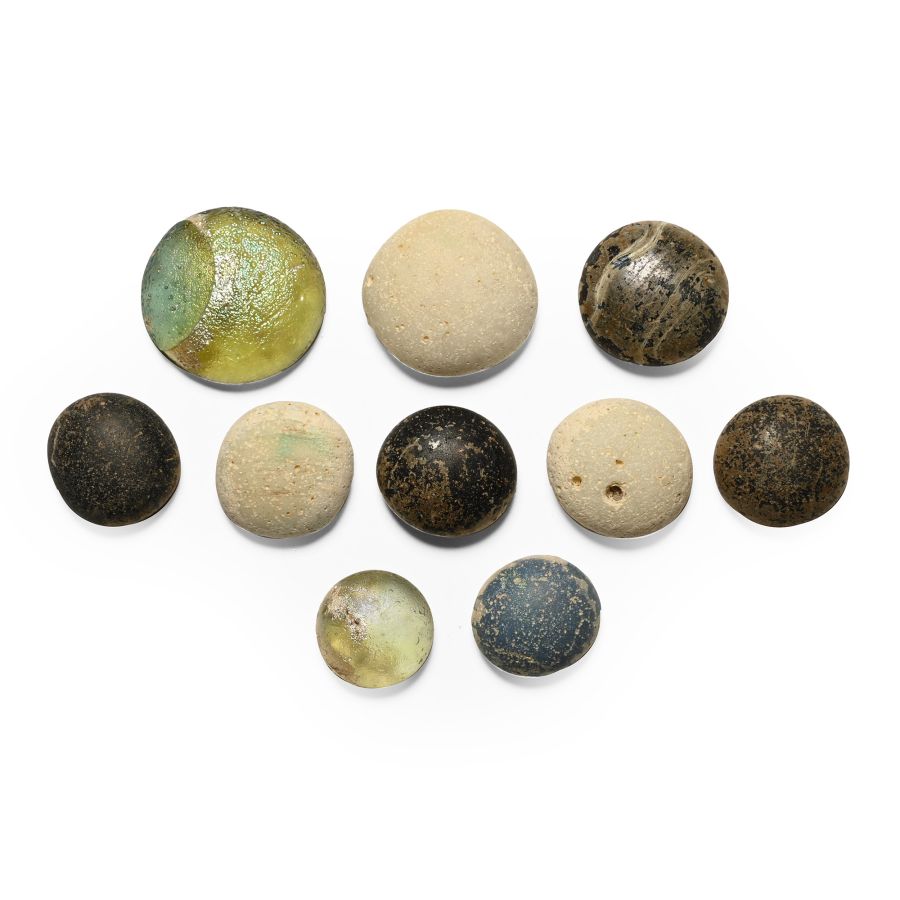
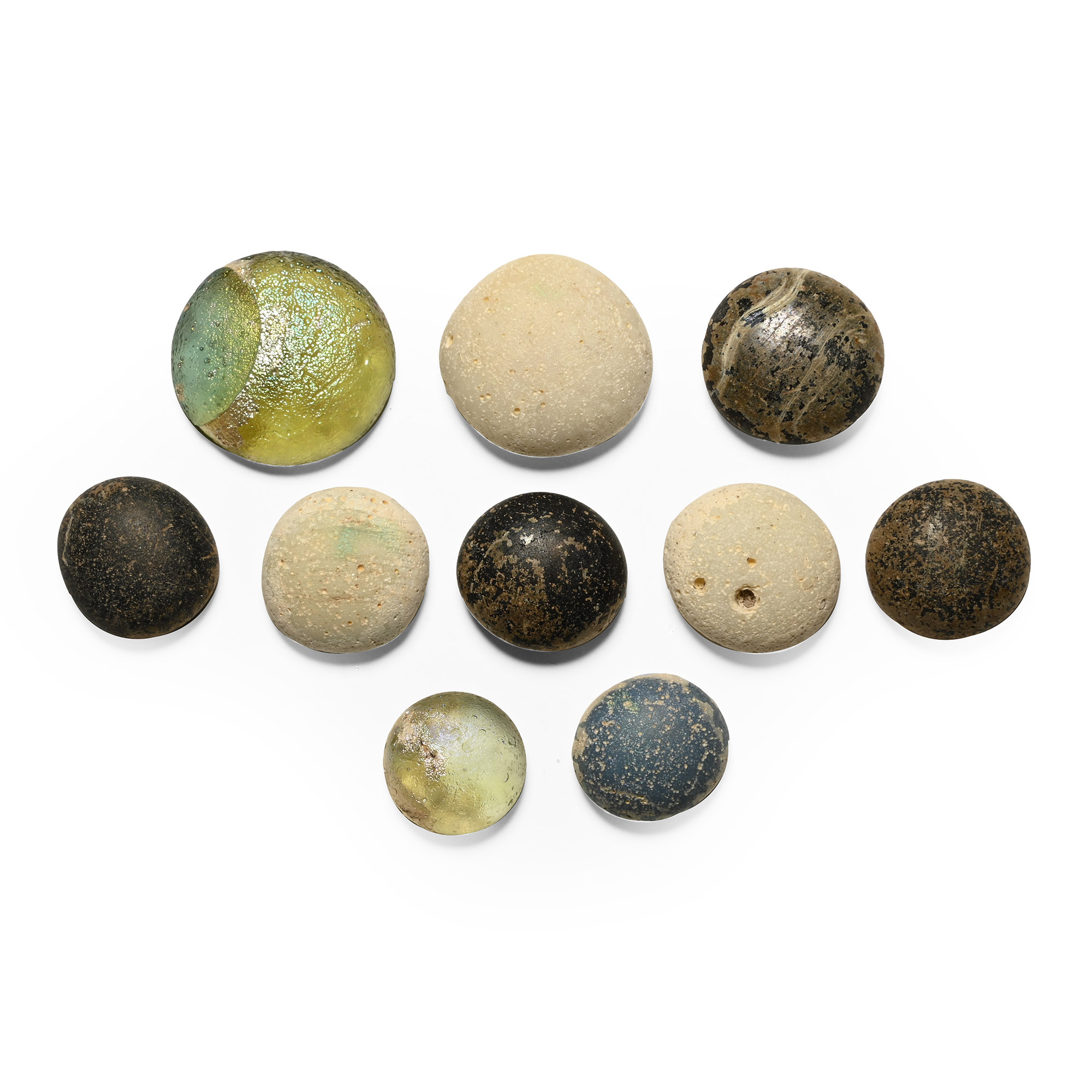
Roman Glass Gaming Piece Collection
1ST-4TH CENTURY A.D.
1/2 - 3/4 in. (27 grams total, 13-21 mm).
Discoid in plan and plano-convex in section, some with iridescence. [10, No Reserve]
ProvenanceFrom an old collection formed after WWII and believed to have been from Paestum.
Ian Wilkinson collection, Nottinghamshire, UK, formed since 1985.
This lot is accompanied by an illustrated lot declaration signed by the Head of the Antiquities Department, Dr Raffaele D’Amato.
TimeLine Auctions follows a vetting process to ensure the authenticity and legality of all items, reinforcing our commitment to integrity and responsible trading. Each antiquity, antique, and coin lot undergoes thorough examination by a vetting committee of at least ten external specialists, professional trade association members, scientists, and archaeologists: Our Vetting Process
AUCTIONS:
TimeLine is a leading auction house specialising in antiquities, ancient art, collectables, natural history, coins, medals, and books. Our auctions offer museums, collectors, historians, and enthusiasts the opportunity to acquire unique and historically significant pieces.
-
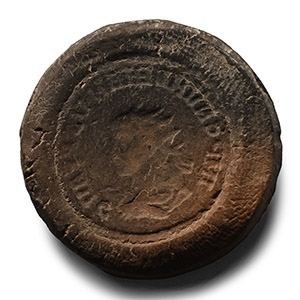
Roman Bifacial Terracotta Forger's Coin Mould
3rd century A.D.Sold for (Inc. bp): £130
Discoid in plan, one side with profile bust of an emperor wearing a radiate crown, legend surrounding; the reverse with a standing female figure holding wreath towards emperor. 4.08 grams, 27 mm
From the collection of a gentleman, acquired on the London art market in the 1990s. This lot is accompanied by an illustrated lot declaration signed by the Head of the Antiquities Department, Dr Raffaele D’Amato. -
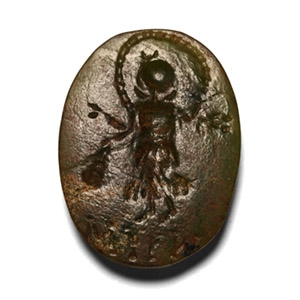
Roman Gnostic Magical Gemstone with Goddess Selene
3rd century A.D.Sold for (Inc. bp): £1,690
An oval-shaped amuletic peridot gemstone intaglio with bevelled edge, engraved with facing figure of goddess Selene advancing left, wearing a peplos with billowing veil or shawl above, crescent at neck and to head, holding a torch; Greek inscription 'MY' and inversed 'MI' below; supplied with a museum-quality impression. 3.07 grams, 21 mm
Acquired 1979-1999. London collection of the late Mr S.M., thence by descent. Acquired on the UK art market. Private collection, London, UK. This lot is accompanied by an illustrated lot declaration signed by the Head of the Antiquities Department, Dr Raffaele D’Amato. -
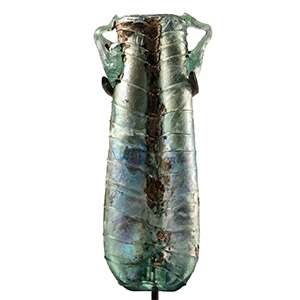
Roman Glass Double Unguentarium
3rd-5th century A.D.Sold for (Inc. bp): £624
Comprising two conjoined tapering tubular cells, with applied handles at the shoulder, decorated with applied trails; mounted on a custom-made stand. 78 grams total, 13 cm including stand
From an important London, UK, collection, 1970-1990s. This lot is accompanied by an illustrated lot declaration signed by the Head of the Antiquities Department, Dr Raffaele D’Amato.
