
Loading, please wait...
LOT 0735
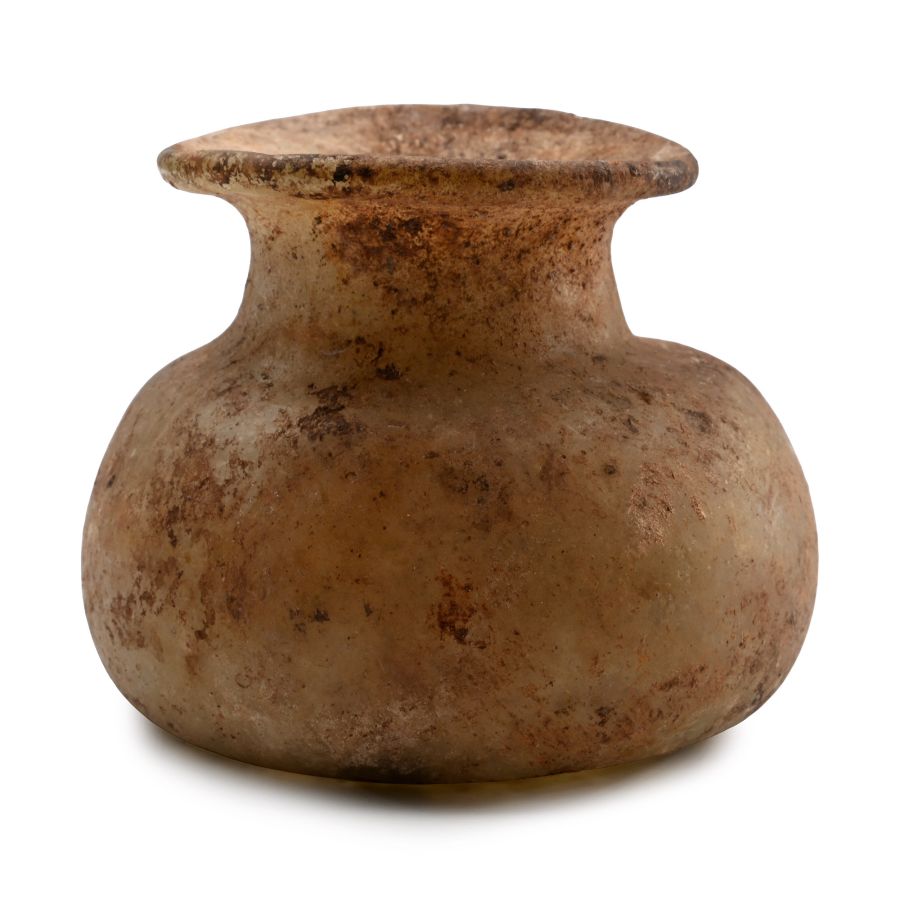
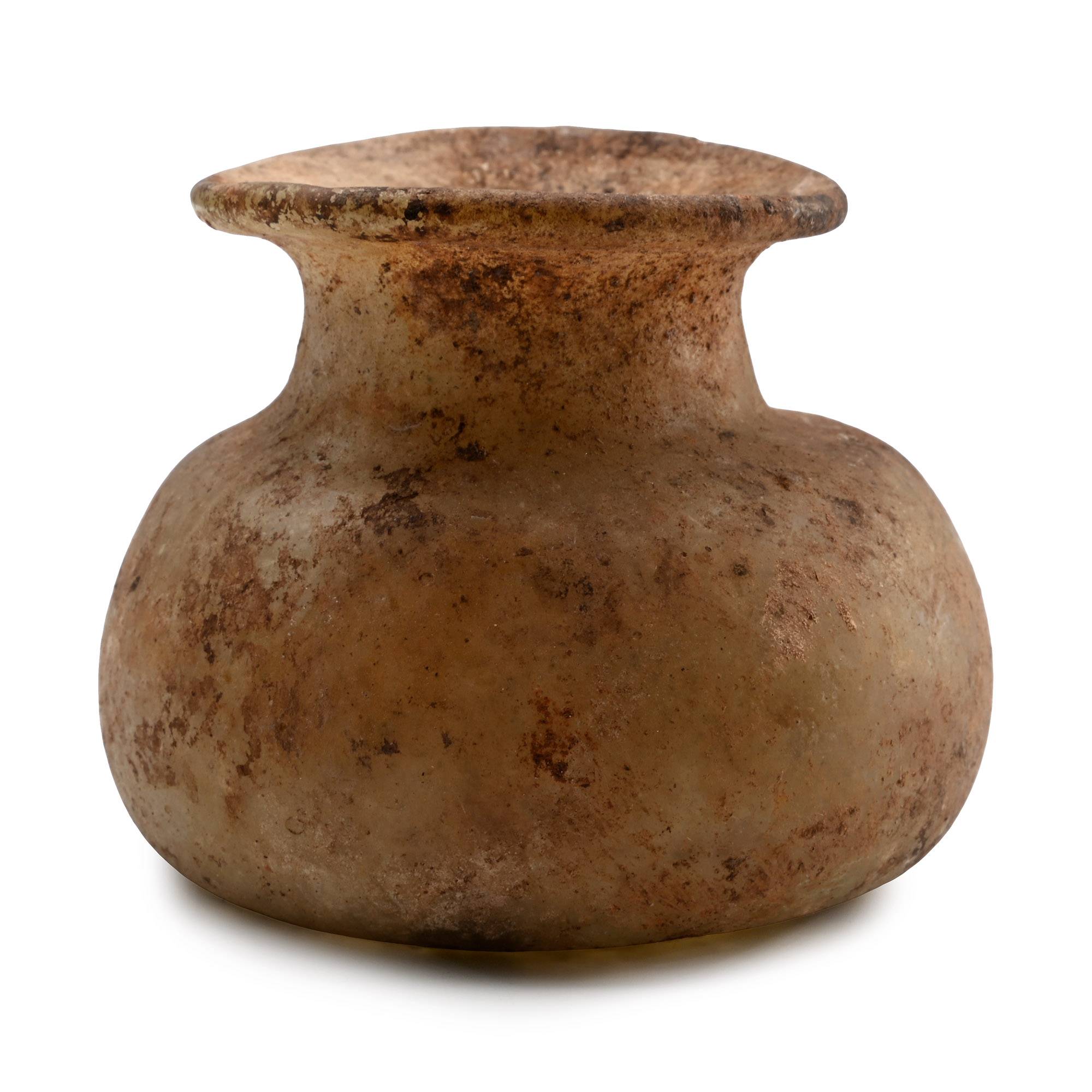
Roman Glass Flask
3RD-4TH CENTURY A.D.
3 in. (93 grams, 78 mm).
Squat in profile with trumpet-shaped neck and mouth, rolled rim, dimple base.
ProvenanceFrom a London, UK, collection of glass, 1970-2000s.
LiteratureCf. Lightfoot, C.S., Ancient Glass in National Museums Scotland, Edinburgh, 2007, item 374, for type.
CONDITIONTimeLine Auctions follows a vetting process to ensure the authenticity and legality of all items, reinforcing our commitment to integrity and responsible trading. Each antiquity, antique, and coin lot undergoes thorough examination by a vetting committee of at least ten external specialists, professional trade association members, scientists, and archaeologists: Our Vetting Process
AUCTIONS:
TimeLine is a leading auction house specialising in antiquities, ancient art, collectables, natural history, coins, medals, and books. Our auctions offer museums, collectors, historians, and enthusiasts the opportunity to acquire unique and historically significant pieces.
-
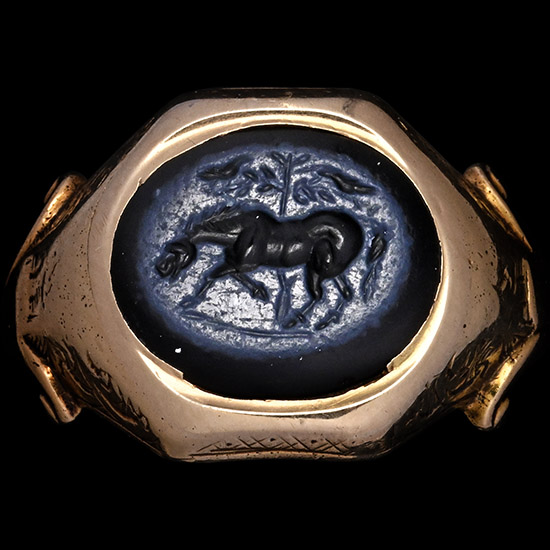
Roman Nicolo Intaglio Depicting a Horse Beneath a Tree in Gold Ring
1st century A.D.Estimate: £2,000 - 3,000 (+bp*)
Opening Bid: £1,000
Comprising a dark blue layered chalcedony, engraved with the figure of a horse standing beneath a stylised tree, within which perch two birds, mounted in a later gold ring of broad, flat-shouldered form, engraved with floral and scrollwork motifs; supplied with a museum-quality impression. 5.33 grams, 20.30 mm overall, 17.24 x 16.55 mm internal diameter (approximate size British M, USA 6, Europe 12.46, Japan 12)
Acquired on the European art market. This lot has been checked against the Interpol Database of stolen works of art and is accompanied by search certificate number no.13366-257910.
Nicolo’s two-tone effect, with its pale upper layer and darker ground, enhances the depth and clarity of the intaglio engraving. -
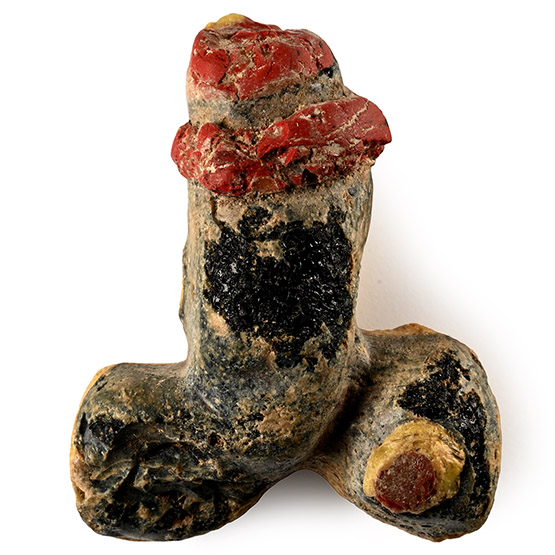
Roman Glass Phallic Amulet
1st century B.C.-1st century A.D.Sold for (Inc. bp): £468
Modelled in the round with applied red-glass collar, pierced through the shaft for suspension. 11.4 grams, 32 mm
Acquired in the mid 1980s-1990s. Private collection, Switzerland, thence by descent. Private collection, since the late 1990s.
In the Roman world, the phallus was a symbol of luck or fertility, and it was believed to have apotropaic functions. Pendants, amulets and small objects were worn by all sorts of people as symbols of protection, especially by young children, according to Varro and Pliny the Elder. The phallus is also commonly found on reliefs, frescoes and lamps from the Graeco-Roman world. -
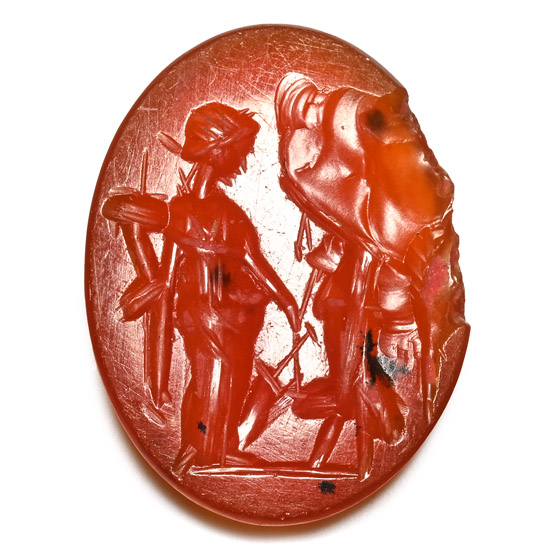
Roman Carnelian Gemstone with Goddesses
1st-2nd century A.D.Sold for (Inc. bp): £98
Tabular type with incuse design of Fortuna standing with a cornucopia and rudder, goddess Victory before her holding tainia, the tips of her wings visible; edge chipped; supplied with a museum-quality impression. 1.02 grams, 17 mm
From the private collection of a European gentleman (1942-2024), formed since the 1970s.
A group of carnelian intaglios found in the Snettisham Hoard, Norfolk, comprised subjects like Fortuna, Diana, Spes, a modius with corn, a bird and a dolphin, from the mid-2nd century A.D.
