
Loading, please wait...
LOT 0869
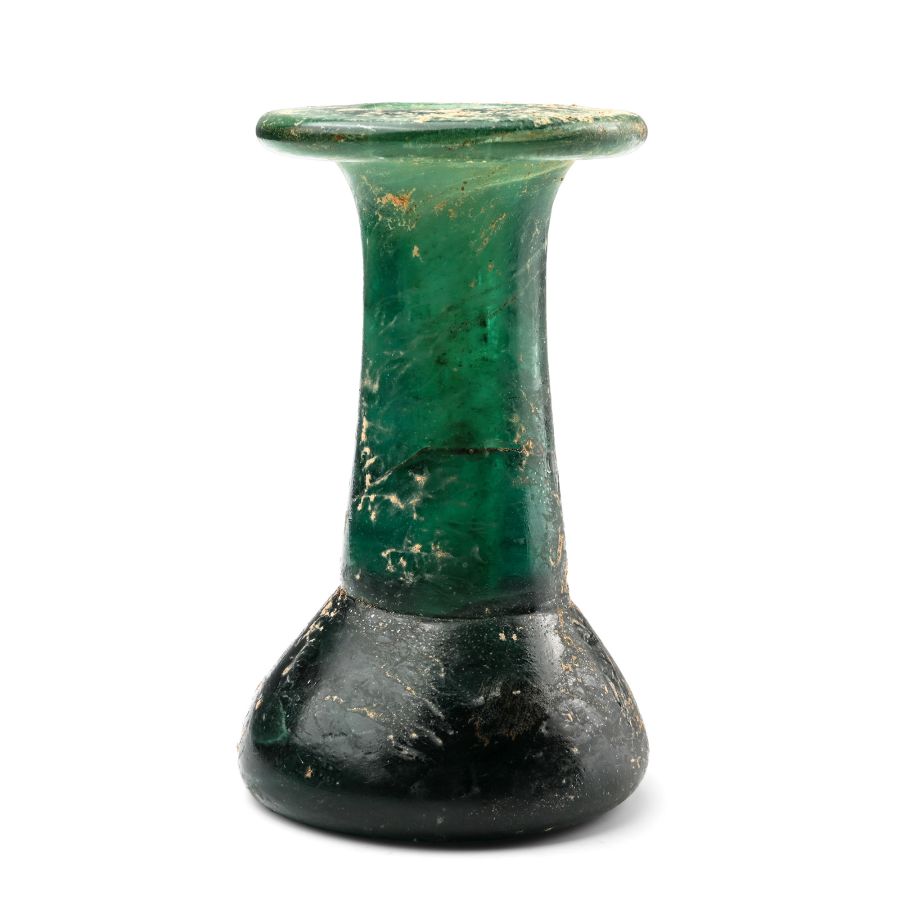
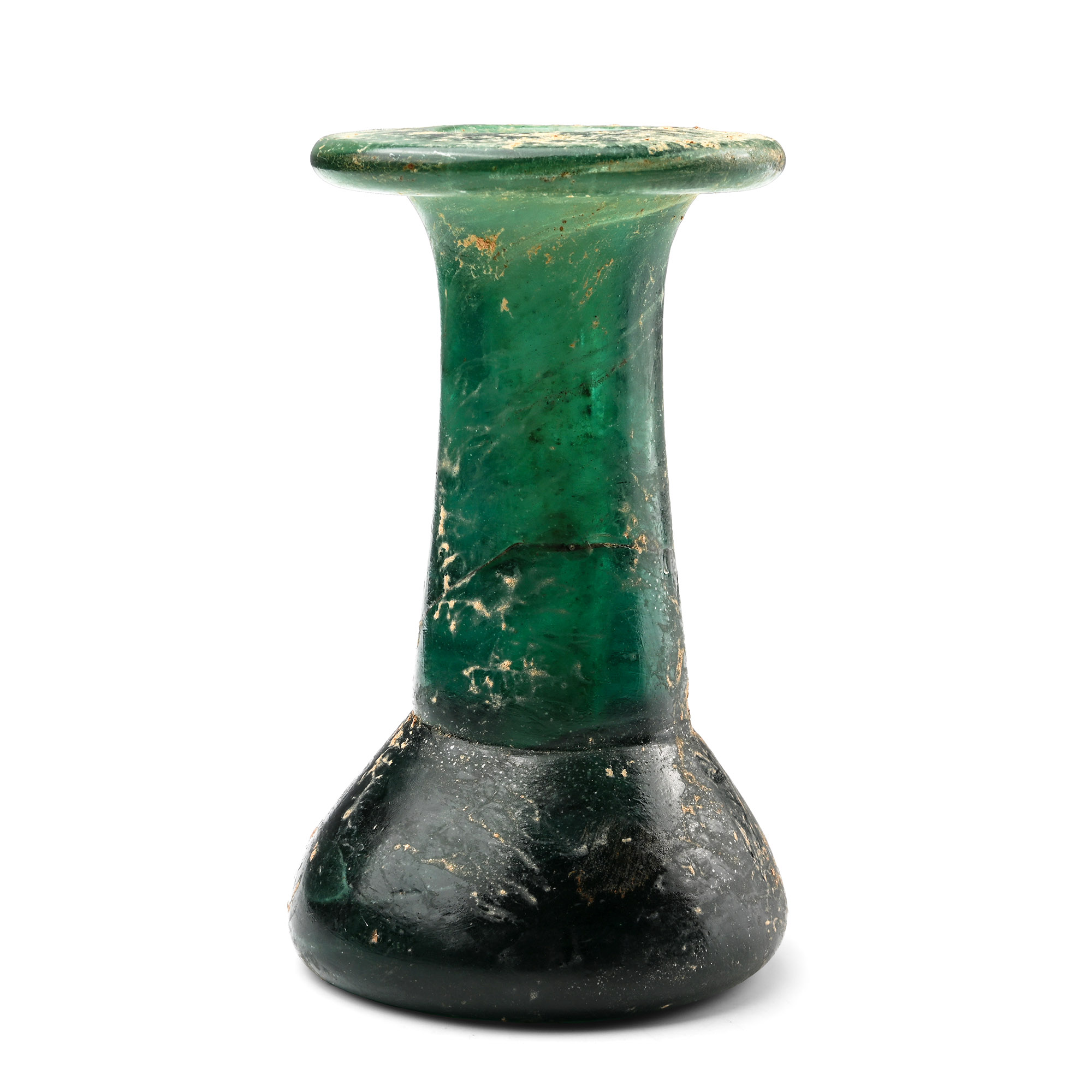
Roman Glass Flask
CIRCA 1ST-2ND CENTURY A.D.
3 5/8 in. (236 grams, 93 mm).
With domed body and flat base, tall neck with trumpet-shaped mouth and rolled rim.
ProvenanceFrom a London, UK, collection of glass, 1970-2000s.
LiteratureCf. Whitehouse, D., Roman Glass in the Corning Museum of Glass, vol.1, New York, 1997, item 268, for type.
CONDITIONTimeLine Auctions follows a vetting process to ensure the authenticity and legality of all items, reinforcing our commitment to integrity and responsible trading. Each antiquity, antique, and coin lot undergoes thorough examination by a vetting committee of at least ten external specialists, professional trade association members, scientists, and archaeologists: Our Vetting Process
AUCTIONS:
TimeLine is a leading auction house specialising in antiquities, ancient art, collectables, natural history, coins, medals, and books. Our auctions offer museums, collectors, historians, and enthusiasts the opportunity to acquire unique and historically significant pieces.
-
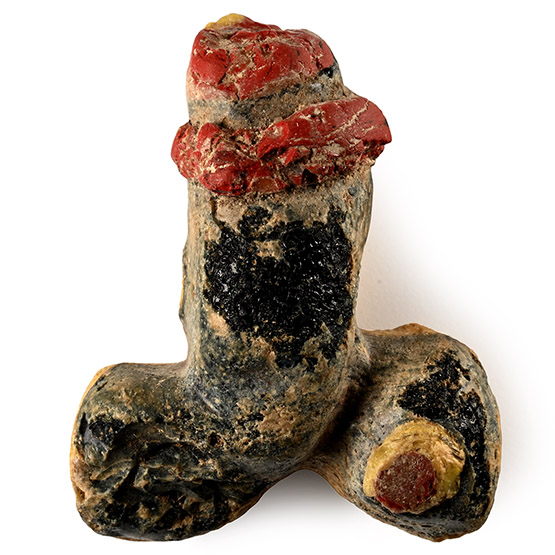
Roman Glass Phallic Amulet
1st century B.C.-1st century A.D.Estimate: £500 - 700 (‡+bp*)
Opening Bid: £250
Modelled in the round with applied red-glass collar, pierced through the shaft for suspension. 11.4 grams, 32 mm
Acquired in the mid 1980s-1990s. Private collection, Switzerland, thence by descent. Private collection, since the late 1990s. -
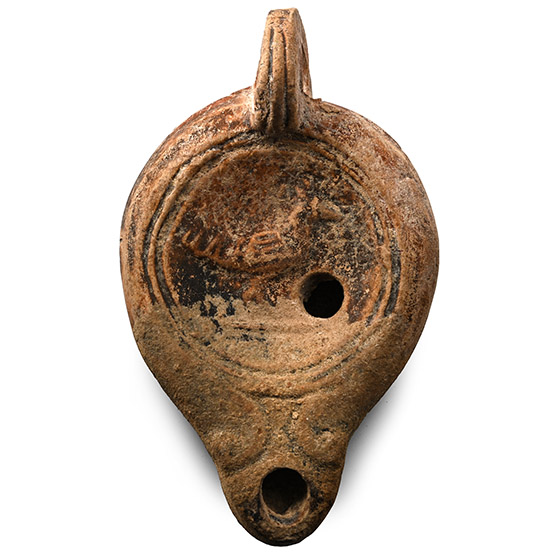
Roman Terracotta Oil Lamp with Bird Facing Right
1st-2nd century A.D.Sold for (Inc. bp): £416
Discoid in plan with D-shaped nozzle, loop handle, discus with low-relief image of tperching bird on a baseline; discus and base bordered with two circular grooves; old label '52' to base and auction tag '455 2' to handle. 64 grams, 98 mm
Ex Weschler's Auctioneers, Washington, D.C., USA, in 1982, no.455. Accompanied by a copy of a receipt dated 26th September 1982. -
.jpg)
Roman Carnelian Gemstone of the Young God Hercules Fighting Snakes
2nd-3rd century A.D.Sold for (Inc. bp): £416
Intaglio image of Hercules kneeling on a baseline holding a snake aloft in one hand and gripping another in the other hand; supplied with a museum-quality impression. 0.70 grams, 13 mm
Private English collection, formed between the late 1970s and early 1990s. Private collection, London, UK.
According to legend, Hera wanted to rid herself of the infant Hercules and placed snakes in his crib. So strong was he even at that young age that he managed to overcome and kill them. The artist has represented the hero as a fully-grown young man.
