
Loading, please wait...
LOT 0835
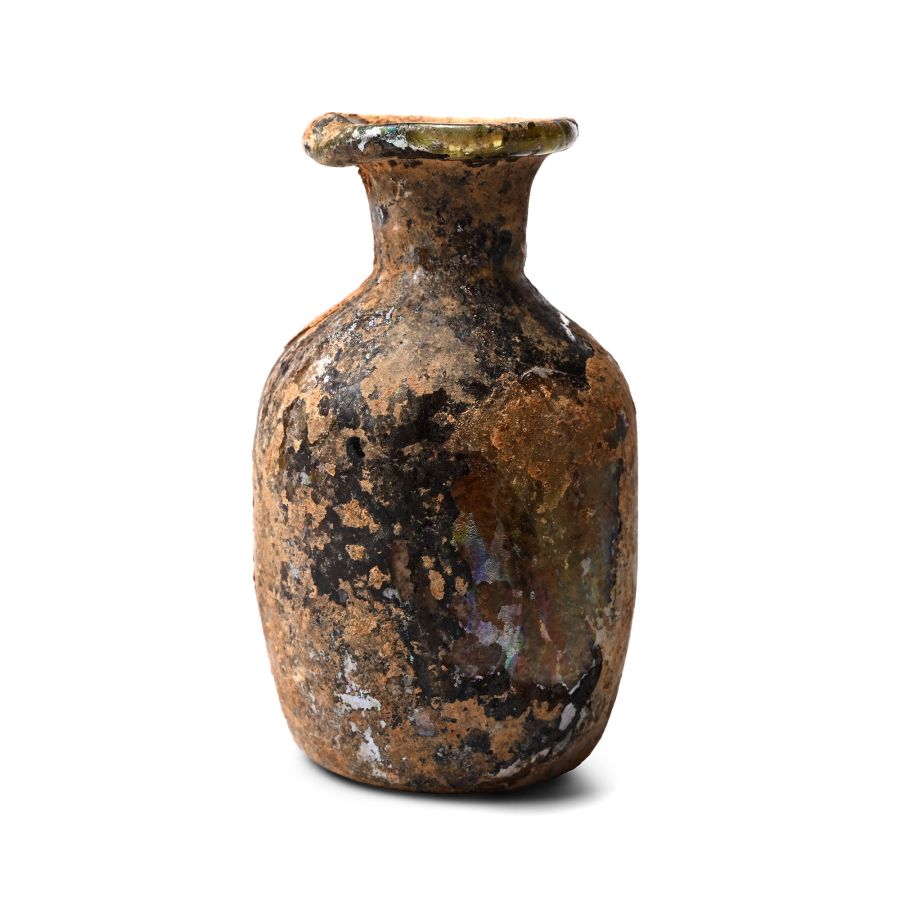
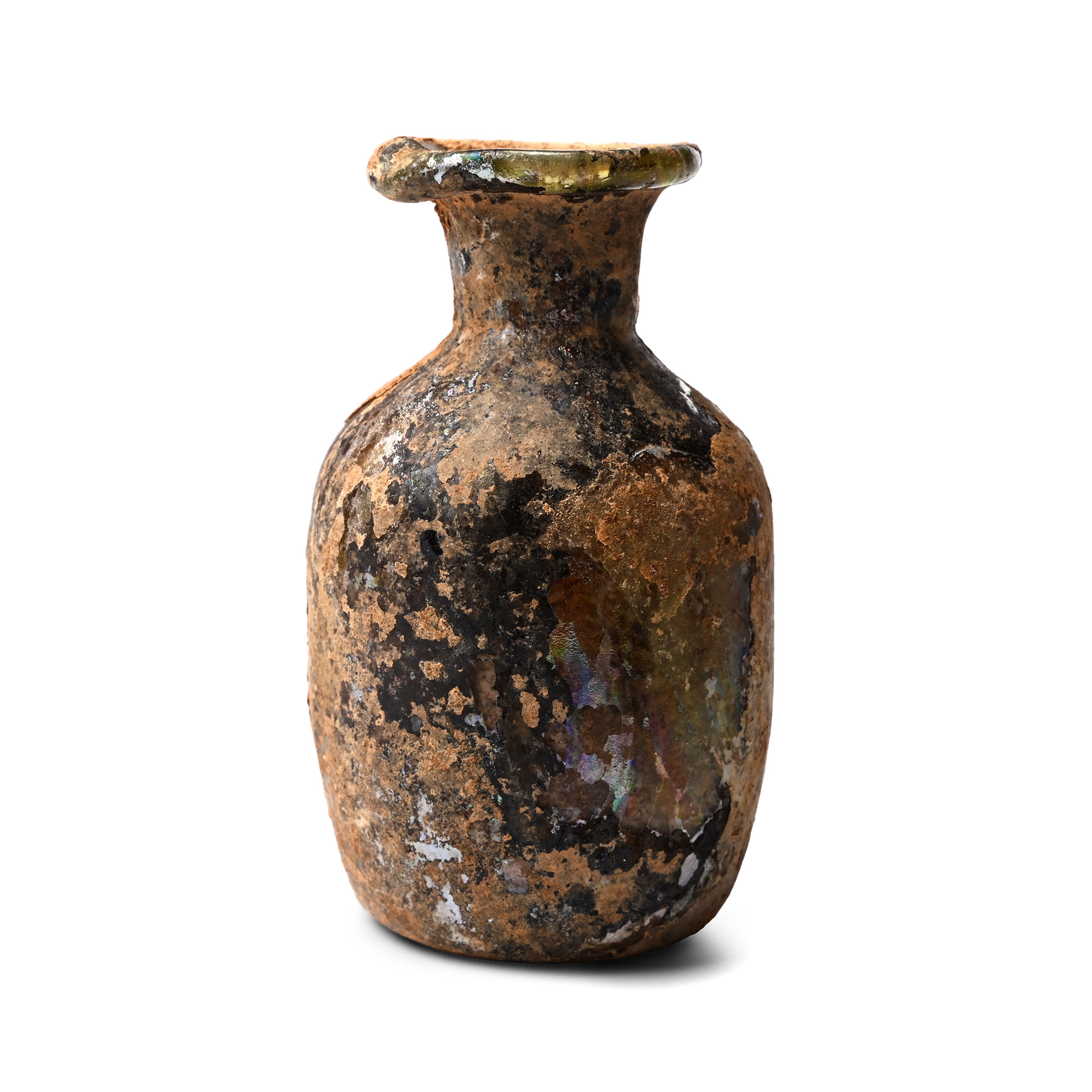
Roman Glass Flask
CIRCA 1ST-4TH CENTURY A.D.
2 7/8 in. (33 grams, 72 mm).
Comprising a barrel-shaped body with a dimpled base, short tubular neck and an everted rim.
ProvenanceFrom a London, UK, collection of glass, 1970-2000s.
CONDITIONTimeLine Auctions follows a vetting process to ensure the authenticity and legality of all items, reinforcing our commitment to integrity and responsible trading. Each antiquity, antique, and coin lot undergoes thorough examination by a vetting committee of at least ten external specialists, professional trade association members, scientists, and archaeologists: Our Vetting Process
AUCTIONS:
TimeLine is a leading auction house specialising in antiquities, ancient art, collectables, natural history, coins, medals, and books. Our auctions offer museums, collectors, historians, and enthusiasts the opportunity to acquire unique and historically significant pieces.
LOT 0835
Roman Glass Flask
Estimate £100 - 140€120 - 160 (for guidance only)$140 - 190 (for guidance only)
-
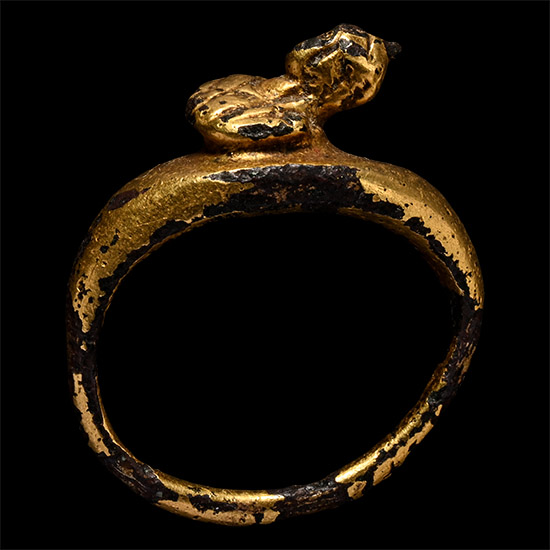
Roman Gilt Bronze Ring with Bust of Minerva
1st-2nd century A.D.Estimate: £350 - 450 (+bp*)
Opening Bid: £175
Integral scaphoid bezel with female bust modelled in the round. 4.23 grams, 24.14 mm overall, 17.40 mm internal diameter (approximate size British G, USA 3 1/4, Europe 4.92, Japan 4)
Private collection, UK. Acquired on the English art market. -
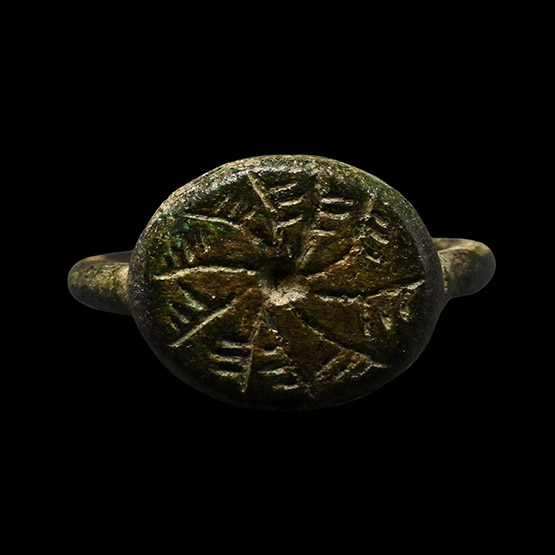
Romano-Celtic Bronze Ring with Tree of Life
1st century B.C.- 1st century A.D.Sold for (Inc. bp): £195
Slender D-section hoop with large discoid bezel with incuse tree of life motif. 7.62 grams, 26.22 mm overall, 19.80 mm internal diameter (approximate size British U, USA 10, Europe 22.52, Japan 21)
Acquired on the UK and EU art market before 2000. From the private collection of a Surrey, UK, gentleman.
The ring belongs to the category where the bezel and the ring’s platform merge together, forming a round plate. The round bezel is often decorated with an animal figure, but in this specimen, it is ornamented with the Celtic pattern of the Tree of Life. -
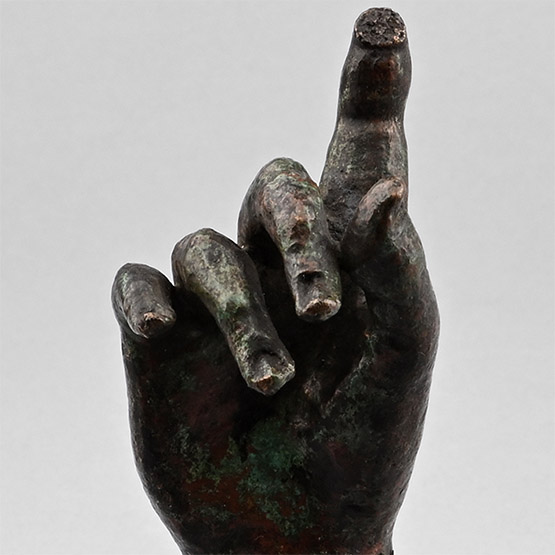
Roman Bronze Statue Hand
2nd century A.D.Sold for (Inc. bp): £2,860
The slender right hand from a large statue with index finger extended and the others curled as if gripping a thin wand, flower-stem or similar item; cracked at the wrist; mounted on a custom-made display stand. 457 grams total, 16.9 cm including stand
Private collection, Europe. Acquired on the English art market. This lot has been checked against the Interpol Database of stolen works of art and is accompanied by search certificate number no.13127-248405.
