
Loading, please wait...
LOT 0823
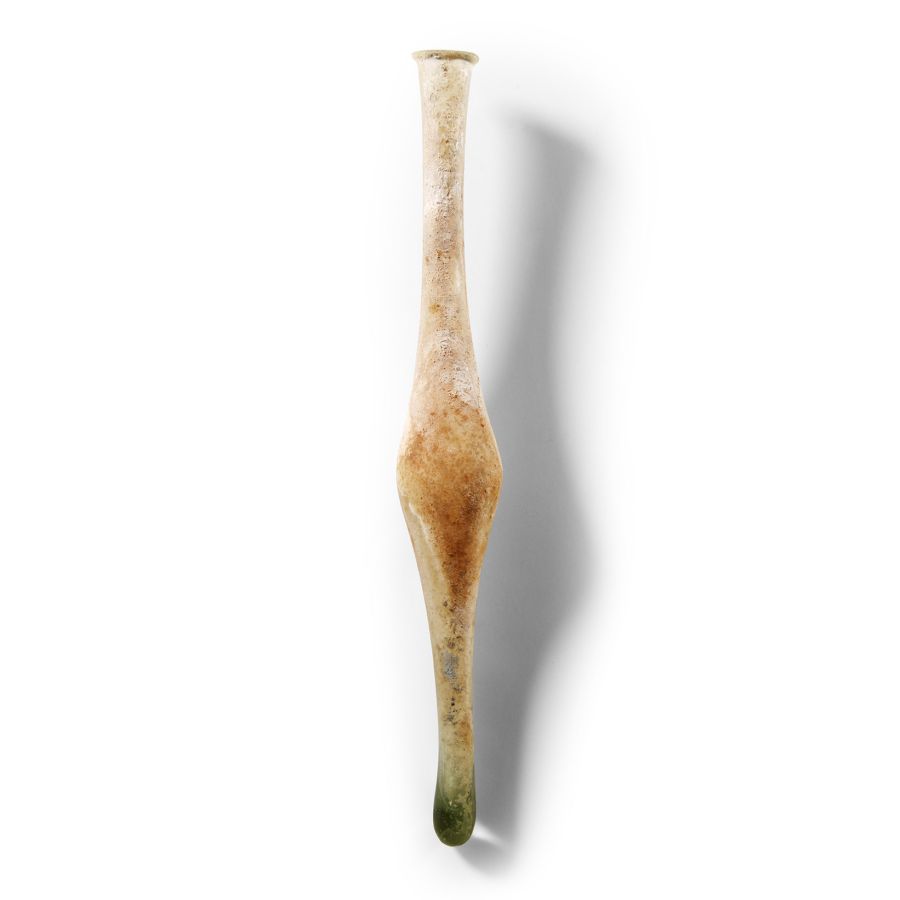
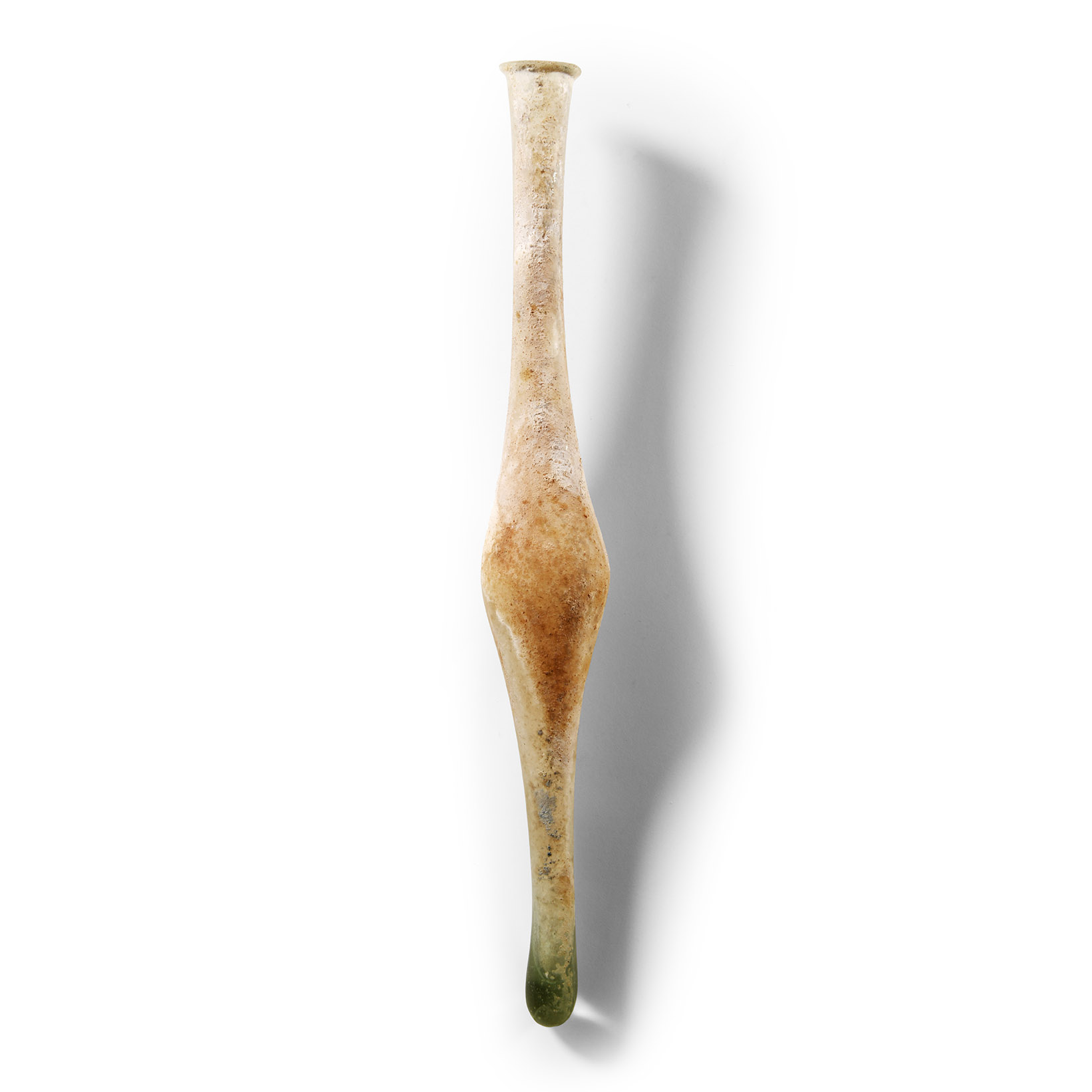
Roman Glass Flask
3RD-4TH CENTURY A.D.
10 1/2 in. (30 grams, 26.5 cm high).
Of fusiform type with a rolled lip and thick rounded bottom.
ProvenanceAcquired 1980-2015.
Ex Abelita family collection.
Cf. The Metropolitan Museum, New York, accession numbers 81.10.52 and 81.10.53, for very similar.
CONDITIONTimeLine Auctions follows a vetting process to ensure the authenticity and legality of all items, reinforcing our commitment to integrity and responsible trading. Each antiquity, antique, and coin lot undergoes thorough examination by a vetting committee of at least ten external specialists, professional trade association members, scientists, and archaeologists: Our Vetting Process
AUCTIONS:
TimeLine is a leading auction house specialising in antiquities, ancient art, collectables, natural history, coins, medals, and books. Our auctions offer museums, collectors, historians, and enthusiasts the opportunity to acquire unique and historically significant pieces.
LOT 0823
Roman Glass Flask
Estimate £200 - 300€230 - 350 (for guidance only)$270 - 410 (for guidance only)
-
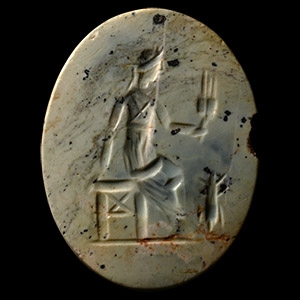
Roman Gemstone with Goddess Demeter
2nd century A.D.Estimate: £600 - 800 (+bp*)
Opening Bid: £333
On burnt sard or carnelian, the goddess fully draped, seated on a throne without a back and holding out wheat ears in her hand over what seems like a small conical altar with horns. 1.40 grams, 18 mm
Acquired in the late 1980s-early 1990s. Important North West London collection.
Ceres was a goddess of agriculture, maternal relationships and fertility, and represents transition, motherhood and nurture. She was also the only one of ancient Rome's agricultural deities to be listed amongst the Dii Consentes, the Roman equivalent to the Twelve Olympians of Greek mythology. -
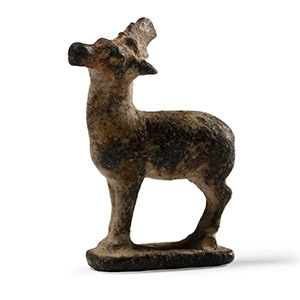
Roman Bronze Standing Deer Statuette
1st-4th century A.D.Sold for (Inc. bp): £85
Modelled in the round with naturalistic detailing, held held straight, standing on a rectangular base. 10.1 grams, 27 mm high
‘The Ancient Menagerie Collection’ formerly the property of a Cambridgeshire lady, collected since the 1990s and acquired from auctions and dealers throughout Europe and the USA, now ex London collection. -
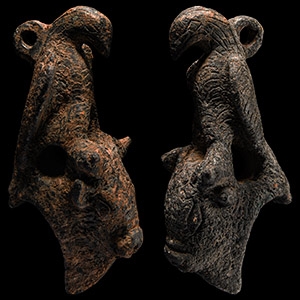
Roman Bronze Jupiter Dolichenus Eagle Pair
2nd-3rd century A.D.Sold for (Inc. bp): £910
The imperial birds modelled in the round, each standing on the head of a horned bull, wings partially spread; semi-naturalistic detailing to the head and feathers; suspension loop behind the neck. 487 grams total, 89-92 mm
Acquired in Europe before 1992.
The cult of Jupiter Dolichenus was a variant of worship of Zeus from Asia Minor whose mystery cult was widespread in the Roman Empire from the early 2nd to mid-3rd centuries A.D., especially in the military. The god is usually represented mounting a bull, with the double axe (labrys or bipennis) in his right raised hand, and dressed in the military attire of a Roman general.
