
Loading, please wait...
LOT 0741
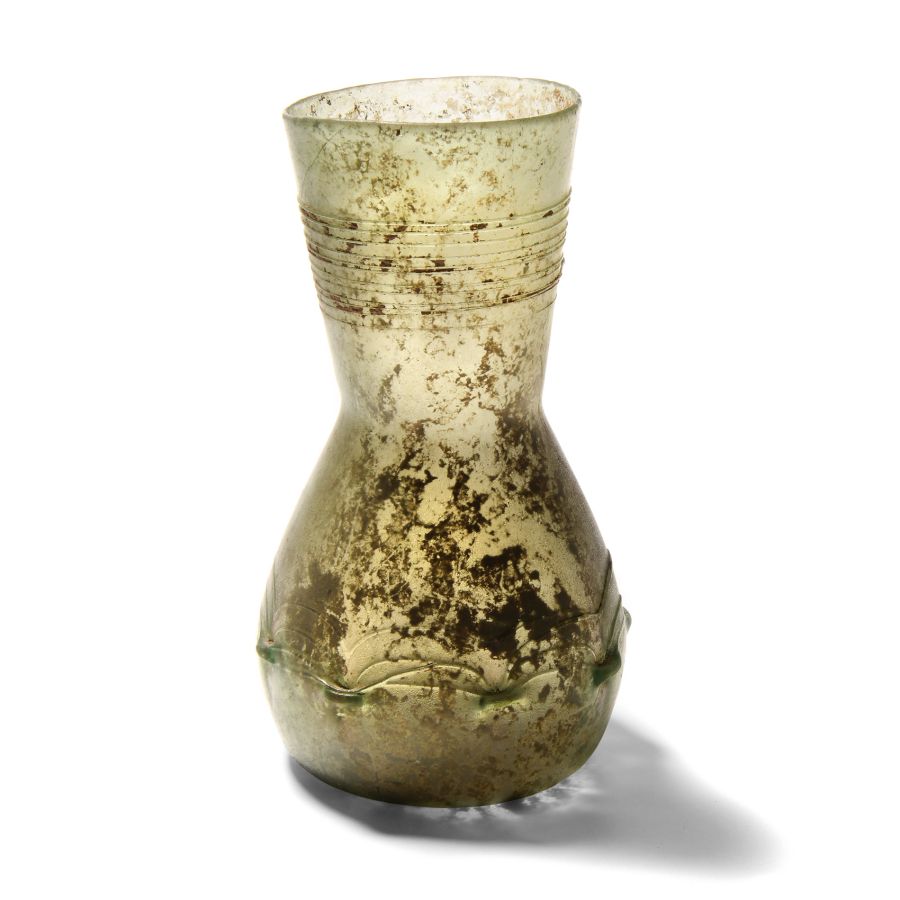
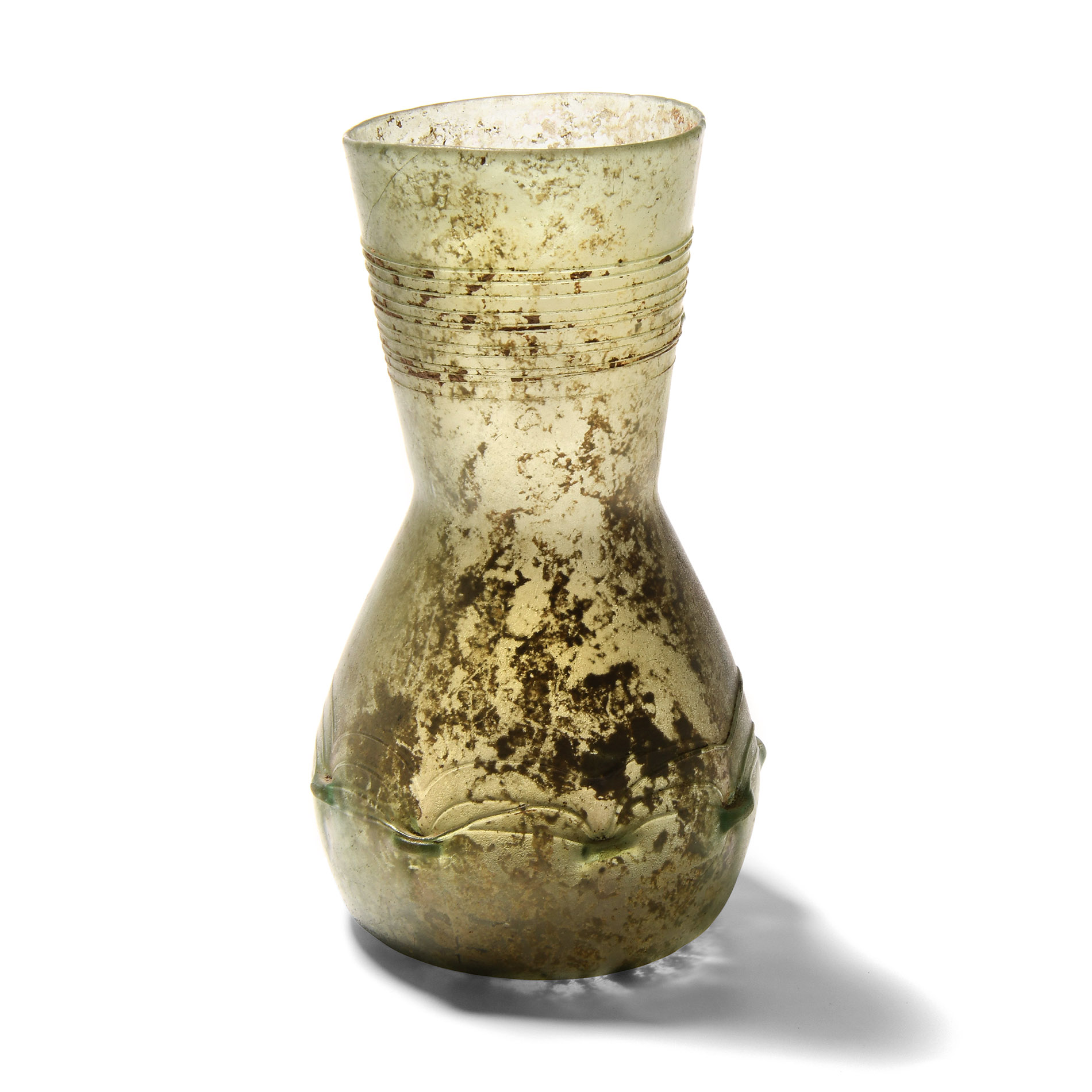
Roman Glass Flask with Trails
1ST-3RD CENTURY A.D.
4 3/4 in. (59 grams, 12 cm high).
A pear-shaped pale green glass flask with broad flared neck, applied trails to the neck and broader, undulating trails to the equator embellished with raised ledges; areas of iridescence; old French collection label to base dated c.1900 A.D.
ProvenanceFrench collection, 1960s-early 2000s.
From an important Paris gallery, France.
TimeLine Auctions follows a vetting process to ensure the authenticity and legality of all items, reinforcing our commitment to integrity and responsible trading. Each antiquity, antique, and coin lot undergoes thorough examination by a vetting committee of at least ten external specialists, professional trade association members, scientists, and archaeologists: Our Vetting Process
AUCTIONS:
TimeLine is a leading auction house specialising in antiquities, ancient art, collectables, natural history, coins, medals, and books. Our auctions offer museums, collectors, historians, and enthusiasts the opportunity to acquire unique and historically significant pieces.
-
.jpg)
Roman Decorated Glass Bowl
3rd-5th century A.D.Sold for (Inc. bp): £234
A transparent glass bowl with gently tapering sidewalls and iridescent surfaces; base displaying a geometric motif with cut or engraved shallow dimples at centre surrounded by curved, radiating lines, circular dimples around the perimeter, with possible shallow ovals to the exterior wall. 131 grams, 14.3 cm wide
Fine condition, repaired.
Acquired in the 1980s-1990s. Previously with Mansour Gallery, London W1. Property of a North West London gentleman. -
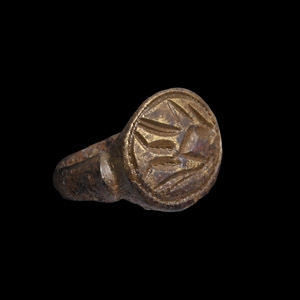
Late Roman Ring with Man Catching Fish
3rd century A.D.Sold for (Inc. bp): £70
A silvered bronze finger ring with stepped shoulders, large ellipsoid bezel with incuse ropework border and stylised figure raising a fish. 6.43 grams, 24.13 mm overall, 17.48 mm internal diameter (approximate size British O, USA 7, Europe 14.98, Japan 14)
Fine condition.
with M. Labarbe, Toulouse, France, 27 November 2011, lot 228. Property of a London gentleman -
.jpg)
Roman Statuette of Attis
1st-2nd century A.D.Sold for (Inc. bp): £702
A bronze figure of Attis standing wearing the distinctive Phrygian cap, advancing wearing a flounced tunic and cloak, holding a falx in the left hand; right arm absent; mounted on a custom-made stand. 117 grams total, 97 mm high including stand
German art market, 1990s. Mr A.H., a North American collector living in the UK.
