
Loading, please wait...
LOT 0851
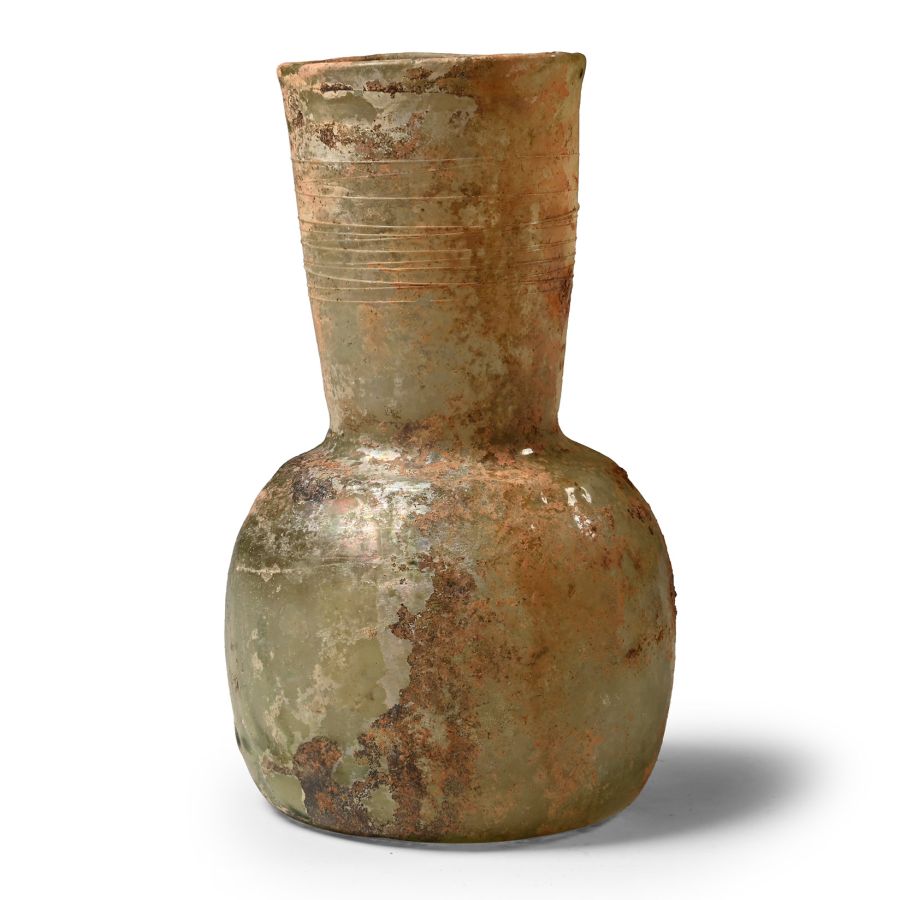
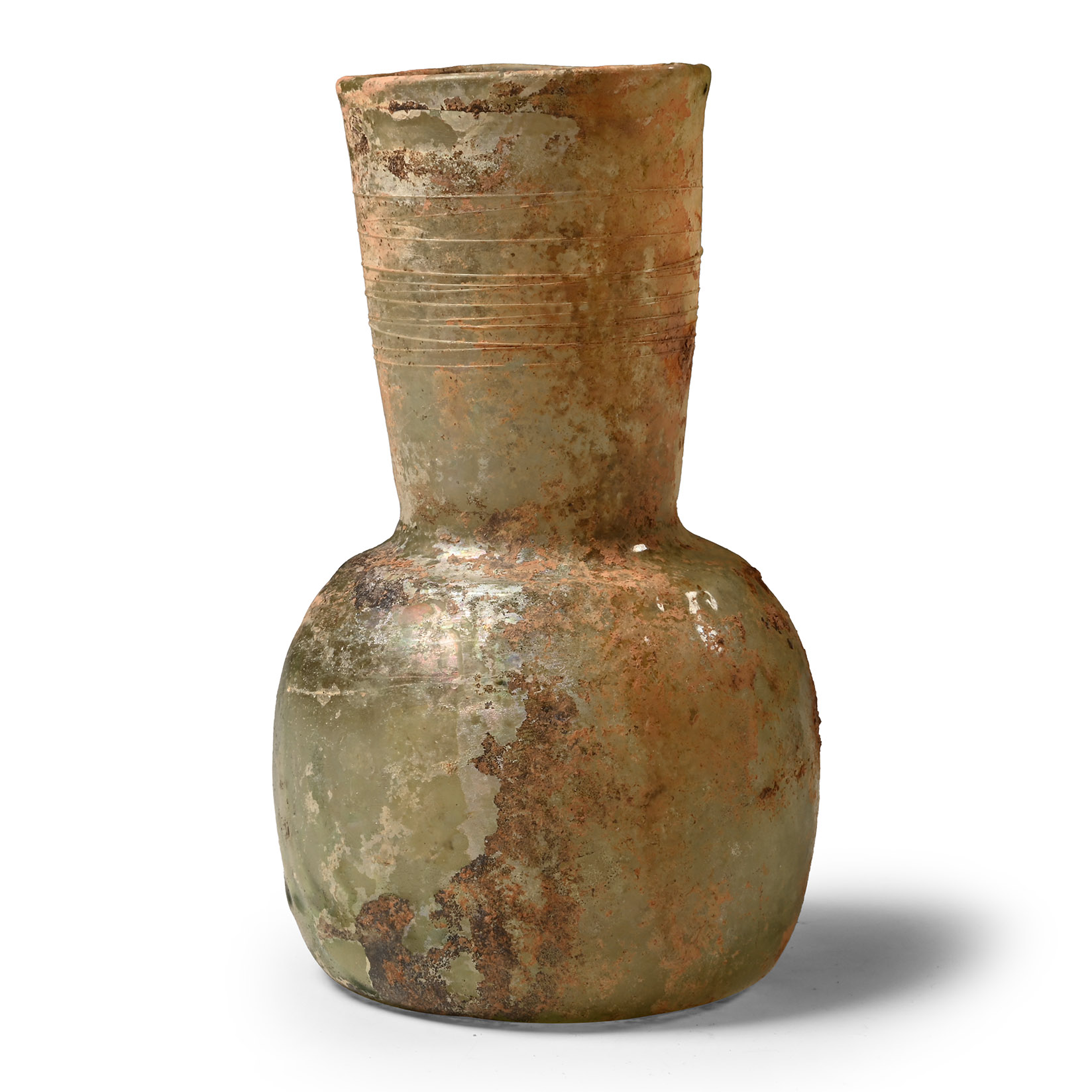
Roman Glass Flask with Everted Spout
4TH CENTURY A.D.
3 7/8 in. (38 grams, 98 mm).
Piriform in profile in aqua glass with broad flared neck; applied trails to the neck, dimple base; areas of iridescence. [No Reserve]
ProvenanceFrom a London, UK, collection, 1990s.
LiteratureSee Whitehouse, D., Roman Glass in the Corning Museum of Glass, vol.2, New York, 2001, item 696, for type.
FootnotesThe flask is a common Late Roman type, especially diffused in Syria and Palestine. Hayes suggested that examples with straight necks are relatively early in date, while those with necks having a bulge at the top and are narrow below were produced slightly later.
CONDITIONTimeLine Auctions follows a vetting process to ensure the authenticity and legality of all items, reinforcing our commitment to integrity and responsible trading. Each antiquity, antique, and coin lot undergoes thorough examination by a vetting committee of at least ten external specialists, professional trade association members, scientists, and archaeologists: Our Vetting Process
AUCTIONS:
TimeLine is a leading auction house specialising in antiquities, ancient art, collectables, natural history, coins, medals, and books. Our auctions offer museums, collectors, historians, and enthusiasts the opportunity to acquire unique and historically significant pieces.
-
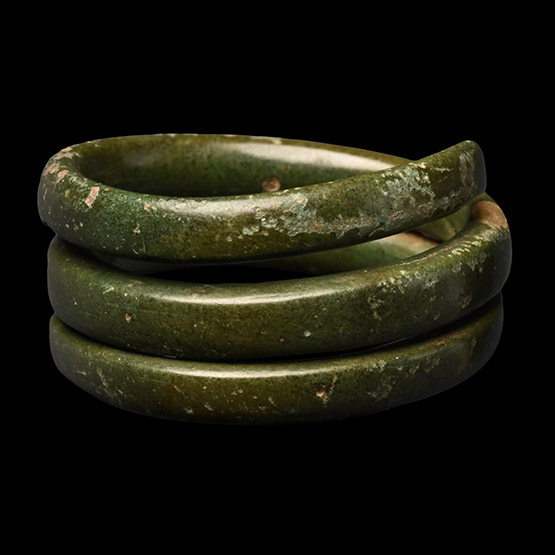
Romano-British Coiled Ring
1st century A.D.Sold for (Inc. bp): £65
Formed from a tightly coiled rectangular-section bar. 17.46 grams, 28.89 mm overall, 21.26 mm internal diameter (approximate size British V 1/2, USA 10 3/4, Europe 24.4, Japan 23)
Found near Cambridge, UK. Acquired on the UK and EU art market before 2000. From the private collection of a Surrey, UK, gentleman.
Spiral type rings have been found in the northern Provinces of the Empire, and a very similar specimen, but in silver, was found near Sitten in 1888, inside a Roman grave of Muraz la Sierre. Bronze examples came from the Germanic Limes. They continued models and typologies of Celtic fashion. -
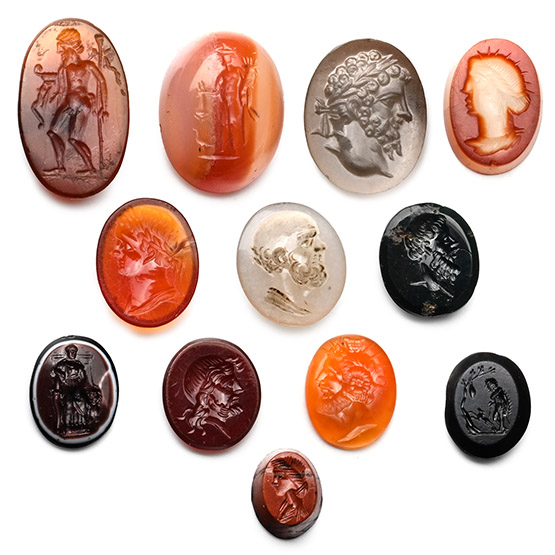
Roman and Later Hardstone Gemstone Collection
2nd century A.D. and laterSold for (Inc. bp): £2,080
Including profile bust, standing warrior and other types; supplied with a museum-quality impression. 13.02 grams total, 10-20 mm
Private collection, England. -
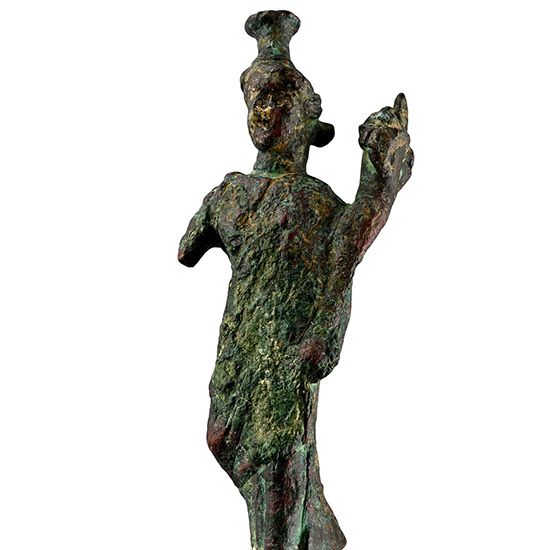
Roman Bronze Statue of Demeter with Cornucopia
1st-3rd century A.D.Estimate: £300 - 400 (+bp*)
Opening Bid: £150
Modelled in the round standing with legs advancing, left arm cradling a cornucopia; hair drawn back in a chignon, surmounted by a modius; attachment loop below feet. 145 grams, 10.5 cm
Acquired before 1990. Ex London gallery, 1990s. Private collection, London, UK.
The Roman Empire was one of the most powerful and influential civilisations of the ancient world, lasting for many centuries. It is known for its impressive cities, roads, engineering, art, and military strength, as well as its system of law and government. At its height, the empire brought together many different cultures, and its ideas and achievements continued to shape Europe and the wider world long after its fall.
