
Loading, please wait...
LOT 0768
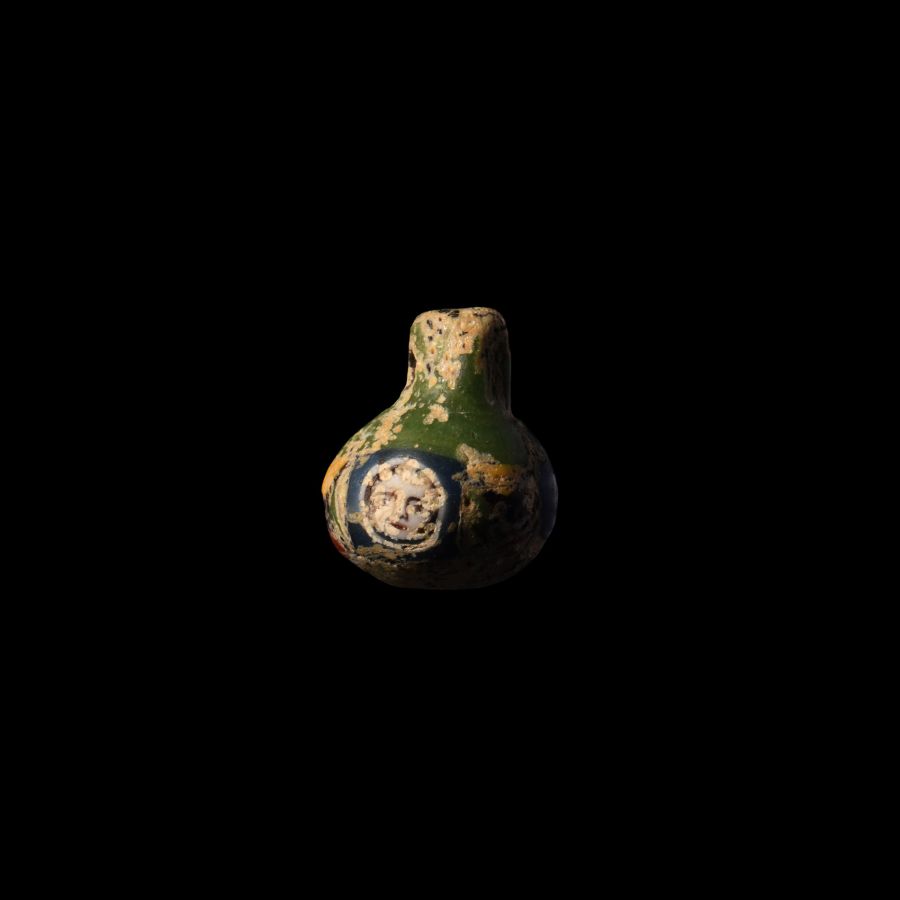
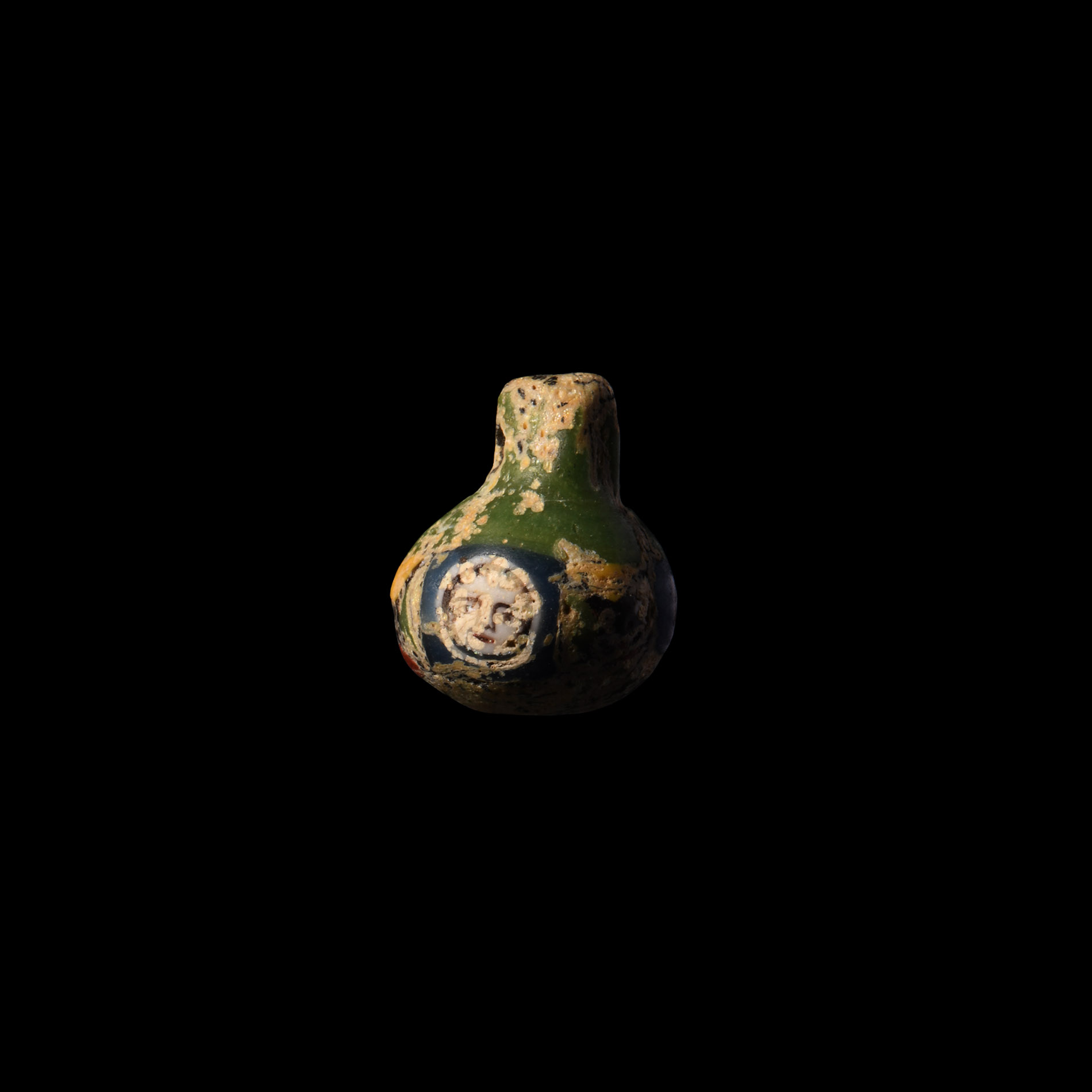
Roman Glass Face Bulla
EASTERN MEDITERRANEAN, 1ST CENTURY B.C.-1ST CENTURY A.D.
5/8 in. (2.29 grams, 16 mm).
A spherical polychrome glass bead with integral suspension lug, decorated with millefiori face cane slices and geometric motifs.
ProvenanceAcquired 1970-2010.
Collection of a late Japanese gentleman.
Cf. Sangiorgi, G., Collezione di Vetri Antichi, no.254.
CONDITIONTimeLine Auctions follows a vetting process to ensure the authenticity and legality of all items, reinforcing our commitment to integrity and responsible trading. Each antiquity, antique, and coin lot undergoes thorough examination by a vetting committee of at least ten external specialists, professional trade association members, scientists, and archaeologists: Our Vetting Process
AUCTIONS:
TimeLine is a leading auction house specialising in antiquities, ancient art, collectables, natural history, coins, medals, and books. Our auctions offer museums, collectors, historians, and enthusiasts the opportunity to acquire unique and historically significant pieces.
LOT 0768
Roman Glass Face Bulla
Estimate £350 - 450€410 - 520 (for guidance only)$470 - 610 (for guidance only)
-
.jpg)
Roman Glass Vessel Group
1st-5th century A.D.Sold for (Inc. bp): £130
A group of two glass vessels comprising: one blue glass toilet bottle with bulbous body, long cylindrical neck and rolled rim; a green glass vessel with squat, tapering body, ogival shoulders and trumpet-style neck and lip, pontil to base. 67 grams total, 5.1-15 cm
Fine condition.
Acquired before 1983. Ex London gallery, 1990s. -
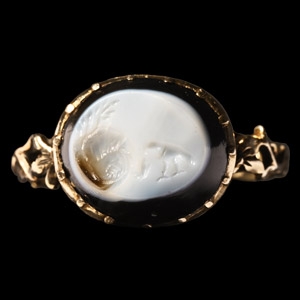
Roman Gemstone in Gold Ring
2nd century A.D. and laterEstimate: £1,500 - 2,000 (+bp*)
Opening Bid: £750
A sardonyx intaglio of a bird pecking at a worm, set into a Georgian gold finger ring with openwork tendril detailing to the hoop, cupped bezel with rosette to the underside. 3.13 grams, 25.68 mm overall, 18.43 mm internal diameter (approximate size British N 1/2, USA 6 3/4, Europe 14.35, Japan 13)
UK private collection. with Bertolami Fine Art, London, 22 April 2022, lot 79. English private collection. -
.jpg)
Roman Vine Leaf Mount
1st-2nd century A.D.Sold for (Inc. bp): £39
A bronze mount or harness fitting in the form of a vine leaf displaying simple stylised detailing to the front face, together with a raised perforated lug and scooped plaque above; suspension loop to the reverse. 57 grams, 58 mm
Found Cambridgeshire in the 1990s.
