
Loading, please wait...


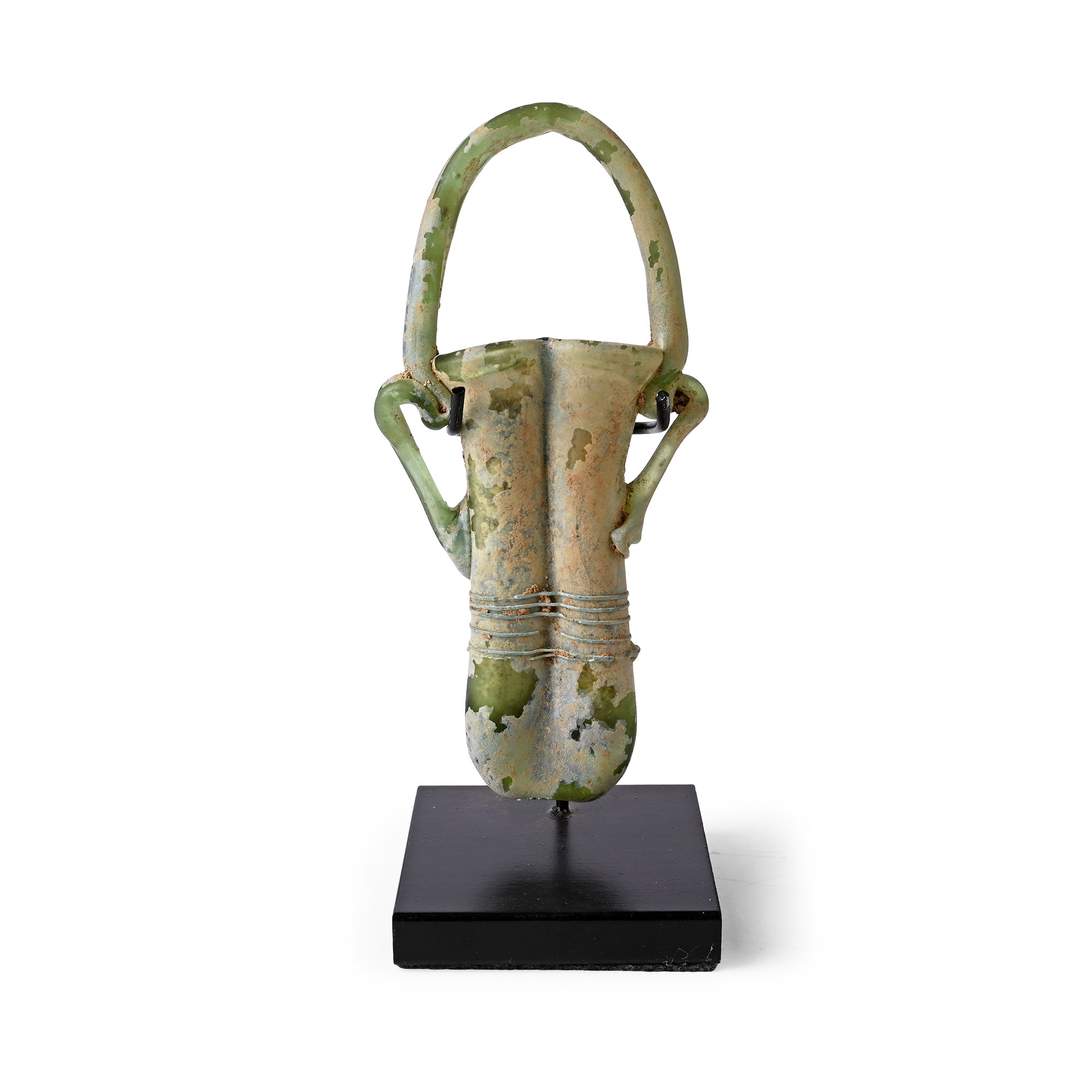
LOT 0138
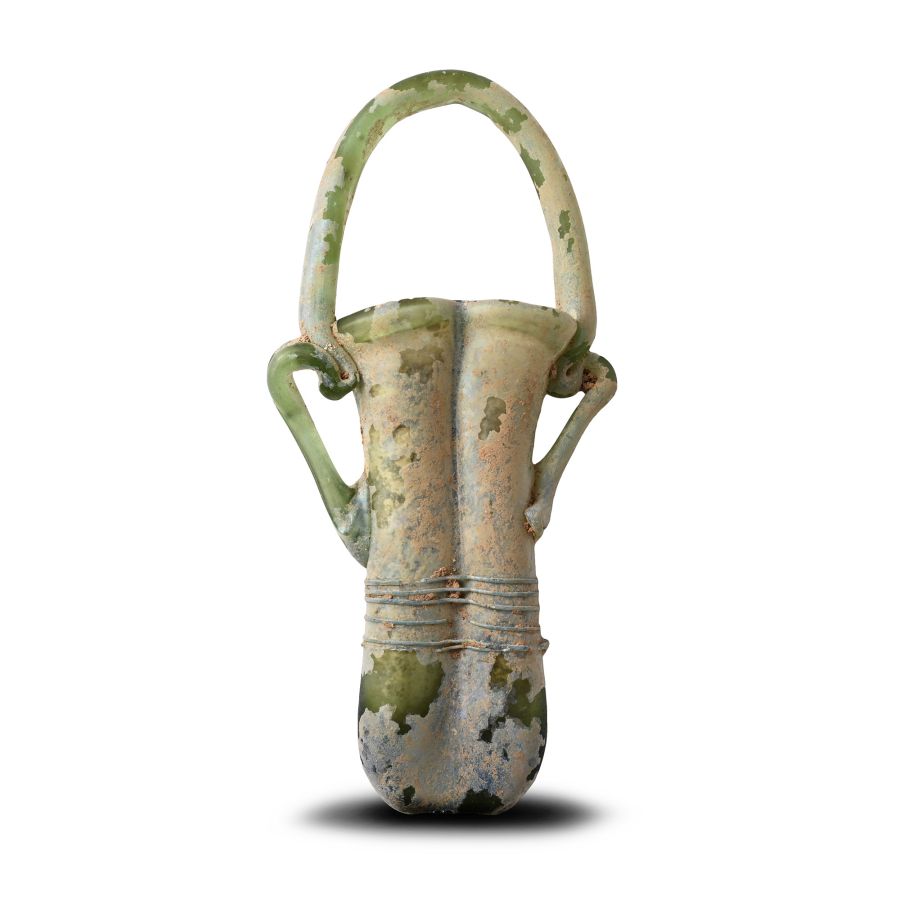
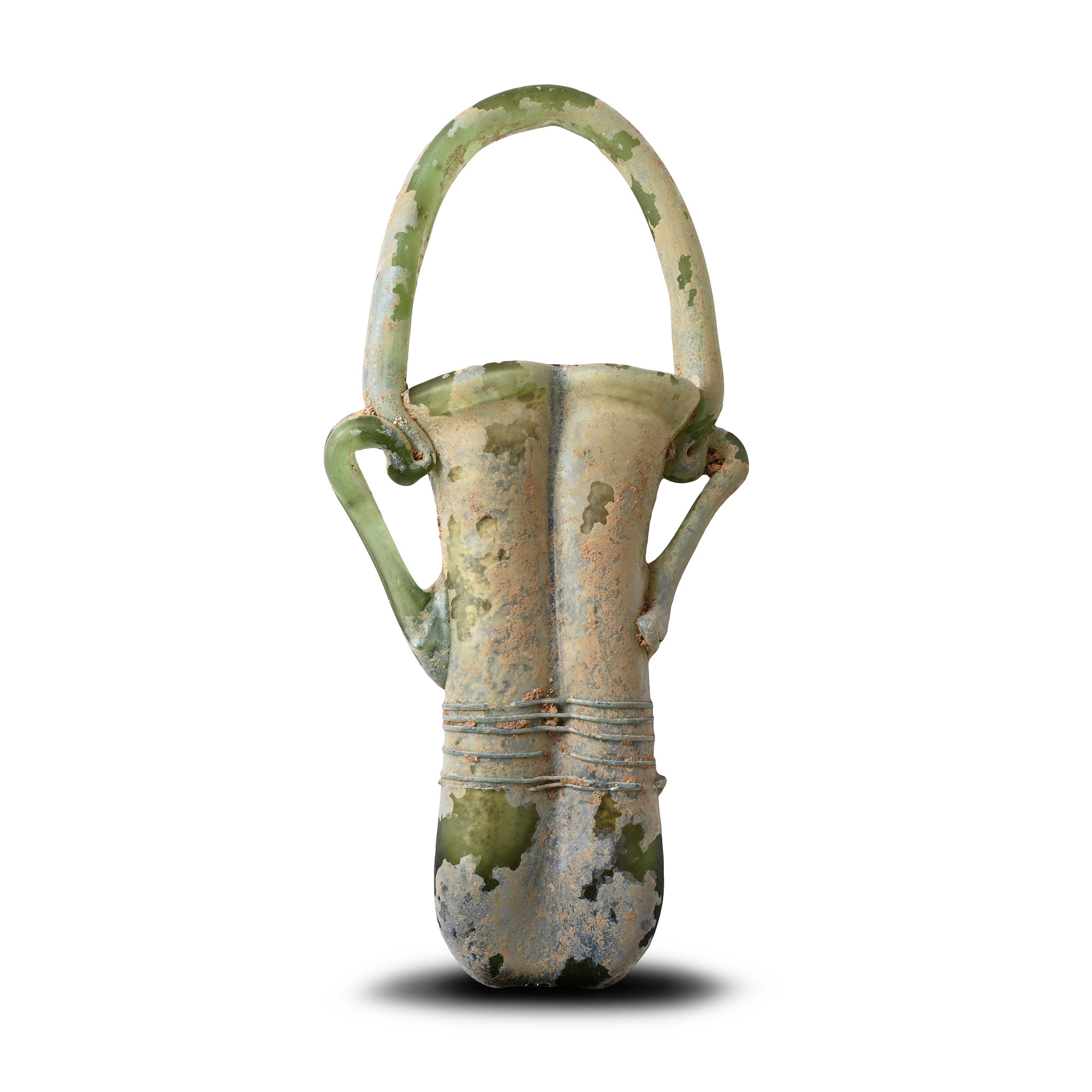
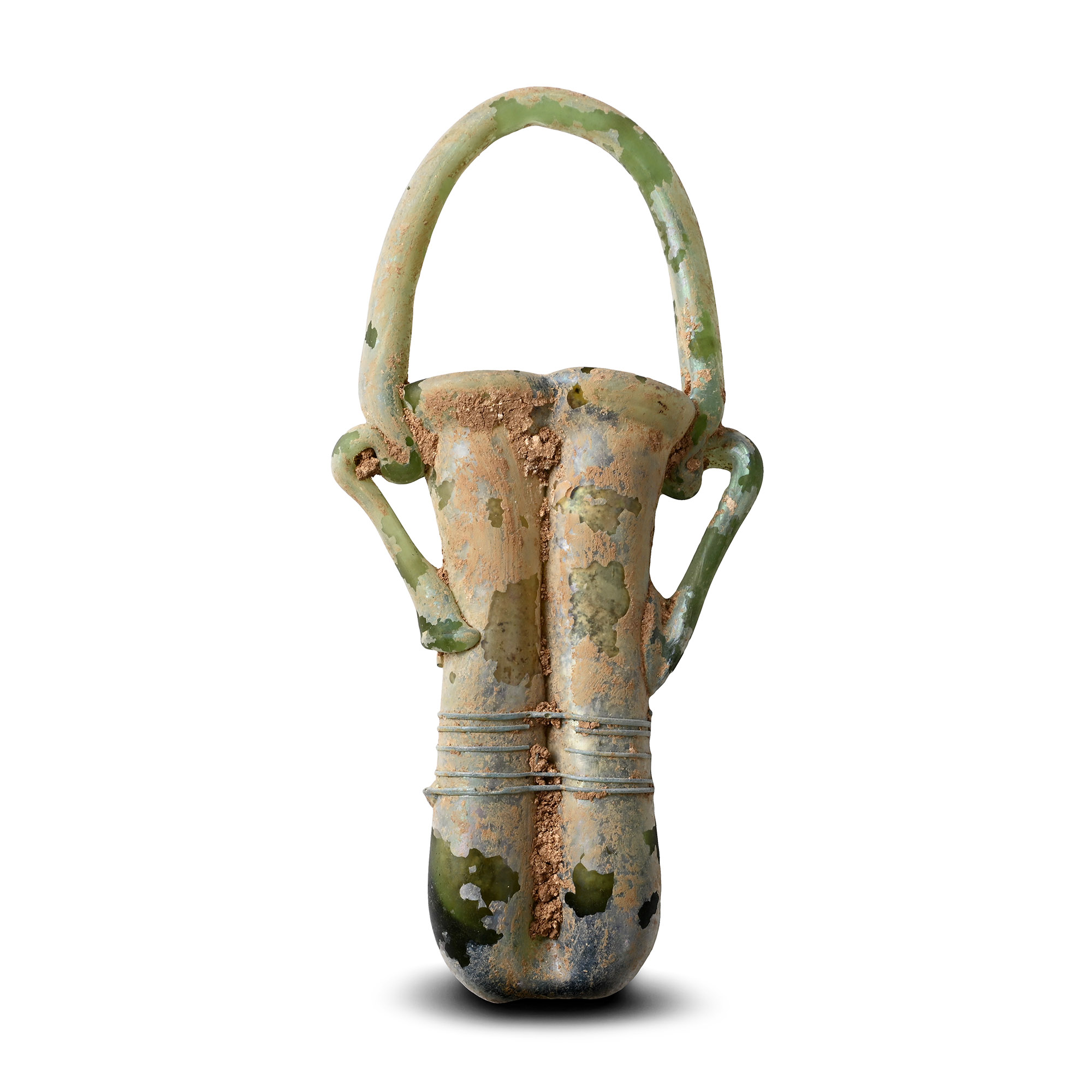
Roman Glass Double Unguentarium
2ND-3RD CENTURY A.D.
6 1/8 in. (87.5 grams, 15.6 cm).
With rolled rim to each tapering tube, applied trail detailing to each Lower body, lateral angled handles and a large applied loop handle above; iridescent surface; accompanied by a custom-made display stand.
ProvenanceFrom an important London, UK, collection 1980-2020.
LiteratureCf. Lightfoot, C.S., Ancient Glass in National Museums Scotland, Edinburgh, 2007, item 460.
CONDITIONTimeLine Auctions follows a vetting process to ensure the authenticity and legality of all items, reinforcing our commitment to integrity and responsible trading. Each antiquity, antique, and coin lot undergoes thorough examination by a vetting committee of at least ten external specialists, professional trade association members, scientists, and archaeologists: Our Vetting Process
AUCTIONS:
TimeLine is a leading auction house specialising in antiquities, ancient art, collectables, natural history, coins, medals, and books. Our auctions offer museums, collectors, historians, and enthusiasts the opportunity to acquire unique and historically significant pieces.
-
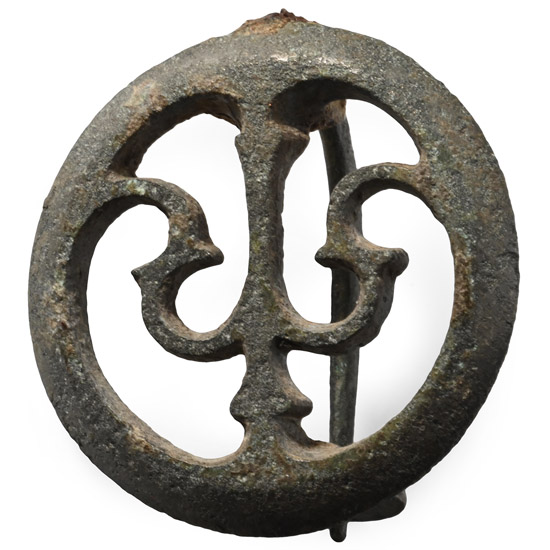
Roman Bronze Military Plate Brooch
2nd-3rd century A.D.Sold for (Inc. bp): £124
With an openwork body formed of volute scrolls, a pin and a catchplate to the reverse. 14 grams, 35 mm
From the private coin collection of a West London, UK, gentleman, formed since the mid 1980s. -
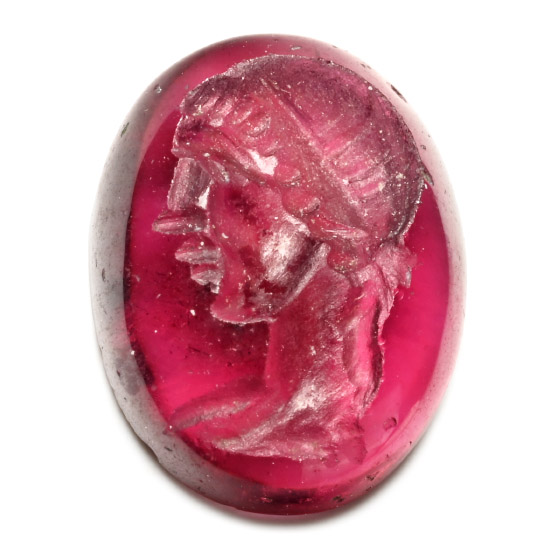
Roman Garnet Gemstone with Bearded Portrait
2nd-3rd century A.D.Sold for (Inc. bp): £72
Plano-convex type with incuse design of a profile bust with wreath to the brow and luxuriant beard; supplied with a museum-quality impression. 0.36 grams, 9 mm
From the private collection of a European gentleman (1942-2024), formed since the 1970s. -
.jpg)
Roman Imperial Silver Ring with Carnelian Gemstone with Gryllos
2nd century A.D.Estimate: £700 - 900 (+bp*)
Opening Bid: £333
Comprising a D-section hoop expanding at the shoulders, set with an intaglio with a composite animal figure (gryllos) advancing on a baseline, wearing a bridled horse protome with a twig in its mouth, a silen's mask on the breast, the tail formed as a ram's head with a twig in its mouth, and the legs of a cockerel. 8.83 grams, 22.17 mm overall, 16.02 x 13.65 mm internal diameter (approximate size British H 1/2, USA 4, Europe 6.81, Japan 6)
UK private collection, acquired on the English market in the 2000s.
