
Loading, please wait...
LOT 0674
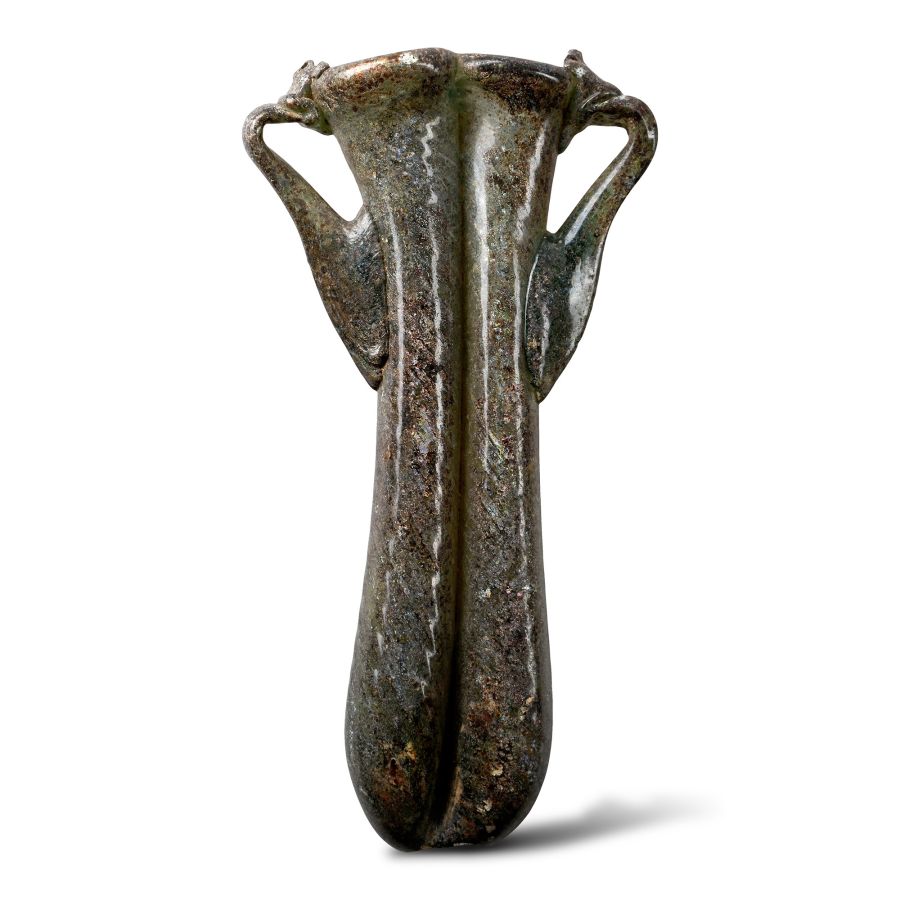
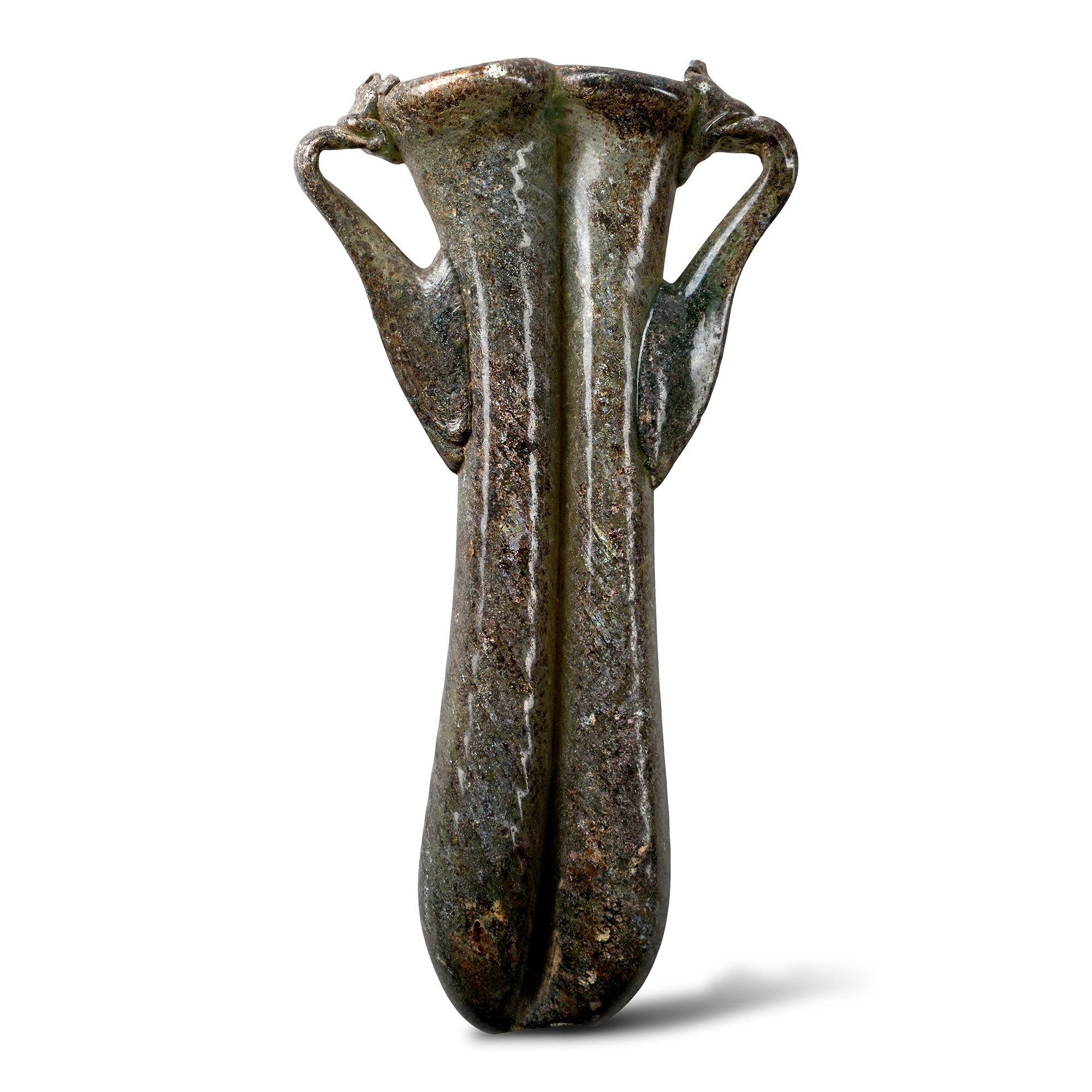
Roman Glass Double Unguentarium
4TH CENTURY A.D.
4 5/8 in. (46.6 grams, 11.7 cm).
Comprising two conjoined tapering tubular cells, with applied handles at the shoulder.
ProvenancePrivate collection, 1990s-early 2000s.
CONDITIONTimeLine Auctions follows a vetting process to ensure the authenticity and legality of all items, reinforcing our commitment to integrity and responsible trading. Each antiquity, antique, and coin lot undergoes thorough examination by a vetting committee of at least ten external specialists, professional trade association members, scientists, and archaeologists: Our Vetting Process
AUCTIONS:
TimeLine is a leading auction house specialising in antiquities, ancient art, collectables, natural history, coins, medals, and books. Our auctions offer museums, collectors, historians, and enthusiasts the opportunity to acquire unique and historically significant pieces.
-
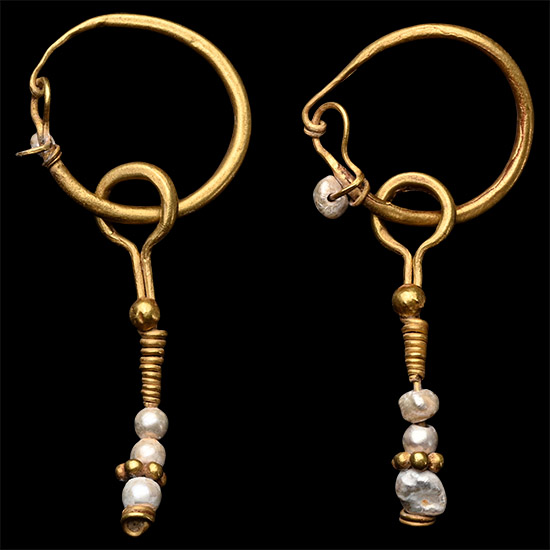
Roman Gold Earrings with Pearls
2nd-3rd century A.D.Sold for (Inc. bp): £1,300
Matched pair, each comprising a tubular shank with hook-and-eye closure, free-running dangle with pearl bead and granule cluster below. 3.94 grams total, 50 mm each
Private collection, 1990s-early 2000s. with Gorny and Mosch, Munich, 14 December 2010, no.160. Accompanied by copies of the Gorny and Mosch catalogue pages. -
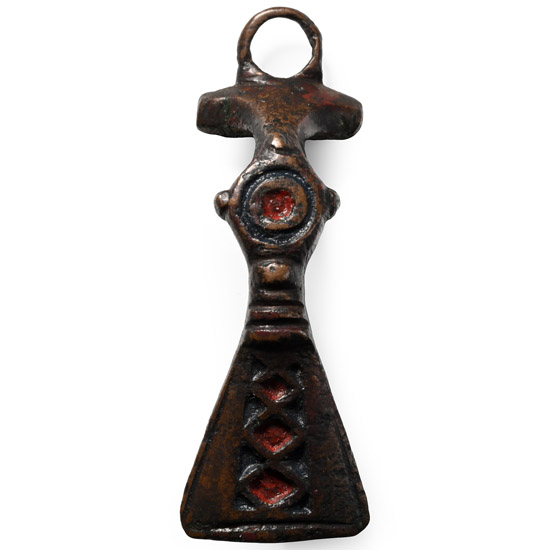
Roman Enamelled Bronze Fantail Bow Brooch
1st century A.D.Sold for (Inc. bp): £182
Comprising a T-shaped headplate with ring above, deep bow with incuse ring-and-dot motif to the centre and four surrounding pellets, transverse ribbing developing to a trapezoidal foot with incuse lattice motif; traces of enamel fill to the bow and foot; catchplate to reverse. 7.86 grams, 49 mm
From the private collection of Mr Brian Edwards, New Malden, Surrey, UK, formed from the late 1970s-early 1980s; thence by descent. Accompanied by the original collector's data sheet(s) with reference no.A75. -
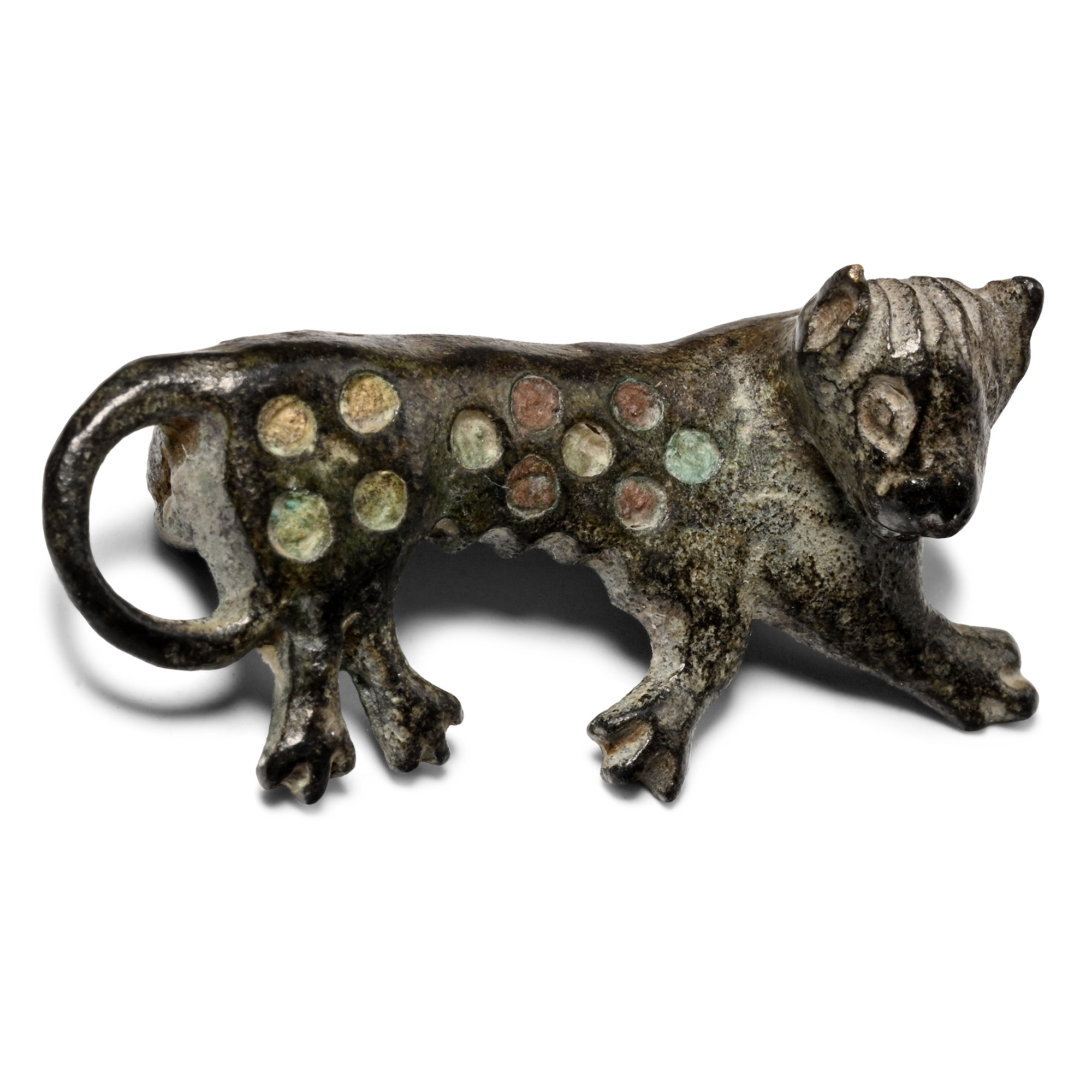
Roman Bronze Panther Plate Brooch
2nd century A.D.Sold for (Inc. bp): £390
Formed as a reclining panther with legs extended and tail recuved to the rump, head raised and modelled in the round; enamelled roundel cells to the flanks; hinged pin and catch to the reverse. 10.36 grams, 36 mm
Acquired on the UK art market. Property of a Lancashire, UK, collector. Accompanied by a certificate of authenticity from Clare Morris, dated 26 February 2012.
