
Loading, please wait...
LOT 0628
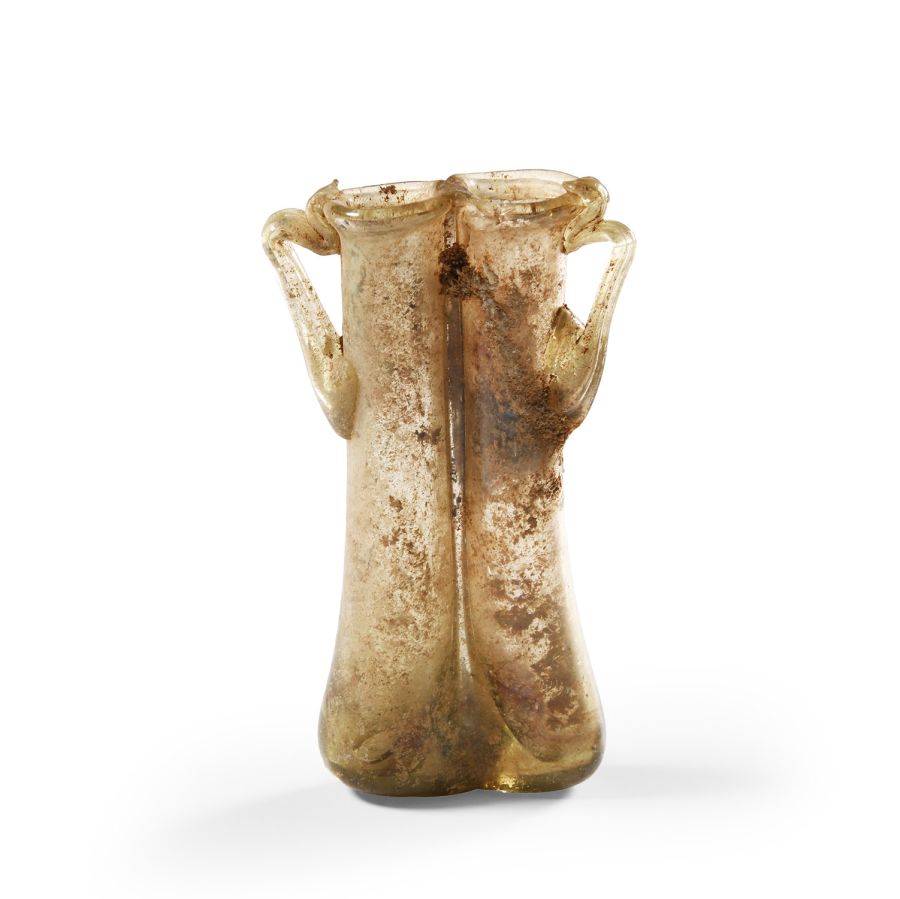
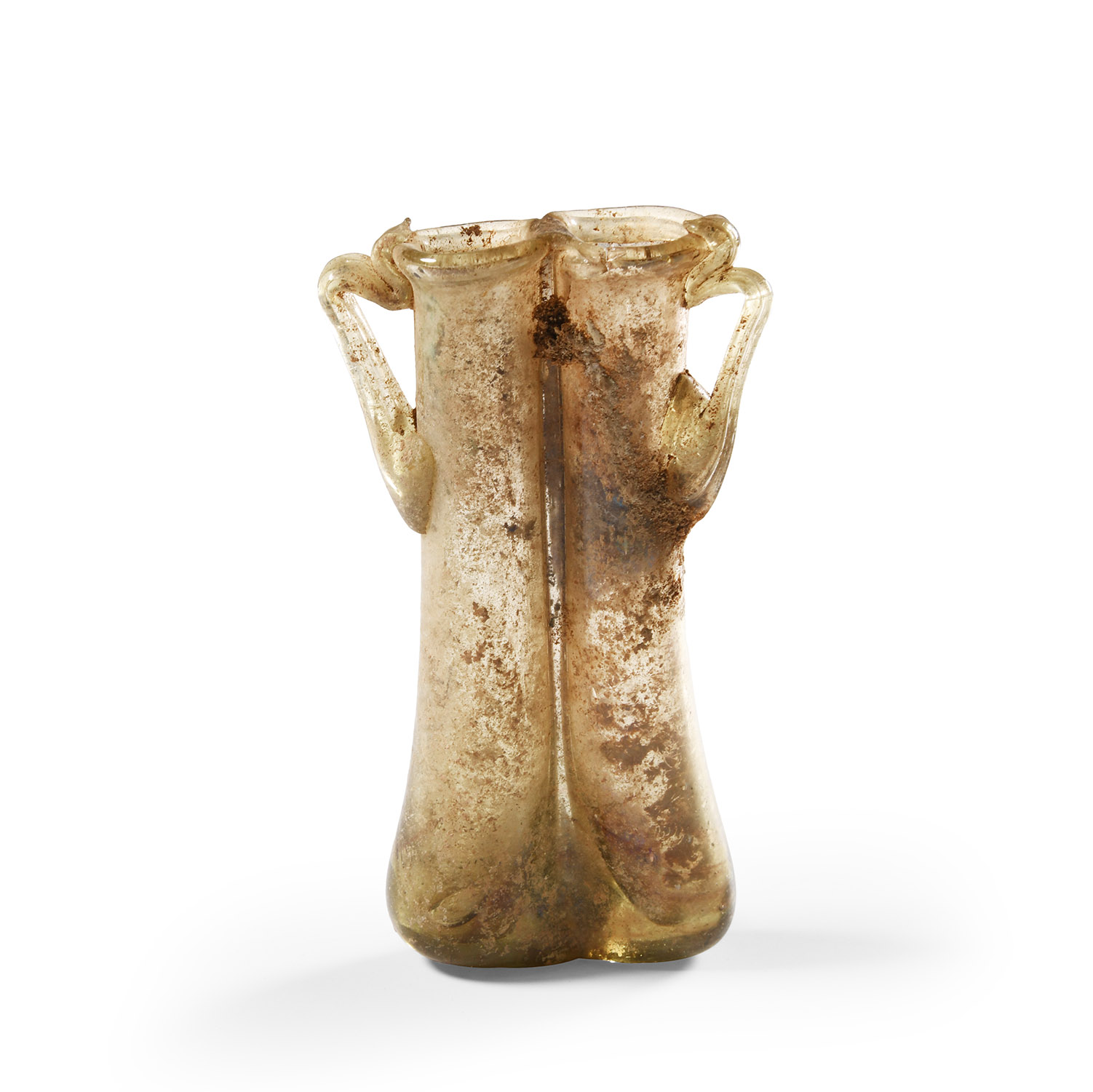
Roman Glass Double Unguentarium with Handles
4TH CENTURY A.D.
4 in. (57 grams, 10.2 cm).
Pale green with two flared tubes with everted rims, triangular-shaped lateral handles.
ProvenanceAcquired 1980-2015.
Ex Abelita family collection.
Cf. Whitehouse, D. Roman Glass in the Corning Museum of Glass, vol.2, New York, 2001, items 742, 744.
CONDITIONTimeLine Auctions follows a vetting process to ensure the authenticity and legality of all items, reinforcing our commitment to integrity and responsible trading. Each antiquity, antique, and coin lot undergoes thorough examination by a vetting committee of at least ten external specialists, professional trade association members, scientists, and archaeologists: Our Vetting Process
AUCTIONS:
TimeLine is a leading auction house specialising in antiquities, ancient art, collectables, natural history, coins, medals, and books. Our auctions offer museums, collectors, historians, and enthusiasts the opportunity to acquire unique and historically significant pieces.
LOT 0628
Roman Glass Double Unguentarium with Handles
Estimate £300 - 400€350 - 460 (for guidance only)$410 - 540 (for guidance only)
-
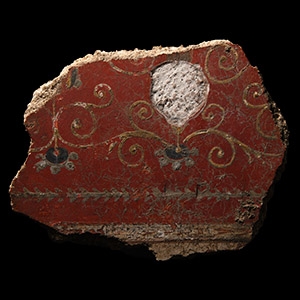
Roman Polychrome Wall Painting Fragment
Mid 1st century A.D.Estimate: £4,000 - 6,000 (+bp*)
Opening Bid: £2,000
Decorated with a frieze of foliage and volutes from which a blossom is springing, the image framed by a green band of arrows, an ochre and cream line border below; background painted in magnificent rosso pompeiano (Pompeian red); mounted on a custom-made display stand. 1.26 kg total, 17 cm high including stand
From a European collection formed in the 19th century or earlier, based on the custom-made tooled leather box similar to another fragment kept in a case of similar manufacture with a label reading 'Fragment de Pompéi provenant de la vente Préat 1868' sold at Sotheby's New York, 12 December 2013, lot 84. Mitsukoshi department store, Nihonbashi, Tokyo, by 1974. Japanese art market, 1974-1978. Accompanied by an academic report by Dr Raffaele D'Amato. This lot has been checked against the Interpol Database of stolen works of art and is accompanied by search certificate number no 11826-207724.
Our painted stucco was probably part of a decorative frame, like that visible in the cubiculum of the Villa of P. Fannius Sinistor, in Boscoreale, which is earlier but represents a model of continuity through the decoration of the Roman walls. This filling of the tablinum and other rooms with ornamental plant-type columns and panels decorated with leaves and plant scrolls is found in Pompeii in certain houses, such as that of Caecilius Jucundus. -
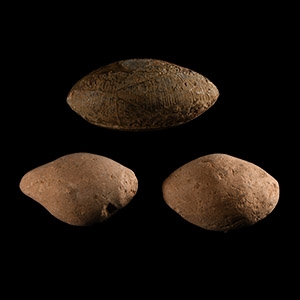
Roman Baked Clay Slingshot Group
1st century A.D.Sold for (Inc. bp): £572
Comprising three lentoid-section glandes. 167 grams total, 50-65 mm
Ex Simmons Gallery, London E11, UK, in the 1990s. From a North London collection.
The trio finds parallels with examples unearthed at Ham Hill, Somerset, UK. The sling (funda) with its lead missiles (plumbea pondera) was used by special funditores, illustrated on Trajan’s Column where they are simply dressed in broad tunics with no armour, but carry a shield. Their cloak, or sagulum acted as an ammunition bag. The effectiveness of the slingers was unquestionable and much appreciated, especially against elephants. Celsus, writing towards the end of the 2nd century A.D., described how a slingshot wound was more dangerous and harder to treat than one inflicted by an arrow. -
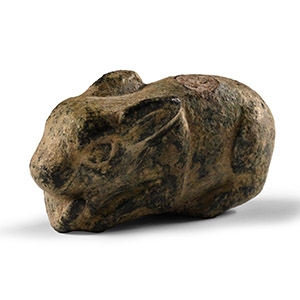
Roman Bronze Crouching Rabbit Statuette
1st-4th century A.D.Estimate: £200 - 300 (+bp*)
Opening Bid: £111
Modelled in the round with naturalistic detailing, its front paws holding onto a food item. 39.9 grams, 34 mm
‘The Ancient Menagerie Collection’ formerly the property of a Cambridgeshire lady, collected since the 1990s and acquired from auctions and dealers throughout Europe and the USA, now ex London collection.
