
Loading, please wait...

LOT 0138
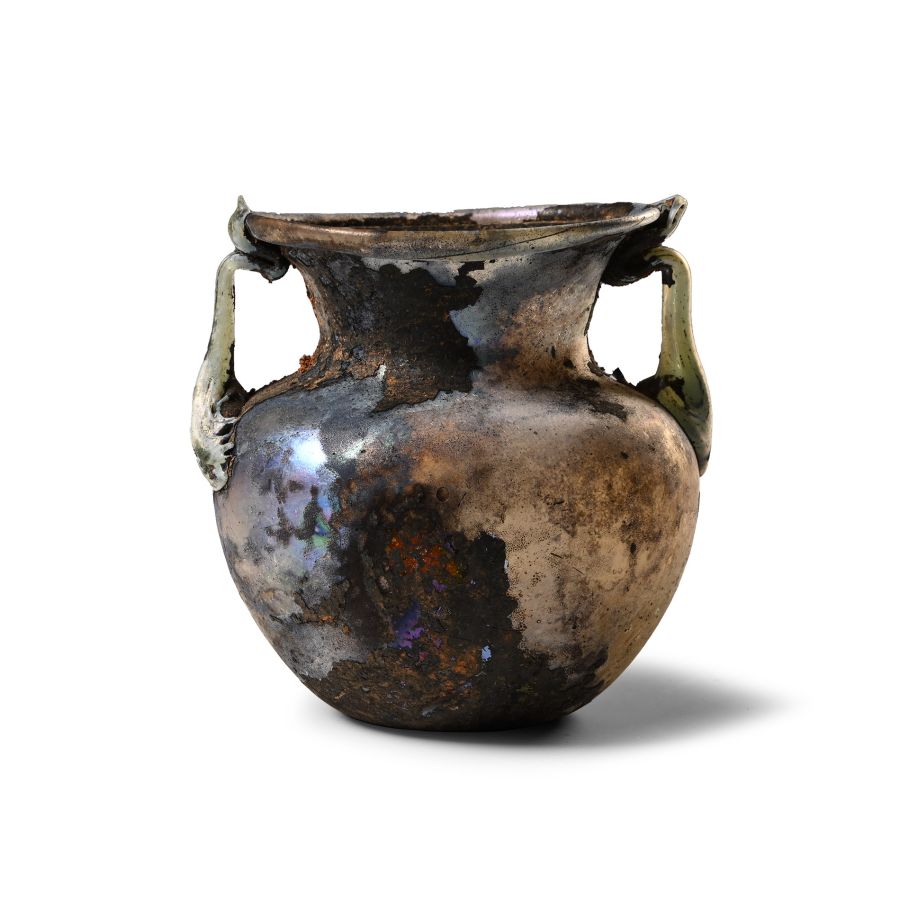
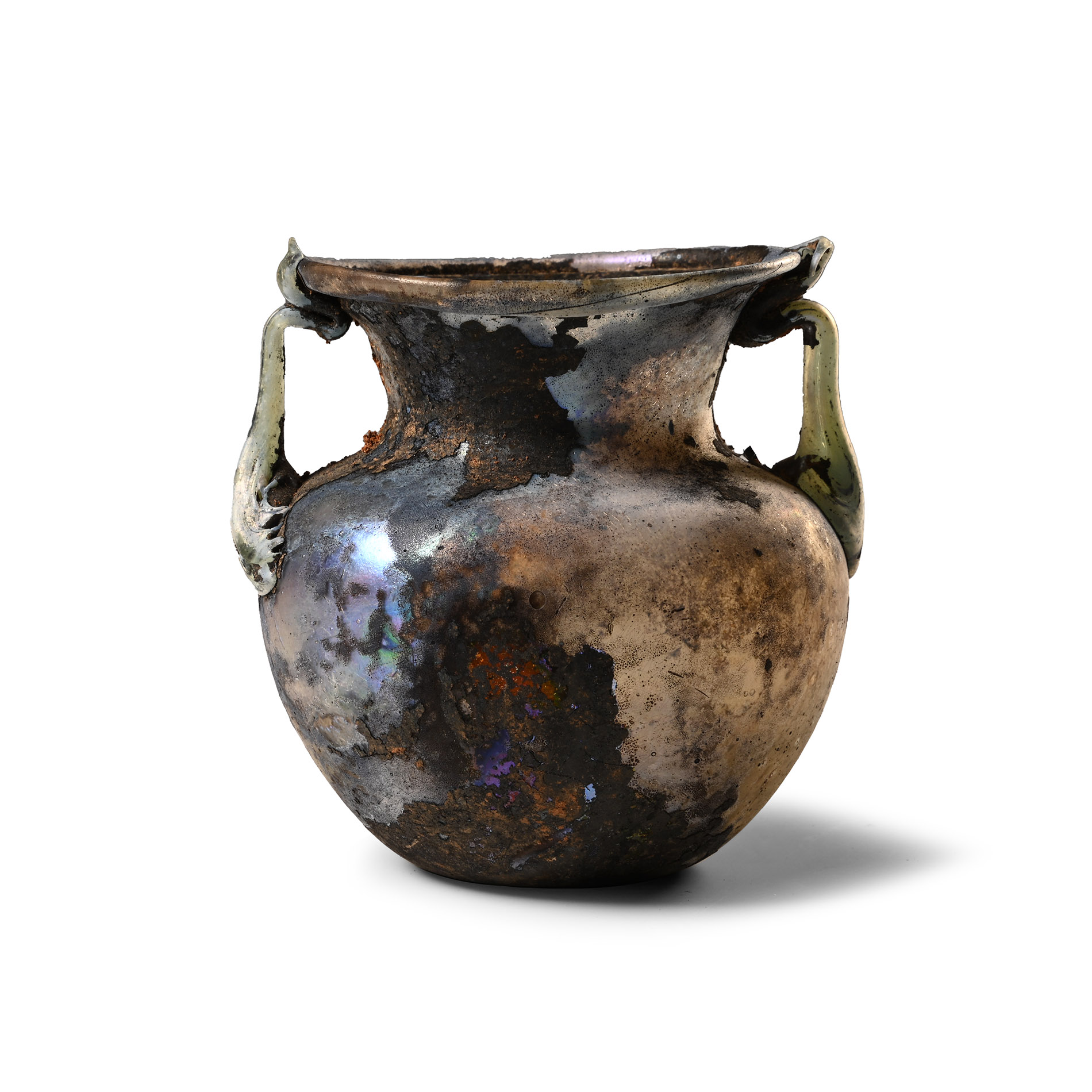
Roman Glass Double-Handled Iridescent Flask
4TH CENTURY A.D.
2 7/8 in. (47 grams, 72 mm).
With squat bulbous body, dimple base, flared trumpet neck; applied trails to the shoulder, applied strap handles to the shoulders.
ProvenanceFrom an important London, UK, collection, 1970-1990s.
LiteratureCf. Whitehouse, D., Roman Glass in the Corning Museum of Glass, vol.1, New York, 1997, item 690, for type.
CONDITIONTimeLine Auctions follows a vetting process to ensure the authenticity and legality of all items, reinforcing our commitment to integrity and responsible trading. Each antiquity, antique, and coin lot undergoes thorough examination by a vetting committee of at least ten external specialists, professional trade association members, scientists, and archaeologists: Our Vetting Process
AUCTIONS:
TimeLine is a leading auction house specialising in antiquities, ancient art, collectables, natural history, coins, medals, and books. Our auctions offer museums, collectors, historians, and enthusiasts the opportunity to acquire unique and historically significant pieces.
LOT 0138
Roman Glass Double-Handled Iridescent Flask
Estimate £650 - 750€750 - 870 (for guidance only)$880 - 1,010 (for guidance only)
-
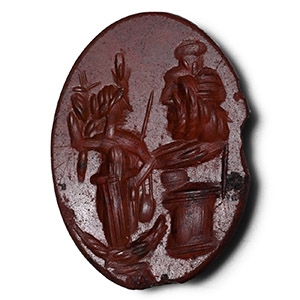
Romano-Egyptian Stone Intaglio Depicting Serapis and Isis
2nd-3rd century A.D.Sold for (Inc. bp): £598
Ellipsoid jasper cloison with intaglio bust of Serapis on a pedestal, modius to the head; Isis standing in a crescent boat. 0.84 grams, 16 mm
Acquired on the German art market, 1989-1995. with The Museum Gallery, 19 Bury Place, London, WC1, UK, 1998-2003. Property of a London based academic, 2003-present. -
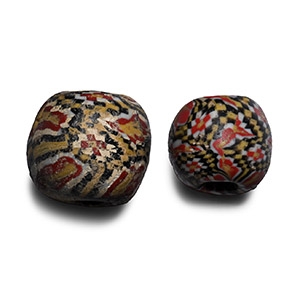
Roman Mosaic Glass Beads
1st-3rd century A.D.Estimate: £700 - 900 (+bp*)
Opening Bid: £280
Each barrel-shaped with millefiori patterns in red, white, blue and yellow. 6.36 grams total, 12-14 mm
From the private collection of Mr K.A., acquired in the 1980s. -
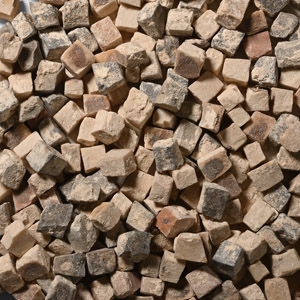
Roman Mosaic Stone Tesserae Group
1st-4th century A.D.Sold for (Inc. bp): £182
A mixed group of two hundred and fifty single tesserae of various colours and sizes, mostly cuboid. 349 grams total, 8-11 mm
From a collection acquired on the UK art market from various auction houses and collections mostly before 2000. From an important Cambridgeshire estate; thence by descent.
