
Loading, please wait...
LOT 0983
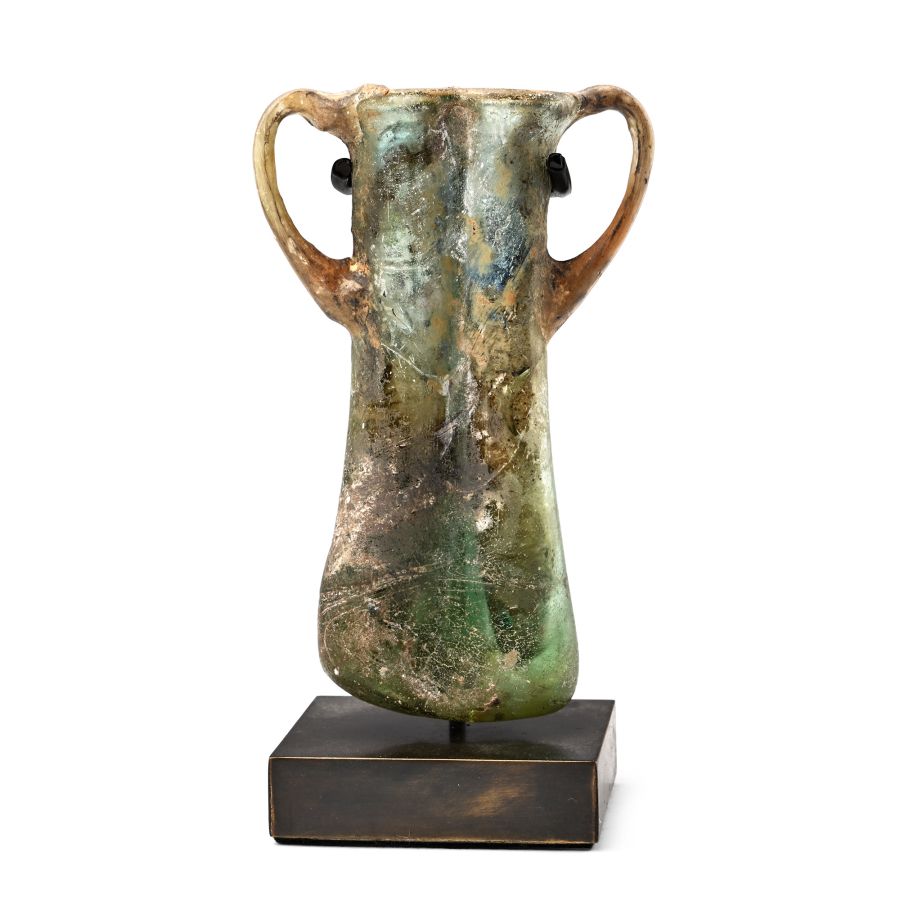
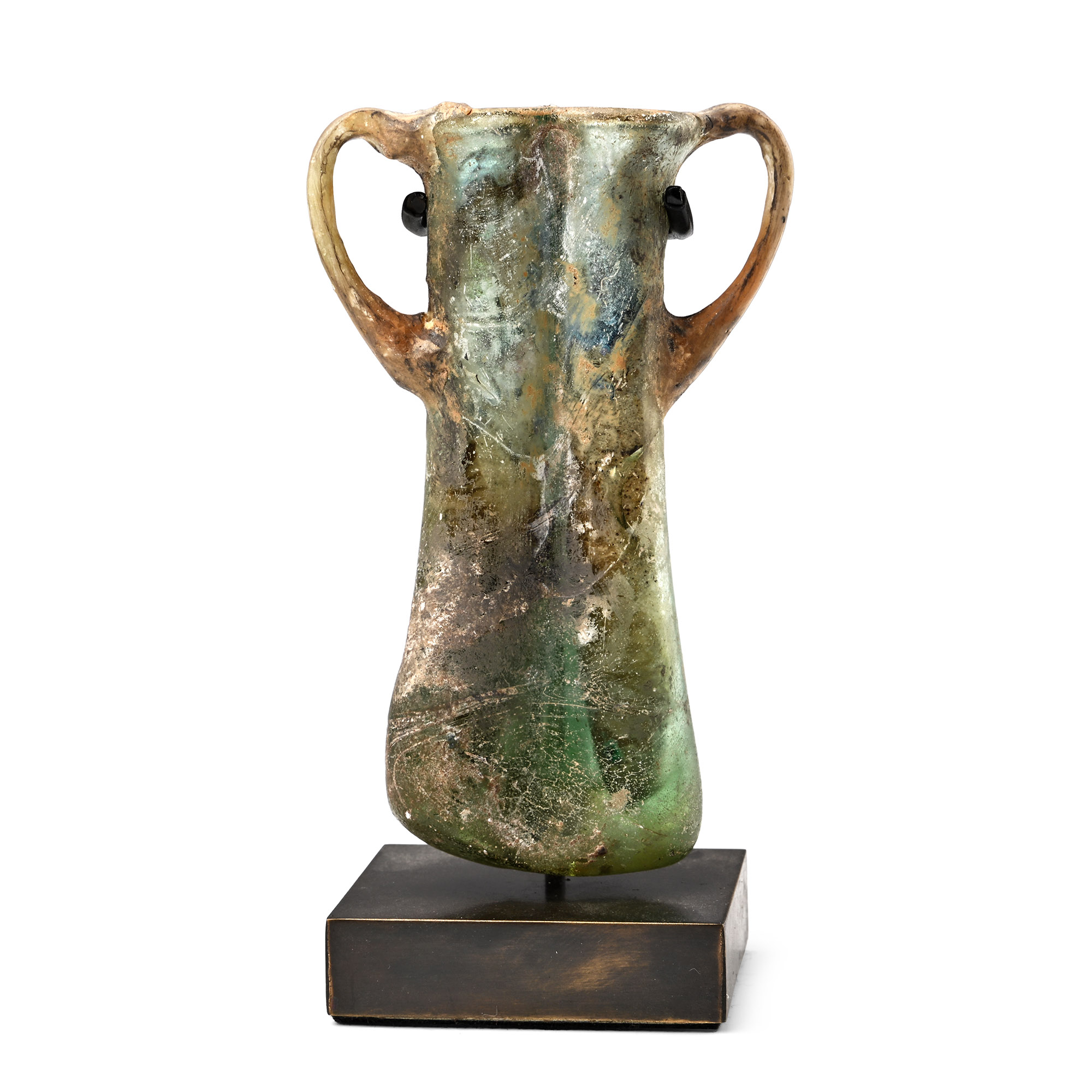
Roman Glass Double Balsamarium
CIRCA 4TH CENTURY A.D.
4 1/4 in. (85 grams, 10.9 cm).
Formed as a pair of conjoined tubes with slightly flared tops and thickened rims; applied handles at the shoulders joined to the rim; glass with areas of iridescence; mounted on a custom-made stand.
ProvenanceFrom a London, UK, collection of glass, 1970-2000s.
LiteratureCf. Lightfoot, C.S., Ancient Glass in National Museums Scotland, Edinburgh, 2007, item 460, for type.
CONDITIONTimeLine Auctions follows a vetting process to ensure the authenticity and legality of all items, reinforcing our commitment to integrity and responsible trading. Each antiquity, antique, and coin lot undergoes thorough examination by a vetting committee of at least ten external specialists, professional trade association members, scientists, and archaeologists: Our Vetting Process
AUCTIONS:
TimeLine is a leading auction house specialising in antiquities, ancient art, collectables, natural history, coins, medals, and books. Our auctions offer museums, collectors, historians, and enthusiasts the opportunity to acquire unique and historically significant pieces.
LOT 0983
Roman Glass Double Balsamarium
Estimate £300 - 400€350 - 460 (for guidance only)$410 - 540 (for guidance only)
-
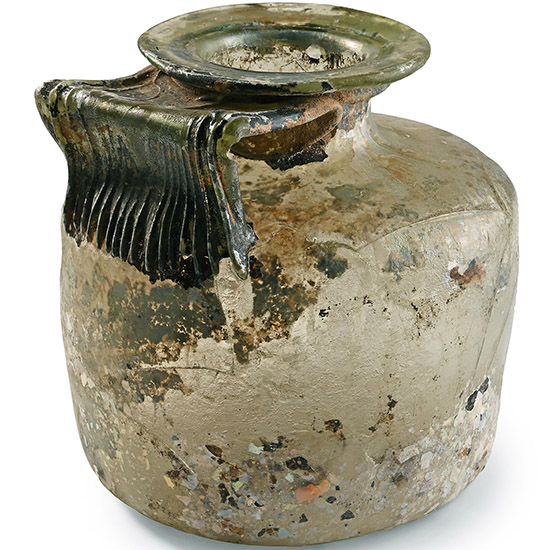
Large Roman Glass Jug with Iridescence
1st-2nd century A.D.Sold for (Inc. bp): £351
With a dimple base, cylindrical body, deep shoulder, everted flange rim with rolled edge, broad fluted strap handle. 435 grams, 15.8 cm
From a London, UK, collection, 1980-1990s. -
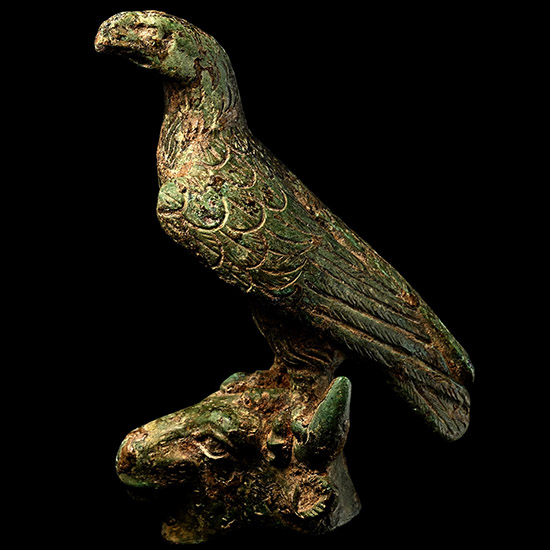
Roman Bronze Eagle on Bull's Head
2nd-3rd century A.D.Sold for (Inc. bp): £1,170
Modelled in the round figure of a bull's head (bucranium) with an eagle with folded wings perched on the horns; hollow to the underside. 129 grams, 70 mm
Acquired by a Swiss family in the mid-1980s to late 1990s, thence by descent. Private collection, Switzerland, since the late 1990s. -
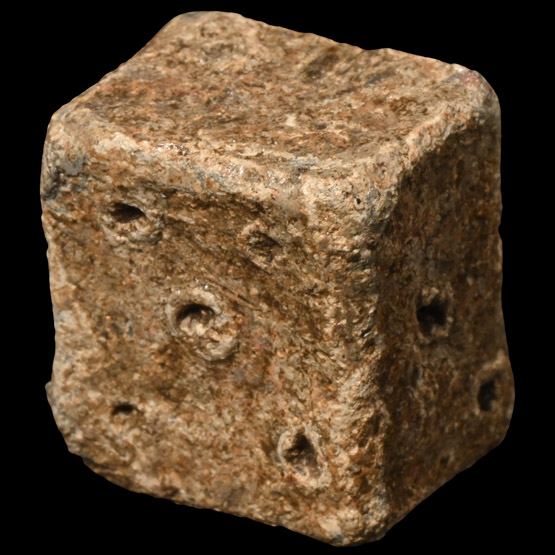
Roman Lead Gaming Dice
1st-4th century A.D.Sold for (Inc. bp): £78
Roughly cuboid in form with traces of impressed dot markings. 44.5 grams, 20 mm
From the private collection of Colin Narbeth, UK, 1990s.
