
Loading, please wait...

LOT 0645
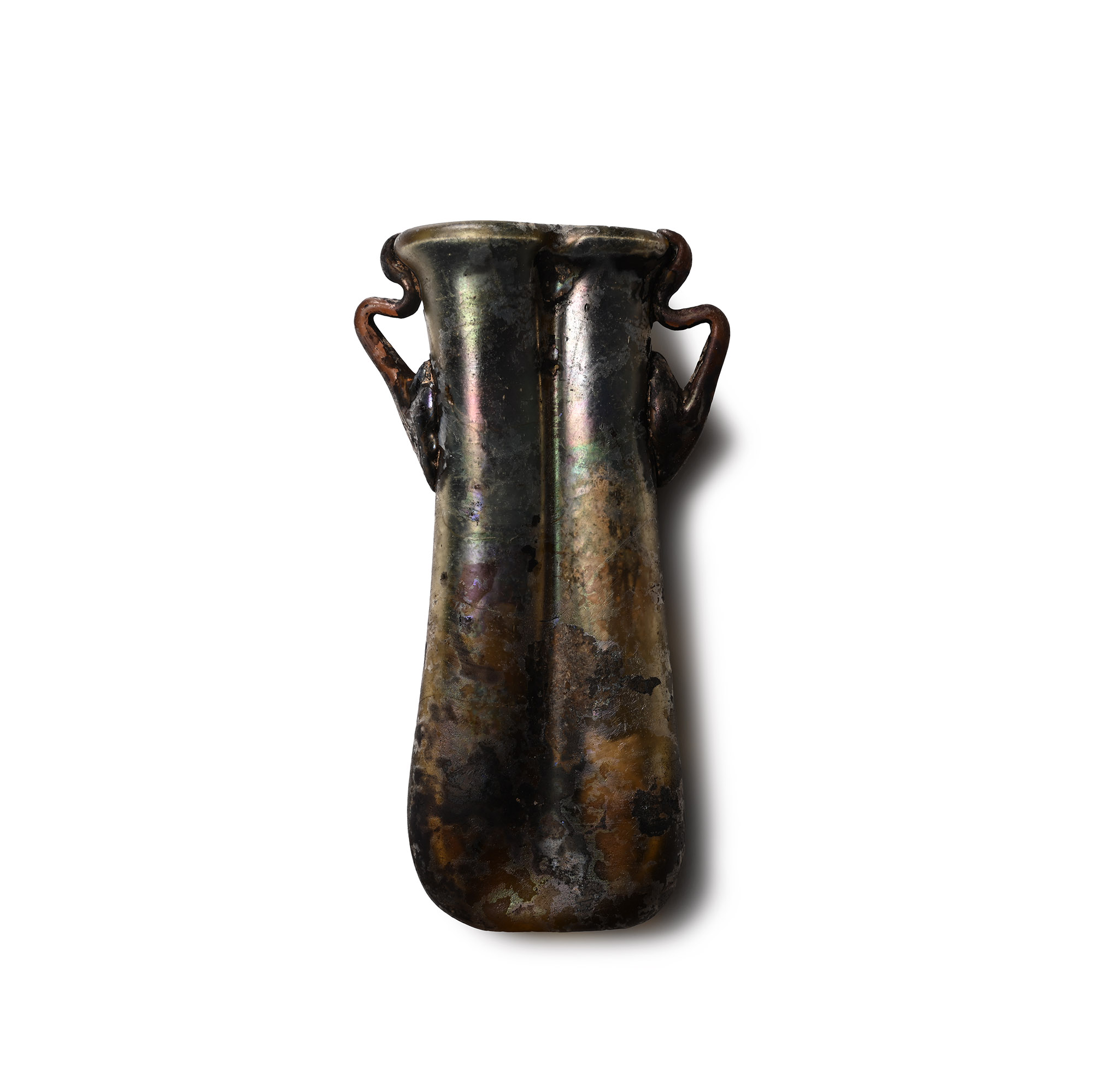
Roman Glass Double Balsamarium
CIRCA 4TH CENTURY A.D.
4 in. (67 grams, 10.3 cm).
A dark amber double balsamarium formed as a pair of conjoined tubes with slightly flared tops with thickened rims; applied handles at the shoulders joined to the rim; glass with areas of iridescence and dark crust, a few small earthy deposits.
ProvenanceFrom a UK private collection.
Ex London, UK, gallery.
Ex TimesAncient, Bristol, UK.
Accompanied by a copy of a previous catalogue entry.
This lot is accompanied by an illustrated lot declaration signed by the Head of the Antiquities Department, Dr Raffaele D’Amato.
Cf. Lightfoot, C.S., Ancient Glass in National Museums Scotland, Edinburgh, 2007, item 460, for type.
CONDITIONTimeLine Auctions follows a vetting process to ensure the authenticity and legality of all items, reinforcing our commitment to integrity and responsible trading. Each antiquity, antique, and coin lot undergoes thorough examination by a vetting committee of at least ten external specialists, professional trade association members, scientists, and archaeologists: Our Vetting Process
AUCTIONS:
TimeLine is a leading auction house specialising in antiquities, ancient art, collectables, natural history, coins, medals, and books. Our auctions offer museums, collectors, historians, and enthusiasts the opportunity to acquire unique and historically significant pieces.
-
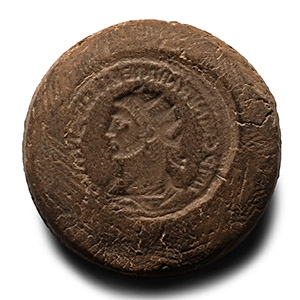
Roman Bifacial Terracotta Forger's Coin Mould
3rd century A.D.Sold for (Inc. bp): £208
Discoid in plan, one side with profile bust of an emperor wearing a radiate crown, legend surrounding; the reverse with a standing female figure holding wreath towards emperor. 4.43 grams, 28 mm
From the collection of a gentleman, acquired on the London art market in the 1990s. This lot is accompanied by an illustrated lot declaration signed by the Head of the Antiquities Department, Dr Raffaele D’Amato. -
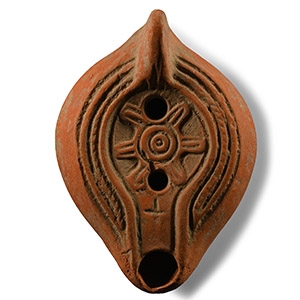
Roman Redware Oil Lamp with Christian Symbols
North Africa, circa 375-450 A.D.Sold for (Inc. bp): £124
Redware oil lamp of Hayes's type I, the discus decorated with a stylised blossom, a cross below, and grooved ridges around much of the perimeter; lug handle to rear, a low ring base to the underside with inscribed mark in the form of the Christogram symbol (Chi-Rho). 177 grams, 11.7 cm
From the private collection of H.L., Rhineland, Germany, since before 2000. Ex TimesAncient, Bristol, UK. Accompanied by a copy of a previous catalogue entry and old handwritten collector's ticket. This lot is accompanied by an illustrated lot declaration signed by the Head of the Antiquities Department, Dr Raffaele D’Amato. -
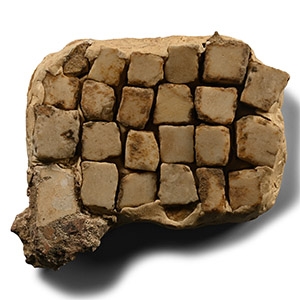
Roman Floor Mosaic Section
1st-4th century A.D.Sold for (Inc. bp): £52
Group of roughly cuboid tesserae in modern matrix; note to underside 'Roman tesserae from mosaic floor, Morgantina, Sicily'. 102 grams, 88 mm
From an old English collection with old identification label to veso. Ian Wilkinson collection, Nottinghamshire, UK, formed since 1985. This lot is accompanied by an illustrated lot declaration signed by the Head of the Antiquities Department, Dr Raffaele D’Amato.
