
Loading, please wait...
LOT 0648
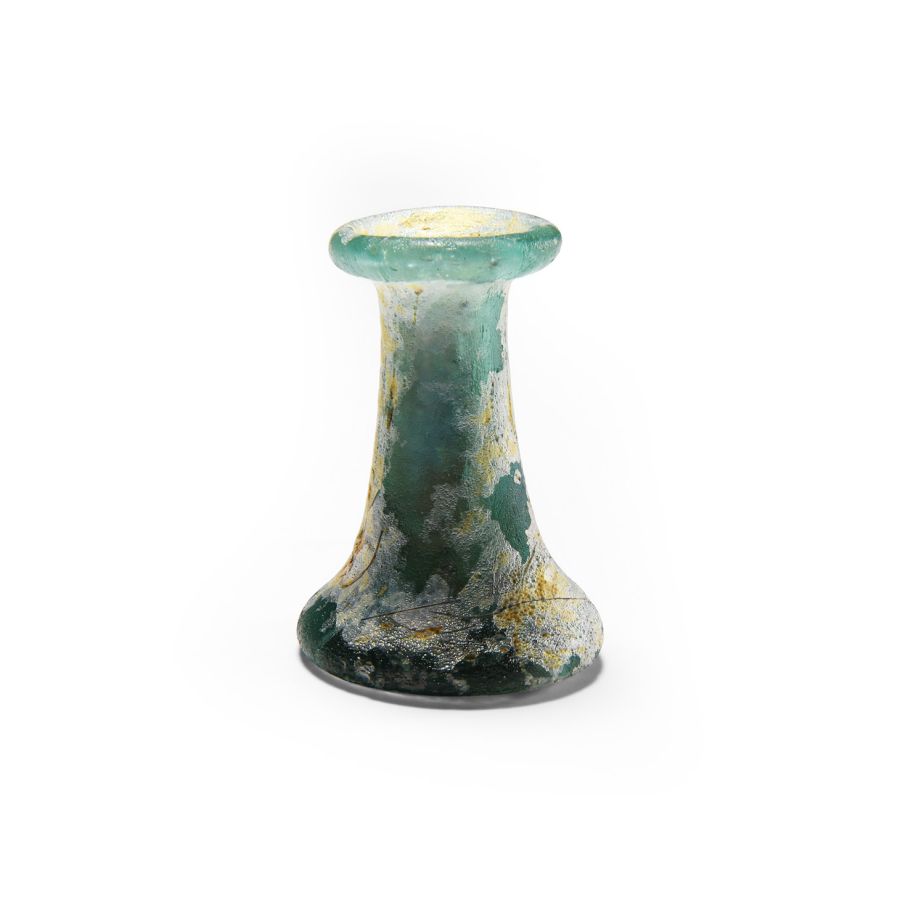
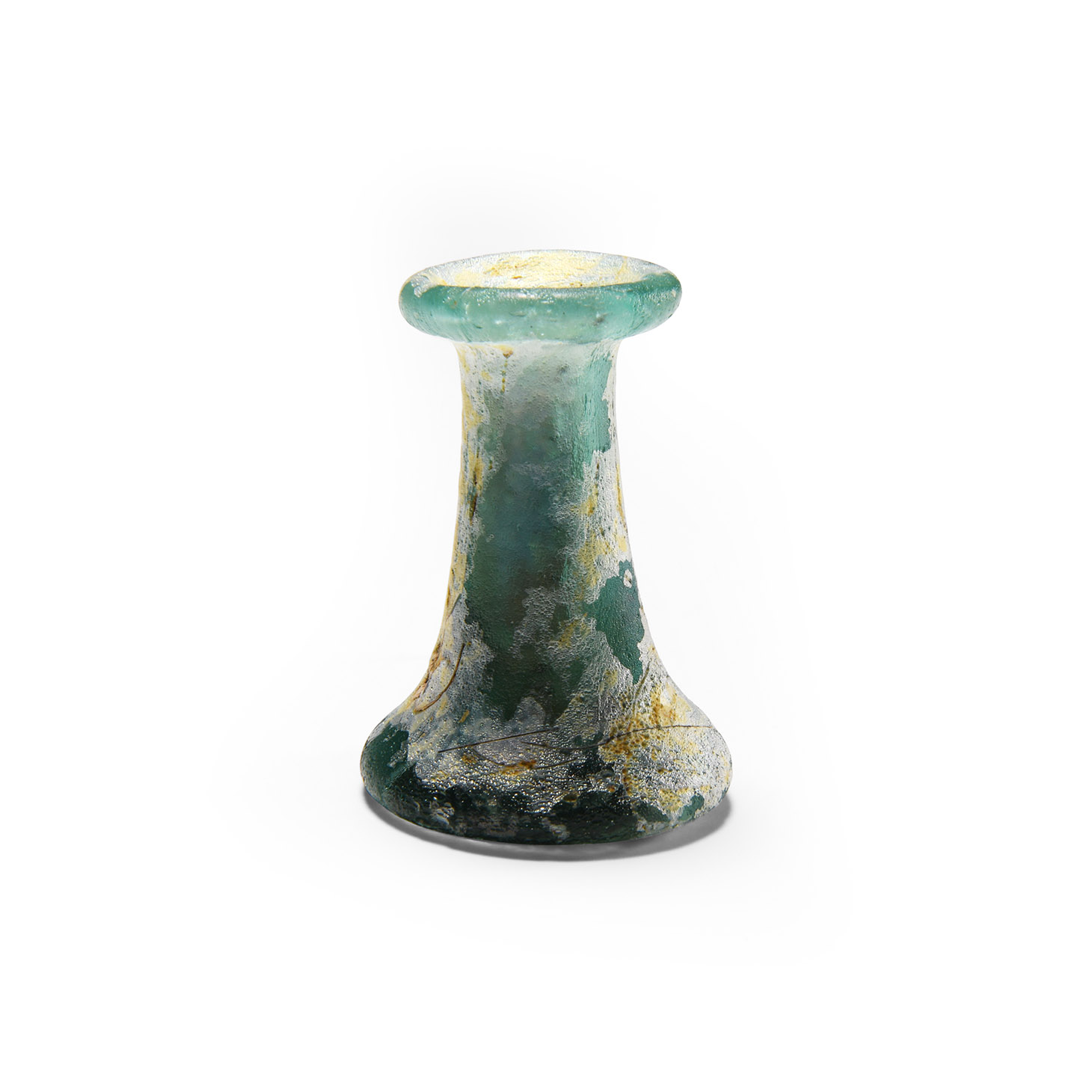
Roman Glass Cotton-Reel Type Bottle
1ST CENTURY A.D.
1 5/8 in. (20.2 grams, 42 mm).
A heavy squat unguentarium or perfume flask with tall, trumpet-style neck and everted rim.
ProvenanceAcquired 1980-2015.
Ex Abelita family collection.
TimeLine Auctions follows a vetting process to ensure the authenticity and legality of all items, reinforcing our commitment to integrity and responsible trading. Each antiquity, antique, and coin lot undergoes thorough examination by a vetting committee of at least ten external specialists, professional trade association members, scientists, and archaeologists: Our Vetting Process
AUCTIONS:
TimeLine is a leading auction house specialising in antiquities, ancient art, collectables, natural history, coins, medals, and books. Our auctions offer museums, collectors, historians, and enthusiasts the opportunity to acquire unique and historically significant pieces.
LOT 0648
Roman Glass Cotton-Reel Type Bottle
Estimate £100 - 140€120 - 160 (for guidance only)$140 - 190 (for guidance only)
-
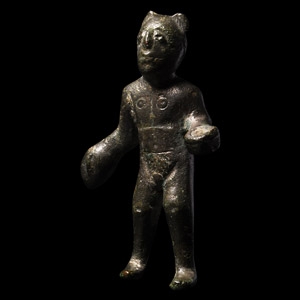
Gallo-Roman Bronze Mercury Statuette
1st-3rd century A.D.Sold for (Inc. bp): £390
Modelled standing nude with stylised anatomical detailing, stylised wings on the head, right hand shrouded beneath a flattened area with horizontal grooves holding the purse, the other clenched into a fist. 43 grams, 59 mm
Fine condition.
Acquired 1970s. Ex UK collection. Property of a Hampshire, UK gentleman.
Likely an ex-voto figure representing Mercury (Greek Hermes) holding a purse, clearly offered by someone to ask or give thanks for successful vows. -
.jpg)
Roman Bronze Musical Flute
Circa 2nd-3rd century A.D.Estimate: £4,000 - 6,000 (+bp*)
Opening Bid: £1,750
An extremely rare aulos or tibia with round-section body, six circular holes to one side and a D-shaped hole to the reverse. 87 grams, 23 cm
Fine condition. Extremely rare.
From the late Alison Barker collection, a retired London barrister; from her collection formed early 1960s-1990s. Accompanied by an academic report by Dr Raffaele D'Amato. This lot has been checked against the Interpol Database of stolen works of art and is accompanied by search certificate number no.11055-184396.
The flute was used for religious ceremonies and for entertainment. The pyrrhic, a war dance of Doric origin, was a rapid dance to the double flute, and made to resemble an action in battle. -
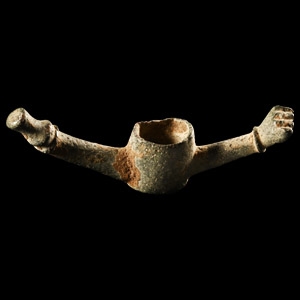
Roman Bronze Phallic and Fist Fitting
1st-4th century A.D.Estimate: £150 - 200 (+bp*)
Opening Bid: £75
The central circular socket flanked by a stylised phallus on one side and an extended arm with clenched fist on the other. 12.8 grams, 57 mm
From the collection of a Cambridge lady, 1990s.
