
Loading, please wait...
LOT 0774
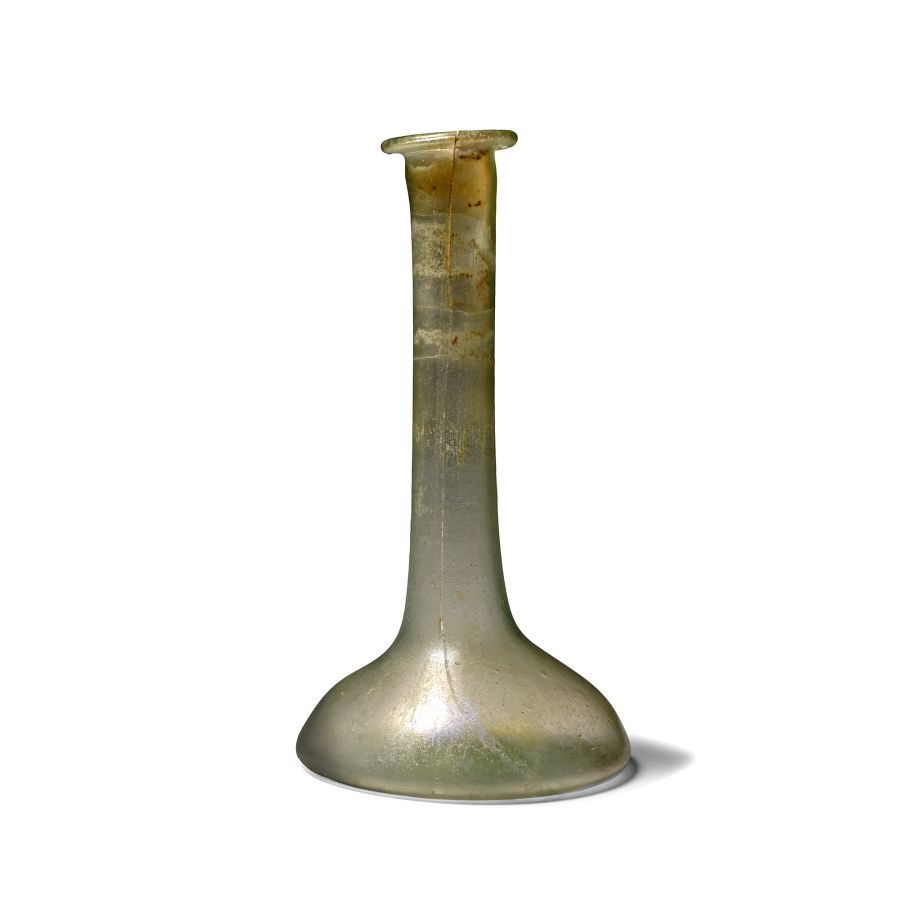
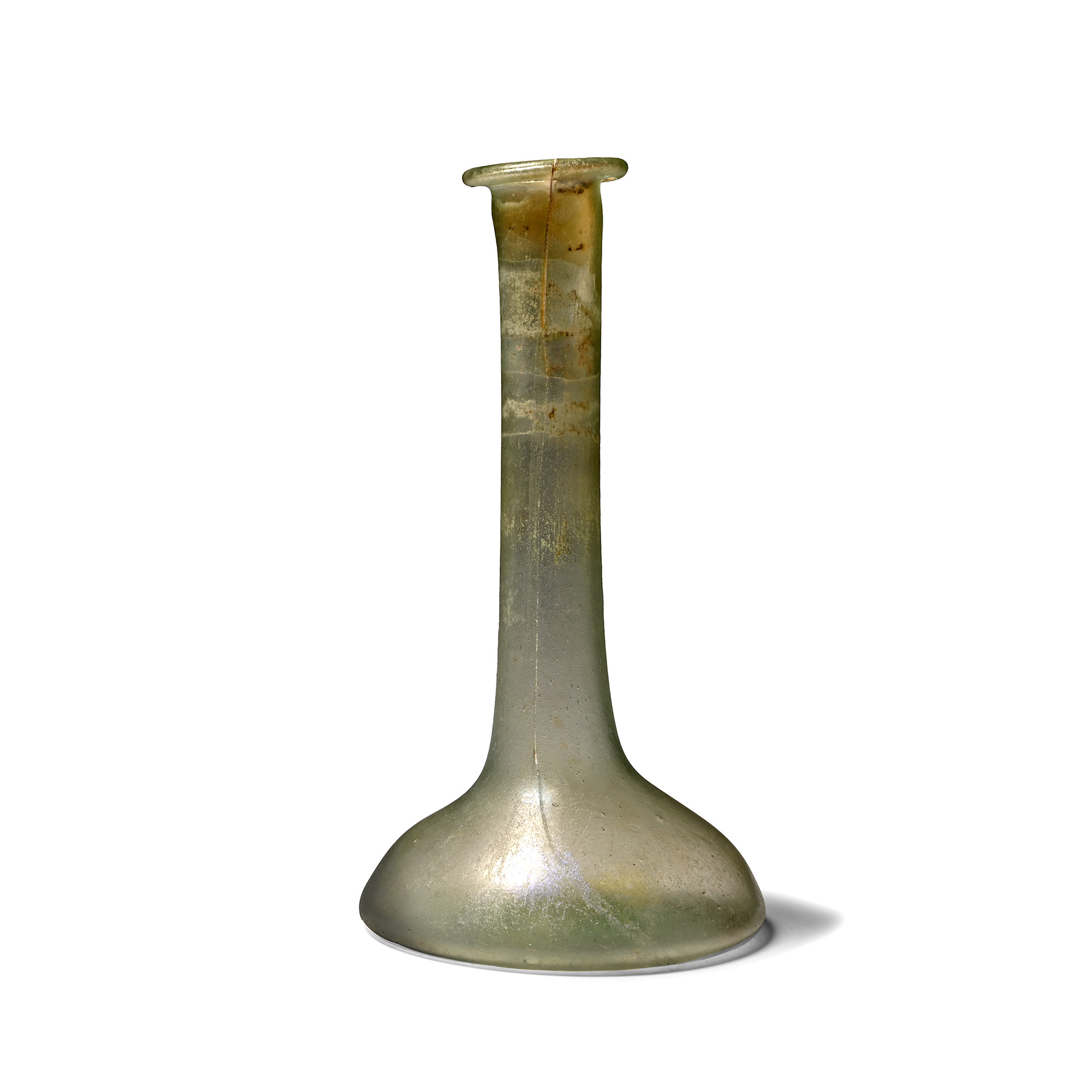
Roman Glass Candlestick Unguentarium
2ND-3RD CENTURY A.D.
5 3/8 in. (37.2 grams, 13.6 cm).
With low conical body and slightly convex wall, dimple base; tall cylindrical neck flaring to mouth with inward-folded rim; slightly iridescent surface.
ProvenanceEx P. Martens, The Netherlands, formed between 1974-1984.
Accompanied by a copy of an Art Loss Register certificate no.S00075481.
TimeLine Auctions follows a vetting process to ensure the authenticity and legality of all items, reinforcing our commitment to integrity and responsible trading. Each antiquity, antique, and coin lot undergoes thorough examination by a vetting committee of at least ten external specialists, professional trade association members, scientists, and archaeologists: Our Vetting Process
AUCTIONS:
TimeLine is a leading auction house specialising in antiquities, ancient art, collectables, natural history, coins, medals, and books. Our auctions offer museums, collectors, historians, and enthusiasts the opportunity to acquire unique and historically significant pieces.
LOT 0774
Roman Glass Candlestick Unguentarium
Estimate £250 - 350€290 - 410 (for guidance only)$340 - 470 (for guidance only)
-
.jpg)
Roman Nicolo Gemstone with Seated Satyr in Gold Ring
1st-2nd century A.D.Sold for (Inc. bp): £2,860
With incuse profile satyr seated on a rock, with cane in his lap; set into a later gold ring; supplied with a museum-quality impression. 22.47 grams, 25.33 mm overall, 20.60 mm internal diameter (approximate size British R, USA 8 1/2, Europe 18 3/4, Japan 18)
with Bertolami Fine Arts, London, Auction 267, no.109. Private collection, England. -
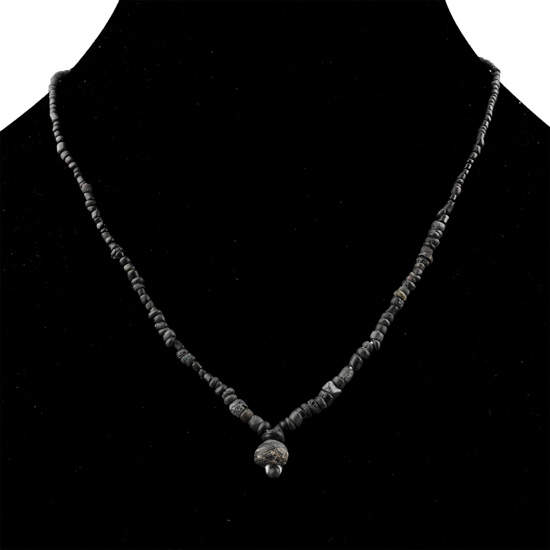
Roman and Other Glass Bead Necklace String
1st-4th century A.D. and laterSold for (Inc. bp): £65
Composed of graduated oblate and annular beads with other types, the central feature a large oblate bead; restrung. 6.88 grams, 45 cm
From London, UK, gallery collection, 1990s. -
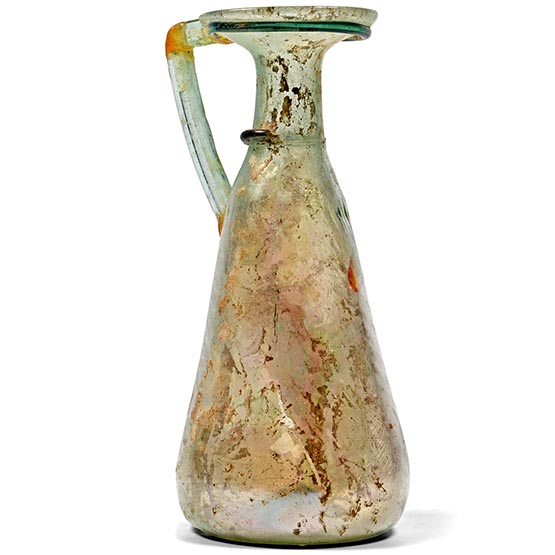
Roman Aqua Glass Jug
1st-4th century A.D.Sold for (Inc. bp): £494
With rounded conical body, upward sloping everted rim with sloping internal face; applied trail to upper and lower neck, angular handle; iridescent surfaces; repaired. 57 grams, 14 cm high
Acquired early 1990s. Ex private American collection; thence by descent. Private collection since 1998.
