
Loading, please wait...
_900x900.jpg "Roman Glass Cameo with a Julio-Claudian Prince, Possibly Drusus")
_200x200.jpg "Roman Glass Cameo with a Julio-Claudian Prince, Possibly Drusus")
.jpg "Roman Glass Cameo with a Julio-Claudian Prince, Possibly Drusus")
LOT 0087
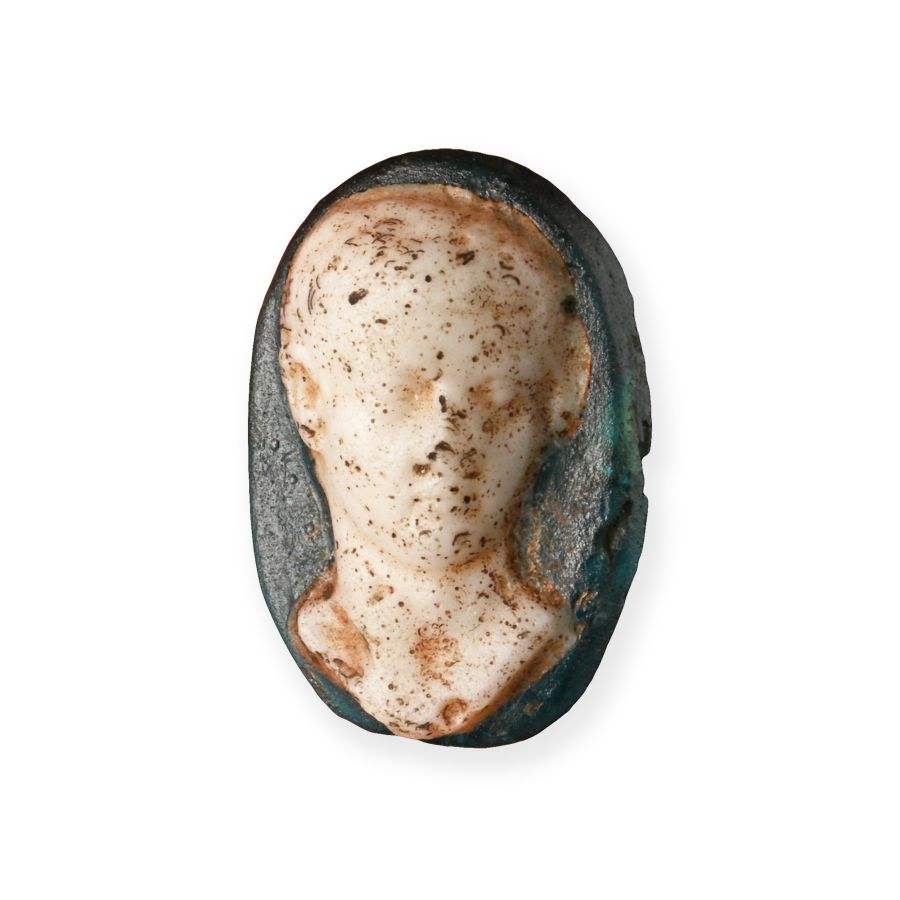
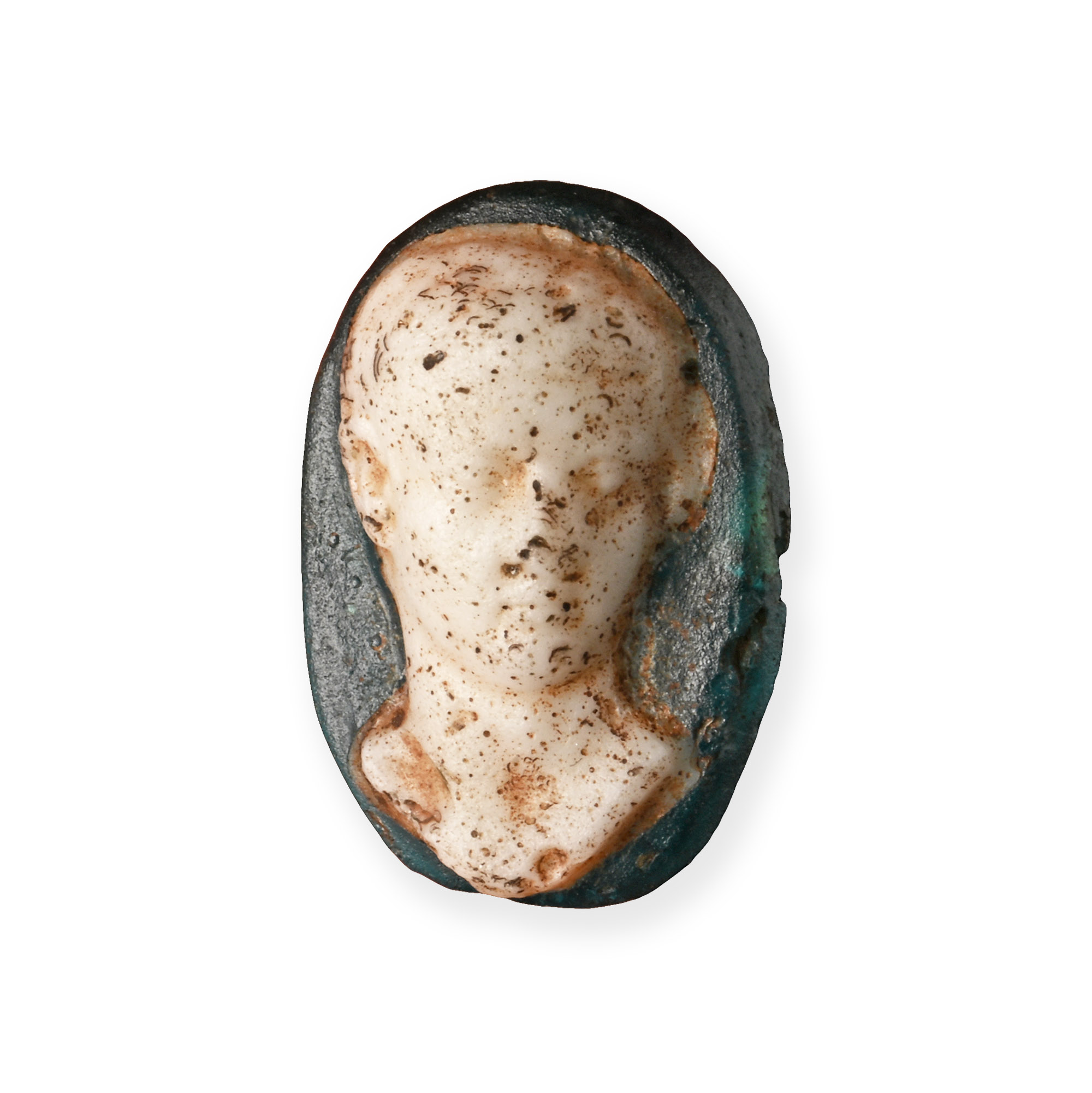
Roman Glass Cameo with a Julio-Claudian Prince, Possibly Drusus
1ST CENTURY A.D.
3/4 in. (1.6 grams, 18 mm).
Featuring a vibrant green-blue base with a white frontal bust of a young male with his head turned slightly to the right, big eyes and a small mouth.
ProvenanceUK private collection, acquired on the French art market in the 2000s.
LiteratureCf. similar portrait in Gołyźniak, P., Engraved Gems and Propaganda in the Roman Republic and under Augustus, Oxford, 2020, fig.981.
FootnotesAlthough the portrait is partially damaged, its style and composition are Augustan. Based on its resemblance to the portrait of Agrippa—though appearing more youthful—it could represent one of his sons, Gaius or Lucius Caesar.
CONDITIONTimeLine Auctions follows a vetting process to ensure the authenticity and legality of all items, reinforcing our commitment to integrity and responsible trading. Each antiquity, antique, and coin lot undergoes thorough examination by a vetting committee of at least ten external specialists, professional trade association members, scientists, and archaeologists: Our Vetting Process
AUCTIONS:
TimeLine is a leading auction house specialising in antiquities, ancient art, collectables, natural history, coins, medals, and books. Our auctions offer museums, collectors, historians, and enthusiasts the opportunity to acquire unique and historically significant pieces.
LOT 0087
Roman Glass Cameo with a Julio-Claudian Prince, Possibly Drusus
Sold for (Inc. bp): £650
-
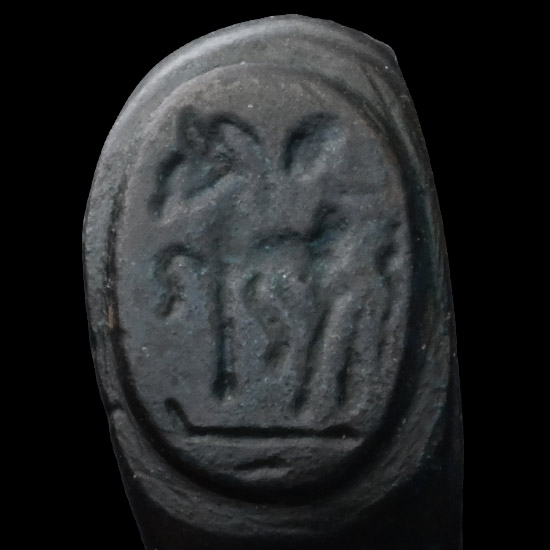
Roman Bronze Ring with Stepping Horse and Dioscourus
Circa 3rd century A.D.Sold for (Inc. bp): £72
Wide hoop expanding at the shoulders, oval bezel with a standing figure beside a stepping horse. 4.45 grams, 20.40 mm overall, 16.70 mm internal diameter (approximate size British K, USA 5 1/4, Europe 9.95, Japan 9)
From a UK collection formed in the 1980s. Property of an Essex, UK, gentleman. -
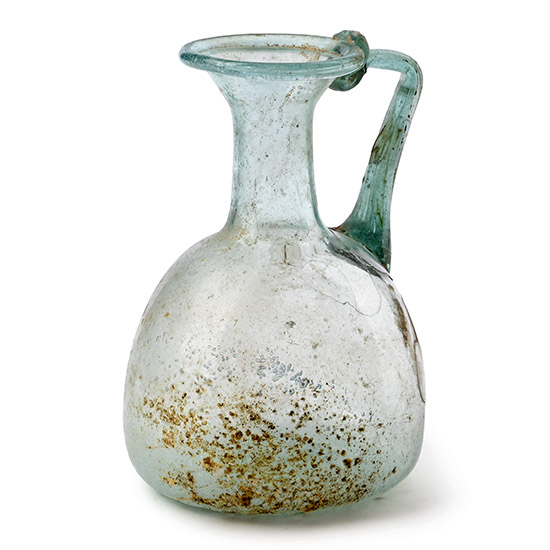
Roman Pale Green Glass Juglet
Circa 4th century A.D.Sold for (Inc. bp): £260
Bulbous body with dimple base, trumpet-shaped neck with rolled rim and a strap handle to the rear. 43.2 grams, 94 mm
From the collection of a late Norfolk, UK gentleman's collection, formed from the late 1960s-1970s. -
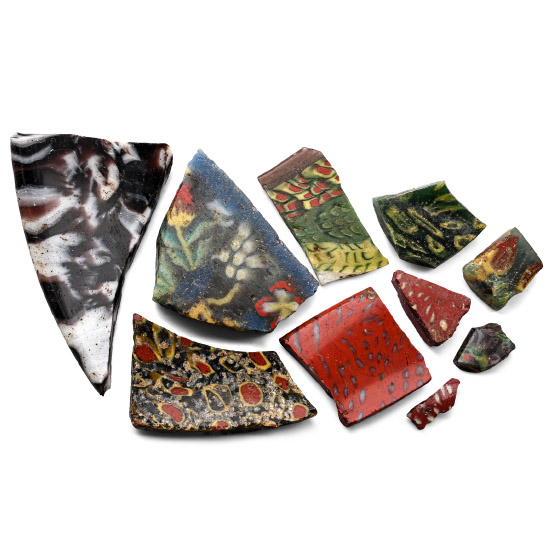
Roman Mosaic Glass Fragment Collection
1st-4th century A.D.Sold for (Inc. bp): £338
Comprising various polychrome fragments, one showing intricate flower details. 64.5 grams total, 15-66 mm
Acquired on the European art market.
