
Loading, please wait...
LOT 0829
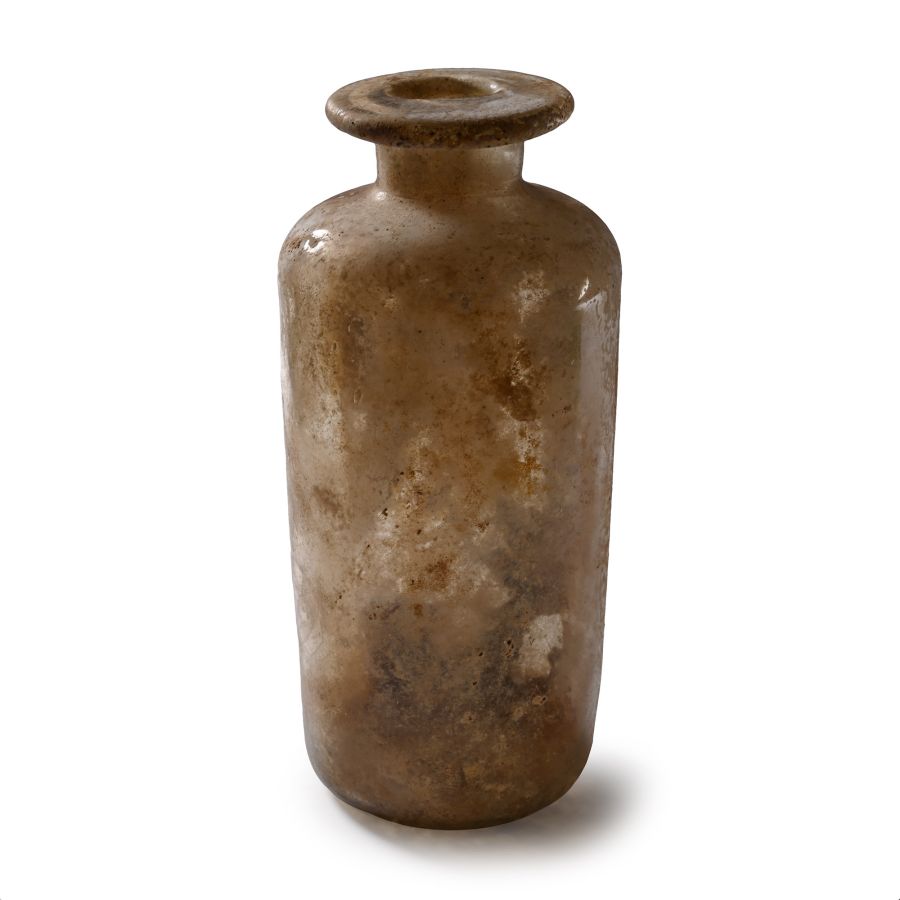
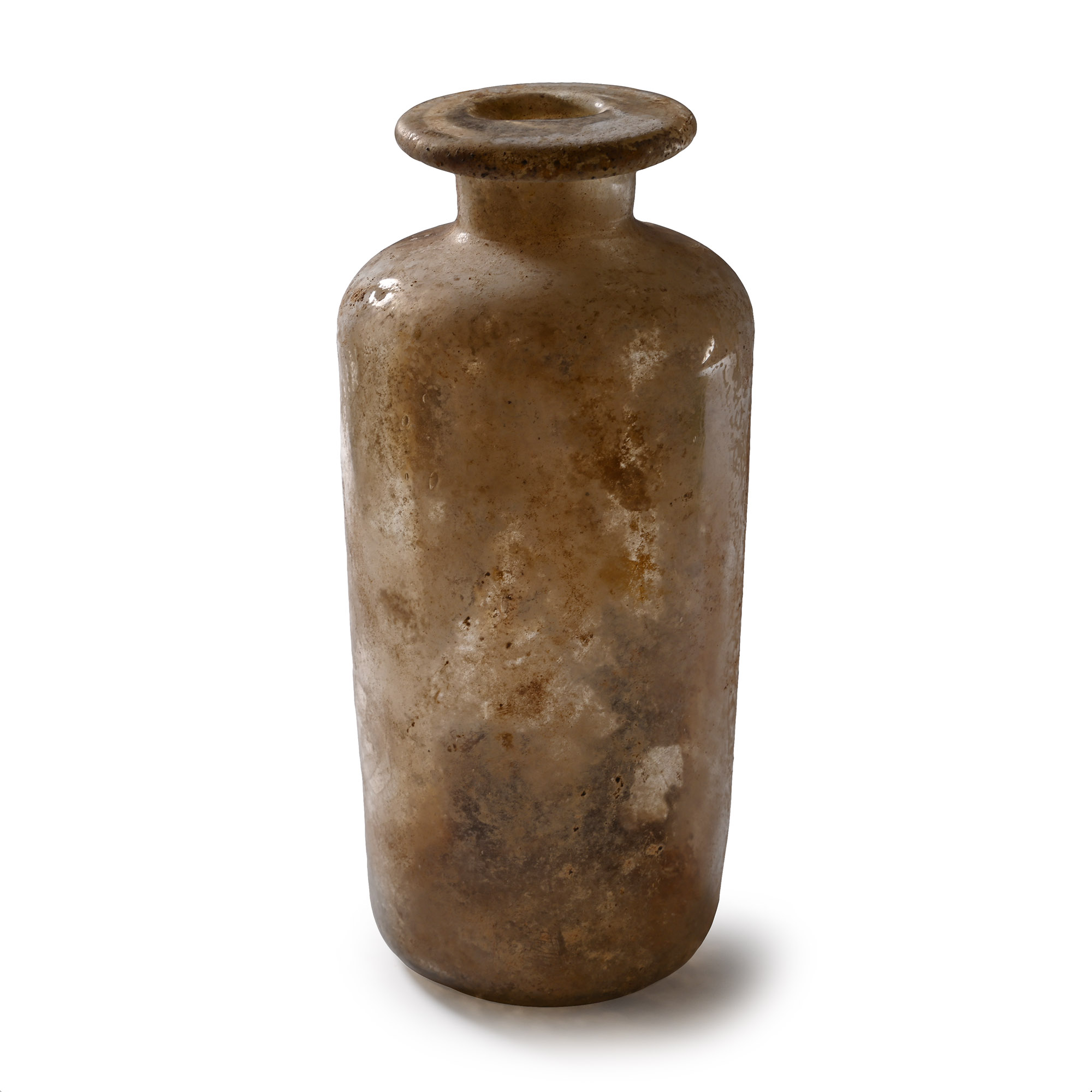
Roman Glass Bottle
3RD-4TH CENTURY A.D.
5 1/2 in. (94.2 grams, 14 cm).
Mould-blown bottle comprising a flat-based tubular body and short neck with returned flange rim.
ProvenanceFrom an important London collection of glass, 1990s.
LiteratureSee Harden, D.B. et al, Masterpieces of Glass, London, 1968, item 78, for type; Whitehouse, D., Roman Glass: The Corning Museum of Glass, volume I, New York, 1997, item 308, for similar.
FootnotesMost of similar examples of Roman bottles have been found in the Eastern Mediterranean. Earliest examples have been found in Roman Lusitania (Pombalinho-Santarem). The type lasted until the 4th century A.D. (Samaria-Sebaste, Israel).
CONDITIONTimeLine Auctions follows a vetting process to ensure the authenticity and legality of all items, reinforcing our commitment to integrity and responsible trading. Each antiquity, antique, and coin lot undergoes thorough examination by a vetting committee of at least ten external specialists, professional trade association members, scientists, and archaeologists: Our Vetting Process
AUCTIONS:
TimeLine is a leading auction house specialising in antiquities, ancient art, collectables, natural history, coins, medals, and books. Our auctions offer museums, collectors, historians, and enthusiasts the opportunity to acquire unique and historically significant pieces.
LOT 0829
Roman Glass Bottle
Estimate £180 - 240€210 - 280 (for guidance only)$240 - 320 (for guidance only)
-
.jpg)
Sasanian Carnelian Gemstone of a Fantastic Creature with Pahlavi Legend
4th-5th century A.D.Estimate: £500 - 700 (+bp*)
Opening Bid: £250
Plano-convex in section with advancing winged and horned beast, Pahlavi legend to the border; supplied with a museum-quality impression. 0.32 grams, 10 mm
Private English collection, formed between the late 1970s and early 1990s. Private collection, London, UK.
Fanciful combinations of various human and animal heads, sometimes with the addition of other elements, are generally called grylloi. These fantastic devices were more than mere artists' fancies and were worn by the ancient Romans and others for their supposed efficacy in averting the evil eye. -
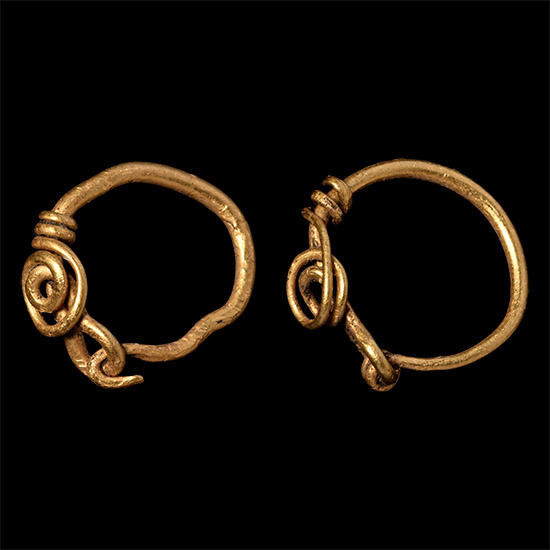
Roman Gold Earring Pair
1st-4th century A.D.Sold for (Inc. bp): £247
Each a small filigree hoop with looped knots and ends wound round the shank. 1.08 grams total, 11 mm each
Ex German art market, 2000s. Acquired from an EU collector living in London. From the collection of a Surrey, UK, gentleman. -
.jpg)
Roman Banded Agate 'Eye' Pendant Inlay
1st century B.C.-1st century A.D.Sold for (Inc. bp): £130
Conical in section with flat top; repaired. 10.6 grams, 33 mm
Acquired by the previous owner, 1970s. Private collection, England.
