
Loading, please wait...
LOT 0658
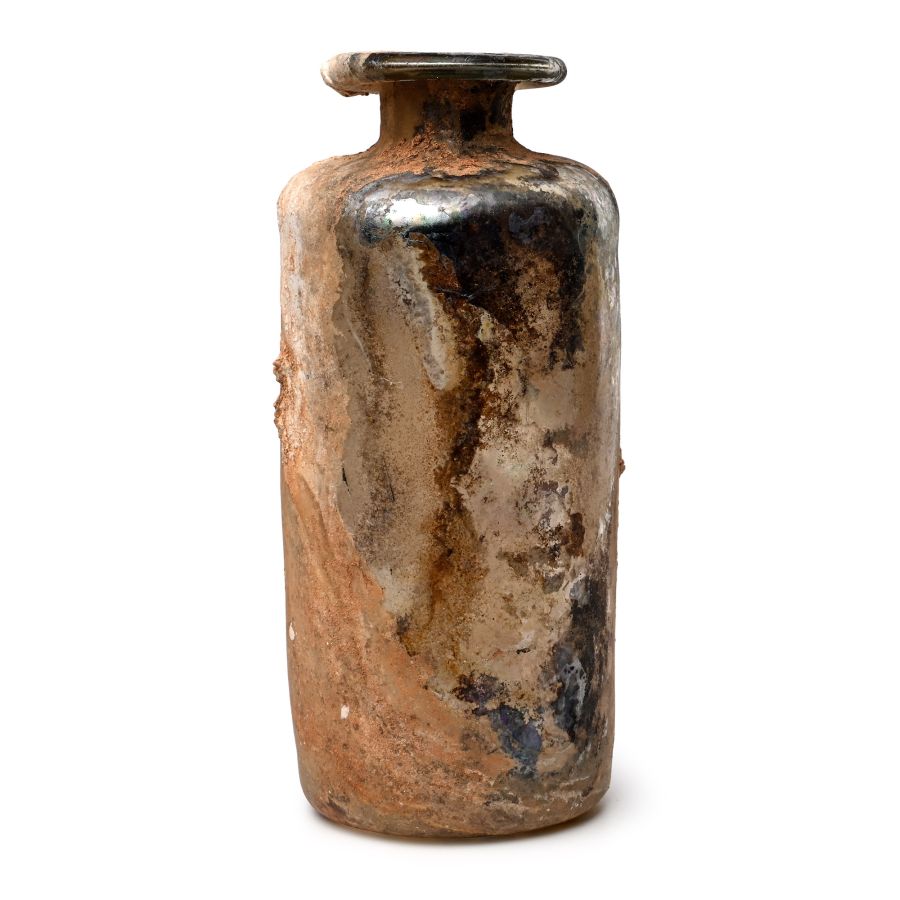
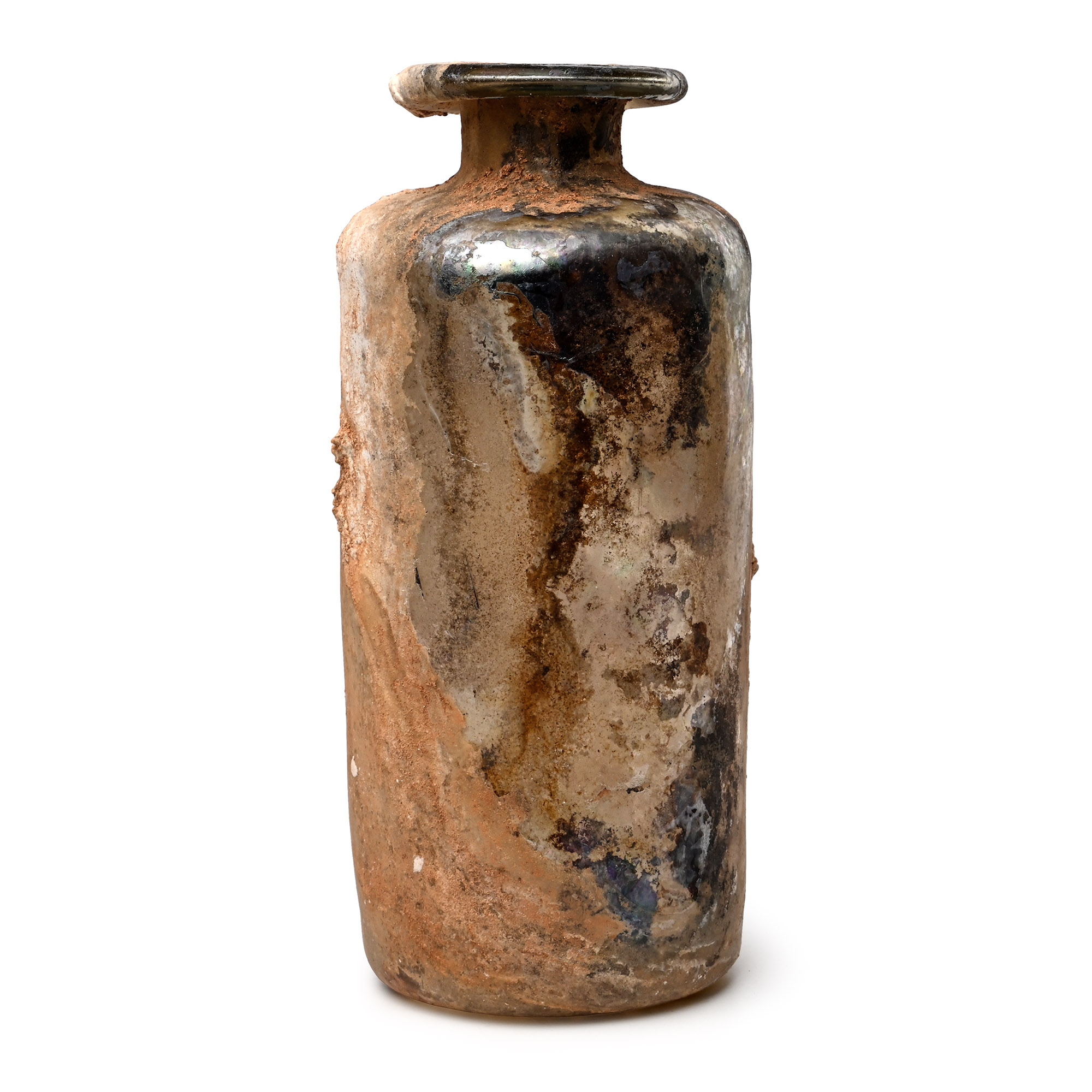
Roman Glass Bottle
CIRCA 1ST-4TH CENTURY A.D.
5 1/2 in. (87 grams, 13.9 cm).
Comprising a flat-based tubular body and short neck with everted flange rim.
ProvenanceFrom a London, UK, collection of glass, 1970-2000s.
CONDITIONTimeLine Auctions follows a vetting process to ensure the authenticity and legality of all items, reinforcing our commitment to integrity and responsible trading. Each antiquity, antique, and coin lot undergoes thorough examination by a vetting committee of at least ten external specialists, professional trade association members, scientists, and archaeologists: Our Vetting Process
AUCTIONS:
TimeLine is a leading auction house specialising in antiquities, ancient art, collectables, natural history, coins, medals, and books. Our auctions offer museums, collectors, historians, and enthusiasts the opportunity to acquire unique and historically significant pieces.
-

Roman Bronze Head of a Grotesque Dwarf
Alexandria, 1st century A.D.Estimate: £1,800 - 2,400 (‡+bp*)
Opening Bid: £1,000
Hollow-formed 'moneybox' with exaggerated nose and lips, small crescent-and-pellet ears, low-relief eyes with impressed pupils, small lock of hair to the scalp, vesica-shaped socket to the underside; pierced at the scalp and at the right ear. 67 grams, 48 mm
with Artemis Gallery, Munich, before 1998. Acquired by the present owner from the above in 2003. This lot has been checked against the Interpol Database of stolen works of art and is accompanied by search certificate number no.12212-222320.
Such small bronzes with physical abnormalities and exaggerated features served as entertainment, but also had the function of warding off evil. -
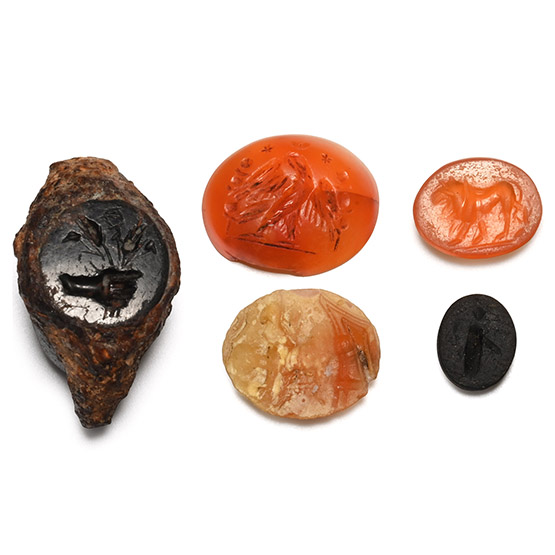
Roman Gemstone Collection
1st-3rd century A.D.Estimate: £380 - 480 (+bp*)
Opening Bid: £210
Including advancing lion, perching bird and other types; each supplied with a museum-quality impression. 3.82 grams total, 7-19 mm
From the collection of a gentleman, acquired on the London art market in the 1990s.
One of the gemstones is certainly pertinent to a military ring, representing an eagle among two signa (standards). Both shafts are decorated with multiple phalerae and lunulae. -
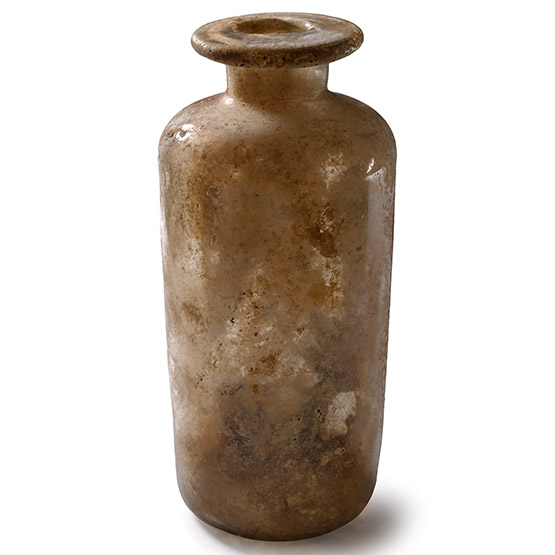
Roman Glass Bottle
3rd-4th century A.D.Estimate: £180 - 240 (+bp*)
Opening Bid: £100
Mould-blown bottle comprising a flat-based tubular body and short neck with returned flange rim. 94.2 grams, 14 cm
From an important London collection of glass, 1990s.
Most of similar examples of Roman bottles have been found in the Eastern Mediterranean. Earliest examples have been found in Roman Lusitania (Pombalinho-Santarem). The type lasted until the 4th century A.D. (Samaria-Sebaste, Israel).
