
Loading, please wait...
LOT 0655
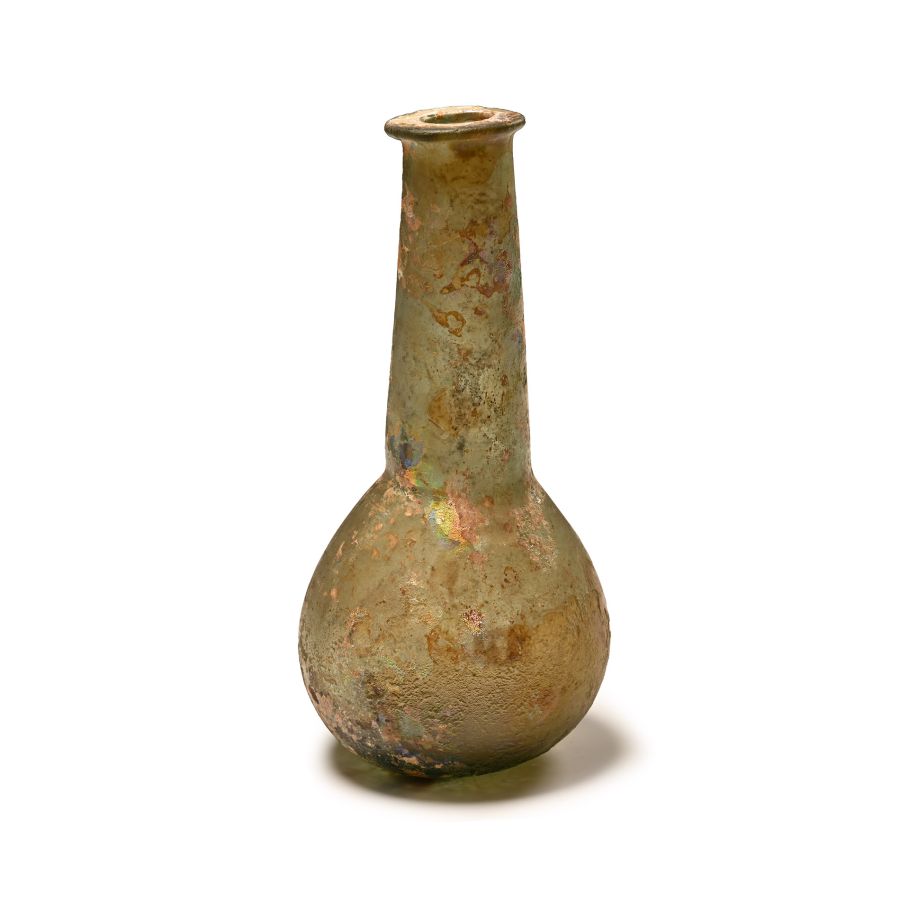
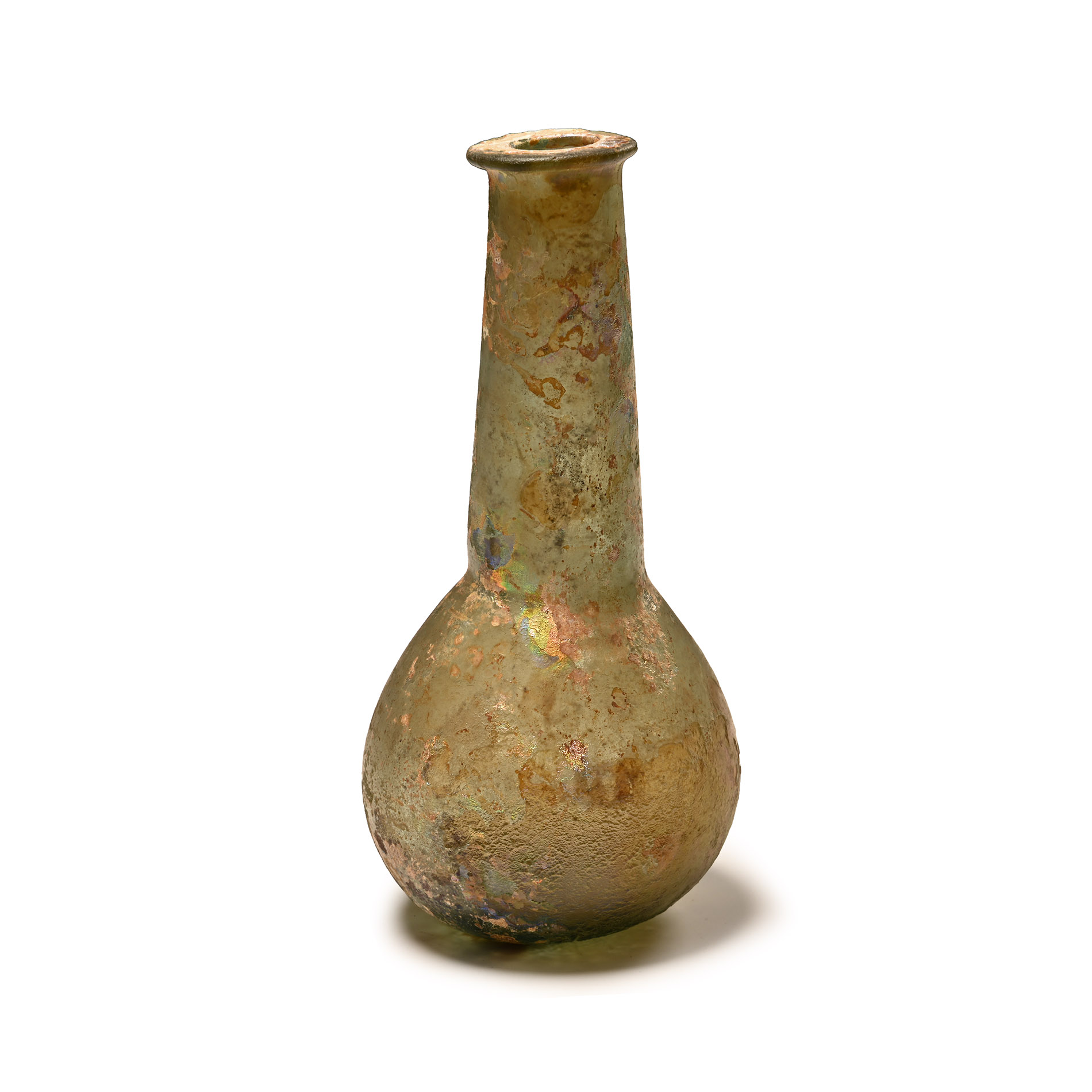
Roman Glass Bottle with Tubular Neck
1ST-2ND CENTURY A.D.
4 1/2 in. (41 grams, 11.5 cm).
With globular body, tubular neck, everted rim and rounded base; some iridescent surface. [No Reserve]
ProvenanceFrom a family collection mostly formed in the 1940s-1950s, thence by descent.
CONDITIONTimeLine Auctions follows a vetting process to ensure the authenticity and legality of all items, reinforcing our commitment to integrity and responsible trading. Each antiquity, antique, and coin lot undergoes thorough examination by a vetting committee of at least ten external specialists, professional trade association members, scientists, and archaeologists: Our Vetting Process
AUCTIONS:
TimeLine is a leading auction house specialising in antiquities, ancient art, collectables, natural history, coins, medals, and books. Our auctions offer museums, collectors, historians, and enthusiasts the opportunity to acquire unique and historically significant pieces.
-
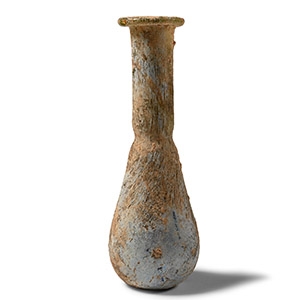
Roman Glass Vessel
1st-2nd century A.D.Estimate: £100 - 140 (+bp*)
Opening Bid: £56
With piriform lower body, extended cylindrical neck and flange rim; iridescent surfaces. 31.4 grams, 10.1 cm
From a London, UK, collection, 1990s. -
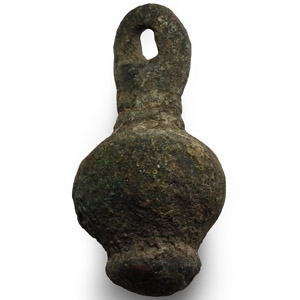
Roman Bronze Mason's Plumb Bob Weight
1st-4th century A.D.Sold for (Inc. bp): £13
With bulbous body, domed base, pierced suspension lug. 23.5 grams, 33 mm
Acquired on the UK art market before 2000. Property of an Essex, UK, gentleman. -
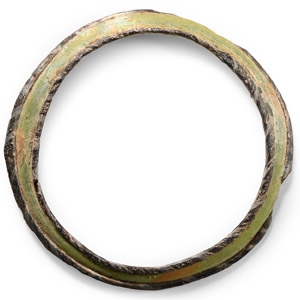
Late Roman Iridescent Multi-Coloured Bracelet
4th-6th century A.D.Estimate: £100 - 140 (+bp*)
Opening Bid: £50
The shank triangular in section with applied polychrome trails to inner and outer edges. 21.9 grams, 87 mm
Acquired 1980-2015. Ex Abelita family collection.
