
Loading, please wait...
LOT 0825
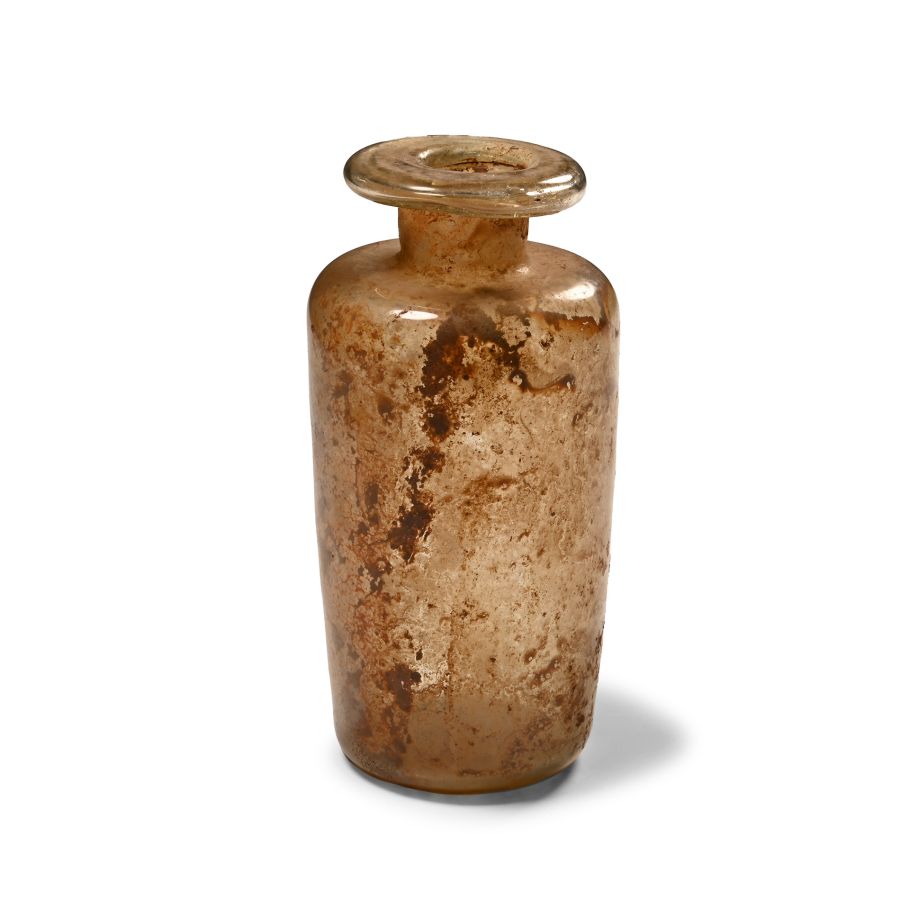
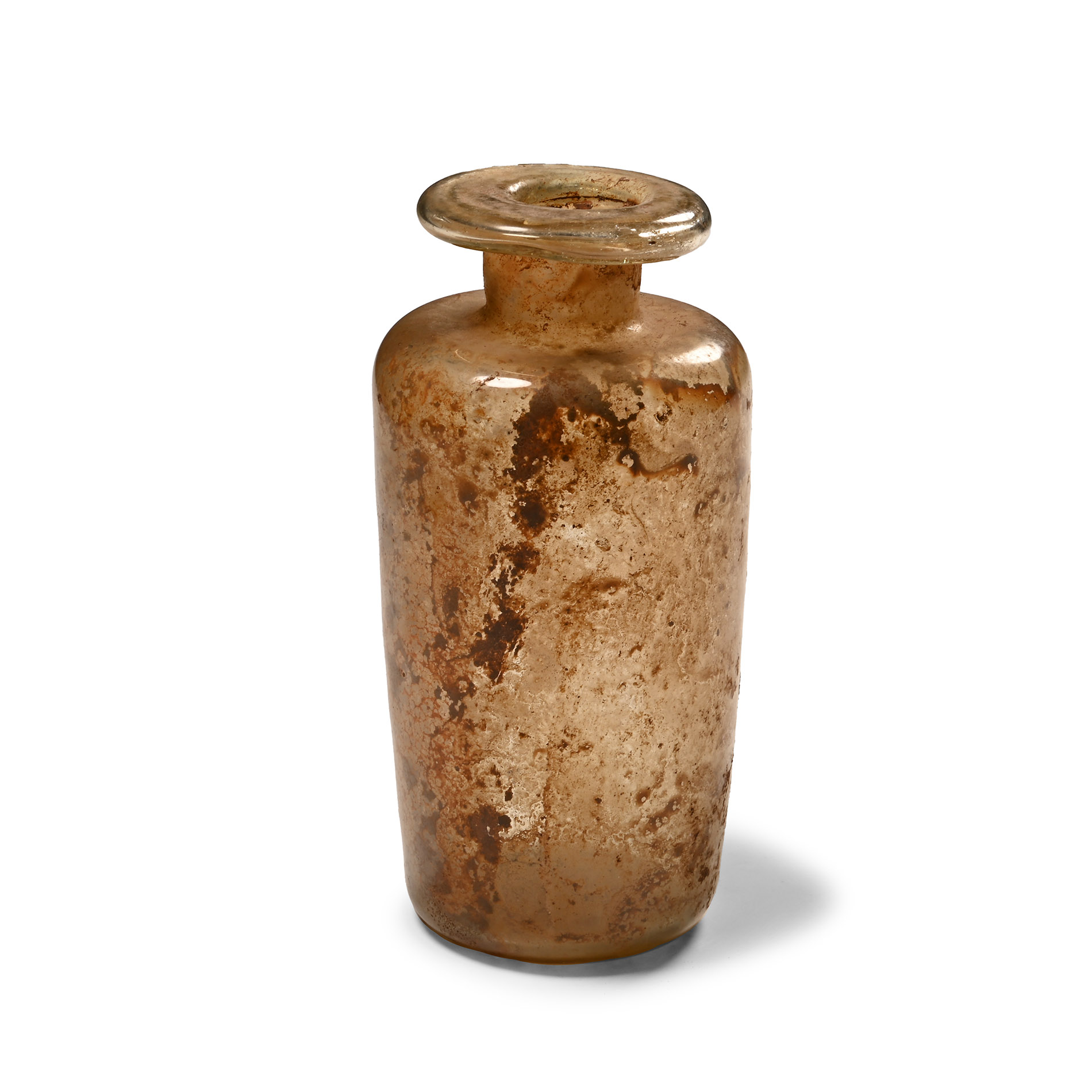
Roman Glass Bottle with Short Neck
3RD-4TH CENTURY A.D.
3 3/4 in. (46 grams, 95 mm).
Mould-blown bottle comprising a flat-based tubular body and bell-shaped neck with applied flange rim. [No Reserve]
ProvenanceFrom a family collection mostly formed in the 1940s-1950s, thence by descent.
LiteratureSee Harden, D.B. et al, Masterpieces of Glass, London, 1968, item 78, for type.
CONDITIONTimeLine Auctions follows a vetting process to ensure the authenticity and legality of all items, reinforcing our commitment to integrity and responsible trading. Each antiquity, antique, and coin lot undergoes thorough examination by a vetting committee of at least ten external specialists, professional trade association members, scientists, and archaeologists: Our Vetting Process
AUCTIONS:
TimeLine is a leading auction house specialising in antiquities, ancient art, collectables, natural history, coins, medals, and books. Our auctions offer museums, collectors, historians, and enthusiasts the opportunity to acquire unique and historically significant pieces.
-
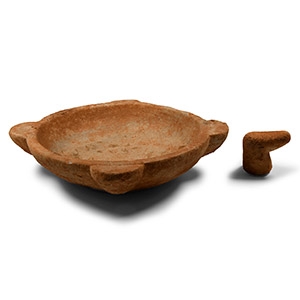
Roman Marble Mortar with Pestle
2nd-4th century A.D.Estimate: £1,500 - 2,000 (‡+bp*)
Opening Bid: £750
Broad squat carved mortarium with basal pad and four D-section ribs to the outer face; separate pestle shaped like a thumb. 1.96 kg total, 5.6-24.8 cm
Ex private collection, Mrs L.S., 1990s. Acquired from the above, 2000. Private European collection. This lot has been checked against the Interpol Database of stolen works of art and is accompanied by a search certificate number no.12095-218195. -
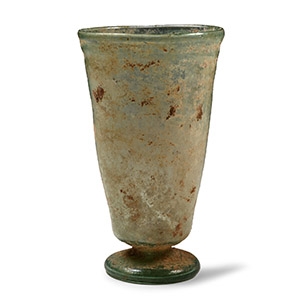
Roman Footed Glass Cup
3rd-4th century A.D.Estimate: £400 - 600 (+bp*)
Opening Bid: £222
Conical profile with slight waisted and integral foot, chamfered rim. 75 grams, 11.3 cm
From a London, UK, collection, 1990s. -
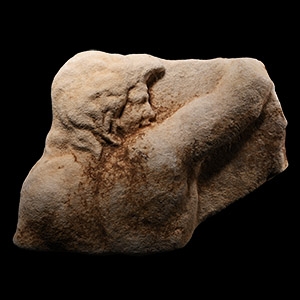
Roman Marble Relief Fragment with Satyr
1st century A.D.Sold for (Inc. bp): £1,560
Depicted nude and shown from behind, his right arm raised and face shown in profile. 3.45 kg, 24 cm
Acquired in the mid 1980s-1990s. Private collection, Switzerland, thence by descent. Private collection, since the late 1990s.
