
Loading, please wait...
LOT 0723
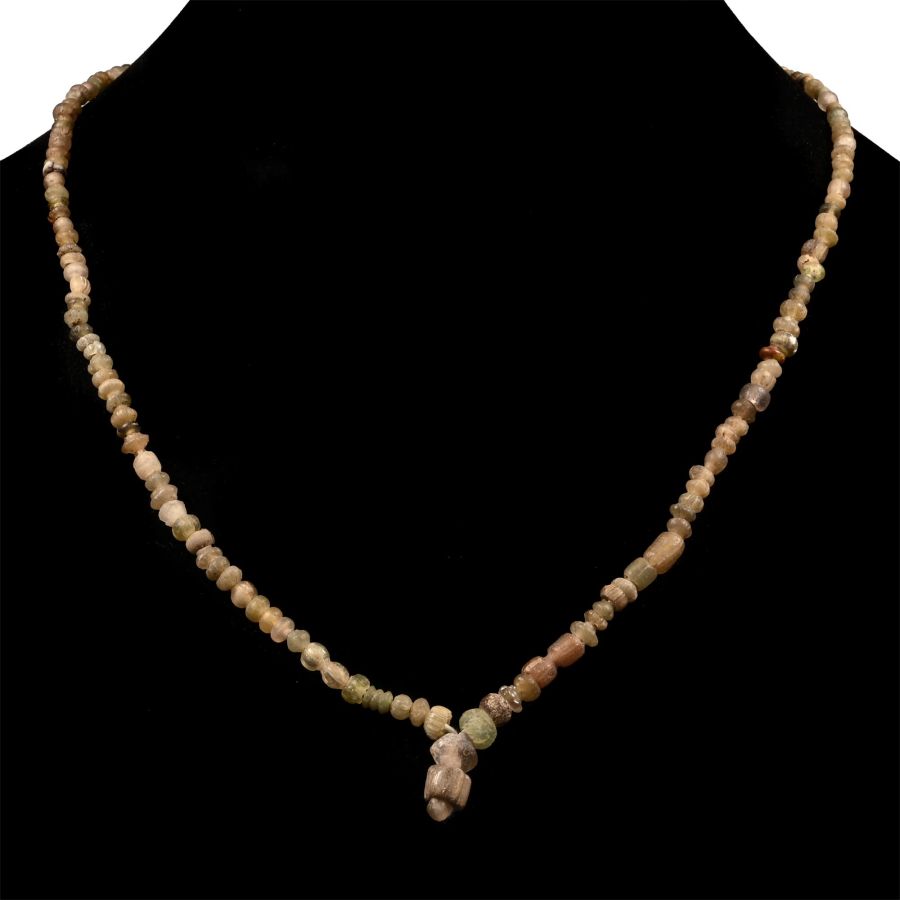
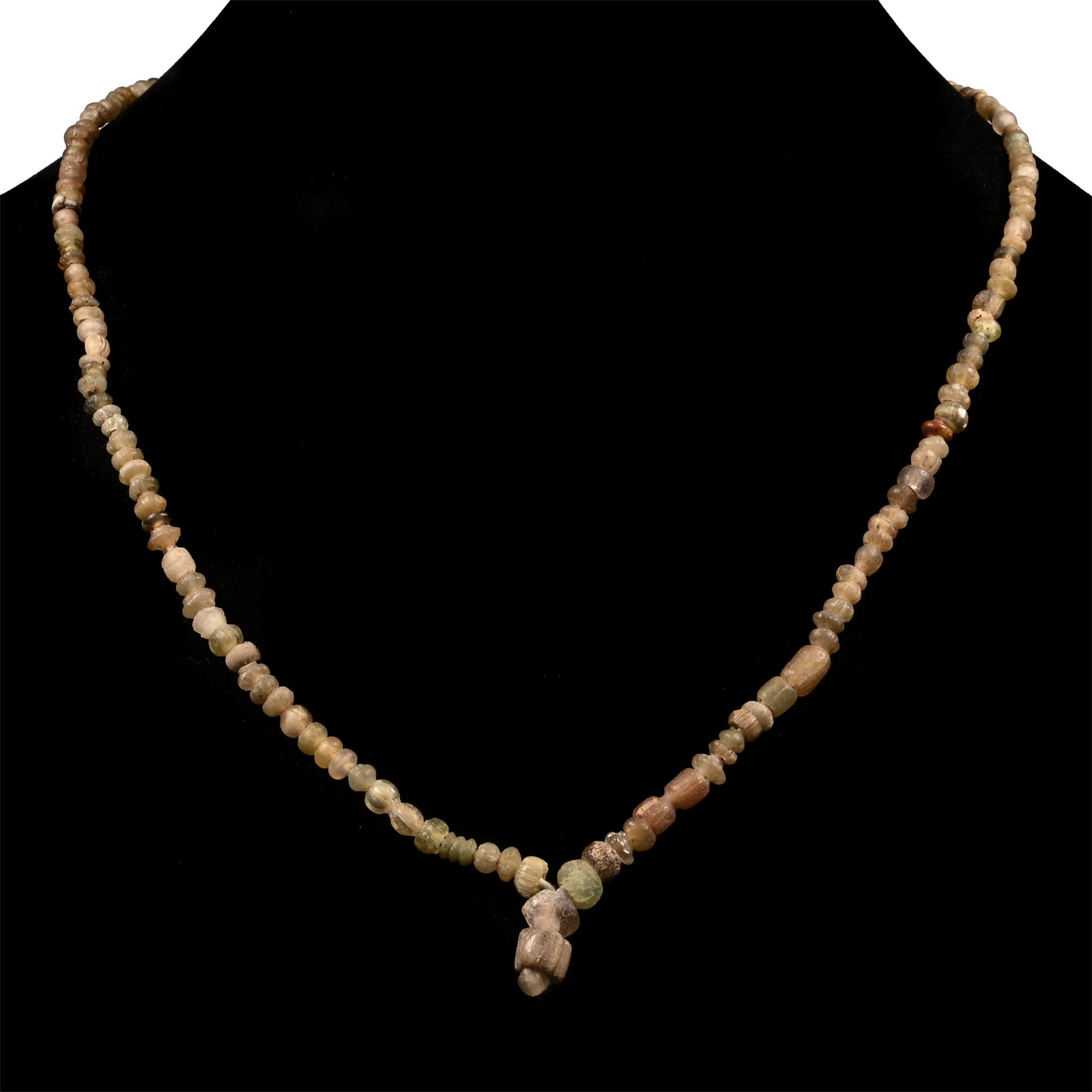
Roman Glass Bead Necklace String
1ST-4TH CENTURY A.D. AND LATER
18 1/2 in. (16.2 grams, 47 cm).
Composed of mainly oblate beads and restrung to a Y-shape, the central feature composed of a biconical and melon bead. [No Reserve]
ProvenanceEx property of a late Japanese collector, 1970-2000s.
CONDITIONTimeLine Auctions follows a vetting process to ensure the authenticity and legality of all items, reinforcing our commitment to integrity and responsible trading. Each antiquity, antique, and coin lot undergoes thorough examination by a vetting committee of at least ten external specialists, professional trade association members, scientists, and archaeologists: Our Vetting Process
AUCTIONS:
TimeLine is a leading auction house specialising in antiquities, ancient art, collectables, natural history, coins, medals, and books. Our auctions offer museums, collectors, historians, and enthusiasts the opportunity to acquire unique and historically significant pieces.
-
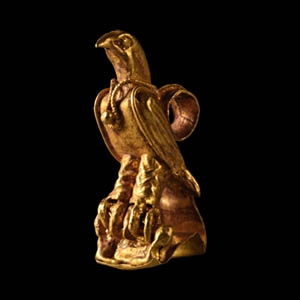
Roman Gold Eagle Pendant
2nd century B.C.-2nd century A.D.Sold for (Inc. bp): £2,340
Depicted as a standing eagle with closed wings, long striated tail extending to the small pedestal; with detailing to wings, beak, eyes and feathers; a filigree collar with small medallion around the neck; holding a small rabbit in its claws; suspension loop to the back. 2.83 grams, 27 mm
From a private family collection formed since the early 19th century, thence by descent. Property of a New Zealand legal professional. This lot has been checked against the Interpol Database of stolen works of art and is accompanied by search certificate number no.12329-223711.
The motif of an eagle and hare is linked with the story of the Trojan War. On their way towards Troy, the two brothers Agamemnon and Menelaus, the Atreides, saw two eagles swoop down upon a pregnant hare and tear her to shreds. They interpreted it as a good omen: the two eagles were the warrior brothers, and the hare Troy. -
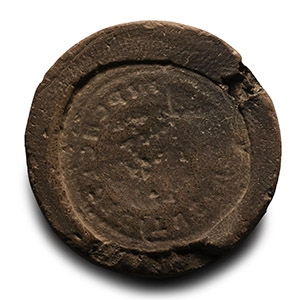
Roman Bifacial Terracotta Forger's Coin Mould
1st-3rd century A.D.Sold for (Inc. bp): £364
Discoid in plan, the obverse with profile bust of an emperor wearing a radiate crown, legend surrounding; the reverse with two opposing figures, legend surrounding. 5 grams, 28 mm
From the collection of a gentleman, acquired on the London art market in the 1990s. -
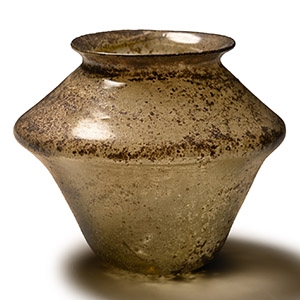
Roman Wide-Mouthed Glass Vessel
1st-4th century A.D.Sold for (Inc. bp): £182
With dimple base, carinated shoulder and low everted rim. 55 grams, 82 mm
From a family collection mostly formed in the 1940s-1950s, thence by descent.
