Loading, please wait...

Use mousewheel to zoom in and out, click to enlarge

Details

LOT 0728

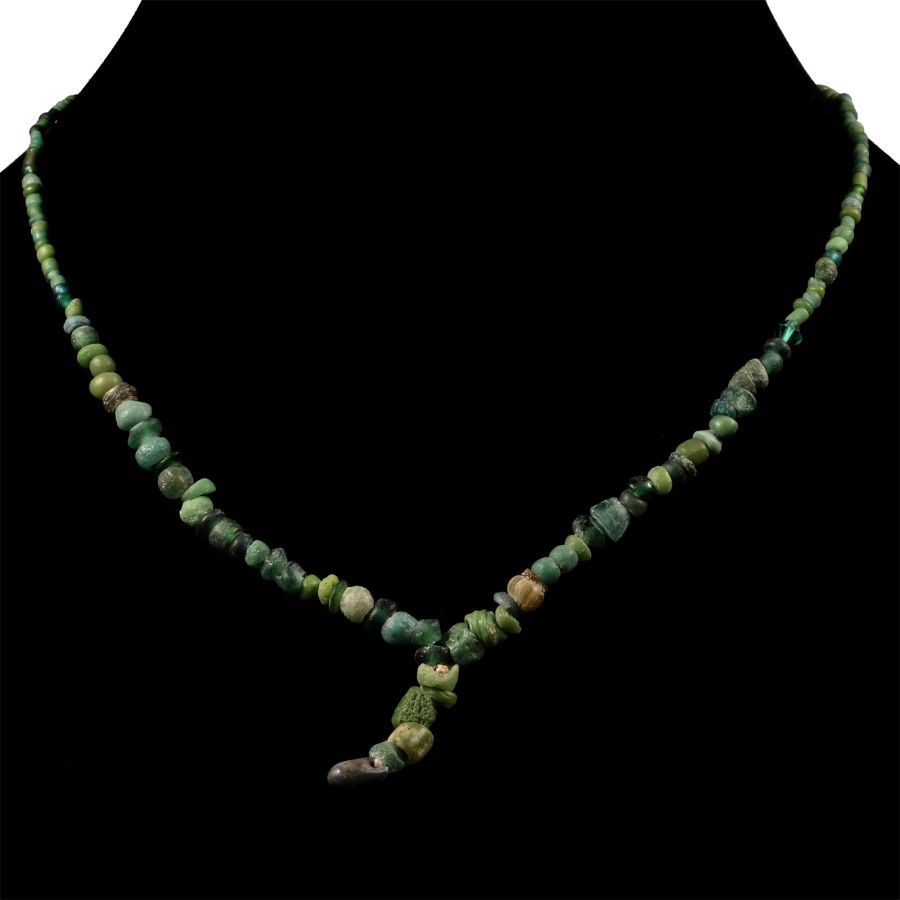
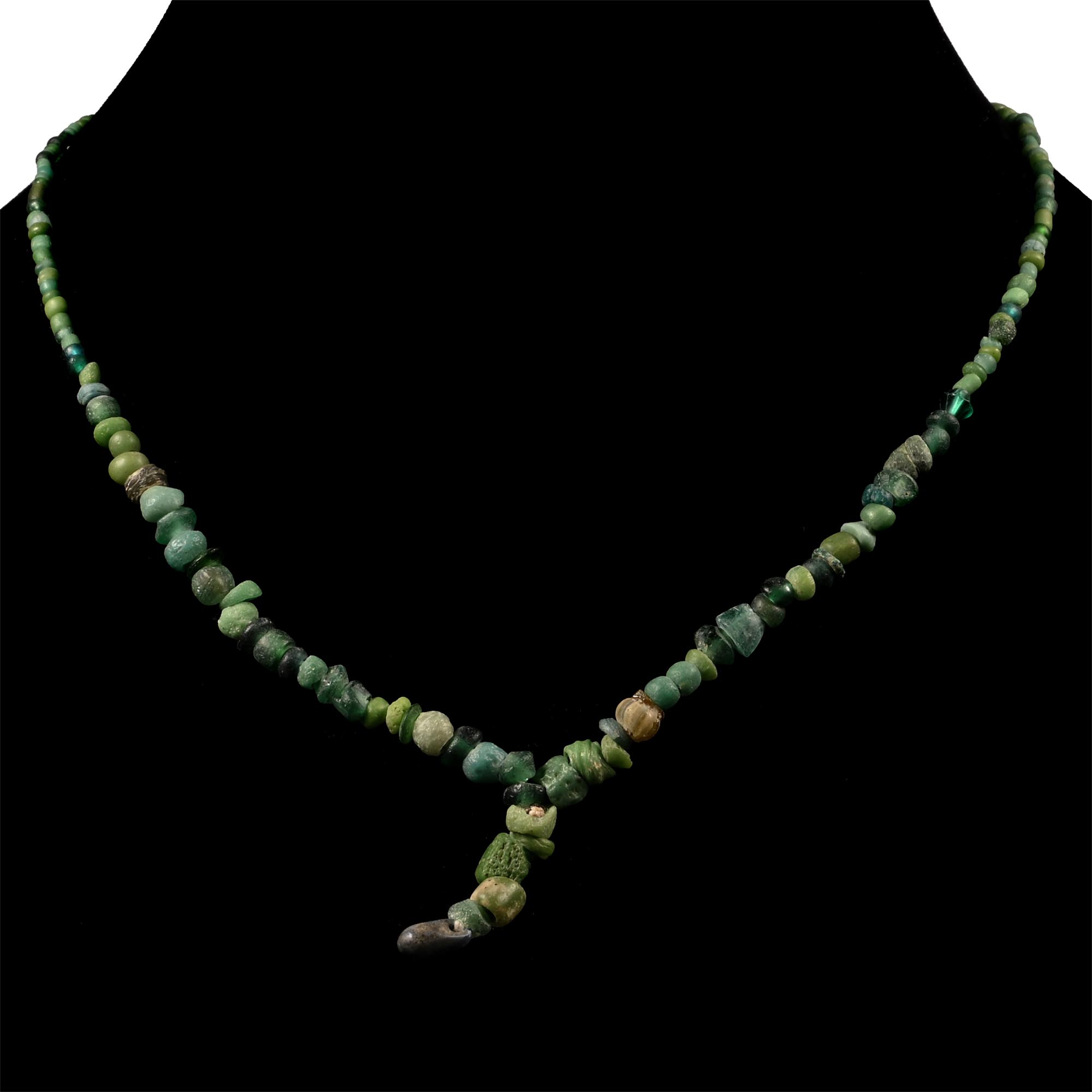
Roman Glass Bead Necklace String

1ST-4TH CENTURY A.D. AND LATER

14 1/2 in. (9.52 grams, 37 cm).

Composed of graduated green beads in various shapes, restrung to a Y-shape. [No Reserve]

Provenance

Ex property of a late Japanese collector, 1970-2000s.

CONDITION

VETTING:

TimeLine Auctions follows a vetting process to ensure the authenticity and legality of all items, reinforcing our commitment to integrity and responsible trading. Each antiquity, antique, and coin lot undergoes thorough examination by a vetting committee of at least ten external specialists, professional trade association members, scientists, and archaeologists: Our Vetting Process


AUCTIONS:

TimeLine is a leading auction house specialising in antiquities, ancient art, collectables, natural history, coins, medals, and books. Our auctions offer museums, collectors, historians, and enthusiasts the opportunity to acquire unique and historically significant pieces.

LOT 0728

Roman Glass Bead Necklace String

Sold for (Inc. bp): £26

Print page

RELATED LOTS

  • Roman Bronze Weight with Three Goddesses
    Roman Bronze Weight with Three Goddesses
    1st-4th century A.D.

    Sold for (Inc. bp): £1,430

    Square panel with three figures modelled in the half-round - Isis Fortuna with a rudder, Minerva with a spear, Nona with a drop-spindle; to the reverse, lozenge within a ring with enigmatic 'VIKΠΔ' legend (bungled, for 'LIBRA'?). 78.7 grams, 38 mm


    From the collection of a gentleman, acquired on the London art market in the 1990s.

    Lot Details

  • Roman Terracotta Mortarium Fragments with Makers Stamps in Tabula Ansata
    Roman Terracotta Mortarium Fragments with Maker's Stamps in Tabula Ansata
    2nd century A.D.

    Sold for (Inc. bp): £46

    Two fragments of the returned rim of a mortarium, one with the convergent ribs for the pouring lip; each stamped with legend 'Q[I]V[S]-A / CRE[S]C = Quintus Iustius Crescens ?' in tabula ansata. 707 grams total, 17.5-19.8 cm


    Found UK, possibly from Lincolnshire. From the collection of a late East Anglian teacher and antiquarian who retired to the Isle of Wight in Hampshire, UK. He amassed a large collection of objects between the 1960s-1980s.

    Significant mortaria were manufactured at several sites in and around Lincoln during 2nd century A.D.; they had a wide distribution across northern England and southern Scotland. Quintus Iustius Crescens was active producer in Lincolnshire during 100-140 A.D.

    Lot Details

  • Large Roman Marble Relief of a Theatre Mask
    Large Roman Marble Relief of a Theatre Mask
    2nd century A.D.

    Sold for (Inc. bp): £23,400

    Carved fragment with a female tragedy theatre mask modelled in the half-round, features strongly delineated, eyes detailed with small cylindrical pupils; the hair sculpted on the upper part with rich locks fastened by a taenia, divided into regular rows falling stiffly on the forehead and down along the sides, bound by laces, open mouth in an expression of sorrow. 30 kg, 51 cm


    Acquired in the mid 1980s-1990s. Private collection, Switzerland, thence by descent. Private collection, since the late 1990s. Accompanied by an academic report by Dr Raffaele D’Amato. This lot has been checked against the Interpol Database of stolen works of art and is accompanied by search certificate number no.12362-226705.

    The mask is known to have been used in tragic theatre since the time of Aeschylus (first half of 5th century B.C.) and considered to be one of the iconic conventions of classical Greek theatre. Masks were also made for male members of the chorus, who play a part in the action and provide a commentary on the events in which they were caught up. The theme of decorative tragic masks as architectural elements passed from the Greek to the Roman culture and is largely visible in all the corners of the Roman Empire. However, these colossal heads are typical of the great architecture of temples and theatres of Roman Asia Minor, and the style and workmanship of this wonderful fragment of frame can be traced back to Hadrian’s era. The face suggests an architectural use, perhaps as a corbel or a lintel.

    Lot Details

Stay up-to-date with the latest from TimeLine Auctions by joining our mailing list