
Loading, please wait...


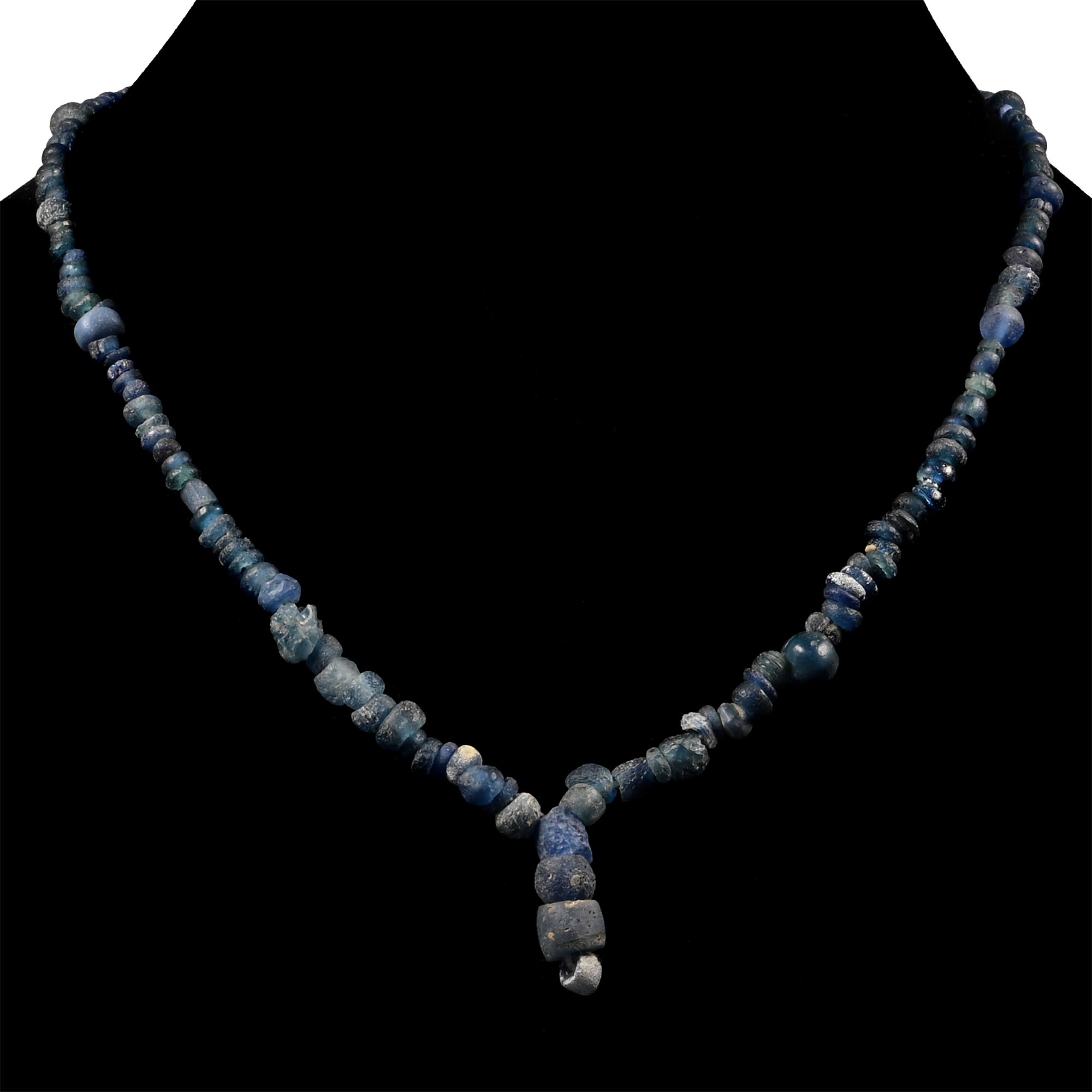
LOT 0747
Roman Glass Bead Necklace String
1ST-4TH CENTURY A.D. AND LATER
14 1/8 in. (13.7 grams, 36 cm).
Composed of mainly blue oblate beads, restrung to a Y-shape. [No Reserve]
ProvenanceEx property of a late Japanese collector, 1970-2000s.
CONDITIONTimeLine Auctions follows a vetting process to ensure the authenticity and legality of all items, reinforcing our commitment to integrity and responsible trading. Each antiquity, antique, and coin lot undergoes thorough examination by a vetting committee of at least ten external specialists, professional trade association members, scientists, and archaeologists: Our Vetting Process
AUCTIONS:
TimeLine is a leading auction house specialising in antiquities, ancient art, collectables, natural history, coins, medals, and books. Our auctions offer museums, collectors, historians, and enthusiasts the opportunity to acquire unique and historically significant pieces.
-
.jpg)
Late Roman Bronze Oil Lamp with Gryphon Handle and Stand
5th-7th century A.D.Sold for (Inc. bp): £20,800
Comprising a rounded lamp with carinated body and elongated nozzle emerging from a lotus flower, a dolphin perching on top of one of the petals, the nozzle formed as an eight-pointed star with projecting knobs; a raised Chi Rho symbol to both sides of the body and a hinged lid to the top; the upcurving handle formed as a gryphon head emerging from the stem of a lotus flower, the gryphon holding a round object in its open beak, the mane formed of four spikes topped with spheres, carrying a Chi Rho topped with a dove between its ears; later modified to mount on a balustered tripod stand with lion's paw feet, reel-shaped drip tray and a tapering pricket to accept the lamp. 4.21 kg, 47 cm high
German art market. European private collection, 1970s-early 2000s. Acquired from the above; thence by descent. Private collection, London, UK. Accompanied by an academic report by Dr Raffaele D’Amato. This lot has been checked against the Interpol Database of stolen works of art and is accompanied by search certificate number no.12347-225589. -
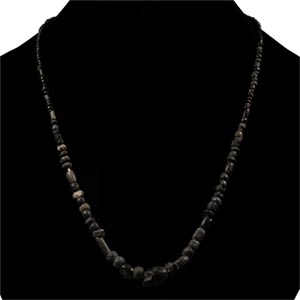
Roman Glass Bead Necklace String
1st-4th century A.D. and laterSold for (Inc. bp): £33
Composed of graduated black beads of various shapes with a central large barrel-shaped bead, restrung. 19.8 grams, 46 cm
Ex property of a late Japanese collector, 1970-2000s. -
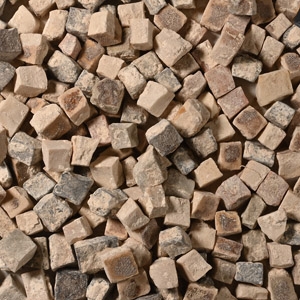
Roman Mosaic Stone Tesserae Group
1st-4th century A.D.Sold for (Inc. bp): £468
A mixed group of two hundred and fifty single tesserae of various colours and sizes, mostly cuboid. 337 grams total, 6-12 mm
From a collection acquired on the UK art market from various auction houses and collections mostly before 2000. From an important Cambridgeshire estate; thence by descent.
