Loading, please wait...

Roman Glass Bead Necklace String Roman Glass Bead Necklace String Roman Glass Bead Necklace String
Use mousewheel to zoom in and out, click to enlarge
Details

LOT 0639

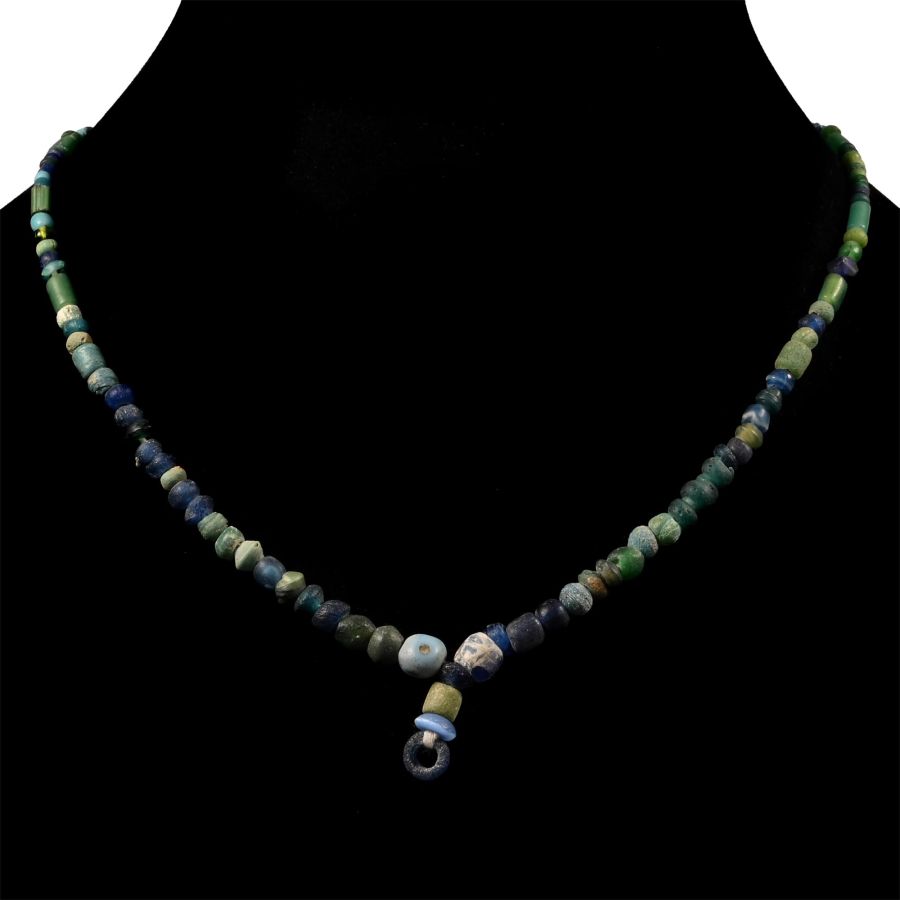
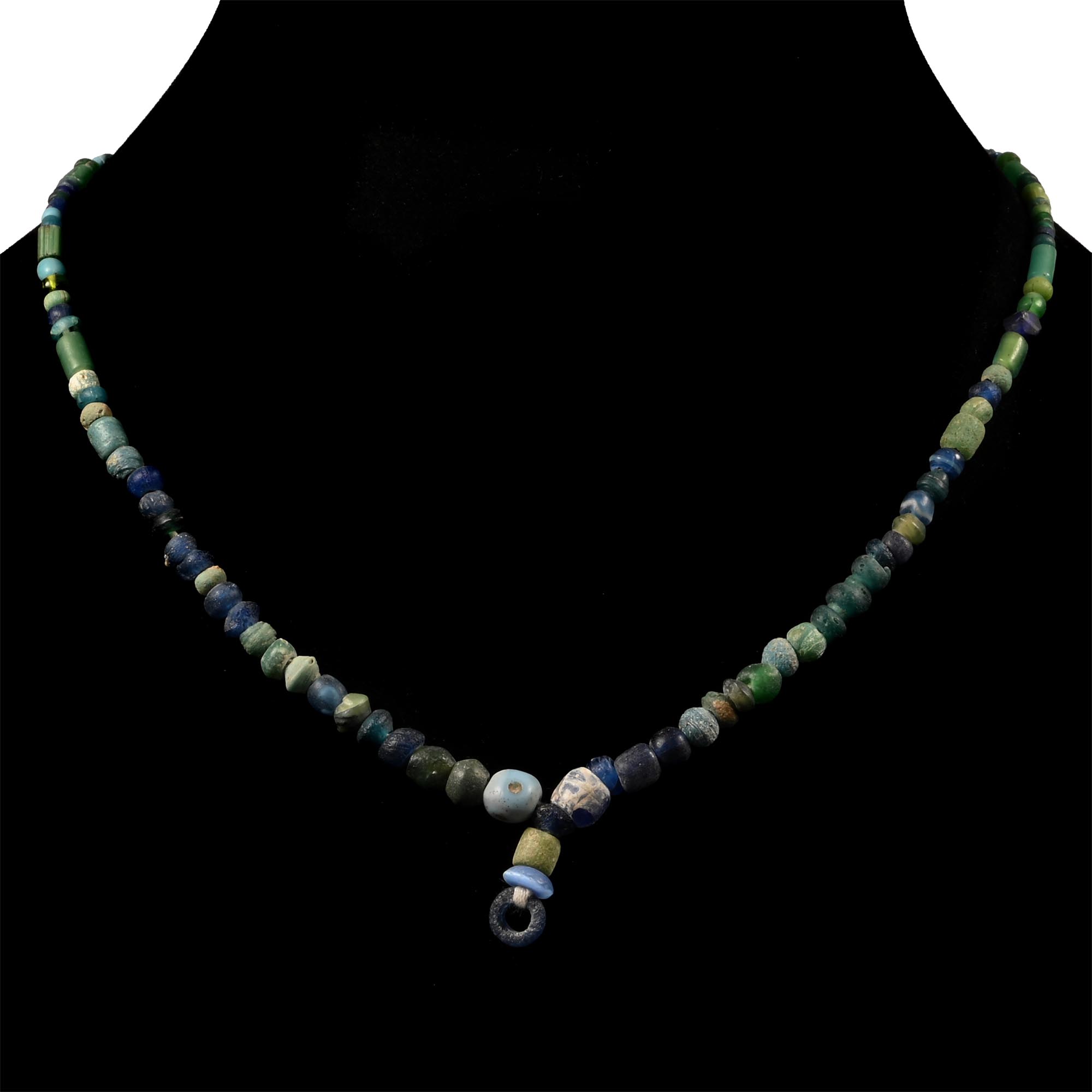
Roman Glass Bead Necklace String

1ST-4TH CENTURY A.D. AND LATER

15 3/8 in. (11.8 grams, 39 cm).

Composed of graduated blue and green beads in various shapes, restrung. [No Reserve]

Provenance

Ex property of a late Japanese collector, 1970-2000s.

CONDITION
VETTING:

TimeLine Auctions follows a vetting process to ensure the authenticity and legality of all items, reinforcing our commitment to integrity and responsible trading. Each antiquity, antique, and coin lot undergoes thorough examination by a vetting committee of at least ten external specialists, professional trade association members, scientists, and archaeologists: Our Vetting Process


AUCTIONS:

TimeLine is a leading auction house specialising in antiquities, ancient art, collectables, natural history, coins, medals, and books. Our auctions offer museums, collectors, historians, and enthusiasts the opportunity to acquire unique and historically significant pieces.

Live Bidding

LOT 0639

Roman Glass Bead Necklace String

Sold for (Inc. bp): £52

Print page

RELATED LOTS
  • Large Romano-British Viroconium Cornoviorum Funerary Urn
    Large Romano-British 'Viroconium Cornoviorum' Funerary Urn
    Lands of the Cornovii, 1st century A.D.

    Sold for (Inc. bp): £780

    With narrow base and shallow shoulder, everted rim to the broad mouth; with inked museum number 'E1029' and accession ticket 'Roman Cremation (inside jar) 1st Cent. A.D. Viroconium Cornoviorum (Wroxeter) Lands of the Cornovii'; professionally repaired. 4.45 kg, 35.5cm


    Found Wroxeter (Viroconium Cornoviorum), UK, in 1921. From a West Country, UK, collection, 1990s. Accompanied by a handwritten identification card with '1921' to verso.

    The Cornovii inhabited an area of the (modern) English West Midlands, from Staffordshire to Chester, centered on modern Wroxeter (Viroconium Cornoviorum). This was among the largest administrative centres in Roman Britain, and drew its wealth in part from salt production and the mining of lead, copper and silver.

    Lot Details

  • Roman Gemstone Group
    Roman Gemstone Group
    1st-2nd century A.D.

    Sold for (Inc. bp): £234

    Comprising: ellipsoid type with profile bust; plano-convex type with horseman; flat ellipsoid with bust of Minerva; chipped. 2.8 grams total, 10-16 mm


    From the private collection of Mr K.A., acquired in the 1990s-early 2000s.

    Lot Details

  • Large Roman Bronze Military Mount
    Large Roman Bronze Military Mount
    2nd-3rd century A.D.

    Estimate: £120 - 170 (+bp*)

    Opening Bid: £65

    Composed of a central domed boss and openwork volutes to the sides; for a sword belt or a chariot, one corner separated. 69 grams, 14 cm wide

    Good condition, very rare

    Acquired 1960s-1990s. Late Alison Barker collection, a retired London barrister.

    In 3rd century A.D. the sword (spatha) was mainly carried suspended from a broad baldric usually on the soldier’s left side. This sword’s shoulder belt, visible on many monuments related to the 3rd century, was composed from a leather strap, reinforced on the rims. The four specimens of Vimose provided valuable information about the shape of the baldric: one end was broad and finished in a straight edge, the other tapered to a narrow strip. They were decorated with silver disks (phalerae) of circa 6.4 cm. of diameter, with rings on the reverse for fastening. These phalerae were of different shapes, styles and decorations: we can observe a range from simple copper-alloy discs to bronze openwork pieces fitted with a plate or an openwork disc showing elaborate figures. They were usually attached at about 29-30 cm from the wider and squared top of the baldric. One of the finial parts of the baldric was in fact very wide and ended with a straight edge, upon which could be placed a hinged rectangular openwork terminal plate (like our specimen), attached to a belt terminal pendant. The lack, in our specimen, of holes for the attachment rivets could also support the thesis that the piece is not for a baldric, but a mount for cart or chariot as some examples in a similar style found in Roman North Africa.

    Lot Details

Stay up-to-date with the latest from TimeLine Auctions by joining our mailing list