
Loading, please wait...

LOT 0627
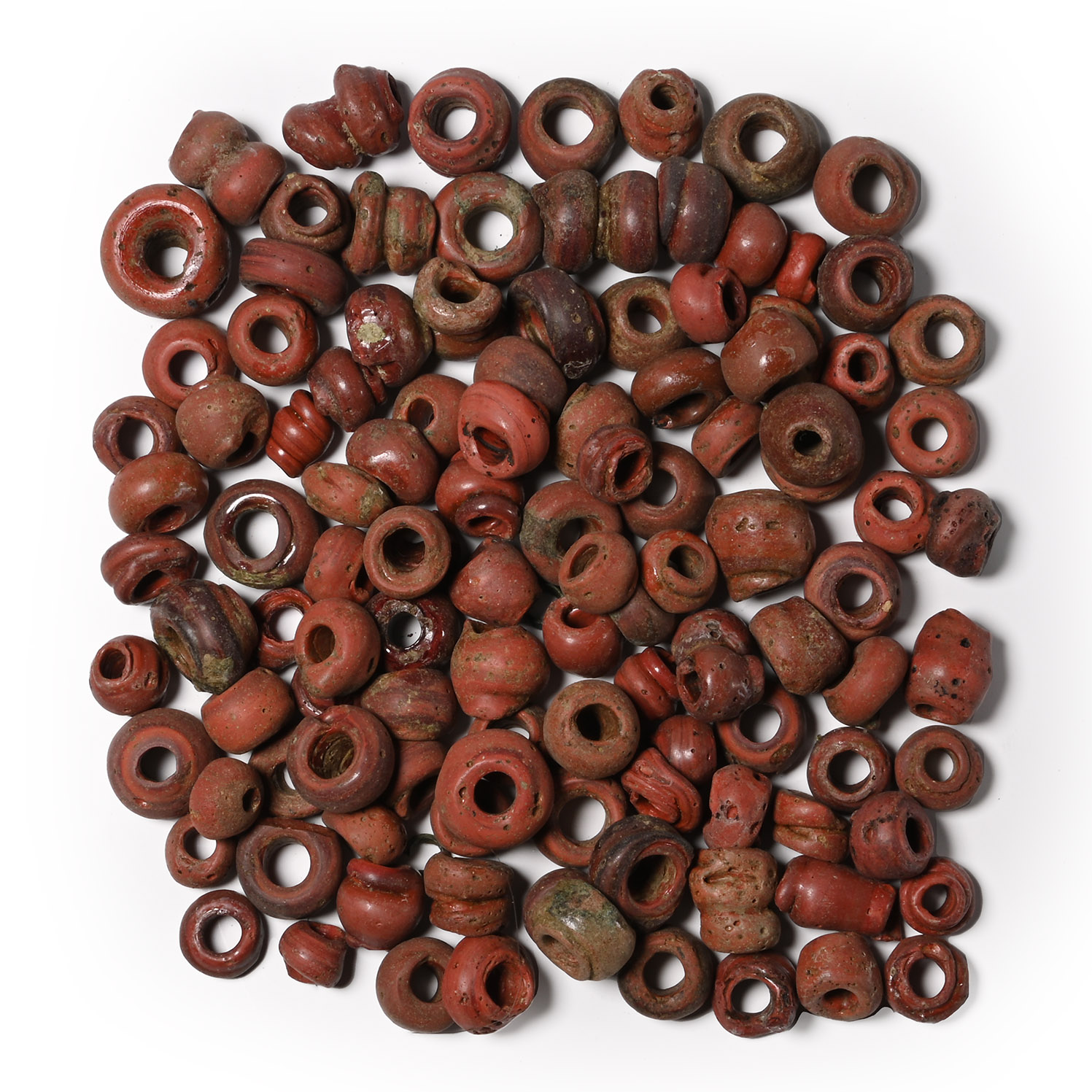
Roman Glass Bead Group
1ST-4TH CENTURY A.D. OR LATER
1/8 - 1/2 in. (93 grams total, 5-13 mm).
Comprising a mix of irregular opaque rust-red glass large-holed oblate-shaped beads. [107, No Reserve]
ProvenanceUK gallery, early 2000s.
This lot is accompanied by an illustrated lot declaration signed by the Head of the Antiquities Department, Dr Raffaele D’Amato.
TimeLine Auctions follows a vetting process to ensure the authenticity and legality of all items, reinforcing our commitment to integrity and responsible trading. Each antiquity, antique, and coin lot undergoes thorough examination by a vetting committee of at least ten external specialists, professional trade association members, scientists, and archaeologists: Our Vetting Process
AUCTIONS:
TimeLine is a leading auction house specialising in antiquities, ancient art, collectables, natural history, coins, medals, and books. Our auctions offer museums, collectors, historians, and enthusiasts the opportunity to acquire unique and historically significant pieces.
-
.jpg)
Roman Ring Gemstone Collection
2nd-3rd century A.D.Sold for (Inc. bp): £286
Mainly ellipsoid carnelian plaques with incuse designs including standing figure, bird in flight and other types. 4.21 grams total, 8-15 mm
From an old UK collection, 1980s. This lot is accompanied by an illustrated lot declaration signed by the Head of the Antiquities Department, Dr Raffaele D’Amato. -
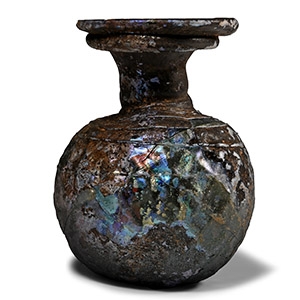
Roman Mould-Blown Glass Flask
1st-2nd century A.D.Sold for (Inc. bp): £182
With squat body and dimple base, reticulation pattern to the shoulder, partly restricted inner neck and baluster, applied gusseted rim to the mouth. 49.4 grams, 82 mm
Ex London art market 1990s. From a London, UK, collection. This lot is accompanied by an illustrated lot declaration signed by the Head of the Antiquities Department, Dr Raffaele D’Amato. -
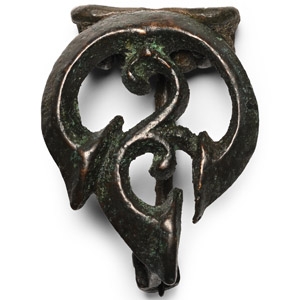
Roman Bronze Plate Brooch
2nd-3rd century A.D.Sold for (Inc. bp): £169
Comprising a chord and integral spring above a scrolled openwork plate with la Tène comma-trumpet ornament, long catch to reverse. 18 grams, 37 mm
Ex important German collection, 1990s. This lot is accompanied by an illustrated lot declaration signed by the Head of the Antiquities Department, Dr Raffaele D’Amato.
