
Loading, please wait...
LOT 0708
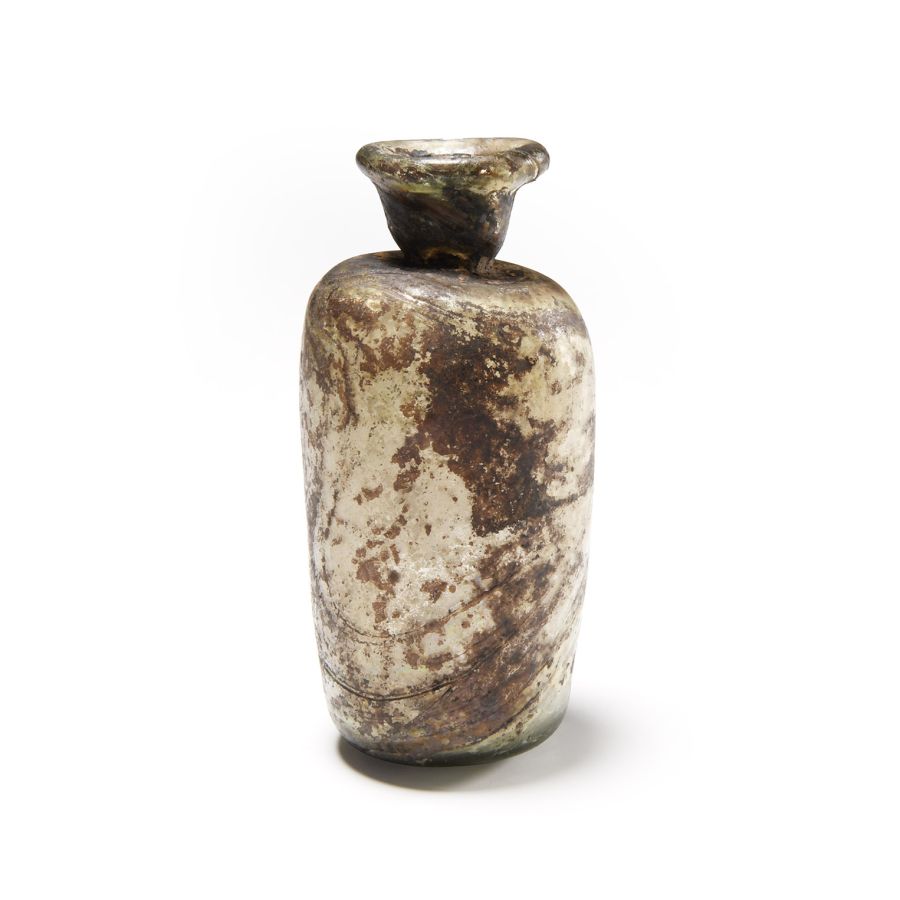
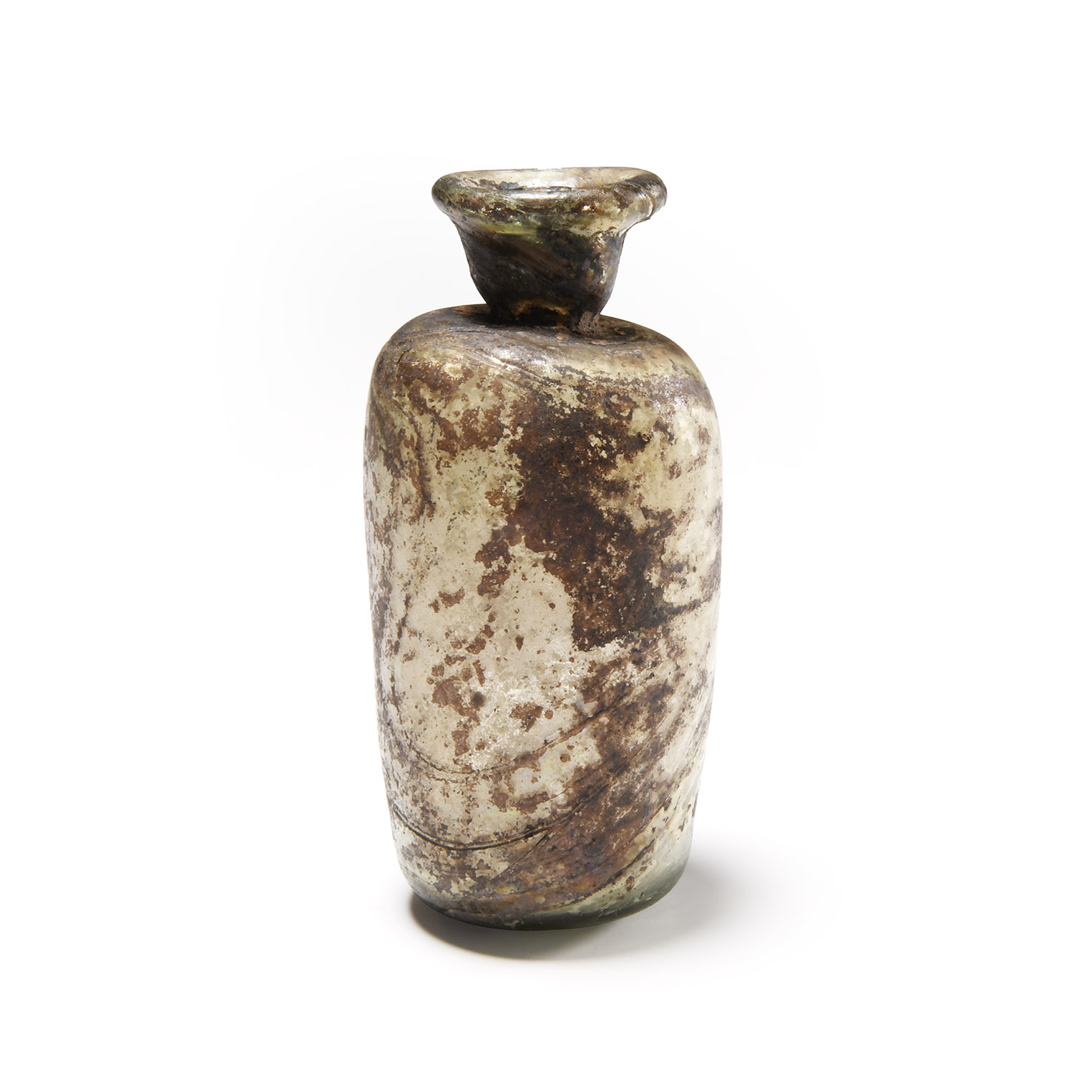
Roman Glass Barrel-Shaped Flask
2ND-3RD CENTURY A.D.
3 7/8 in. (55.4 grams, 98 mm).
Cylindrical shape with flat bottom, short v-shaped neck with everted rim.
ProvenanceAcquired 1980-2015.
Ex Abelita family collection.
TimeLine Auctions follows a vetting process to ensure the authenticity and legality of all items, reinforcing our commitment to integrity and responsible trading. Each antiquity, antique, and coin lot undergoes thorough examination by a vetting committee of at least ten external specialists, professional trade association members, scientists, and archaeologists: Our Vetting Process
AUCTIONS:
TimeLine is a leading auction house specialising in antiquities, ancient art, collectables, natural history, coins, medals, and books. Our auctions offer museums, collectors, historians, and enthusiasts the opportunity to acquire unique and historically significant pieces.
LOT 0708
Roman Glass Barrel-Shaped Flask
Estimate £120 - 170€140 - 200 (for guidance only)$160 - 230 (for guidance only)
-
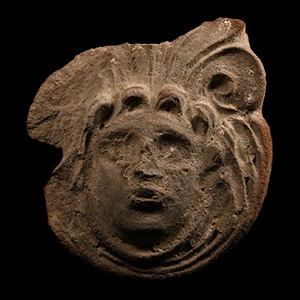
Roman Terracotta Frieze Fragment with Face
1st-2nd century A.D.Sold for (Inc. bp): £169
Comprising a circular medallion from an architectural frieze, representing a mask crowned by vegetable curls and volutes, the edges marked with a double line. 1 kg, 19.5 cm
Acquired from Millon Arts D'Orient. Property of a Ruislip, UK, gentleman, by inheritance.
The medallion partially corresponds to some faces visible on the clay antefixes on the temple of Isis in Pompeii. The antefix was a roof covering element placed on the end of roof beams or as an occlusion of the terminal channels of the tiles in Greek, Etruscan and Roman buildings. -
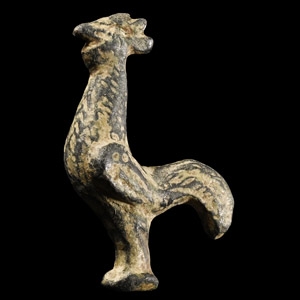
Roman Bronze Cockerel Statuette
1st-4th century A.D.Sold for (Inc. bp): £169
Modelled in the round with feather detailing. 9.96 grams, 32 mm
‘The Ancient Menagerie Collection’ formerly the property of a Cambridgeshire lady, collected since the 1990s and acquired from auctions and dealers throughout Europe and the USA, now ex London collection. -
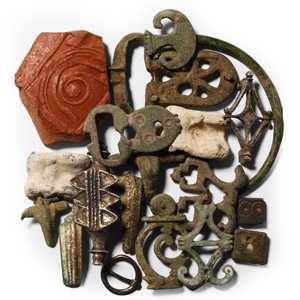
Roman Bronze and Other Mixed Artefact Group
Circa 6th century A.D.Sold for (Inc. bp): £65
Including brooches of various types; ornate openwork mounts; buckle plates and weights, together with other miscellaneous items. 144 grams total, 10-74 mm
Acquired on the UK art market. Property of a Ruislip, UK, gentleman, by inheritance.
