
Loading, please wait...
LOT 0671
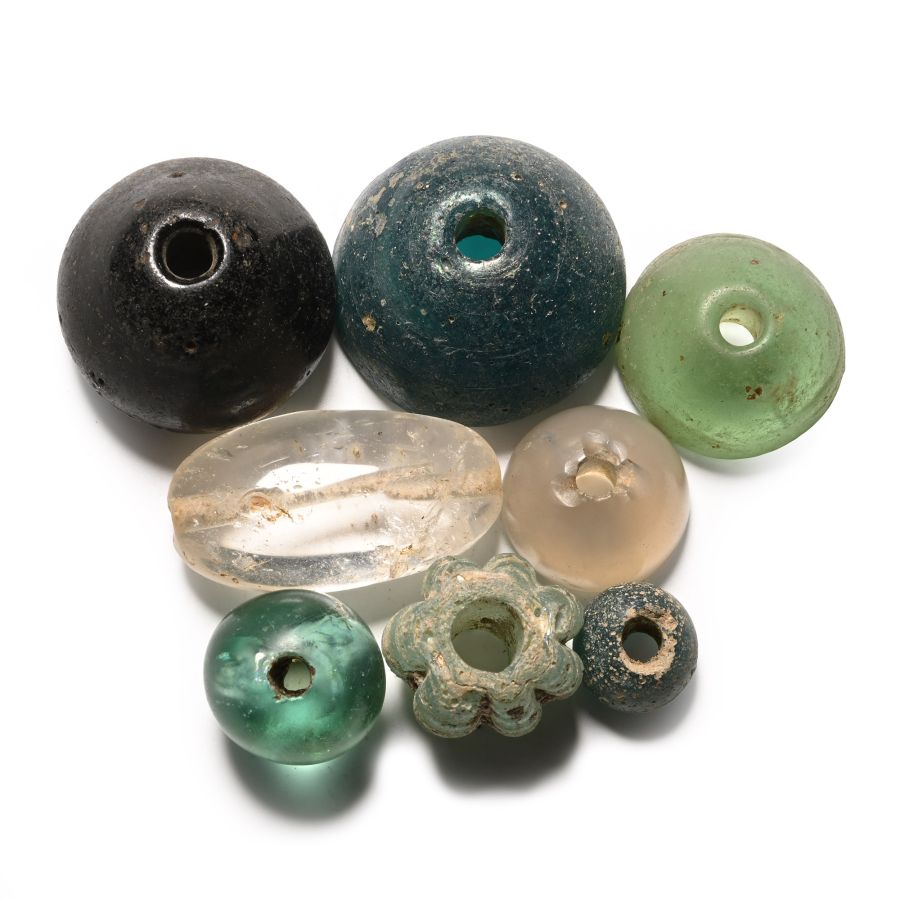
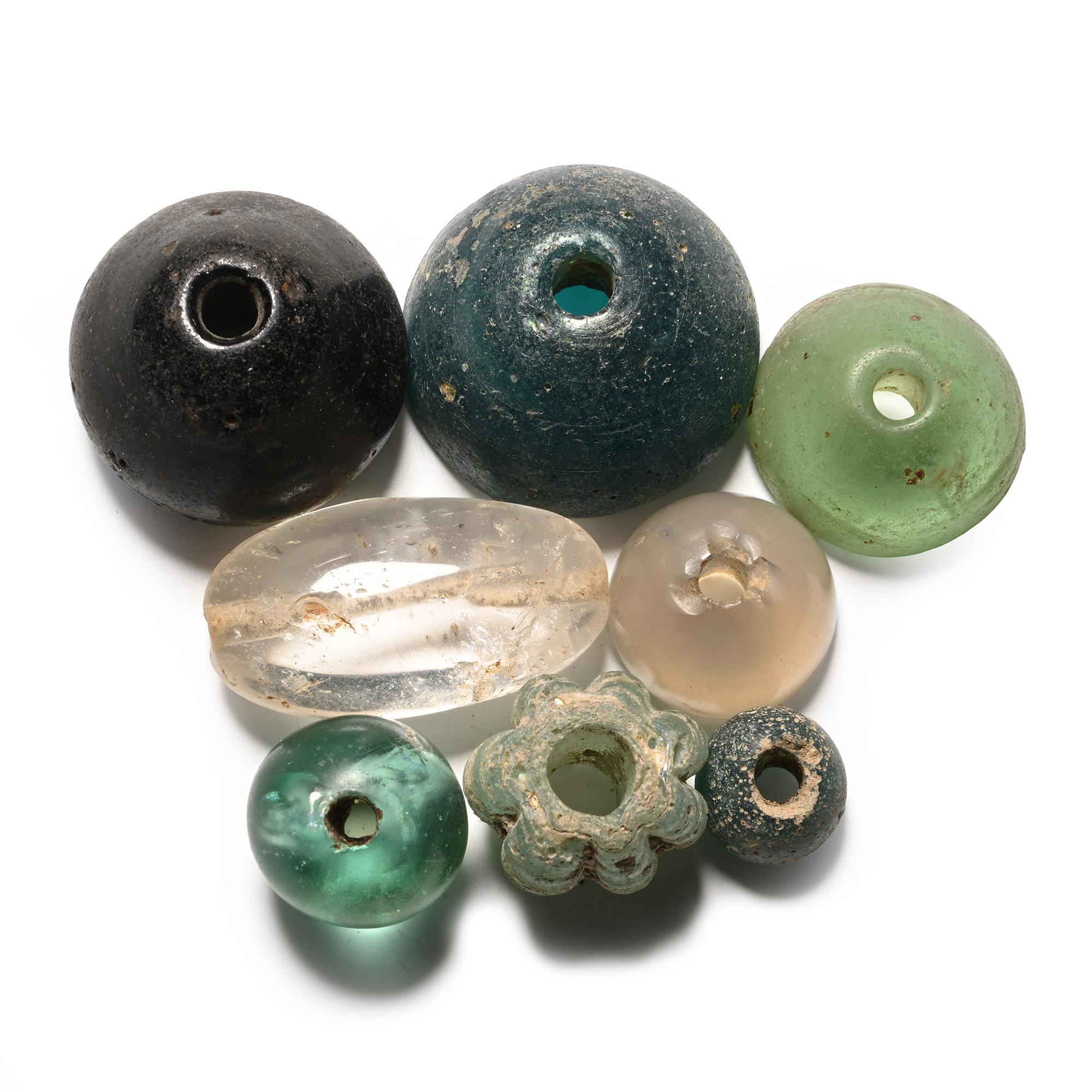
Roman Glass and Stone Bead Collection
1ST-4TH CENTURY A.D.
1/2 - 1 1/4 in. (78.2 grams total, 13-33 mm).
Comprising eight large beads, four domed, one melon, two spherical and one oval rock crystal bead. [8, No Reserve]
ProvenanceFrom the private collection of a European gentleman (1942-2024), formed since the 1970s.
LiteratureCf. similar Roman globular beads in blue glass in the Amgueddfa Cymru – Museum Wales, inventory no.29.370/1, from Castlemartin Burrows, Pembrokeshire.
CONDITIONTimeLine Auctions follows a vetting process to ensure the authenticity and legality of all items, reinforcing our commitment to integrity and responsible trading. Each antiquity, antique, and coin lot undergoes thorough examination by a vetting committee of at least ten external specialists, professional trade association members, scientists, and archaeologists: Our Vetting Process
AUCTIONS:
TimeLine is a leading auction house specialising in antiquities, ancient art, collectables, natural history, coins, medals, and books. Our auctions offer museums, collectors, historians, and enthusiasts the opportunity to acquire unique and historically significant pieces.
-
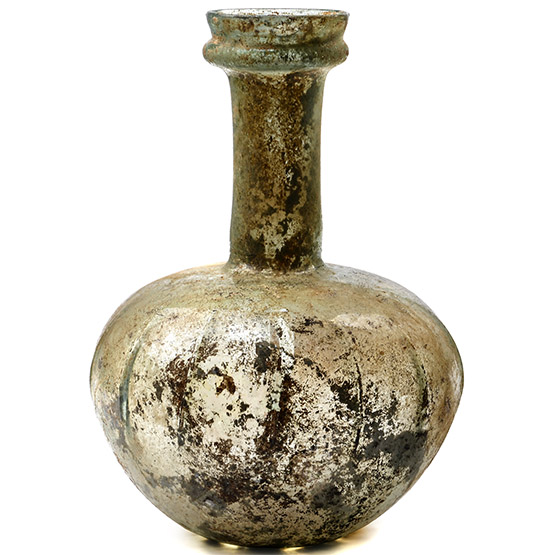
Roman Ribbed Glass Bottle
4th-5th century A.D.Estimate: £400 - 600 (‡+bp*)
Opening Bid: £200
With globular body, dimple foot, slight vertical ribbing to body, broad funicular mouth with folded rim. 174 grams, 19 cm
Acquired in the late 1980s. Private collection, thence by descent. Private collection, since the late 1990s.
Similar vessels (bottles) were found in 4th-5th century tombs at Beit Ras, Jordan, and from Samaria-Sebaste, Israel. The most recognisable characteristic of these bottles was the faint ribs on the body. The type survived until the Arab conquest in the 7th century A.D. -
.jpg)
Roman Garnet Cameo of Eros the Greek God of Love
1st century A.D. or laterSold for (Inc. bp): £780
Discoid in plan with a high-relief plastic head of Cupid (Greek Eros). 0.42 grams, 8 mm
Private English collection, formed between the late 1970s and early 1990s. Private collection, London, UK.
The finely engraved head on the cameo represents a young child, probably intended as Eros (Cupid). Such depictions were produced in numerous variations to illustrate the stages of childhood and the capacity of children to undertake meaningful or symbolic actions. The high relief type appears to have been especially popular and was probably derived from metalwork, like the plaster medallion from Begram, Afghanistan. -
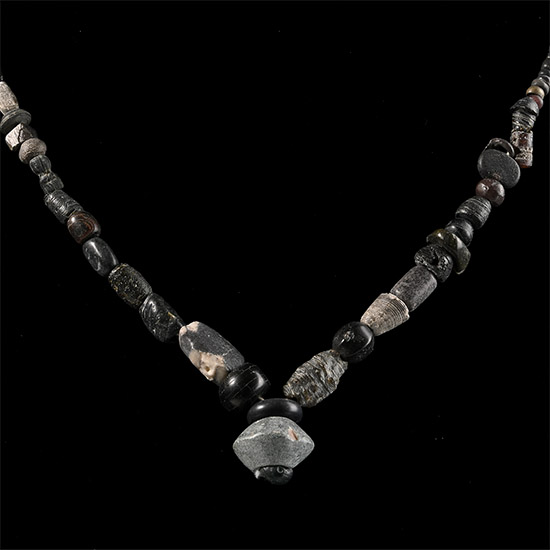
Roman Black Glass and Other Bead Necklace String
1st-4th century A.D. and laterSold for (Inc. bp): £39
Graduated group of mixed beads, the central feature a large biconical bead; restrung. 16.7 grams, 34.6 cm
Acquired in the 1990s. Ex London, UK, collection.
