
Loading, please wait...
LOT 0728
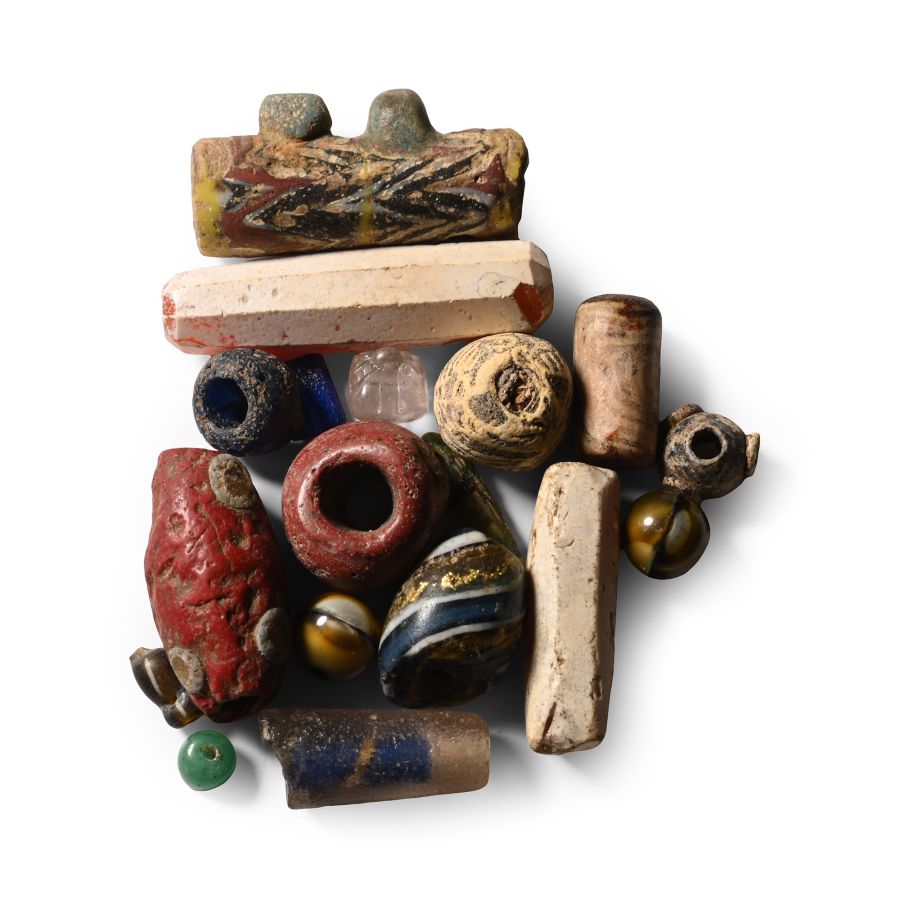
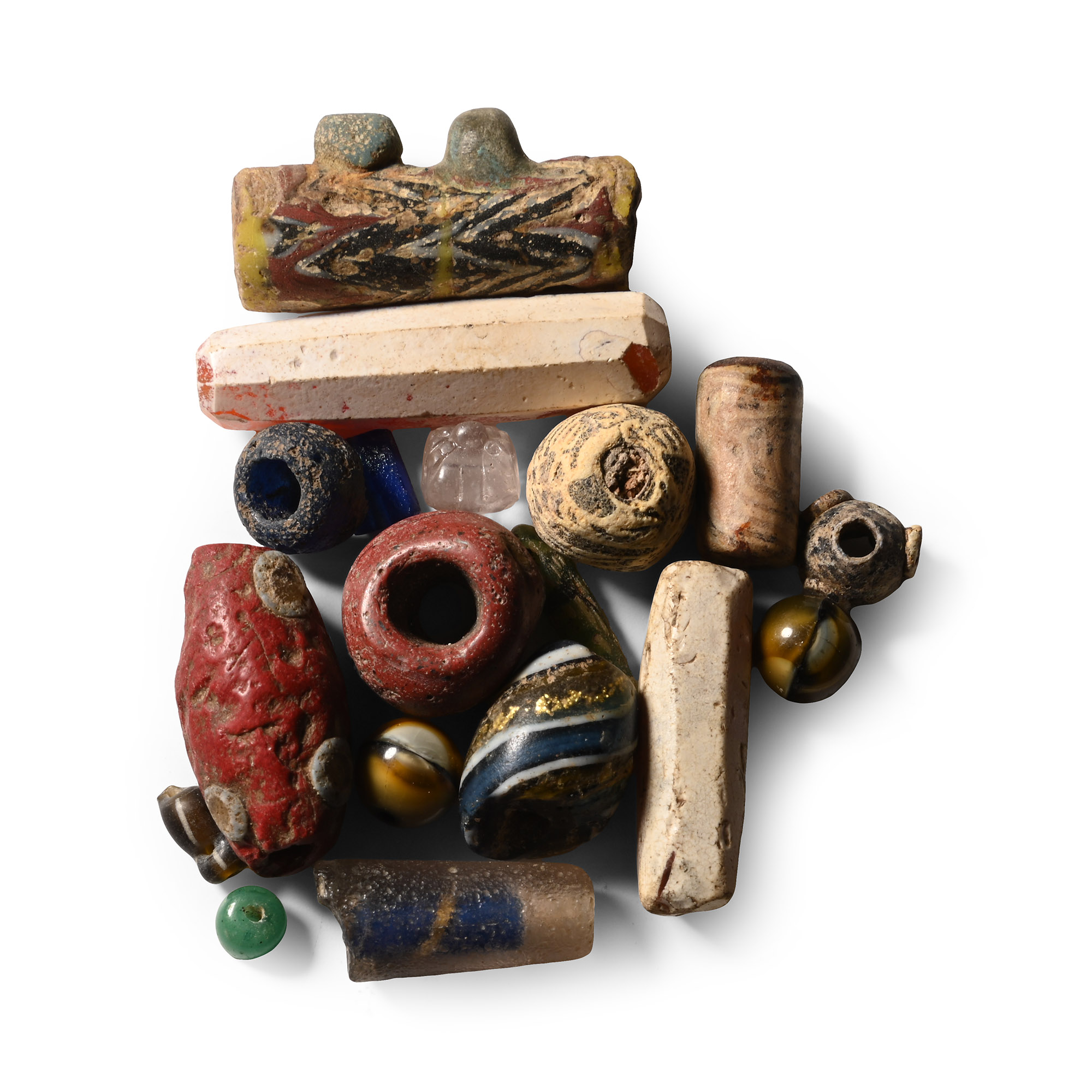
Roman Glass and Stone Bead and Pendant Collection
1ST-4TH CENTURY A.D. AND LATER
1/8 - 1 3/8 in. (32.5 grams total, 5-34 mm).
Mixed group including gold-in-glass, trail-decorated, and other types. [18, No Reserve]
ProvenanceFrom the private collection of a European gentleman (1942-2024), formed since the 1970s.
LiteratureCf. Beutler, F. et al., Der Adler Roms. Carnuntum und die Armee der Cäsaren, Bad-Deutsch-Altenburg, 2017, items 812-821, 965-966, 971-972, for similar.
CONDITIONTimeLine Auctions follows a vetting process to ensure the authenticity and legality of all items, reinforcing our commitment to integrity and responsible trading. Each antiquity, antique, and coin lot undergoes thorough examination by a vetting committee of at least ten external specialists, professional trade association members, scientists, and archaeologists: Our Vetting Process
AUCTIONS:
TimeLine is a leading auction house specialising in antiquities, ancient art, collectables, natural history, coins, medals, and books. Our auctions offer museums, collectors, historians, and enthusiasts the opportunity to acquire unique and historically significant pieces.
-
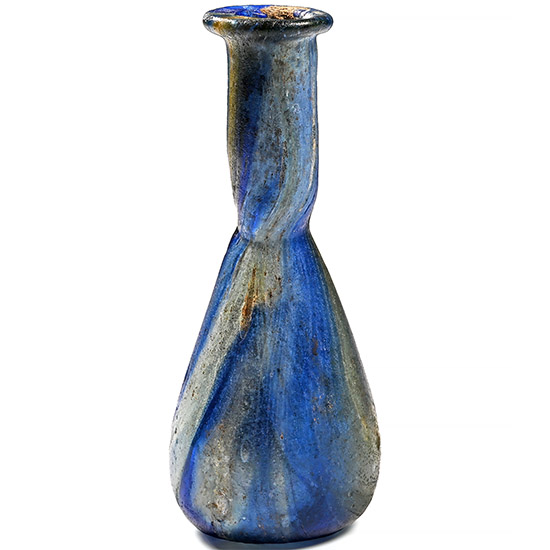
Roman Marbled Blue Glass Toilet Bottle
1st-2nd century A.D.Sold for (Inc. bp): £1,820
An iridescent unguentarium with piriform body, tubular neck with everted rolled rim. 19.7 grams, 83 mm
Acquired on the European art market in 2001.
This typology was produced mainly in Egypt (Karanis class XIII.B). They were characteristic of the Eastern Mediterranean as well, and characterised by the irregular curved depression on the underside of the base and by the narrow cylindrical neck with slight constriction at the bottom. -
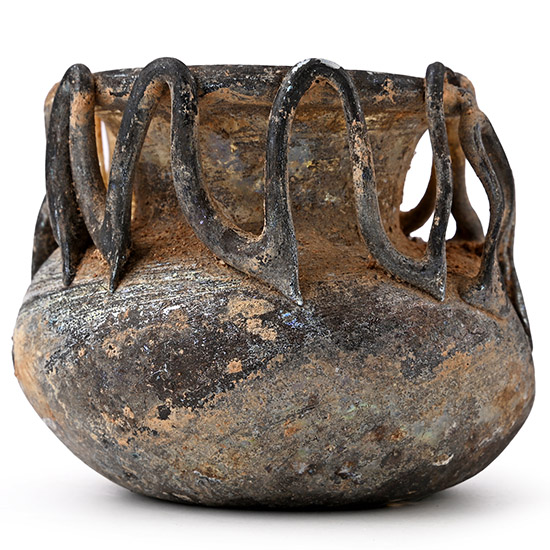
Roman Glass Vessel with Iridescence
4th-5th century A.D.Sold for (Inc. bp): £468
Squat body with a short trumpet-shaped neck with rolled rim, applied openwork gallery encircling the neck. 59.8 grams, 73 mm wide
From an important London, UK, collection 1980-2020.
Such jars, with applied trails, are commonly found in the Near East and Egypt. One trail was wound once horizontally around the undercurve of the mouth; another was applied in a large pad to shoulder and then formed into wavy zigzag patterns. -
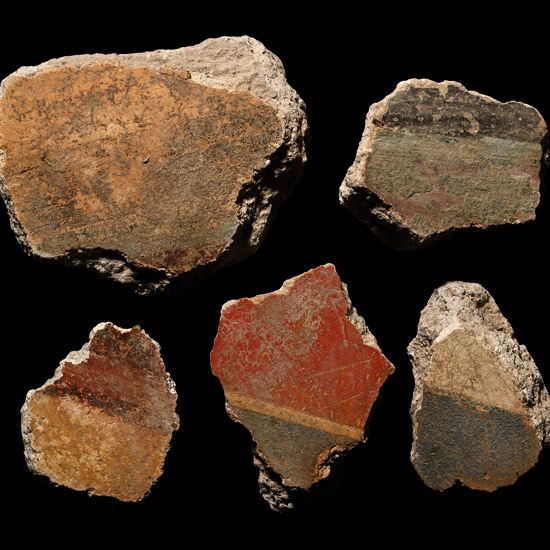
Roman Fresco Wall Plaster Collection
1st century A.D.Sold for (Inc. bp): £416
Fragments of wall plaster with rendered surface painted with mainly Pompeii red, pale blue, brown and cream detailing; some with an impression of timber laths to the reverse. 673 grams total, 6.3-11.3 cm
Acquired in the 19th century. Ex Jeger collection, Switzerland. UK gallery, early 2000s.
These small fragments, for analogies with the fragments of Pompeii, seem to belong to the second style of Roman painting, red panels representing highlight and shadow, decorated with vegetal interlaces. A red grenade fillet probably framed some panels. A fragment shows alternate blue and red colours over a cream background, maybe pertinent to a socle.
