
Loading, please wait...
LOT 0689
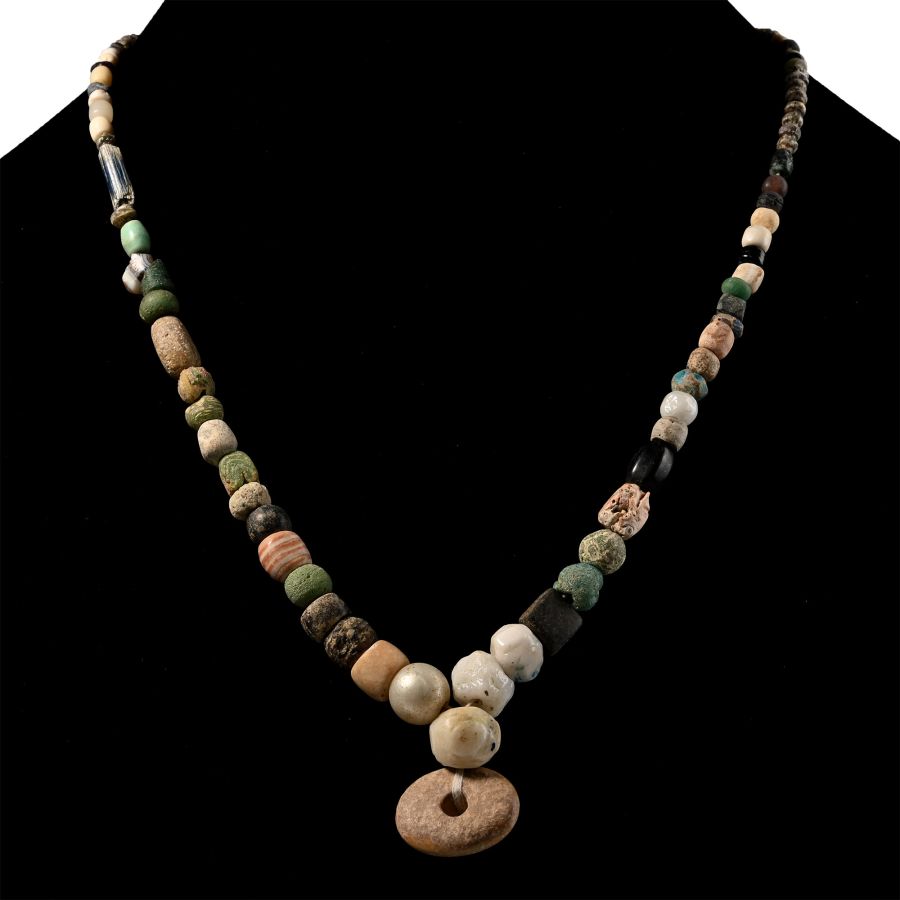
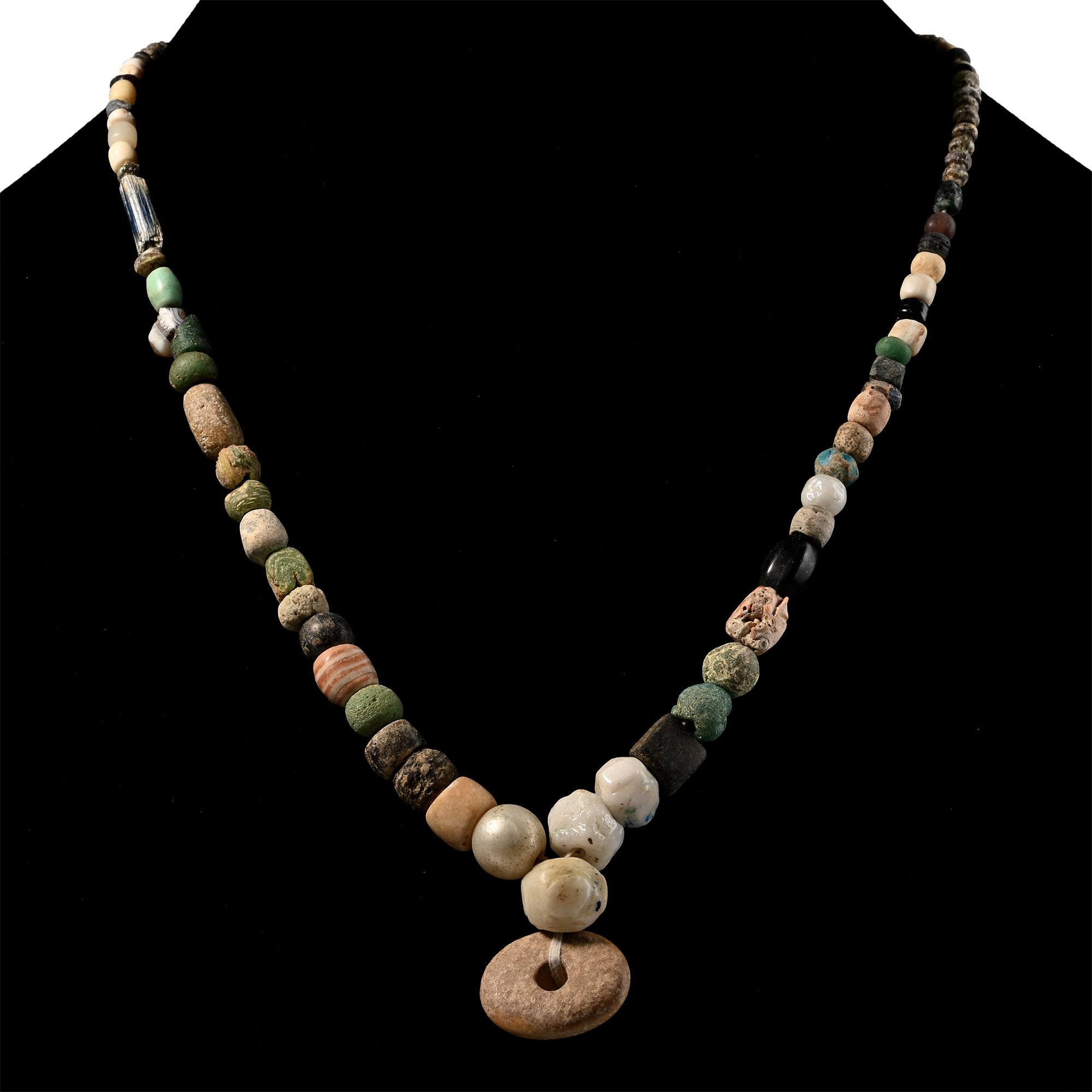
Roman Glass and Other Bead Necklace String
1ST-4TH CENTURY A.D. AND LATER
17 7/8 in.. (35.4 grmas, 45.5 cm).
Mixed group of graduated beads in various colours and materials, the central feature a large discoid bead; restrung. [No Reserve]
ProvenanceAcquired in the 1990s.
Ex London, UK, collection.
TimeLine Auctions follows a vetting process to ensure the authenticity and legality of all items, reinforcing our commitment to integrity and responsible trading. Each antiquity, antique, and coin lot undergoes thorough examination by a vetting committee of at least ten external specialists, professional trade association members, scientists, and archaeologists: Our Vetting Process
AUCTIONS:
TimeLine is a leading auction house specialising in antiquities, ancient art, collectables, natural history, coins, medals, and books. Our auctions offer museums, collectors, historians, and enthusiasts the opportunity to acquire unique and historically significant pieces.
-
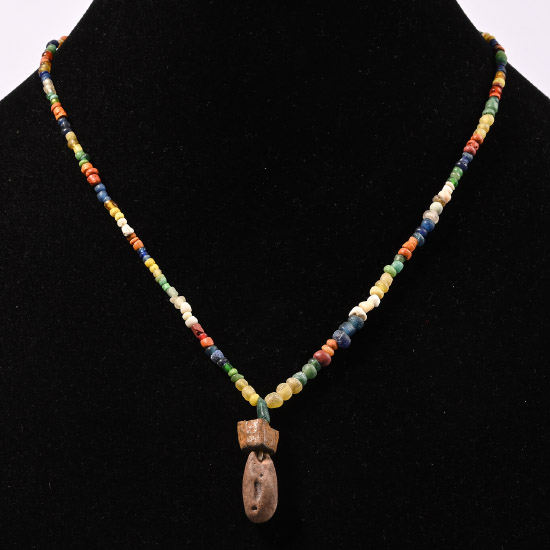
Roman Mixed Glass and Other Bead Necklace String
1st-4th century A.D. and laterSold for (Inc. bp): £13
Composed of polychrome oblate and annular beads with two larger beads as a central feature, restrung. 10.5 grams, 38 cm
Ex Ancient Art Shop, Windsor, UK, 1990s. Ex private West County, UK, collection. -
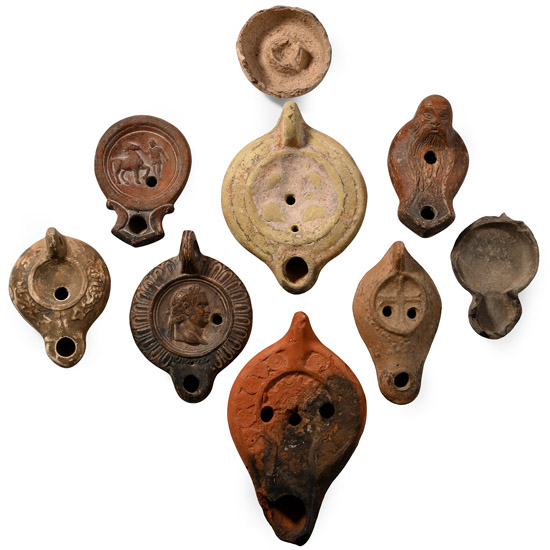
Roman and Later Terracotta Oil Lamp Collection
Circa 1st-19th century A.D.Sold for (Inc. bp): £468
Comprising nine lamps, including one with a wreathed profile bust, one with a man and a horse, one with the handle formed as a bearded head, one with a cross, and others. 823 grams total, 6.2-13.9 cm
From an important collection of lamps, Germany, 1970s. -
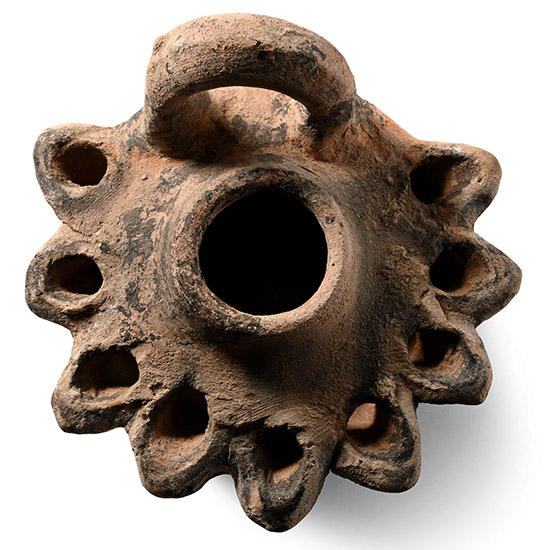
Romano-Jewish Terracotta Multinozzle Oil Lamp
Holy Land, circa 1st-2nd century A.D.Sold for (Inc. bp): £182
High body with a large filler hole and nine oval spouts surrounding, a large U-shaped handle to the rear, inked collector's number '410' on the underside. 150 grams, 10.3 cm
Ex important German collection, 1960-1990.
