
Loading, please wait...
LOT 0928
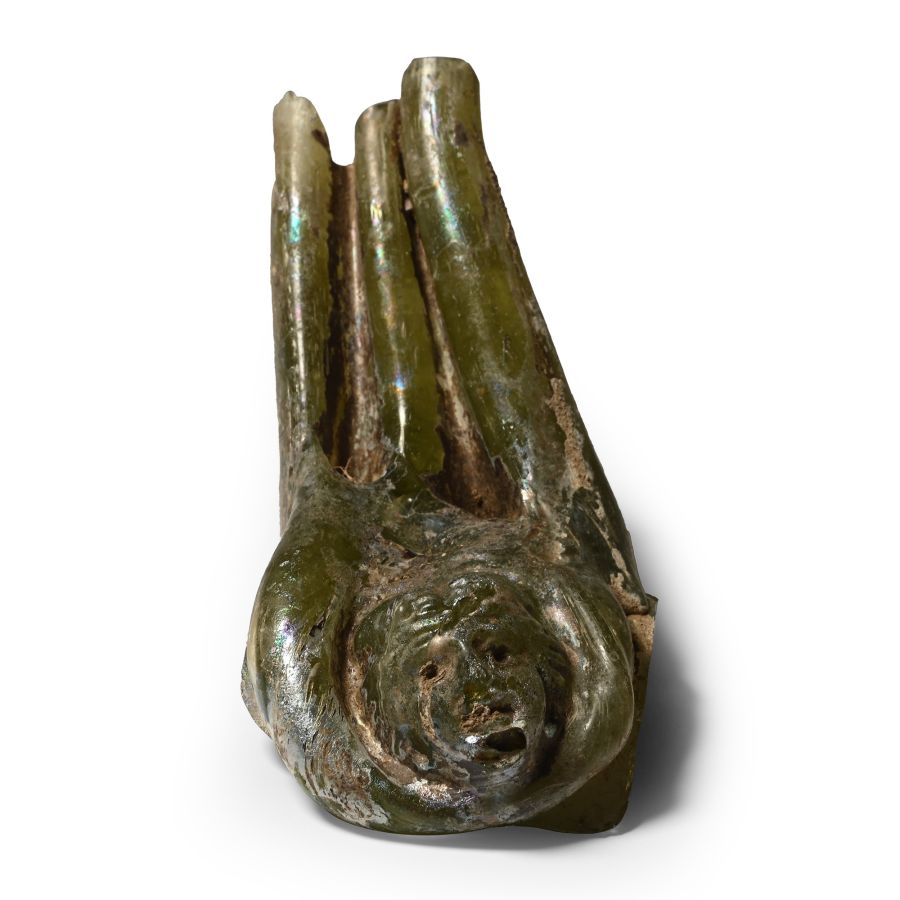
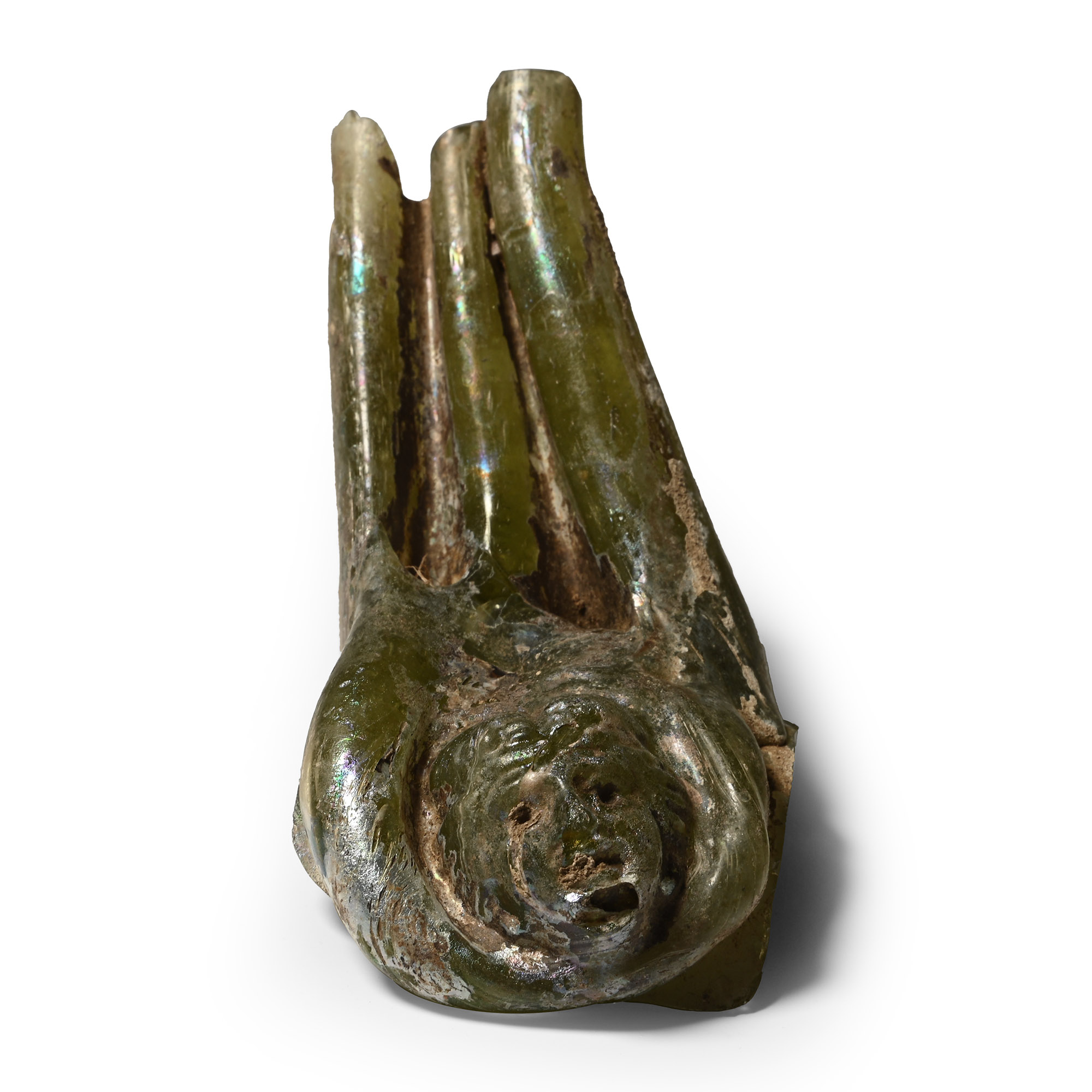
Roman Glass Amphora Handle Fragment with Medusa
1ST CENTURY A.D.
4 1/4 in. (122 grams, 10.7 cm).
Comprising a ribbed handle developing to a round plaque with moulded gorgoneion motif.
ProvenanceEx German art market, 2000s.
Acquired from an EU collector living in London.
From the collection of Surrey, UK, gentleman.
This lot is accompanied by an illustrated lot declaration signed by the Head of the Antiquities Department, Dr Raffaele D’Amato.
TimeLine Auctions follows a vetting process to ensure the authenticity and legality of all items, reinforcing our commitment to integrity and responsible trading. Each antiquity, antique, and coin lot undergoes thorough examination by a vetting committee of at least ten external specialists, professional trade association members, scientists, and archaeologists: Our Vetting Process
AUCTIONS:
TimeLine is a leading auction house specialising in antiquities, ancient art, collectables, natural history, coins, medals, and books. Our auctions offer museums, collectors, historians, and enthusiasts the opportunity to acquire unique and historically significant pieces.
LOT 0928
Roman Glass Amphora Handle Fragment with Medusa
Estimate £150 - 200€170 - 230 (for guidance only)$200 - 270 (for guidance only)
-
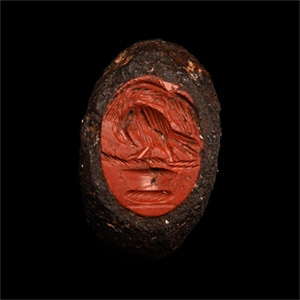
Roman Iron Ring with Eagle Gemstone
1st-2nd century A.D.Estimate: £800 - 1,000 (+bp*)
Opening Bid: £400
Ellipsoid jasper cloison with intaglio perching eagle with wings spread on top of a column; set in a ferrous finger ring; supplied with a museum-quality impression. 11.40 grams, 27.14 mm overall, 18.35 mm internal diameter (approximate size British J, USA 4 3/4, Europe 8.69, Japan 8)
Acquired on the UK art market. Private collection, London, UK. This lot is accompanied by an illustrated lot declaration signed by the Head of the Antiquities Department, Dr Raffaele D’Amato. -
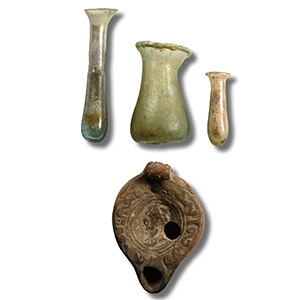
Romano-British Glass Vessel and Terracotta Oil Lamp Group
1st-2nd century AD.Sold for (Inc. bp): £117
Comprising: a small unguentarium with iridescent surface; a small flask with rolled rim; terracotta oil lamp with lug handle. 71 grams total, 41-75 mm
From an old collection formed before WWII, and believed to have been found at Worcester, UK. Acquired from Alan Cherry, Bournemouth, UK, in 2007. Ian Wilkinson collection, Nottinghamshire, UK, formed since 1985. This lot is accompanied by an illustrated lot declaration signed by the Head of the Antiquities Department, Dr Raffaele D’Amato. -
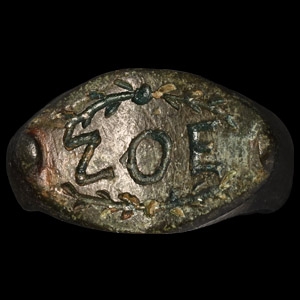
Roman Bronze Ring with ZOE
1st-4th century A.D.Sold for (Inc. bp): £975
Ellipsoid bezel with spur at each narrow end, incuse wreath and 'ZOE' (life) legend. 8.12 grams, 23.77 mm overall, 17.32 mm internal diameter (approximate size British N 1/2, USA 6 3/4, Europe 14.35, Japan 13)
Ex German art market, 2000s. Acquired from an EU collector living in London. From the collection of Surrey, UK, gentleman. This lot is accompanied by an illustrated lot declaration signed by the Head of the Antiquities Department, Dr Raffaele D’Amato.
