
Loading, please wait...
LOT 0122
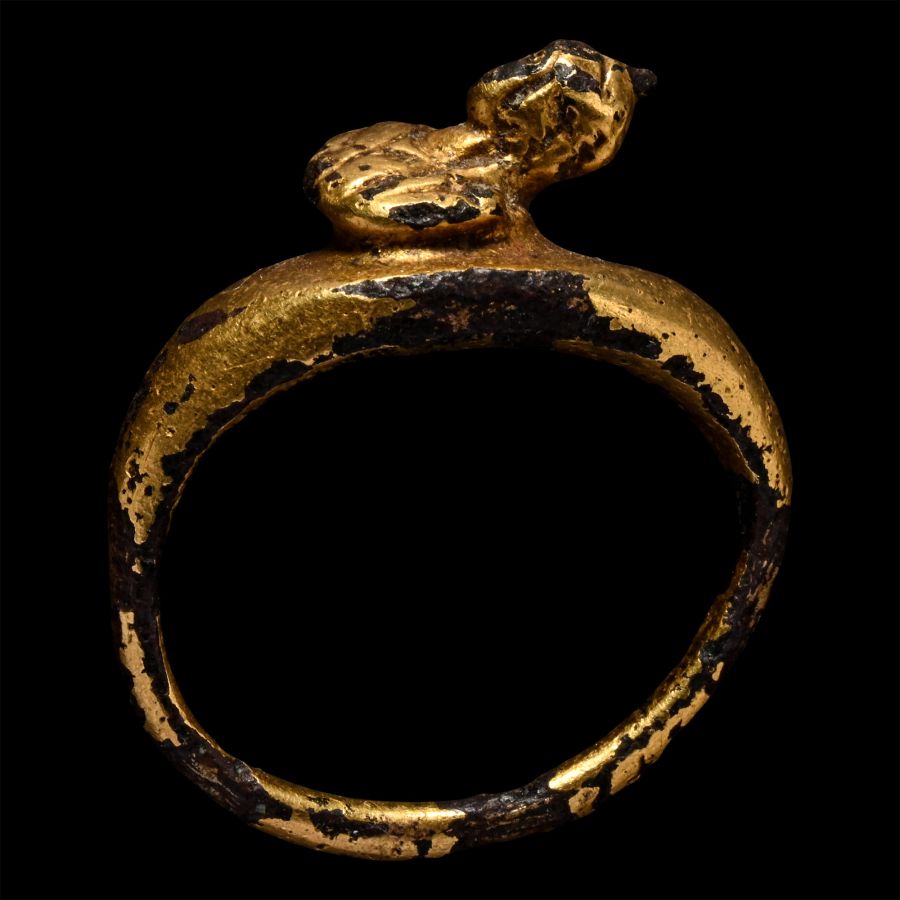
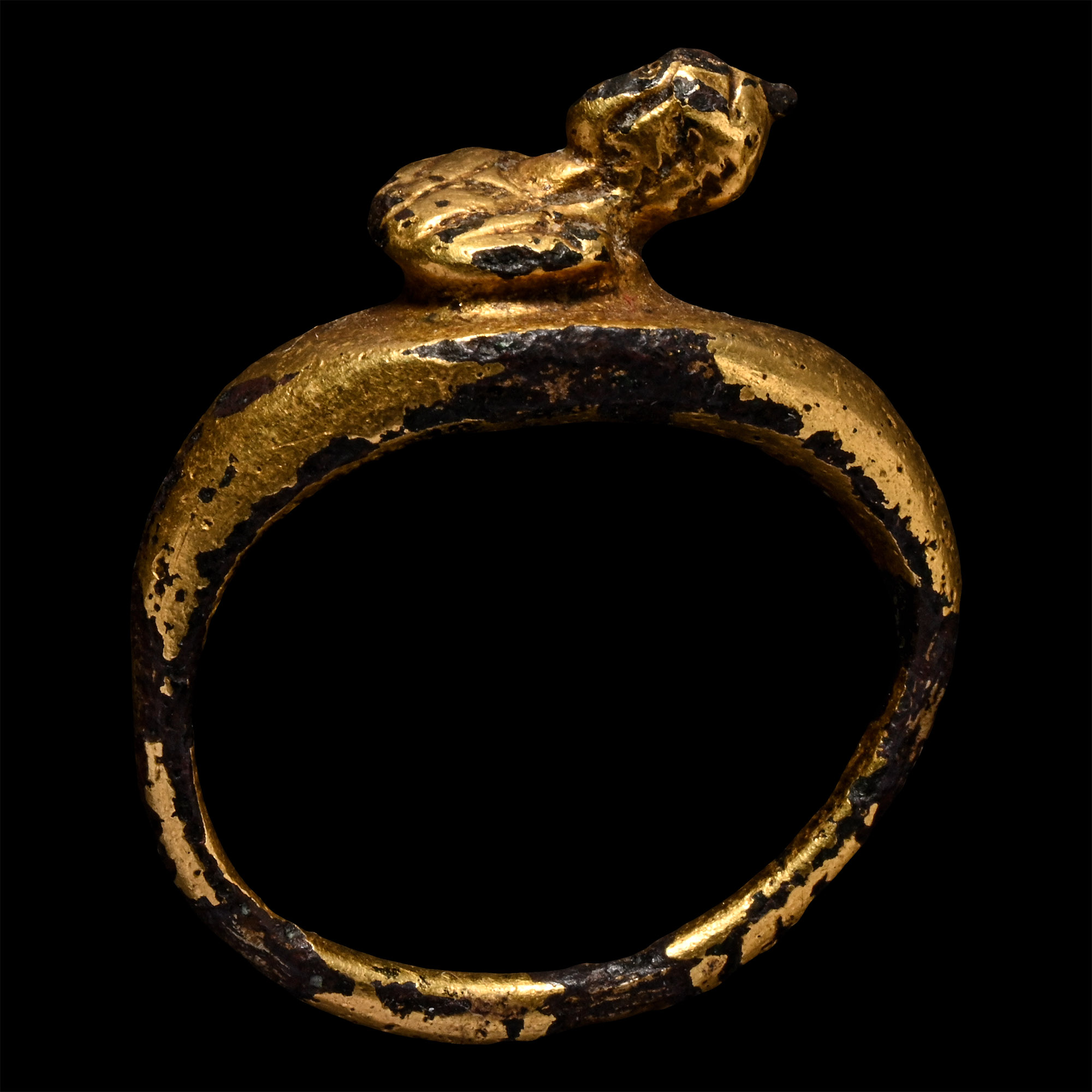
Roman Gilt Bronze Ring with Bust of Minerva
1ST-2ND CENTURY A.D.
1 in. (4.23 grams, 24.14 mm overall, 17.40 mm internal diameter (approximate size British G, USA 3 1/4, Europe 4.92, Japan 4)).
Integral scaphoid bezel with female bust modelled in the round.
ProvenancePrivate collection, UK.
Acquired on the English art market.
Cf. Chadour, A.B., Rings. The Alice and Louis Koch Collection, volume I, Leeds, 1994, item 182, for type.
CONDITIONTimeLine Auctions follows a vetting process to ensure the authenticity and legality of all items, reinforcing our commitment to integrity and responsible trading. Each antiquity, antique, and coin lot undergoes thorough examination by a vetting committee of at least ten external specialists, professional trade association members, scientists, and archaeologists: Our Vetting Process
AUCTIONS:
TimeLine is a leading auction house specialising in antiquities, ancient art, collectables, natural history, coins, medals, and books. Our auctions offer museums, collectors, historians, and enthusiasts the opportunity to acquire unique and historically significant pieces.
LOT 0122
Roman Gilt Bronze Ring with Bust of Minerva
Estimate £350 - 450€410 - 520 (for guidance only)$470 - 610 (for guidance only)
-
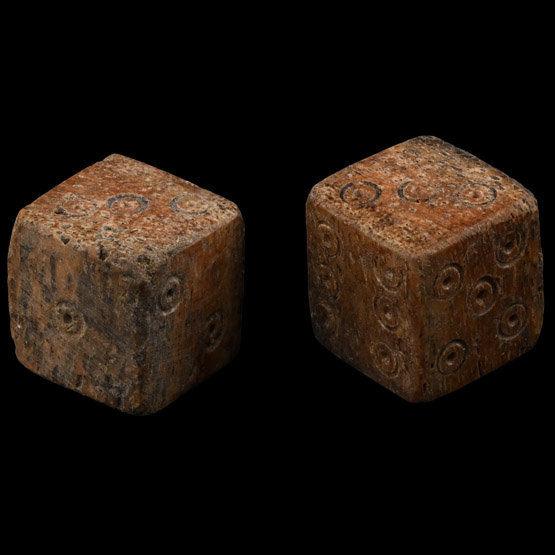
Roman Bone Gaming Dice Pair
1st-2nd century A.D.Sold for (Inc. bp): £312
Each cuboid with ring-and-dot markings disposed 1:6, 2:5, 3:4. 6.57 grams total, 12 mm each
From a Cambridgeshire, UK, collection, 1990s. -
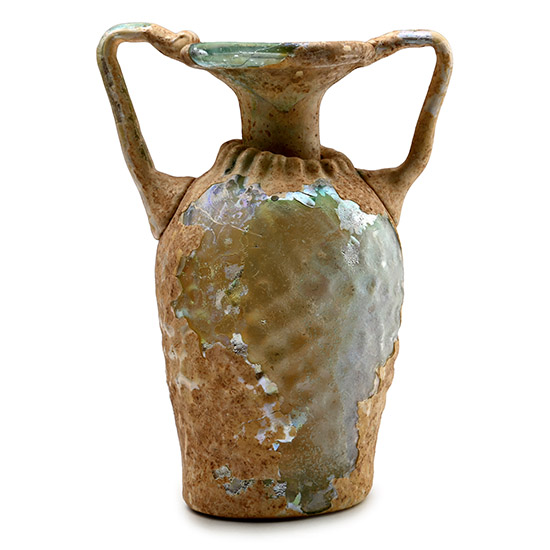
Roman Glass Two-Handled Jar
Circa 1st-4th century A.D.Estimate: £400 - 600 (+bp*)
Opening Bid: £200
With mould-blown tubular body decorated with raised ribs to the shoulder and impressed honeycomb effect to the sidewall, pontil base; milky patination and iridescent surface. 58 grams, 11cm
From a London, UK, collection of glass, 1970-2000s. -
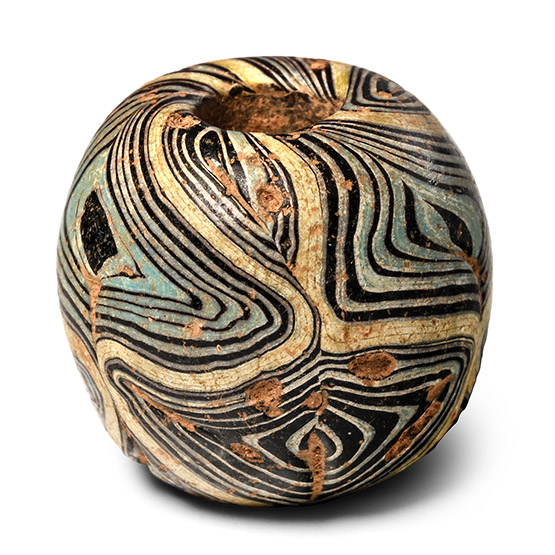
Roman Folded Glass Bead
1st-3rd century A.D.Sold for (Inc. bp): £111
Rounded in profile with symmetrically disposed design, created by the folding technique. 7.13 grams, 18 mm
London collection, 1979-1983.
