
Loading, please wait...
LOT 0871
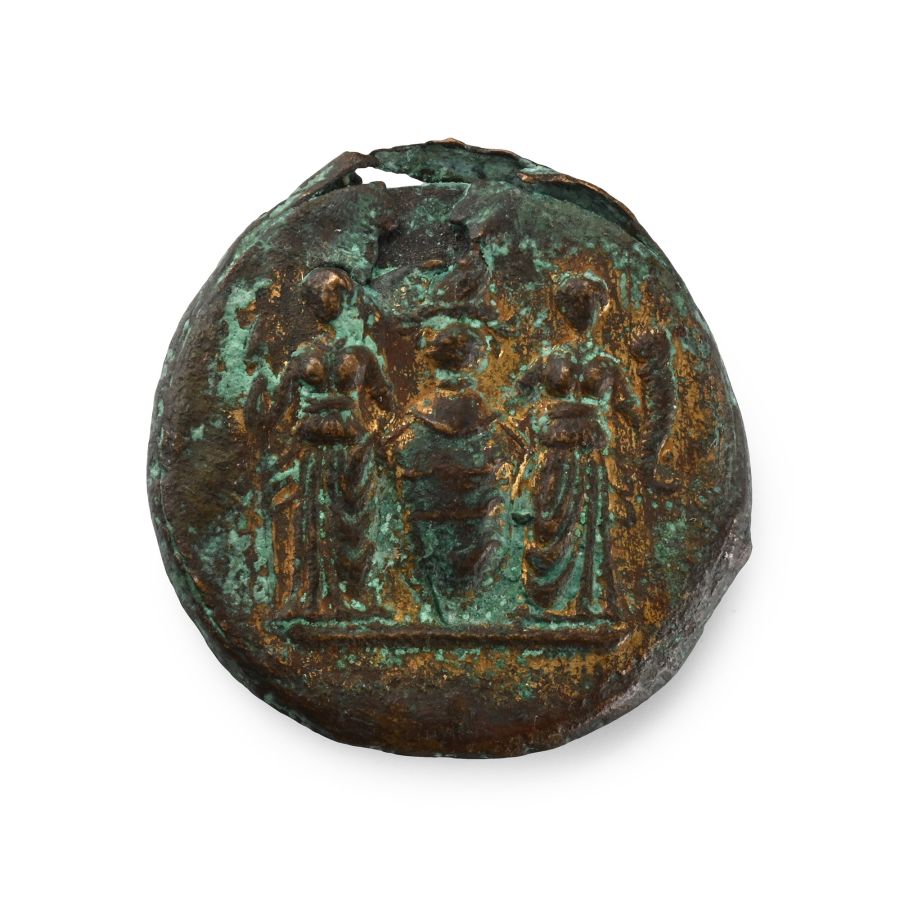
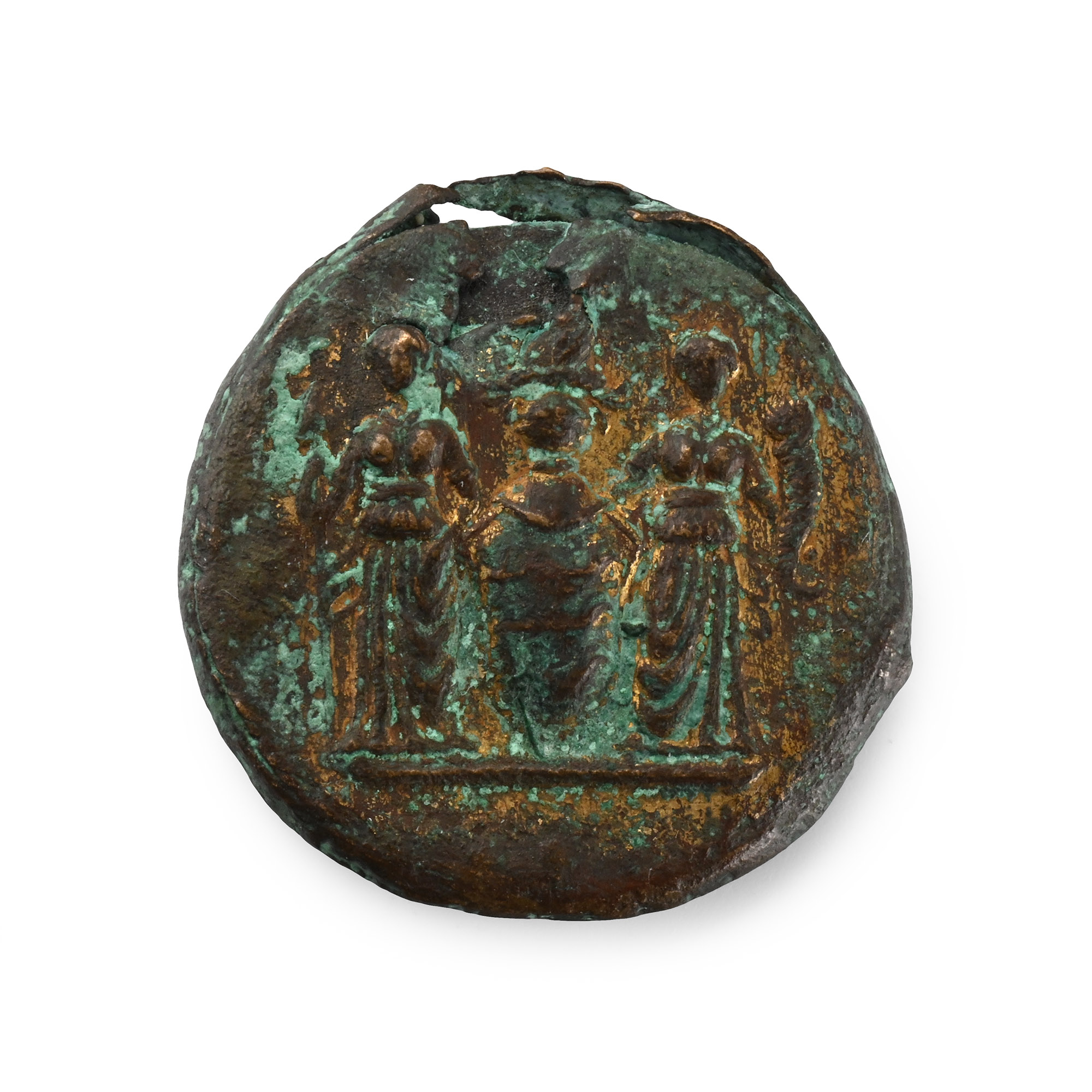
Roman Gilt Bronze Medallion with Mythological Scene
3RD-5TH CENTURY A.D.
1 in. (7.5 grams, 23 mm).
Discoid in plan with repoussé sheet-bronze cover on a bronze disc; facing image of two goddesses holding cornucopiae (Fortuna and Isis) flanking an altar, on a baseline. [No Reserve]
ProvenanceAcquired in 1993.
Private collection, thence by descent.
Private collection, since the late 1990s.
This lot is accompanied by an illustrated lot declaration signed by the Head of the Antiquities Department, Dr Raffaele D'Amato.
There are reliefs and paintings from across the Empire showing religious processions involving cult statues of the two goddesses. The famous Roman novel 'The Golden Ass' by Lucius Apuleius provides literary evidence of such processions in honour of the goddess Isis. The statue of the goddess was taken from the temple and processed through the streets with great pomp and ceremony on an elaborate bier or cart by the priests and devotees to the accompaniment of music and prayers.
CONDITIONTimeLine Auctions follows a vetting process to ensure the authenticity and legality of all items, reinforcing our commitment to integrity and responsible trading. Each antiquity, antique, and coin lot undergoes thorough examination by a vetting committee of at least ten external specialists, professional trade association members, scientists, and archaeologists: Our Vetting Process
AUCTIONS:
TimeLine is a leading auction house specialising in antiquities, ancient art, collectables, natural history, coins, medals, and books. Our auctions offer museums, collectors, historians, and enthusiasts the opportunity to acquire unique and historically significant pieces.
-
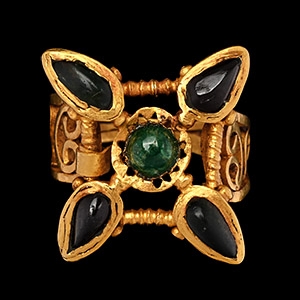
Graeco-Roman Gold Ring with Garnets and Emeralds
1st century A.D.Sold for (Inc. bp): £5,720
Comprising a tapering hoop formed with convergent bands filled with scrolls, granule at the junction to the reverse; beaded wire frame to the square bezel with central panel and teardrop-cell to each corner; inset cabochon to each corner cell, later green cabochon to centre; shoulder repaired in antiquity with gold strap. 7.27 grams, 23.17 mm overall, 16.94 mm internal diameter (approximate size British K, USA 5 1/4, Europe 9.95, Japan 9)
with Gorny & Mosch, Auction 119, 16 October 2002, no.3072. Private collection, London. This lot has been checked against the Interpol Database of stolen works of art and is accompanied by search certificate number no.12814-241422. This lot has been cleared against the Art Loss Register database, and is accompanied by an illustrated lot declaration signed by the Head of the Antiquities Department, Dr Raffaele D'Amato. -
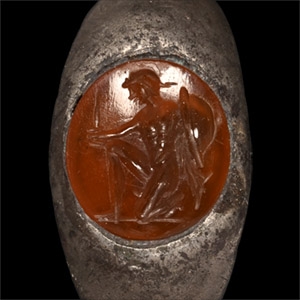
Roman Silver Ring with Warrior Gemstone
2nd-3rd century A.D.Sold for (Inc. bp): £936
With ellipsoid plaque and inset carnelian cloison with intaglio kneeling warrior with Pseudo-Attic helmet pushed back from the face, domed shield on one arm and sword held upright in the other hand supported by the knee. 8.11 grams, 27.11 mm overall, 20.96 mm internal diameter (approximate size British N 1/2, USA 6 3/4, Europe 14.35, Japan 13)
Acquired on the European art market in the 1990s. UK collection of a European gentleman. This lot is accompanied by an illustrated lot declaration signed by the Head of the Antiquities Department, Dr Raffaele D'Amato.
The motif of a nude kneeling warrior with weapons is certainly visible in the repertory of the Greek gemstones since the Archaic and classical age. The scene possibly alludes to the incident in the Trojan Cycle where Achilles is wounded by an arrow in his heel, the only part of his body which was not impervious to injury. -
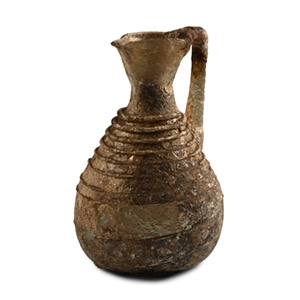
Roman Glass Jug with Trails
4th-5th century A.D.Estimate: £700 - 900 (‡+bp*)
Opening Bid: £250
A small pale yellow collared globular jug with short neck, angular ribbon handle with two narrow prominent ribs, folded upper attachment to the cylindrical neck, several horizontal lines on the globular body, trefoil mouth. 32 grams, 74 mm
with H.A.C., Basel, prior 1999. This lot is accompanied by an illustrated lot declaration signed by the Head of the Antiquities Department, Dr Raffaele D’Amato. This lot is accompanied by an illustrated lot declaration signed by the Head of the Antiquities Department, Dr Raffaele D'Amato.
These globular jugs were typical of the Eastern Mediterranean in the late Roman period. Ornamental threads were decorating the body, and the employment of these jugs was often similar to those of pilgrim flasks, destined to collect oil and water from early Christian sanctuaries.
