
Loading, please wait...



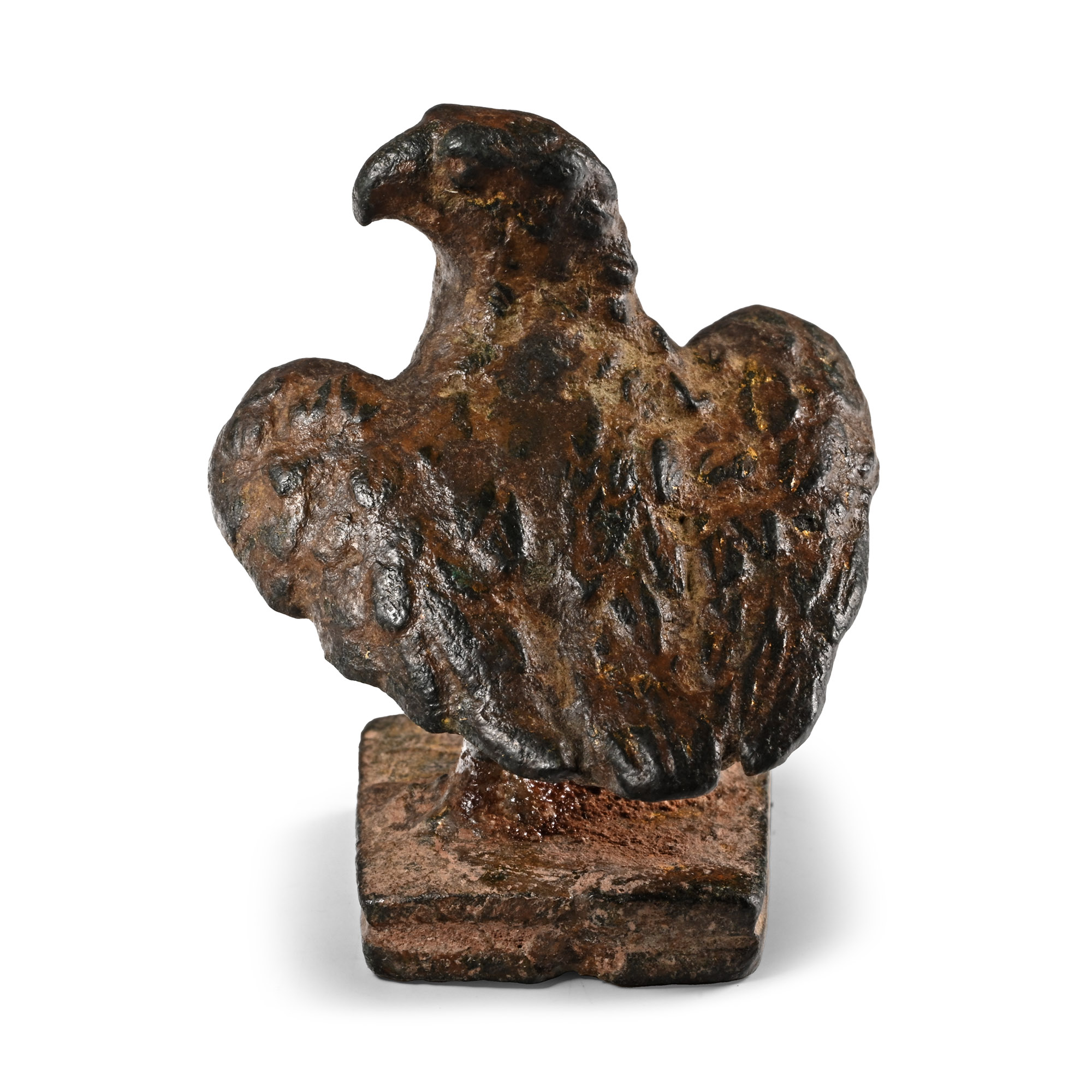
LOT 0114
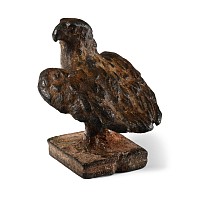
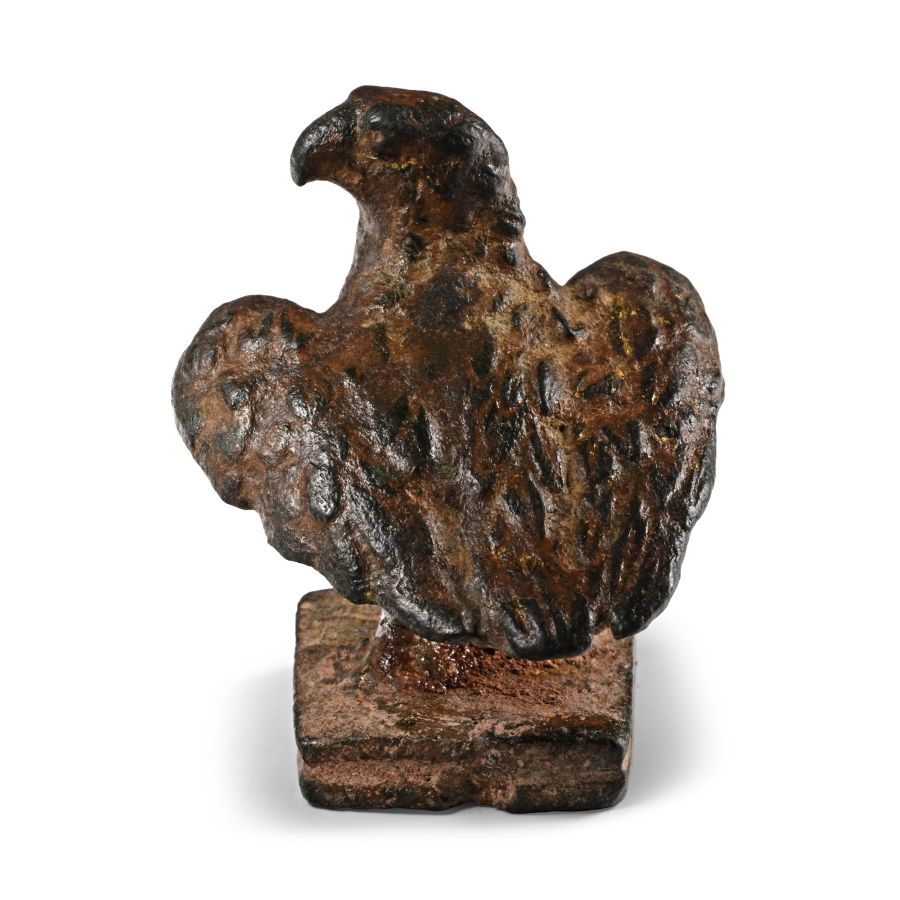
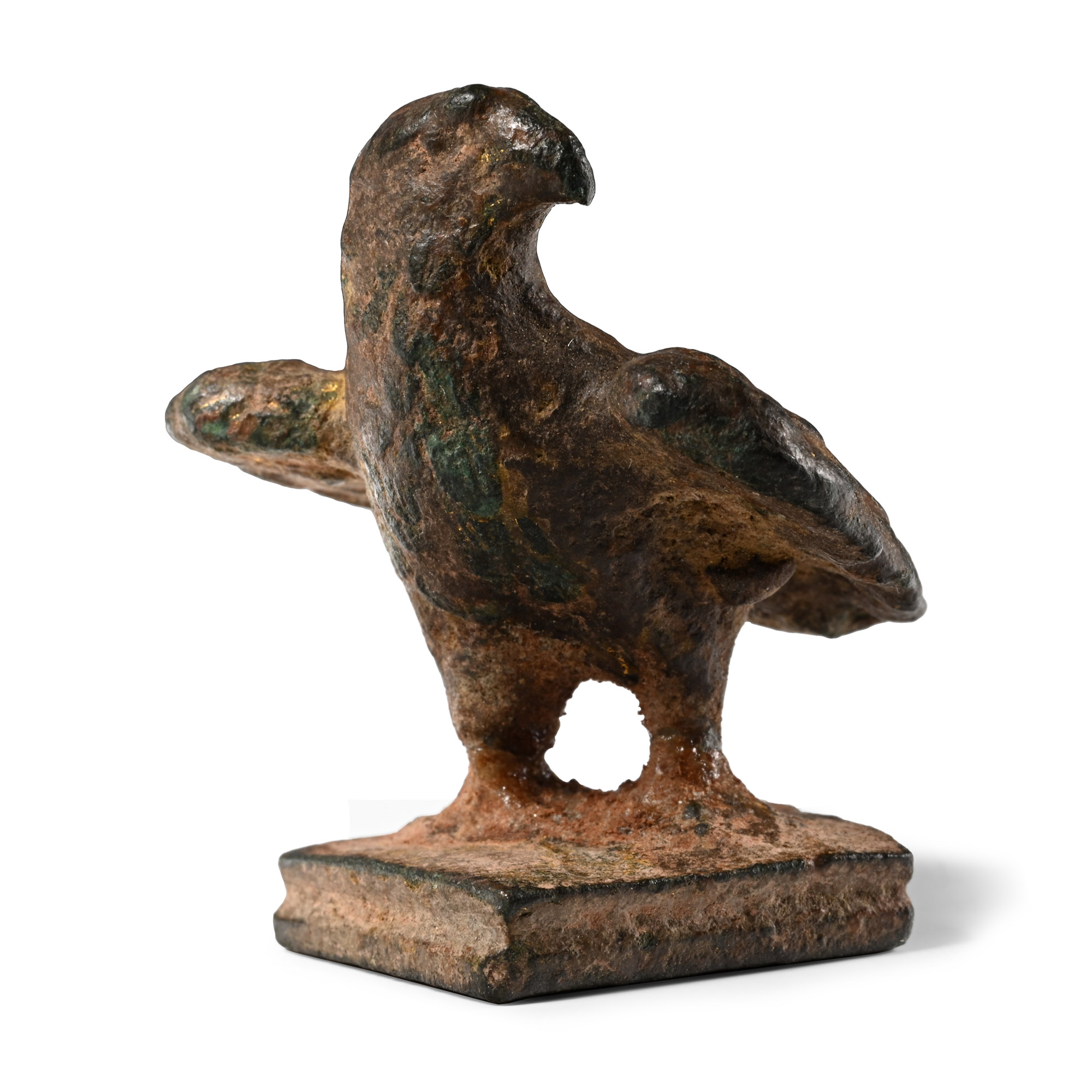
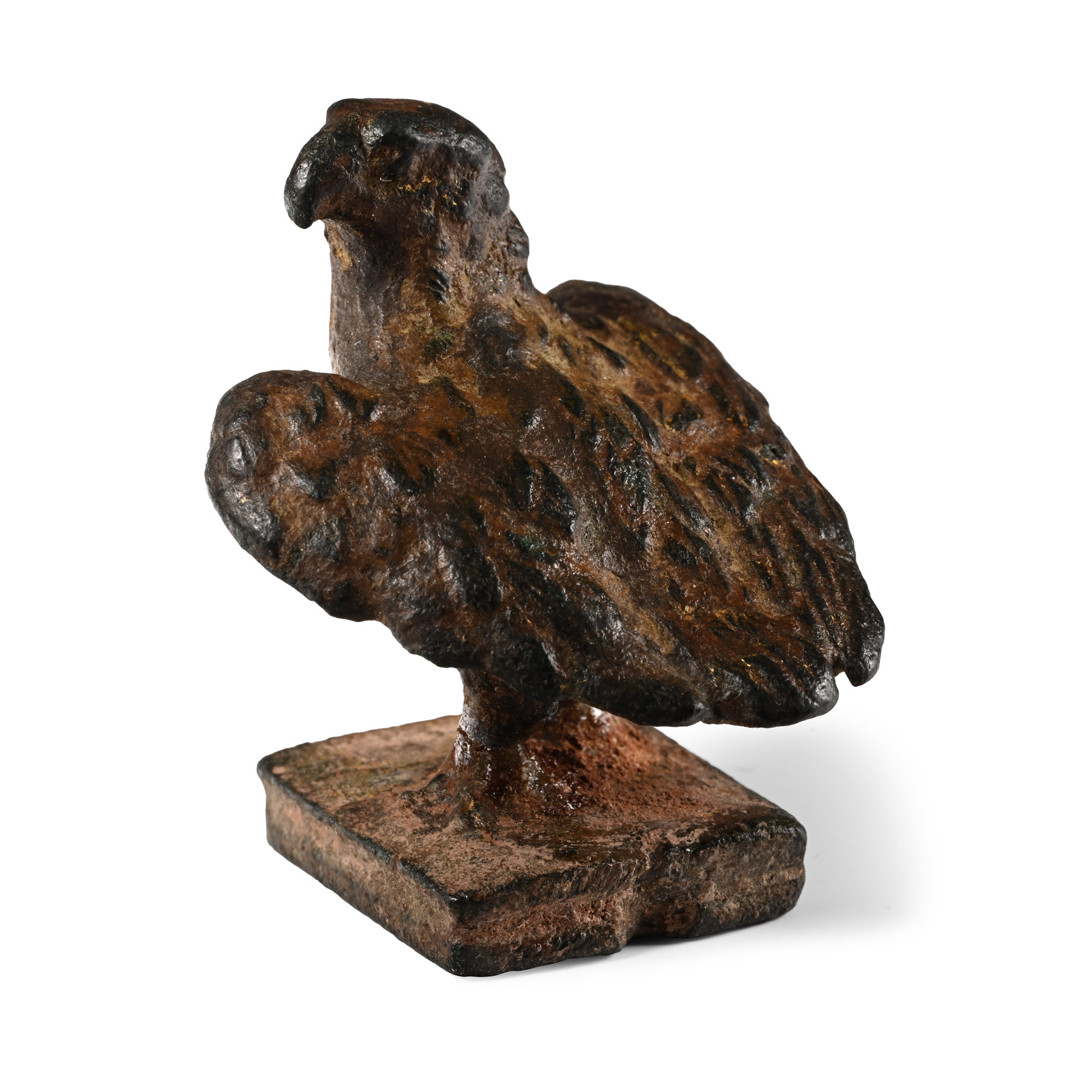
Roman Gilt Bronze Eagle Statuette
2ND-3RD CENTURY A.D.
1 7/8 in. (104 grams, 47 mm).
Modelled in the round on a square base with gusseted sides, standing with head turned and wings spread.
ProvenanceAcquired in the mid 1980s-1990s.
Private collection, Switzerland, thence by descent.
Private collection, since the late 1990s.
This lot has been checked against the Interpol Database of stolen works of art and is accompanied by search certificate number no.12239-222315.
This lot has been cleared against the Art Loss Register database, and is accompanied by an illustrated lot declaration signed by the Head of the Antiquities Department, Dr Raffaele D’Amato.
Cf. Rolland, H., Bronzes Antiques de Haute Provence, Paris, 1965, item 268.
CONDITIONTimeLine Auctions follows a vetting process to ensure the authenticity and legality of all items, reinforcing our commitment to integrity and responsible trading. Each antiquity, antique, and coin lot undergoes thorough examination by a vetting committee of at least ten external specialists, professional trade association members, scientists, and archaeologists: Our Vetting Process
AUCTIONS:
TimeLine is a leading auction house specialising in antiquities, ancient art, collectables, natural history, coins, medals, and books. Our auctions offer museums, collectors, historians, and enthusiasts the opportunity to acquire unique and historically significant pieces.
LOT 0114
Roman Gilt Bronze Eagle Statuette
Estimate £1,500 - 2,000€1,740 - 2,320 (for guidance only)$2,030 - 2,700 (for guidance only)
-
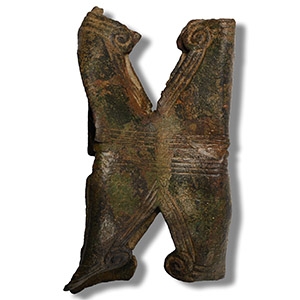
Romano-British Bronze Military Sword Scabbard Chape
2nd century A.D.Sold for (Inc. bp): £65
Bronze fitting with repoussé rings and low-relief lines to rim, folded to fit onto a scabbard. 26.8 grams, 71 mm
Found by Ian Wilkinson, next to the Roman 'Fosse Way' road at Farnham, near Newark, Nottinghamshire, in 2004. Ian Wilkinson collection, Nottinghamshire, UK, formed since 1985. This lot is accompanied by an illustrated lot declaration signed by the Head of the Antiquities Department, Dr Raffaele D’Amato. -
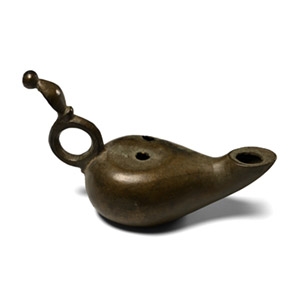
Roman Bronze Oil Lamp
2nd-3rd century A.D.Sold for (Inc. bp): £182
Slipper-shaped with scooped nozzle, loop handle and thumb-pad; lateral vent to nozzle. 102 grams, 10 cm
Ex German art market, 2000s. Acquired from an EU collector living in London. From the collection of Surrey, UK, gentleman. This lot is accompanied by an illustrated lot declaration signed by the Head of the Antiquities Department, Dr Raffaele D’Amato. -
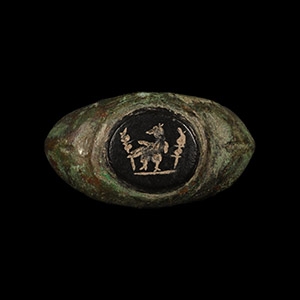
Romano-British Bronze Military Ring with Eagle and Standards Gem
2nd-3rd century A.D.Sold for (Inc. bp): £416
Sturdy hoop, broad plaque with inset glass stud with perching eagle flanked by military standards. 12.83 grams, 26.40 mm overall, 17.20 mm internal diameter (approximate size British F 1/2, USA 3, Europe 4.3, Japan 4)
Found in Britain. Acquired from Ancient & Oriental, UK, in the 1990s. Ian Wilkinson collection, Nottinghamshire, UK, formed since 1985. This lot is accompanied by an illustrated lot declaration signed by the Head of the Antiquities Department, Dr Raffaele D’Amato.
