
Loading, please wait...
LOT 0143
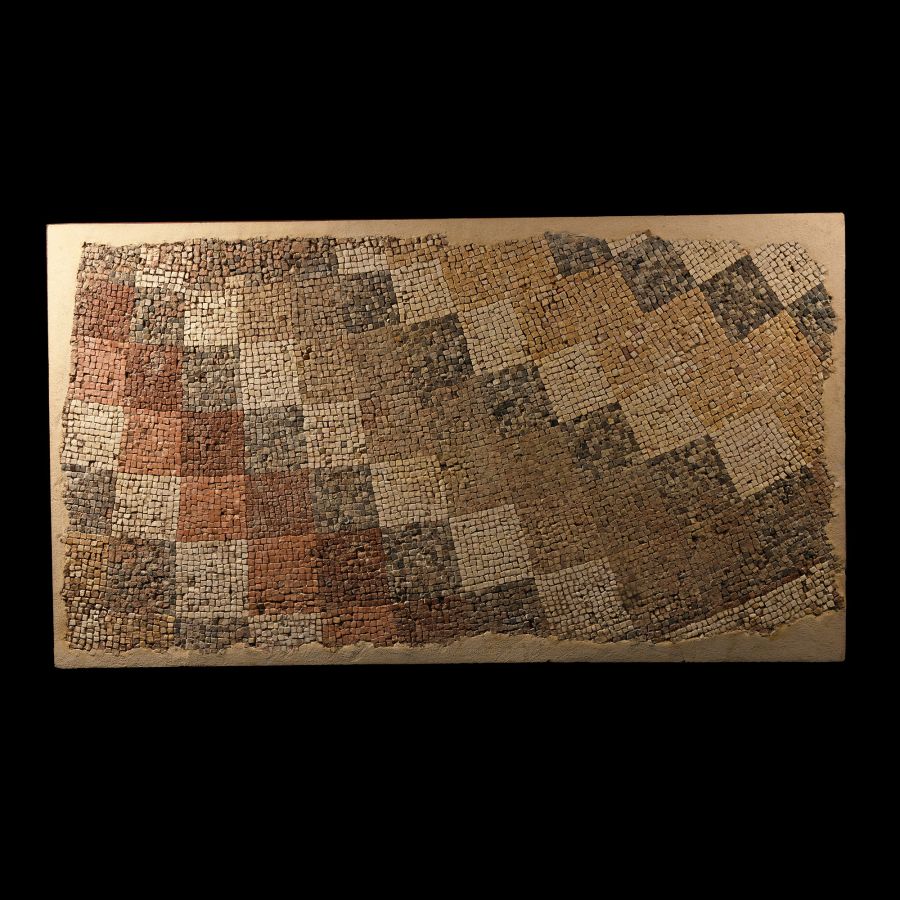
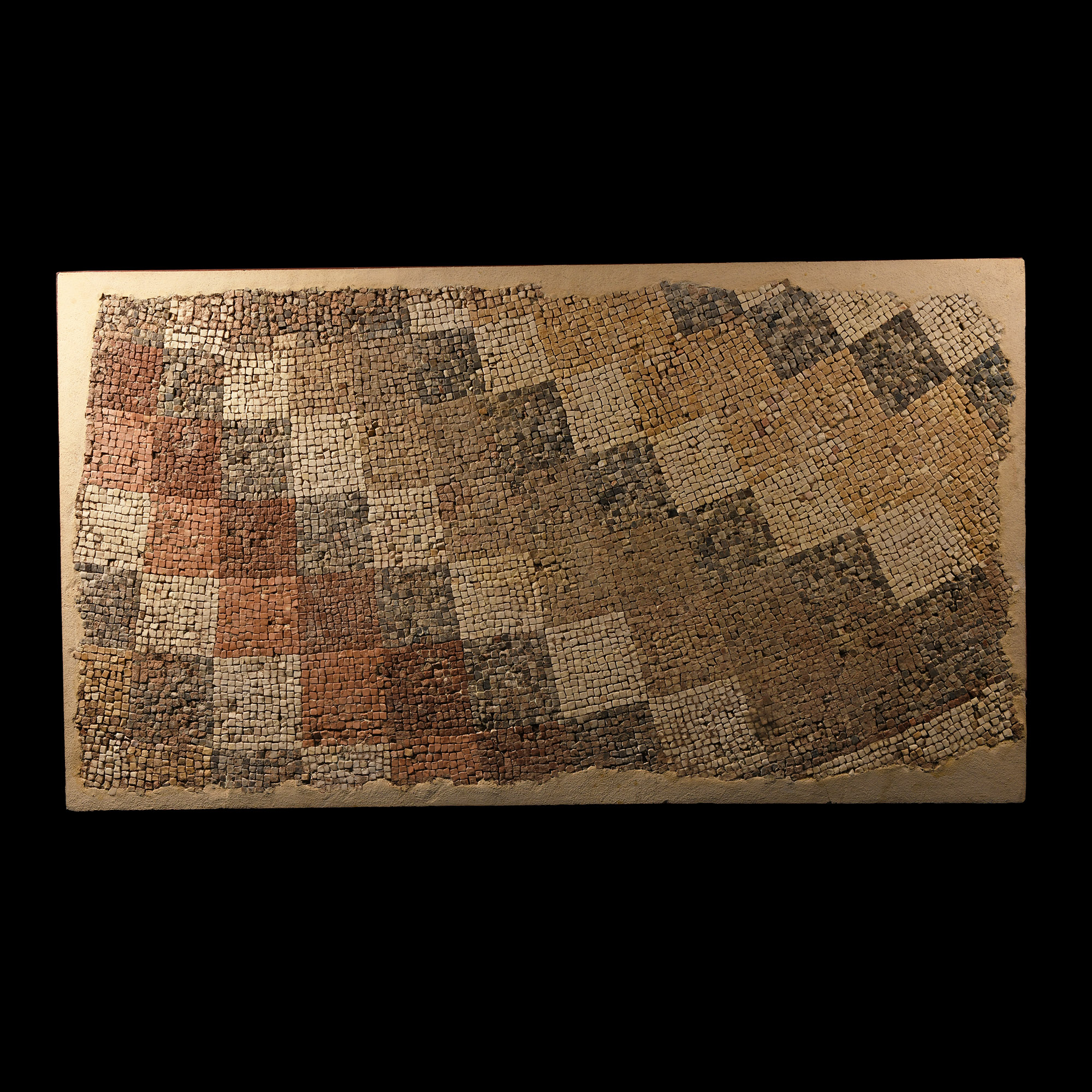
Roman Geometric Floor Mosaic
CIRCA 1ST-4TH CENTURY A.D.
61 1/4 in. (82.5 kg, 156 cm wide including frame).
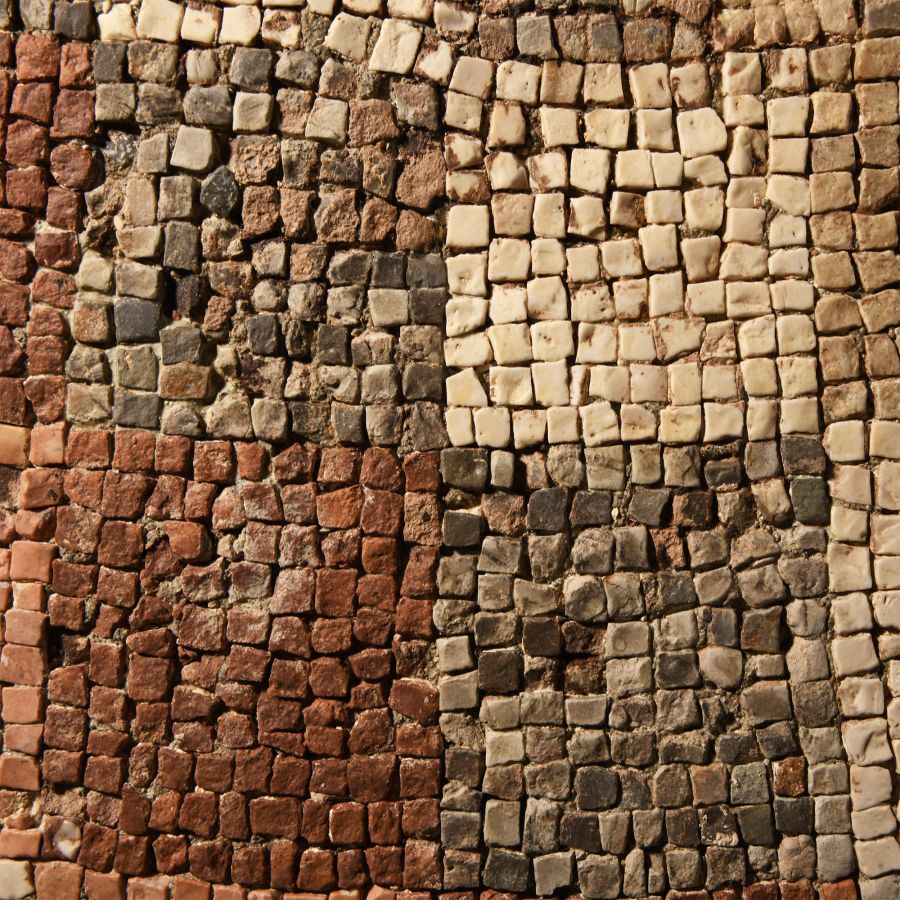
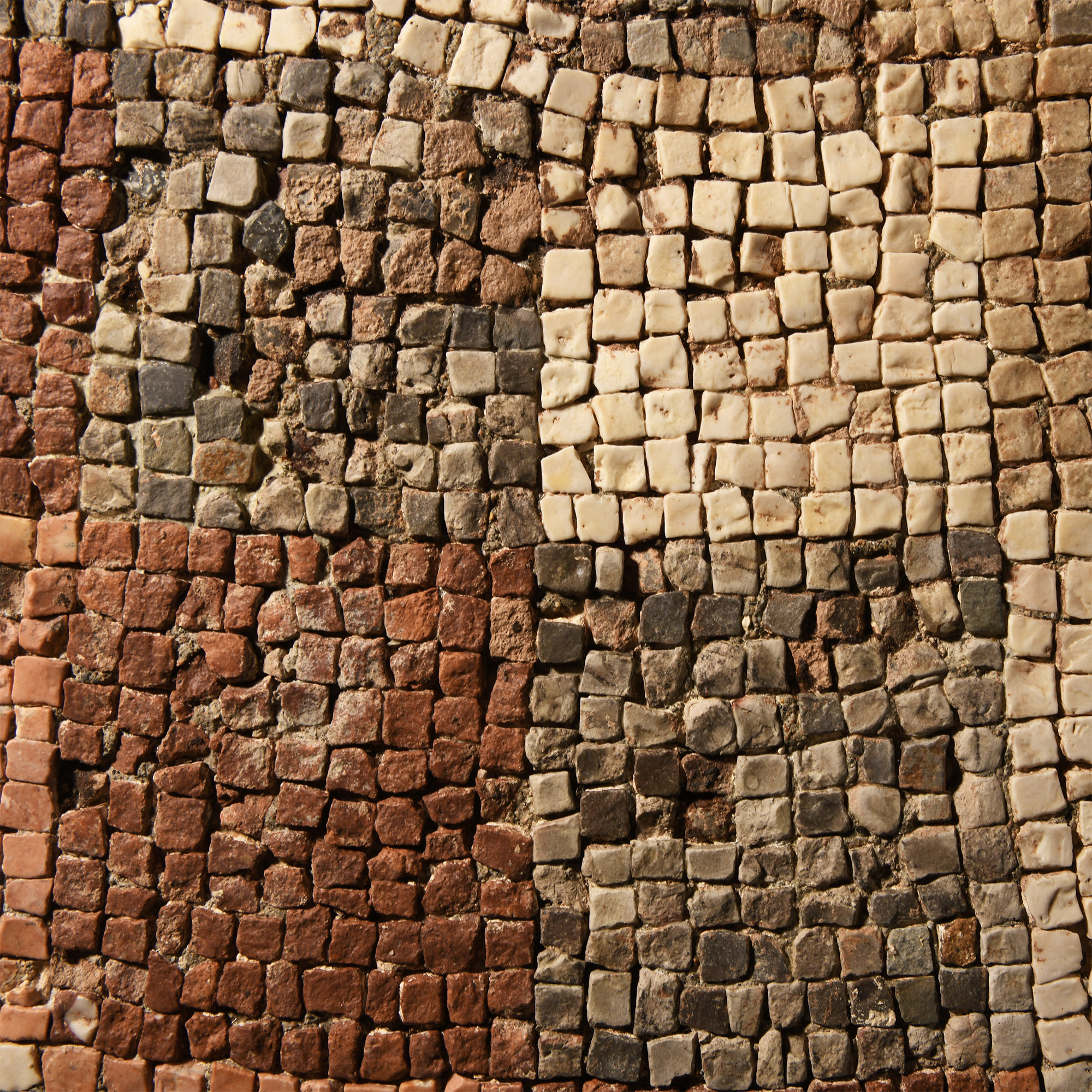
Fragment or portion of floor mosaic, showing a composition of alternated patterns of different coloured squares in chequerboard pattern, combined in diagonal rows of light yellow, light blue, off-white, pink, red, light violet, again off-white, light grey, light grey, dark grey, off-white, light yellow (repeated two times) light blue and off-white shadows; on the lower part a red line is edging the composition over an off-white band. [No Reserve]
ProvenanceAcquired 1970s-1996.
Property of a North American collector.
London collection, 2016.
This lot has been checked against the Interpol Database of stolen works of art and is accompanied by search certificate number no.11822-207409.
Cf. Ling, R., Ancient Mosaics, London, 1998, p.114 (Mosaics from Ampurias, Spain) for parallel; Arce, J., Ensoli, S. & La Rocca, E., Hispania Romana. Da Terra Di Conquista a Provincia dell'Impero, Venezia, 1997, p.314, fig.3 (Mosaic of Quintanilla de la Queza).
FootnotesThe square-decorated mosaics had a strong presence in the Hispanic provinces, with some 1st century A.D. examples in the houses of Ampurias, up to the late imperial examples of the Villa of Palencia (archaeological site of La Tejada) where the main rooms show wall paintings with geometric, vegetal or decorations imitating marbles, and mosaics with simple geometric decorations alternating with elegant decorative motifs such as swastikas, chequered motifs or ropes, and Solomonic symbols. The chequerboard motif was widespread, and it is visible also in the 3rd-4rd century mosaic of the Roman Villa of Brading or in the house found under the Museum of Lincoln, in Britain.
CONDITIONTimeLine Auctions follows a vetting process to ensure the authenticity and legality of all items, reinforcing our commitment to integrity and responsible trading. Each antiquity, antique, and coin lot undergoes thorough examination by a vetting committee of at least ten external specialists, professional trade association members, scientists, and archaeologists: Our Vetting Process
AUCTIONS:
TimeLine is a leading auction house specialising in antiquities, ancient art, collectables, natural history, coins, medals, and books. Our auctions offer museums, collectors, historians, and enthusiasts the opportunity to acquire unique and historically significant pieces.
-
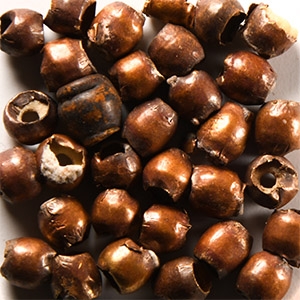
Roman Gold-Coloured Bead Group
1st century A.D. or laterSold for (Inc. bp): £39
Each bulbous-bodied sheet-gold bead with a slightly different profile and central hole for suspension. 5.18 grams total, 5-6 mm
UK gallery, early 2000s. -
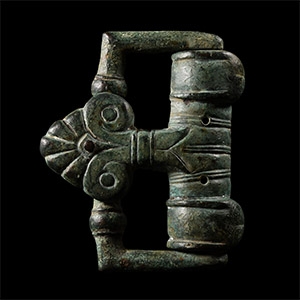
Huge Roman Bronze Buckle-Shaped Fitting
1st-2nd century A.D.Sold for (Inc. bp): £390
With rectangular loop and two bulbs flanking the rest for the tongue; robust hinged tongue integral with the hinge, terminating in a palmette; hollow to the underside. 471 grams, 11.3 cm
Acquired 1980-2015. Ex Abelita family collection.
The buckle is too large and heavy for normal use; it was probably created for an oversized statue of an emperor. -
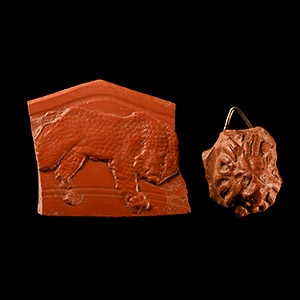
Roman Redware Sherd Group with Lions
4th-5th century A.D.Sold for (Inc. bp): £85
The larger fragment with stepped neck and rim, bearing a leaping lion right in raised relief; the smaller fragment with leonine protome; both in terra sigillata africana; modern suspension loop to reverse. 54 grams total, 35-60 mm
Acquired 1960s-1990s. From the late Alison Barker collection, a retired London barrister.
The most ancient production of red African ware began in the Flavian Age. Towards the second half of the 3rd century A.D. – but most probably before – the production reached its zenith and African redware pottery was imported from all the Imperial provinces.
