
Loading, please wait...

LOT 0119
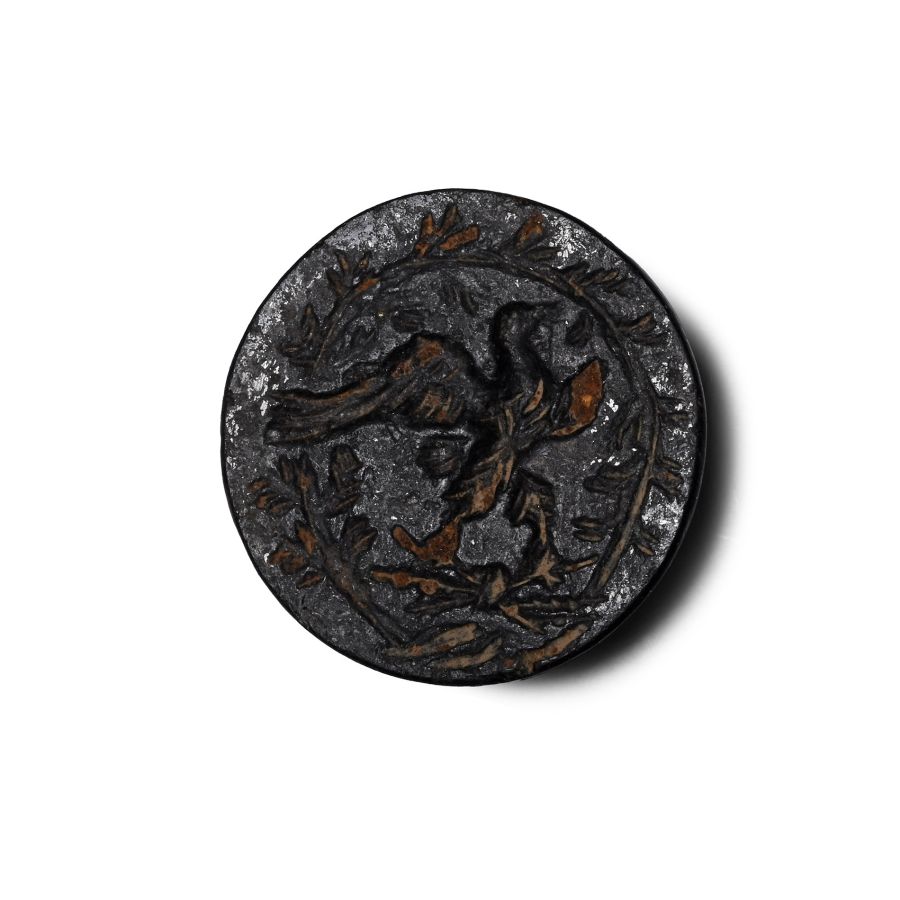
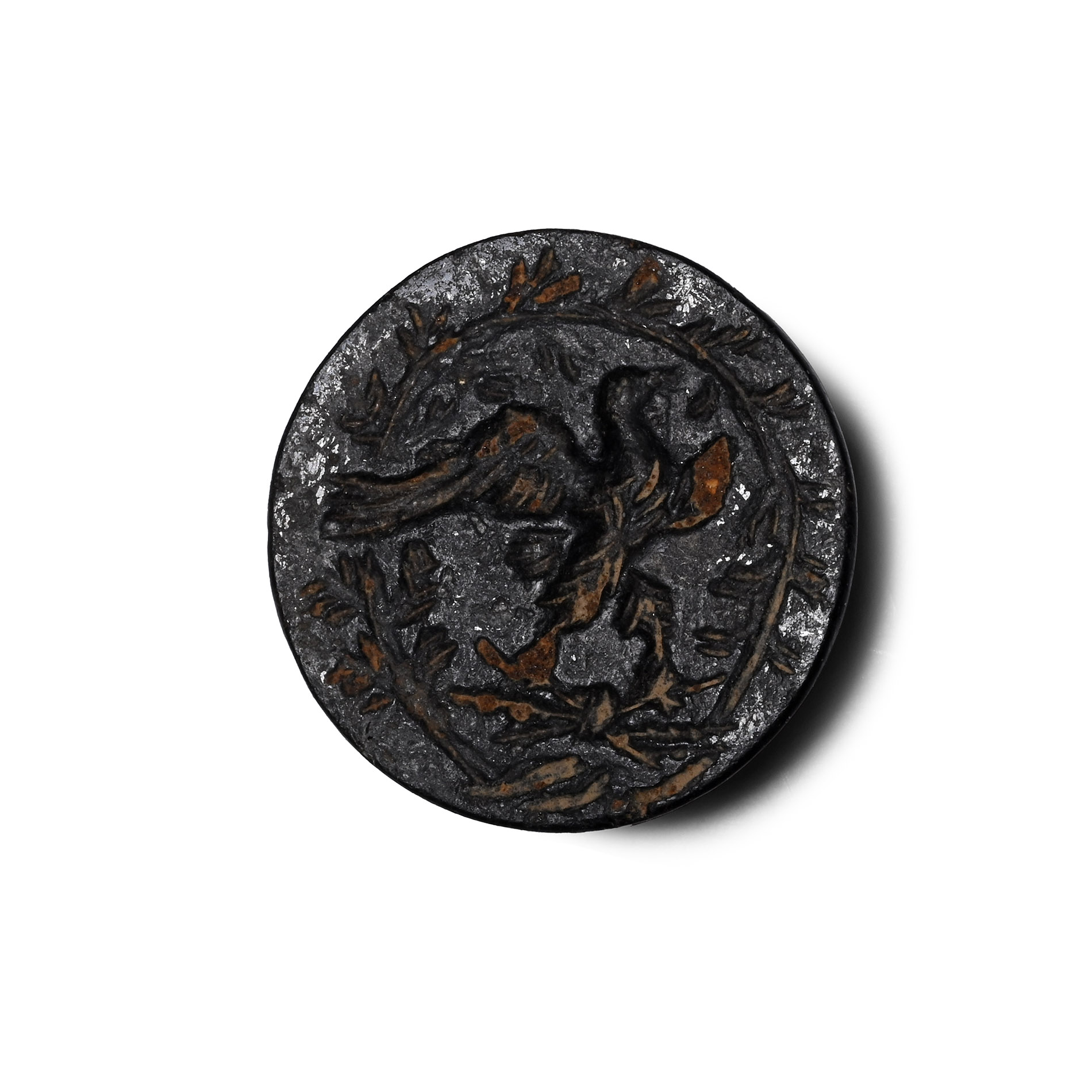
Roman Gemstone with Wreath and Eagle
2ND-3RD CENTURY A.D.
5/8 in. (1.7 grams, 15 mm).
Tabular in profile with incuse wreath and eagle taking to flight.
ProvenanceFrom a London, UK, based collection, 1990s.
CONDITIONTimeLine Auctions follows a vetting process to ensure the authenticity and legality of all items, reinforcing our commitment to integrity and responsible trading. Each antiquity, antique, and coin lot undergoes thorough examination by a vetting committee of at least ten external specialists, professional trade association members, scientists, and archaeologists: Our Vetting Process
AUCTIONS:
TimeLine is a leading auction house specialising in antiquities, ancient art, collectables, natural history, coins, medals, and books. Our auctions offer museums, collectors, historians, and enthusiasts the opportunity to acquire unique and historically significant pieces.
-
Roman Bronze Ring Bezel with Inscription
1st-2nd century A.D.Sold for (Inc. bp): £33
Ellipsoid bezel with enigmatic text in two registers; hoop absent. 2.6 grams, 27 mm
From the collection of a gentleman, acquired on the London art market in the 1990s. -
Roman Bronze and Silver Artefact Collection
2nd-4th century A.D.Sold for (Inc. bp): £52
Including head-stud brooch, enamelled pendant and other items. 34 grams total, 18-63 mm
From a private Barnsley, UK, family collection. -
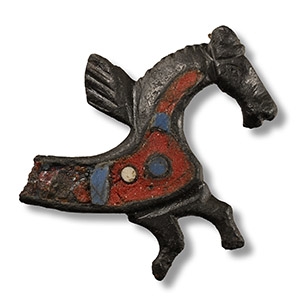
Romano-British Enamelled Bronze Hippocampus Brooch
Circa 2nd century A.D.Sold for (Inc. bp): £156
Plate brooch fragment with enamelled panels to the neck, shoulder and flank. 3.98 grams, 31 mm
Found near St Albans, Hertfordshire, UK.
