
Loading, please wait...

LOT 0120
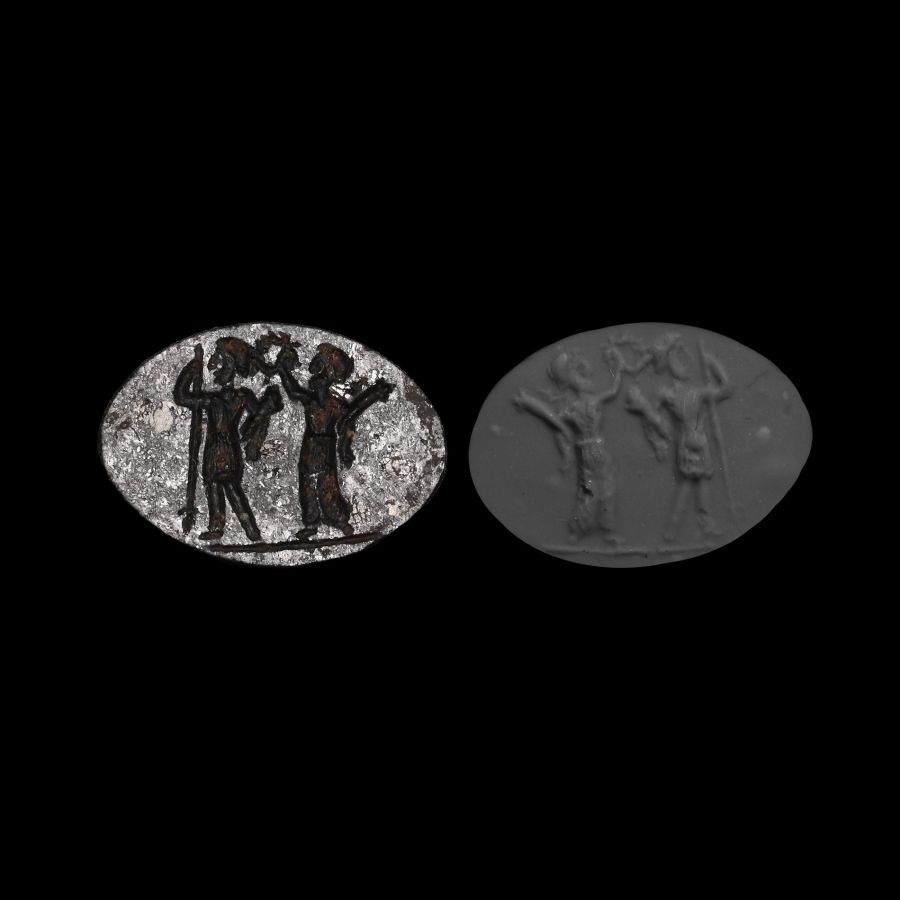
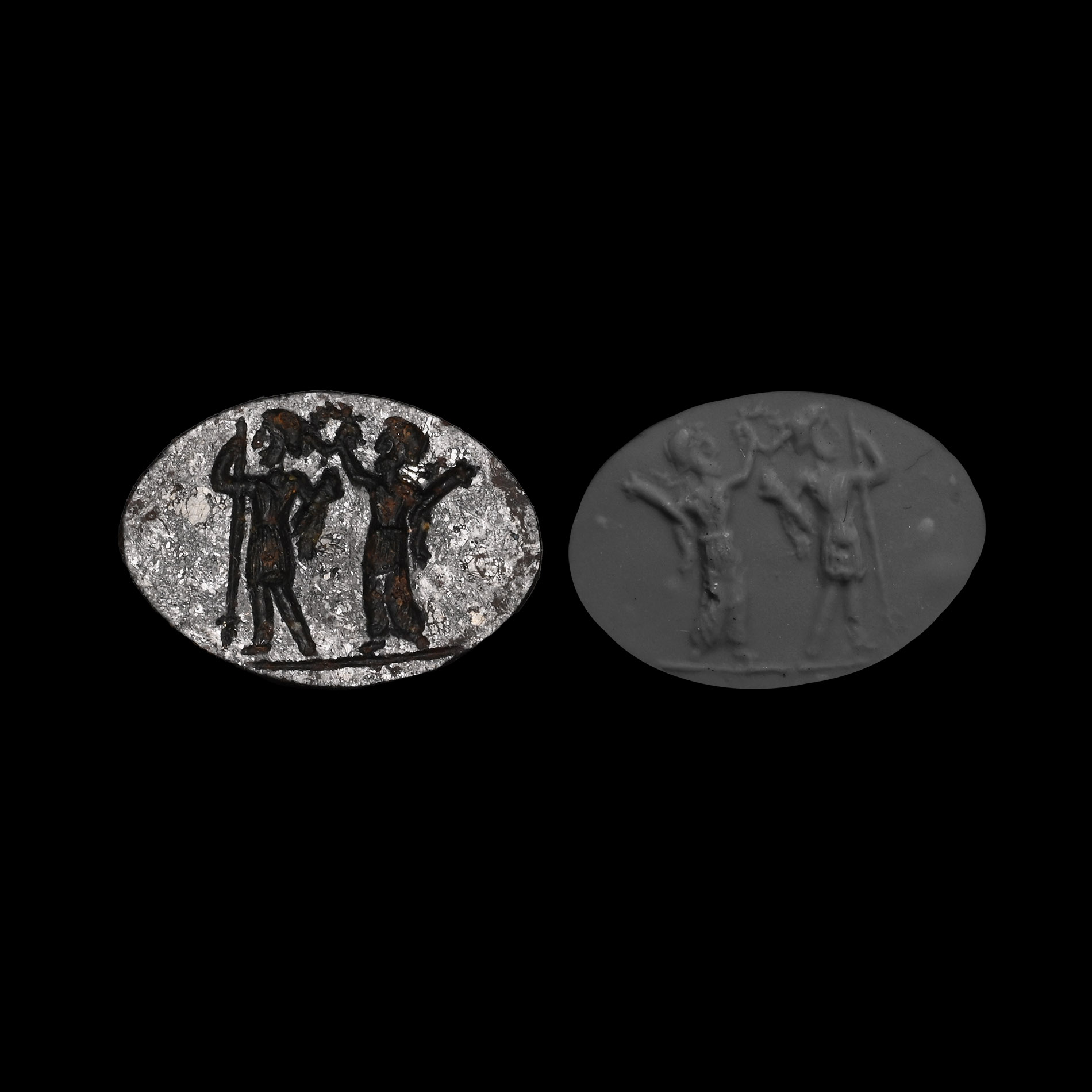
Roman Gemstone with Victory Scene
2ND-3RD CENTURY A.D.
3/4 in. (2.18 grams, 19 mm).
Ellipsoid in plan with chamfered sides, intaglio scene with soldier or gladiator standing with a spear, figure to his rear holding a wreath above his head; supplied with a museum-quality impression.
ProvenanceFrom a London, UK, based collection, 1990s.
CONDITIONTimeLine Auctions follows a vetting process to ensure the authenticity and legality of all items, reinforcing our commitment to integrity and responsible trading. Each antiquity, antique, and coin lot undergoes thorough examination by a vetting committee of at least ten external specialists, professional trade association members, scientists, and archaeologists: Our Vetting Process
AUCTIONS:
TimeLine is a leading auction house specialising in antiquities, ancient art, collectables, natural history, coins, medals, and books. Our auctions offer museums, collectors, historians, and enthusiasts the opportunity to acquire unique and historically significant pieces.
LOT 0120
Roman Gemstone with Victory Scene
Estimate £400 - 600€460 - 700 (for guidance only)$540 - 810 (for guidance only)
-
Roman Silver Ring with Later Apollo Gemstone
3rd century A.D. and laterSold for (Inc. bp): £572
With a substantial hoop with fluted shoulders, bezel set with a later orange carnelian intaglio, engraved with an image of standing Apollo holding a wreath and patera, palm frond and an amphora on a baseline. 12.81 grams, 25.23 mm overall, 18.89 mm internal diameter (approximate size British J, USA 4 3/4, Europe 8.69, Japan 8)
Ex German art market, 2000s. Acquired from an EU collector living in London. From the collection of Surrey, UK, gentleman. -
Roman Bronze Silenus Mount
1st-2nd century A.D.Sold for (Inc. bp): £91
Domed mount with a bearded satyr face to the centre, short horns projecting from his head; hollow to the reverse. 7.68 grams, 26 mm
Ex German art market, 2000s. Acquired from an EU collector living in London. From the collection of Surrey, UK, gentleman. -
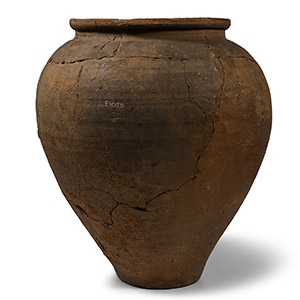
Large Romano-British 'Viroconium Cornoviorum' Funerary Urn
Lands of the Cornovii, 1st century A.D.Sold for (Inc. bp): £780
With narrow base and shallow shoulder, everted rim to the broad mouth; with inked museum number 'E1029' and accession ticket 'Roman Cremation (inside jar) 1st Cent. A.D. Viroconium Cornoviorum (Wroxeter) Lands of the Cornovii'; professionally repaired. 4.45 kg, 35.5cm
Found Wroxeter (Viroconium Cornoviorum), UK, in 1921. From a West Country, UK, collection, 1990s. Accompanied by a handwritten identification card with '1921' to verso.
The Cornovii inhabited an area of the (modern) English West Midlands, from Staffordshire to Chester, centered on modern Wroxeter (Viroconium Cornoviorum). This was among the largest administrative centres in Roman Britain, and drew its wealth in part from salt production and the mining of lead, copper and silver.
