
Loading, please wait...


LOT 0703
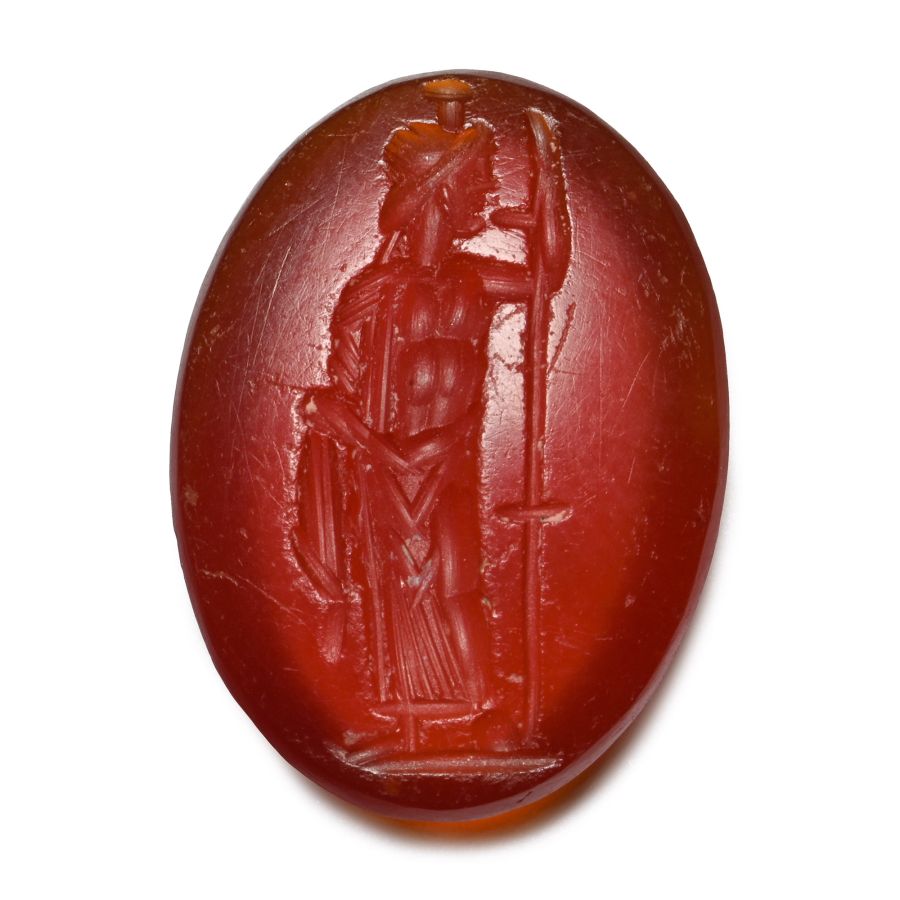
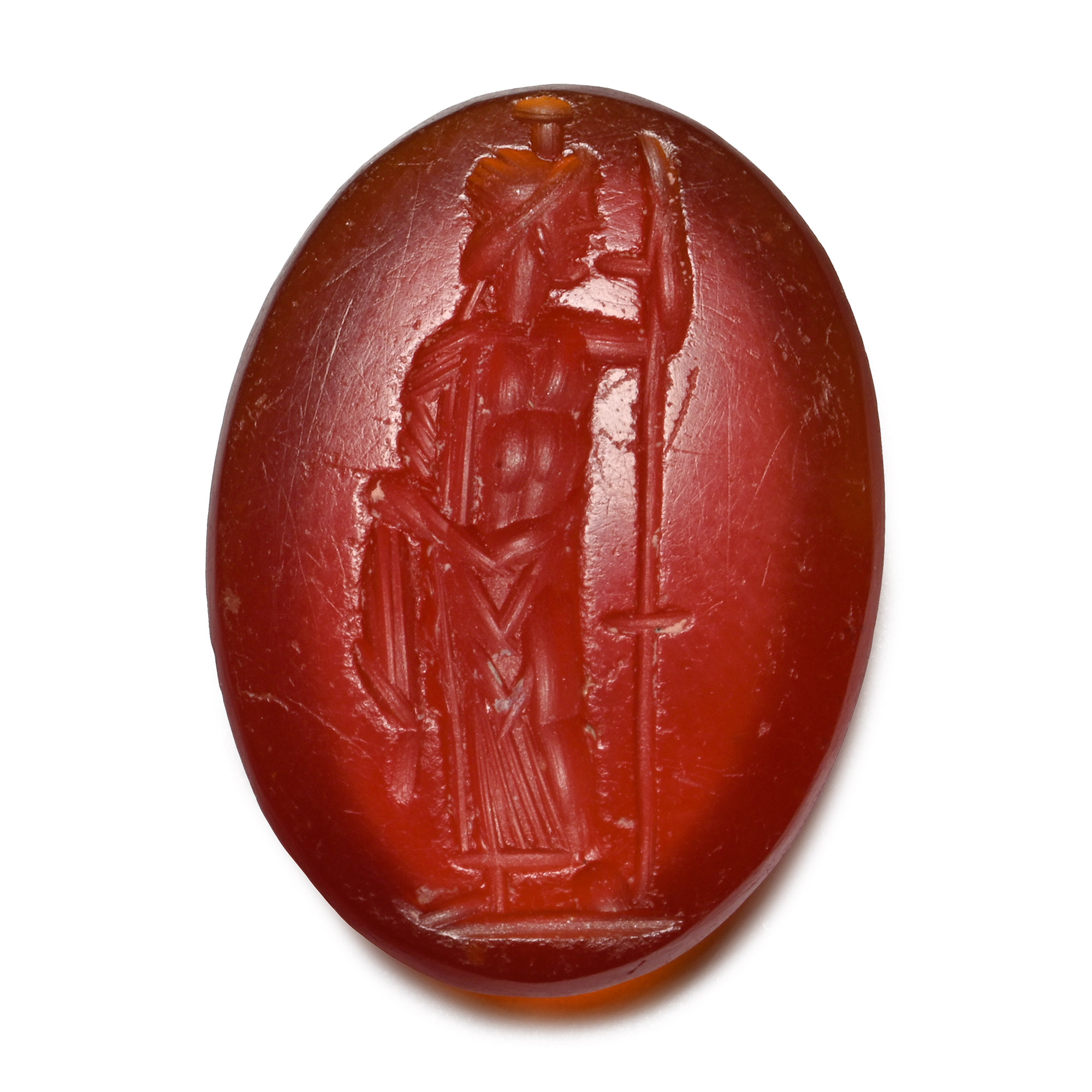
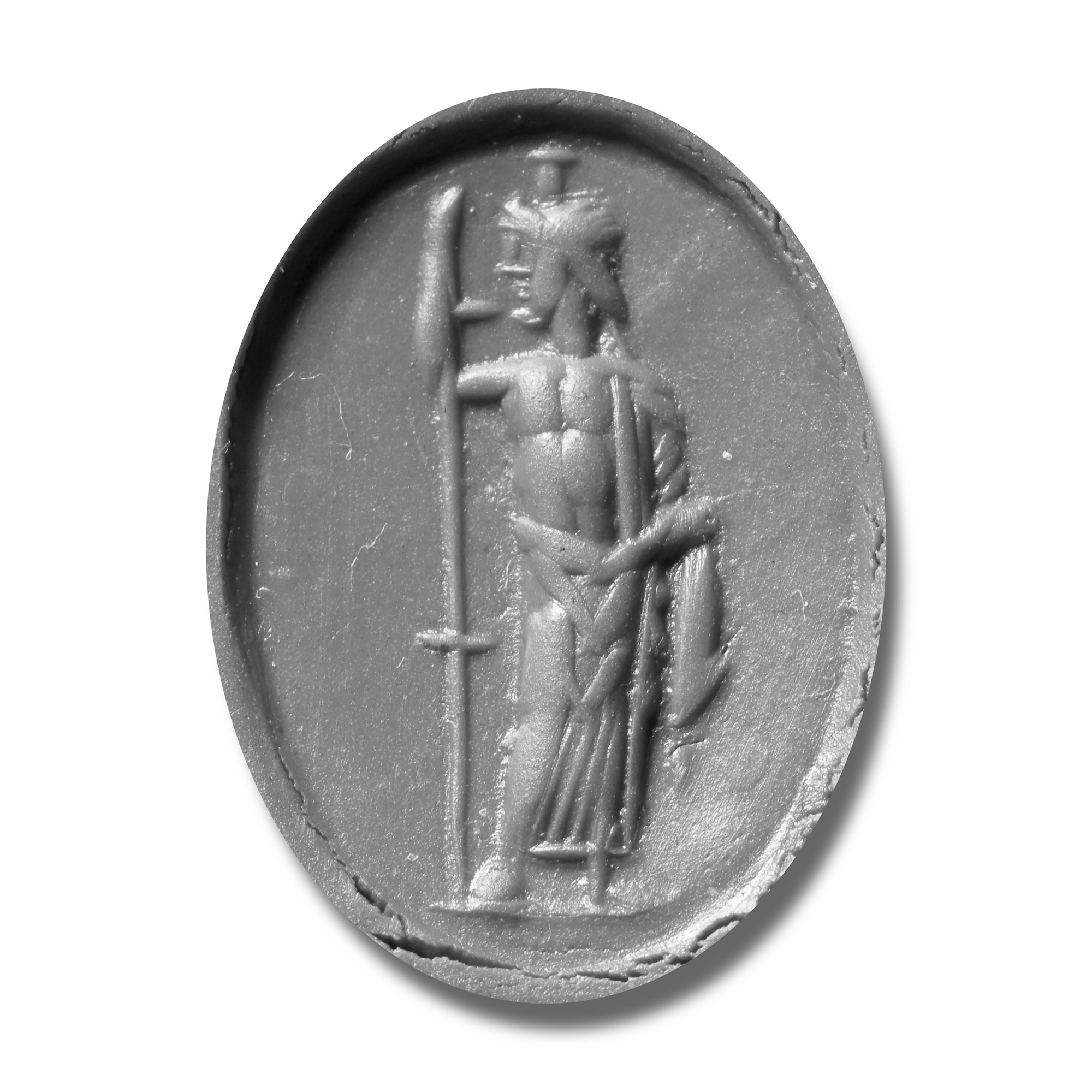
Roman Gemstone with Standing Figure
2ND-3RD CENTURY A.D.
1/2 in. (0.7 grams. 14 mm).
An oval red carnelian intaglio gemstone engraved with a togate male figure leaning on a long staff.
ProvenanceFrom the Fortuna collection of engraved gems; acquired on the European art market in the late 1960s-early 1970s.
Private collection, Suffolk, UK.
TimeLine Auctions follows a vetting process to ensure the authenticity and legality of all items, reinforcing our commitment to integrity and responsible trading. Each antiquity, antique, and coin lot undergoes thorough examination by a vetting committee of at least ten external specialists, professional trade association members, scientists, and archaeologists: Our Vetting Process
AUCTIONS:
TimeLine is a leading auction house specialising in antiquities, ancient art, collectables, natural history, coins, medals, and books. Our auctions offer museums, collectors, historians, and enthusiasts the opportunity to acquire unique and historically significant pieces.
-
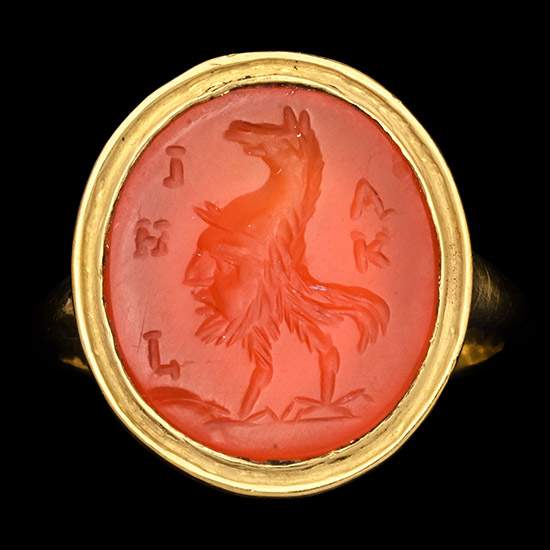
Roman Carnelian Gemstone with Gryllus in Gold Ring
2nd century A.D.Sold for (Inc. bp): £2,860
Translucent oval intaglio featuring a standing gryllus wearing a gryphon-headed helmet, flanked by the inscription 'KAΛHI' meaning 'to the beautiful one'; set in a later gold ring with a D-section hoop; supplied with a museum-quality impression. 9.29 grams, 23.83 mm overall, 20.32 x 17.88 mm internal diameter (approximate size British R 1/2, USA 8 3/4, Europe 19.38, Japan 18)
Acquired on the European art market. This lot has been checked against the Interpol Database of stolen works of art and is accompanied by search certificate number no.13322-257896.
Fanciful combinations of various human and animal heads, sometimes with the addition of other elements, are generally called grylloi. These fantastic devices were more than mere artists' fancies and were worn by the ancient Romans and others for their supposed efficacy in averting the evil eye. -
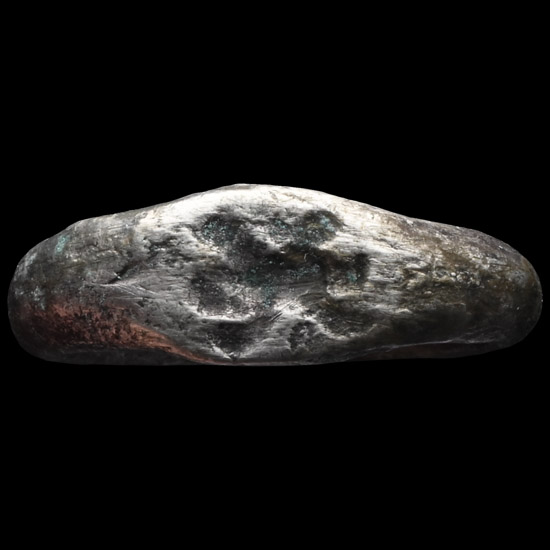
Roman Silver Ring with Lizard
1st-3rd century A.D.Sold for (Inc. bp): £78
Round-section hoop with flat plaque, incuse lizard motif. 5.06 grams, 21.46 mm overall, 14.96 x 14.00 mm internal diameter (approximate size British G 1/2, USA 3 1/2, Europe 5.55, Japan 5)
From the private collection of Mr Brian Edwards, New Malden, Surrey, UK, formed from the late 1970s-early 1980s; thence by descent. Accompanied by the original collector's data sheet(s) with reference no.A78. -
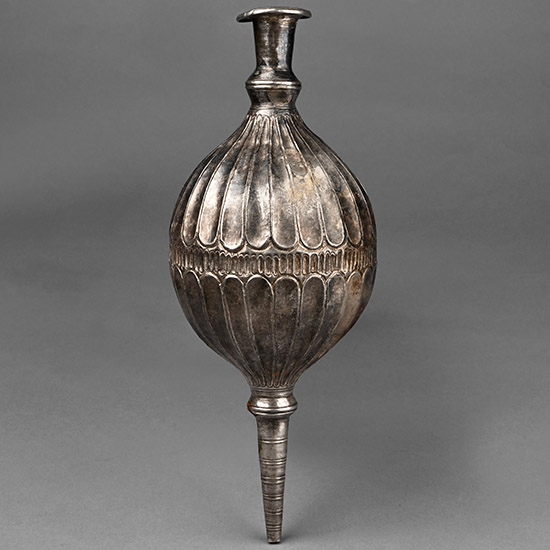
Large Graeco-Roman Silver Wine Infundibulum
5th century B.C.-1st century A.D.Sold for (Inc. bp): £39,000
With a hollow spherical body decorated with slightly concave petals radiating from each end, separated by a central grooved band; one end with a tapering funnel marked by horizontal grooves, the other with a short tapering neck and a wide rim. 356 grams, 29.5 cm
Old Austrian private collection, 1980s. Accompanied by a copy of a nine-page examination report number 154/2026 by Dr habil Mikhail Treister. Accompanied by an academic report by Dr Raffaele D’Amato. This lot has been checked against the Interpol Database of stolen works of art and is accompanied by search certificate number no.12905-242699.
Comparable instruments, usually called clepsydra in Greek and infundibulum in Latin, were in use in the 5th – first half of the 4th centuries B.C. A total of 13 such objects, or clepsydra, are known, including two of the unknown origin), represented by the finds both from Central (Lazio) and South (Campania, Calabria and Basilicata) Italy, Illyria (Apollonia) and Central Greece (Boeotia, Phocis) (all made of bronze), from the Taman peninsula in the North Pontic area, a fragmented one – from the Ulyap kurgan necropolis in the Trans-Kuban region and a silver piece from an aristocratic Thracian burial in the Plovdiv region. A distinctive feature of all these metal objects is the combination of a narrow vertical tube, at the lower end turning into a container with holes in the bottom.
