
Loading, please wait...
LOT 0166
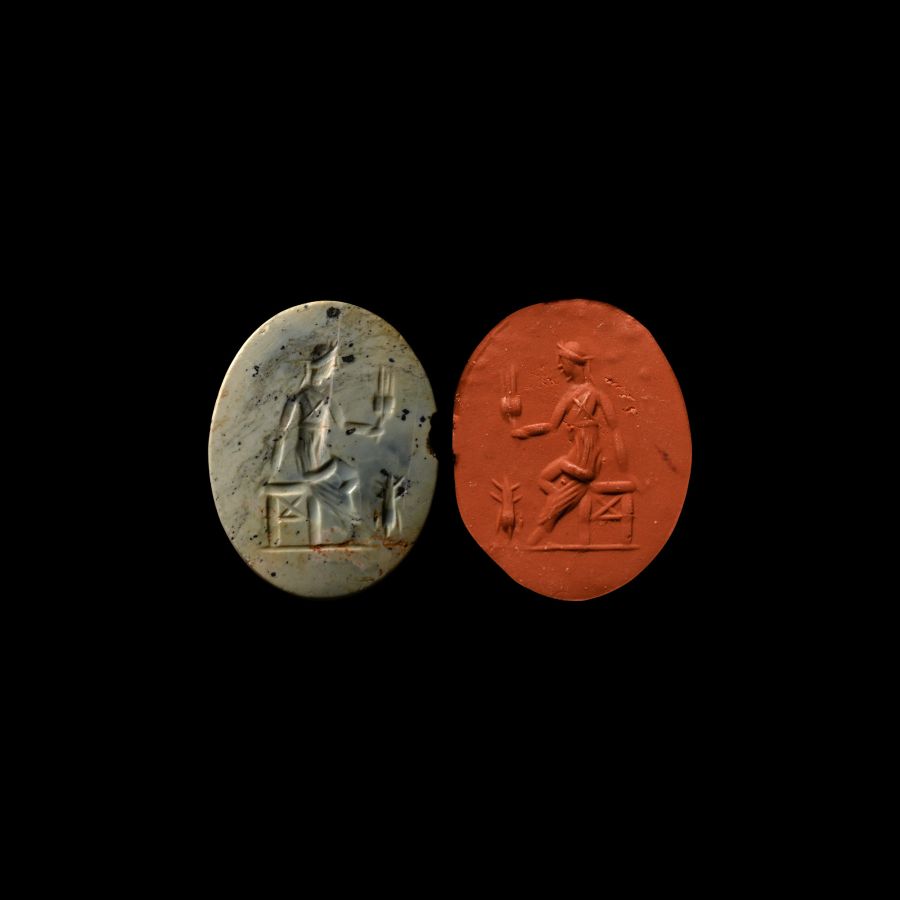
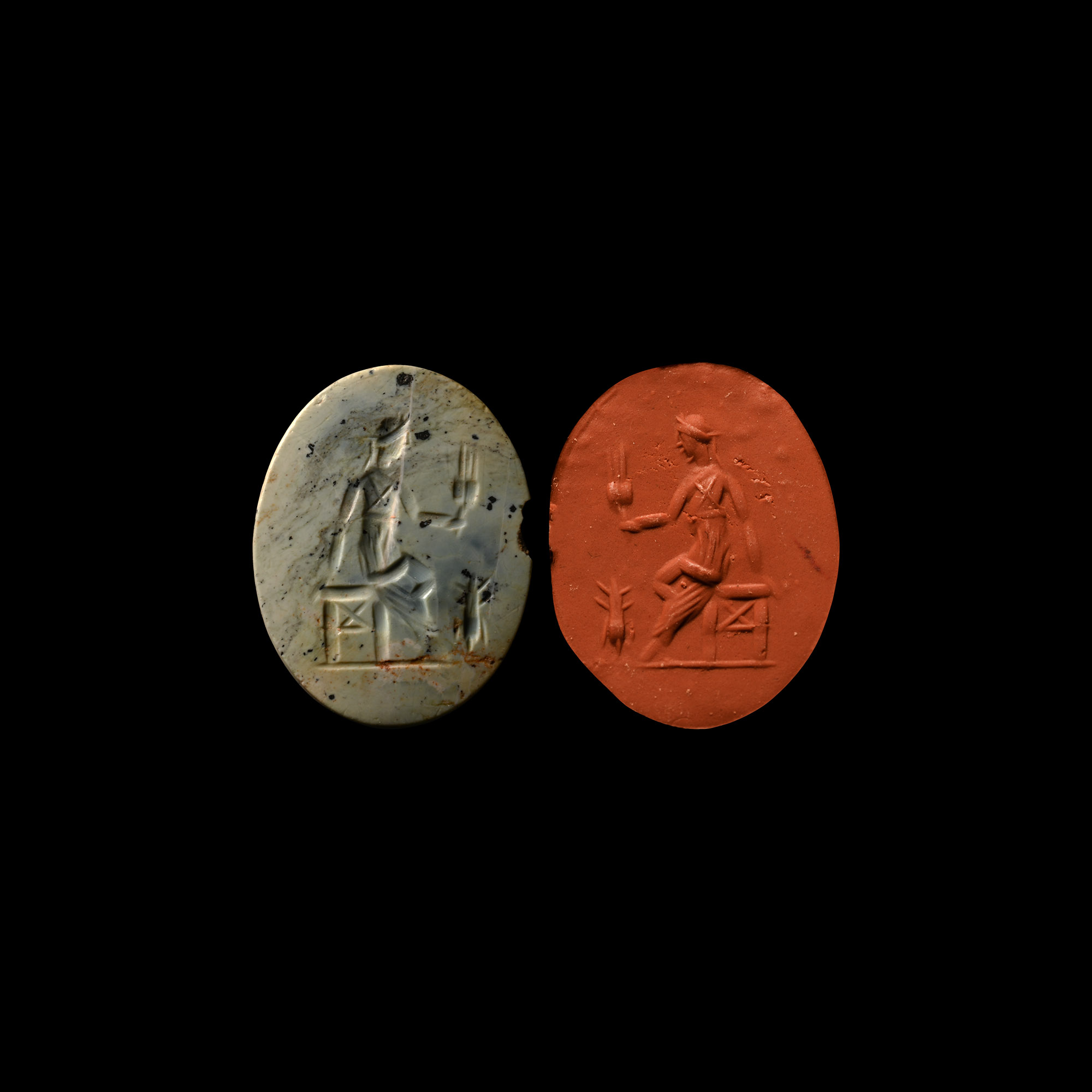
Roman Gemstone with Goddess Demeter
2ND CENTURY A.D.
3/4 in. (1.40 grams, 18 mm).
On burnt sard or carnelian, the goddess fully draped, seated on a throne without a back and holding out wheat ears in her hand over what seems like a small conical altar with horns.
ProvenanceAcquired in the late 1980s-early 1990s.
Important North West London collection.
Cf. Osborne, D., Engraved gems, Signets, Talismans and ornamental intaglios, ancient and modern, New York, 1912, pl.XXIII, no.2, p.362, for similar.
FootnotesCeres was a goddess of agriculture, maternal relationships and fertility, and represents transition, motherhood and nurture. She was also the only one of ancient Rome's agricultural deities to be listed amongst the Dii Consentes, the Roman equivalent to the Twelve Olympians of Greek mythology.
CONDITIONTimeLine Auctions follows a vetting process to ensure the authenticity and legality of all items, reinforcing our commitment to integrity and responsible trading. Each antiquity, antique, and coin lot undergoes thorough examination by a vetting committee of at least ten external specialists, professional trade association members, scientists, and archaeologists: Our Vetting Process
AUCTIONS:
TimeLine is a leading auction house specialising in antiquities, ancient art, collectables, natural history, coins, medals, and books. Our auctions offer museums, collectors, historians, and enthusiasts the opportunity to acquire unique and historically significant pieces.
LOT 0166
Roman Gemstone with Goddess Demeter
Estimate £600 - 800€700 - 930 (for guidance only)$810 - 1,080 (for guidance only)
-
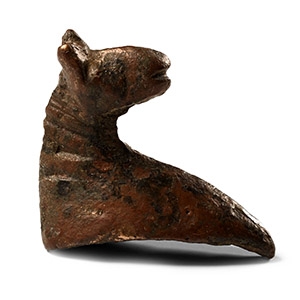
Roman Bronze Horse Head Protome
1st-4th century A.D.Estimate: £70 - 90 (+bp*)
Opening Bid: £39
Modelled with naturalistic detailing with signs of attachment. 13.7 grams, 26 mm high
‘The Ancient Menagerie Collection’ formerly the property of a Cambridgeshire lady, collected since the 1990s and acquired from auctions and dealers throughout Europe and the USA, now ex London collection. -
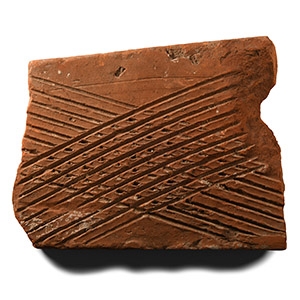
Roman Terracotta 'Chelmsford' Hypocaust Floor Tile
1st-4th century A.D.Sold for (Inc. bp): £85
Of sub-rectangular form, combed 'X' with pecking to upper face. 1.2 kg, 21 cm
Found Chelmsford, Essex, UK, in 1976. -
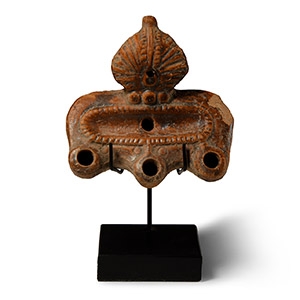
Roman Terracotta Triple-Spouted Lamp
Circa 2nd-1st millennium B.C.Sold for (Inc. bp): £598
An oblong vessel with three spouts and palmette reflector handle with pierced lug below to reverse; raised and notched discus; accompanied by a custom-made display stand. 209 grams total, 15 cm high including stand
From the collection of the German specialist Arno Jumpertz, Leverkusen, Germany, 1924-1984. Most of the collection was exhibited at Neus museum in 1985.
