
Loading, please wait...
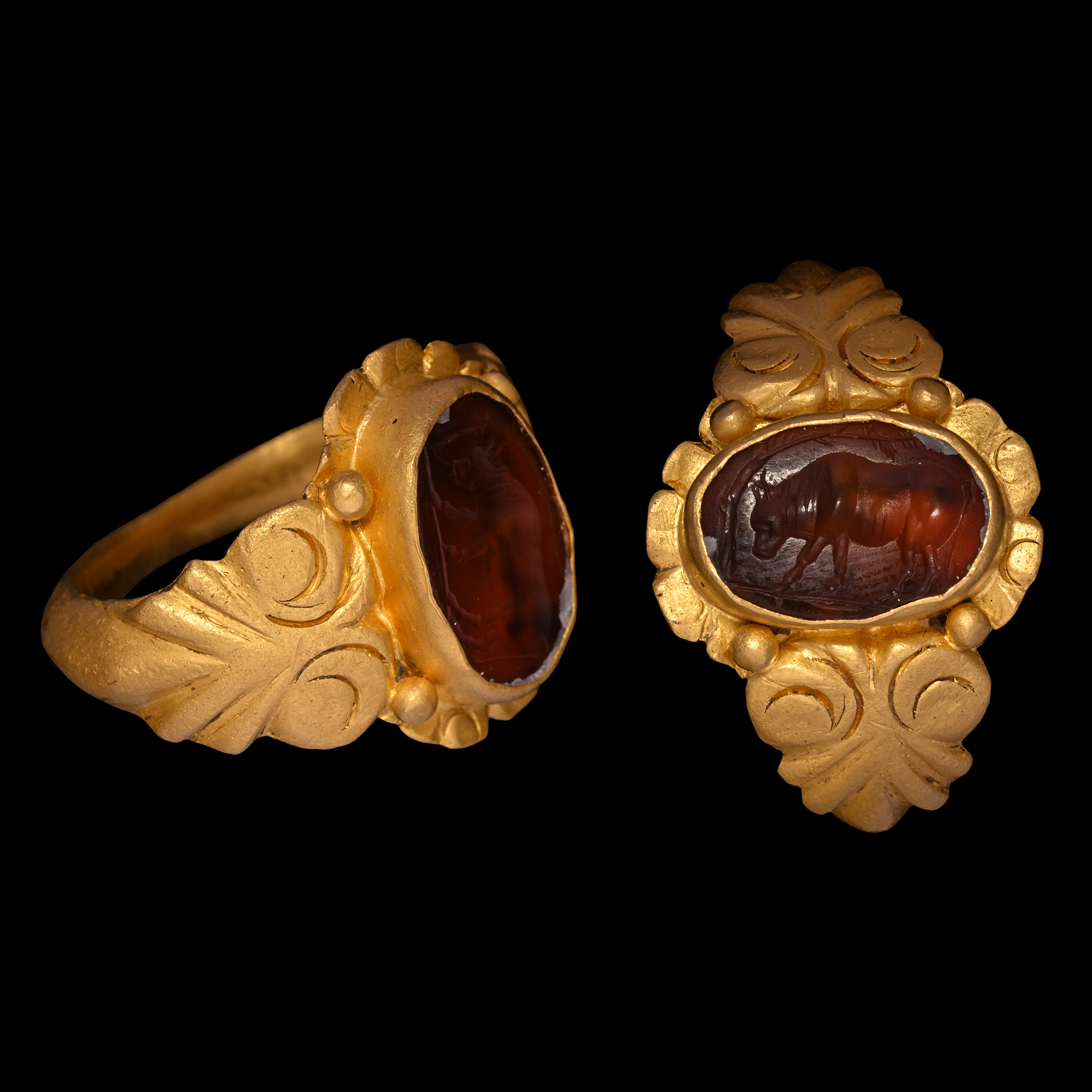
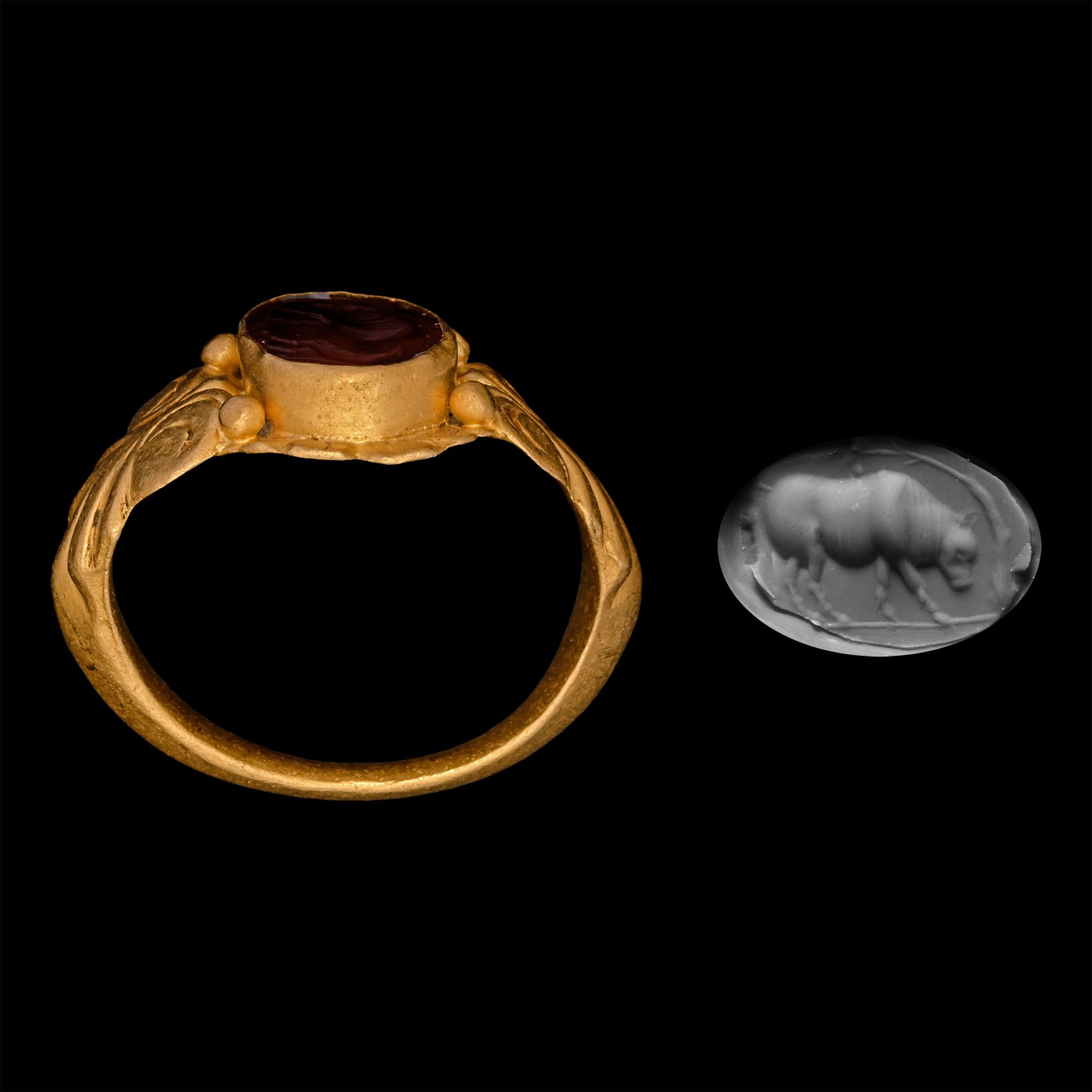
LOT 0728
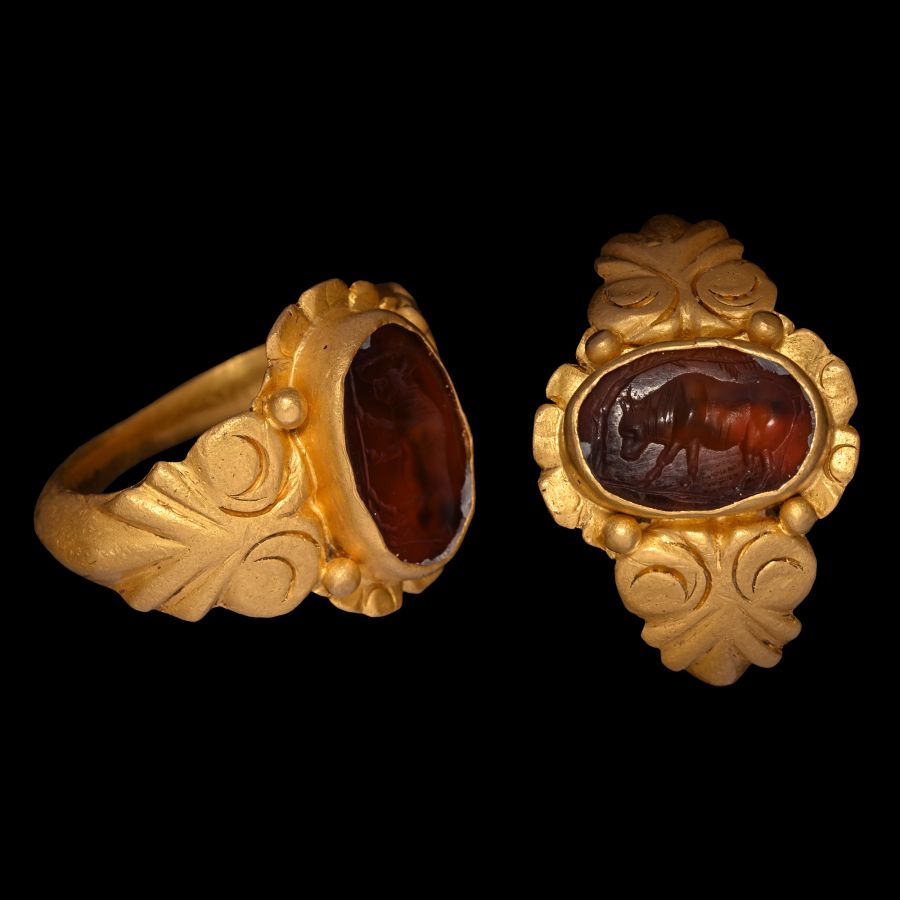
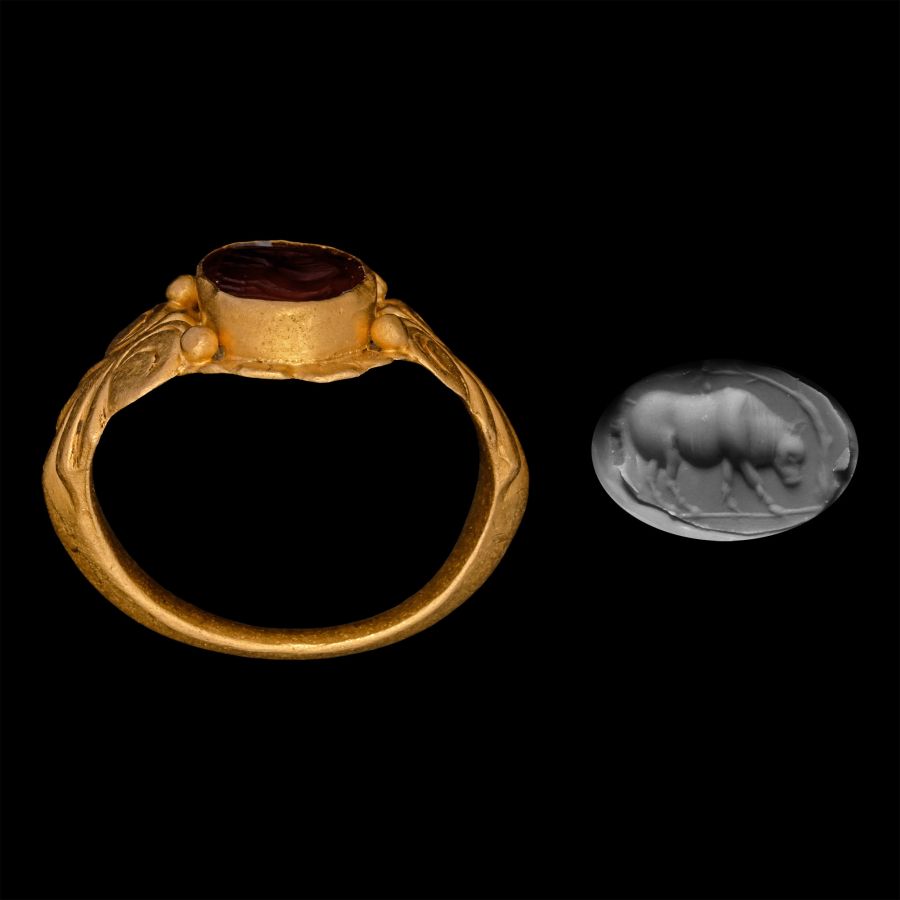
Roman Gemstone with Bull in Gold Ring
3RD CENTURY A.D.
1 in. (13.37 grams, 27.86 mm overall, 22.33 x 17.37 mm internal diameter (approximate size British R, USA 8 1/2, Europe 18 3/4, Japan 18)).
A carnelian cloison with intaglio bull beneath a sapling, set in a later gold finger ring comprising a D-section hoop with lateral cusps, volute scrolled shoulders, ellipsoid bezel with dentilled flange rim, and applied granules; supplied with a museum-quality impression.
Provenancewith Gorny and Mosch, Munich, Germany, 11 July 2006, no.174.
Private collection, England.
This lot has been checked against the Interpol Database of stolen works of art and is accompanied by search certificate number no.13170-249492.
Cf. Ruseva-Slokoska, L., Roman Jewellery, Sofia, 1991, item 184, for type.
CONDITIONTimeLine Auctions follows a vetting process to ensure the authenticity and legality of all items, reinforcing our commitment to integrity and responsible trading. Each antiquity, antique, and coin lot undergoes thorough examination by a vetting committee of at least ten external specialists, professional trade association members, scientists, and archaeologists: Our Vetting Process
AUCTIONS:
TimeLine is a leading auction house specialising in antiquities, ancient art, collectables, natural history, coins, medals, and books. Our auctions offer museums, collectors, historians, and enthusiasts the opportunity to acquire unique and historically significant pieces.
LOT 0728
Roman Gemstone with Bull in Gold Ring
Estimate £2,500 - 3,500€2,900 - 4,060 (for guidance only)$3,380 - 4,730 (for guidance only)
-
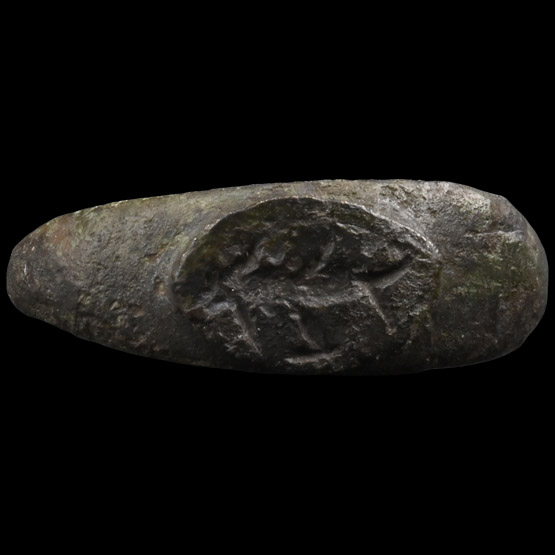
Roman Early Christian Bronze Ring with Fish
4th century A.D.Sold for (Inc. bp): £72
Ellipsoid bezel with incuse fish motif, broad shoulders. 2.93 grams, 19.68 mm overall, 15.64 mm internal diameter (approximate size British G 1/2, USA 3 1/2, Europe 5.55, Japan 5)
Ex German art market, 2000s. Acquired from an EU collector living in London. From the collection of a Surrey, UK, gentleman.
The Christian fish motif was one of the most important and widespread symbols used by early Christians during the Roman period. It served as a secret sign of identity and a shorthand declaration of faith, primarily to avoid persecution by Roman authorities. -
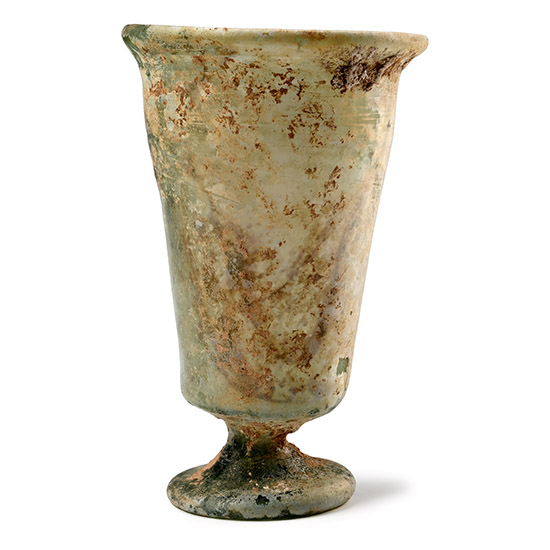
Roman Glass Footed Cup
Circa 1st-4th century A.D.Estimate: £400 - 600 (+bp*)
Opening Bid: £190
Comprising a bell-shaped sidewall with everted rim and rounded neck, low trumpet-shaped foot. 61.4 grams, 10.5 cm
From a London, UK, collection of glass, 1970-2000s. -
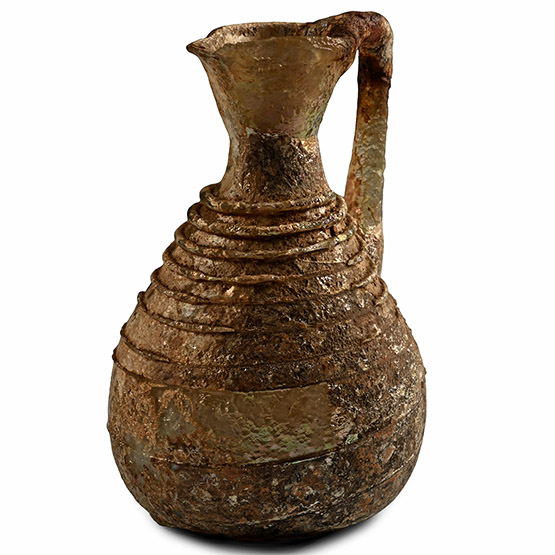
Roman Glass Jug with Trails
4th-5th century A.D.Estimate: £400 - 600 (‡+bp*)
Opening Bid: £222
A small pale yellow collared globular jug with short neck, angular ribbon handle with two narrow prominent ribs, folded upper attachment to the cylindrical neck, several horizontal lines on the globular body, trefoil mouth. 32 grams, 74 mm
with H.A.C., Basel, prior 1999.
These globular jugs were typical of the Eastern Mediterranean in the late Roman period. The body was often decorated with ornamental threads. The jugs were often used in a manner similar to pilgrim flasks, to collect oil and water from early Christian sanctuaries.
