
Loading, please wait...
LOT 0858
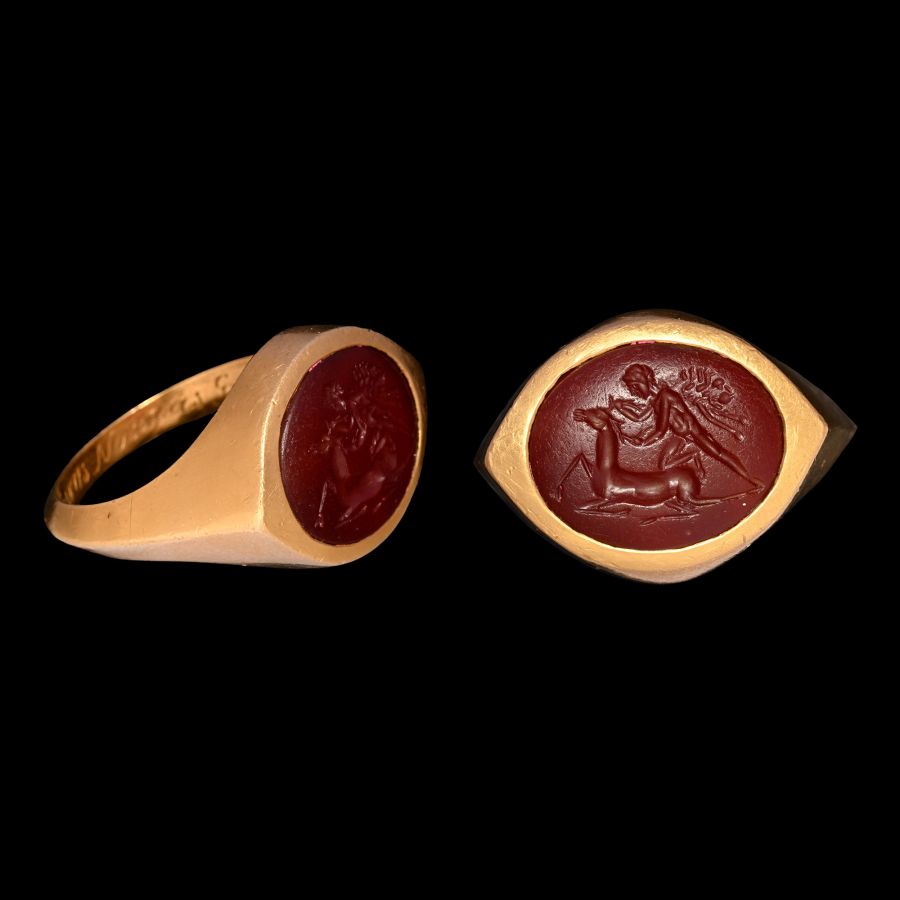
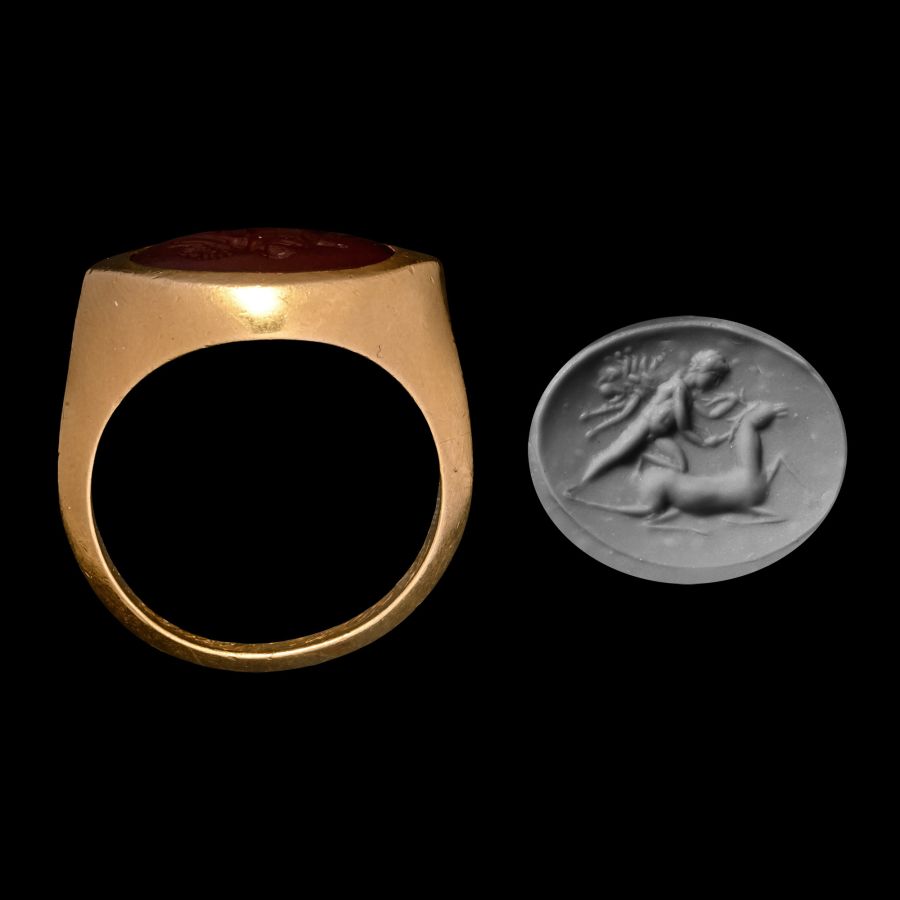
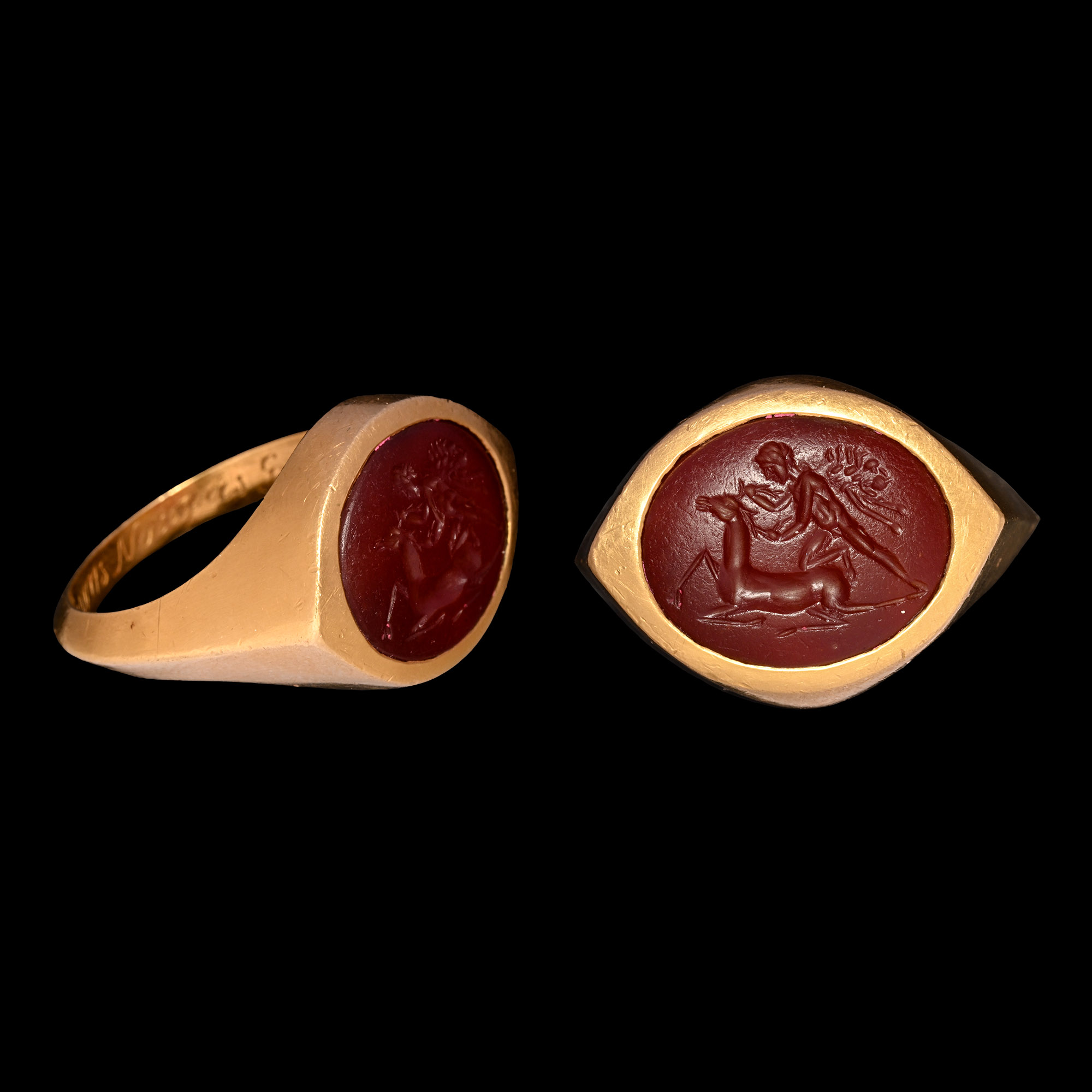
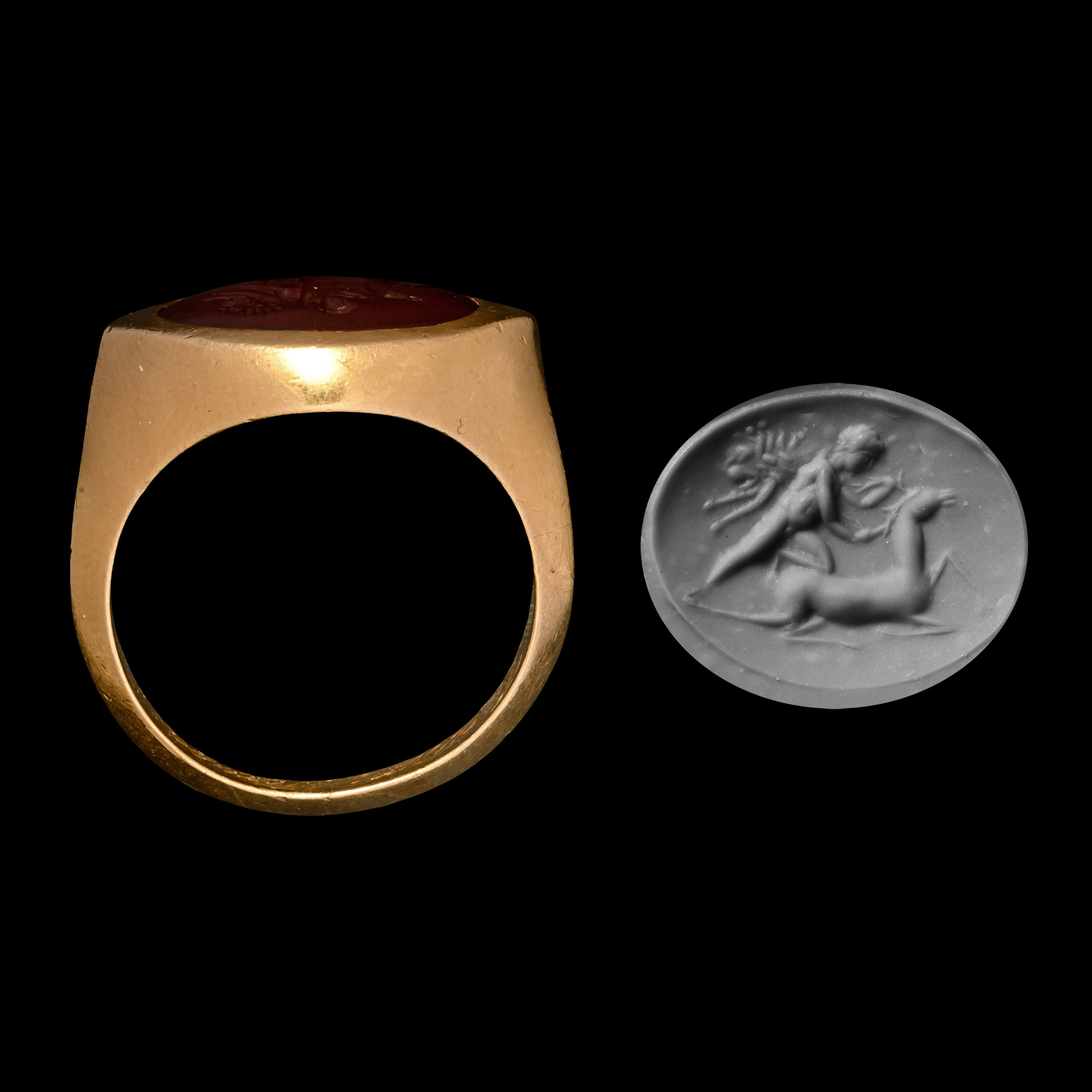
Roman Gemstone of Hercules with Ceryneian Hind in Gold Ring
2ND CENTURY A.D.
1 1/8 in. (24.05 grams, 29.85 mm overall, 22.95 x 22.30mm internal diameter (approximate size British Z+2, USA 13 1/4, Europe 31.31, Japan 30)).
Red jasper intaglio engraved with nude Hercules draped in lion's skin, holding antlers of a reclining hind; set into a later substantial gold ring with carinated hoop and enigmatic italic inscription to the inner face with date 1922.
ProvenancePrivate collection, England.
This lot has been checked against the Interpol Database of stolen works of art and is accompanied by search certificate number no.13171-249502.
For the pose, see National Archaeological Museum of Spain, item 38315BIS; The British Museum, registration number 1805,0703.137.
FootnotesThe third labour of Hercules was to capture the Ceryneian hind, a swift, golden-antlered animal sacred to the goddess Artemis (Diana), required to bring it alive to the court of King Eurystheus. He accomplished the task after a year-long chase, when he wounded the hind's legs with an arrow near the Ladon River. He explained the situation to Artemis, and after he showed the hind to the king, the animal was released back into nature.
CONDITIONTimeLine Auctions follows a vetting process to ensure the authenticity and legality of all items, reinforcing our commitment to integrity and responsible trading. Each antiquity, antique, and coin lot undergoes thorough examination by a vetting committee of at least ten external specialists, professional trade association members, scientists, and archaeologists: Our Vetting Process
AUCTIONS:
TimeLine is a leading auction house specialising in antiquities, ancient art, collectables, natural history, coins, medals, and books. Our auctions offer museums, collectors, historians, and enthusiasts the opportunity to acquire unique and historically significant pieces.
LOT 0858
Roman Gemstone of Hercules with Ceryneian Hind in Gold Ring
Estimate £3,000 - 4,000€3,480 - 4,640 (for guidance only)$4,050 - 5,400 (for guidance only)
-
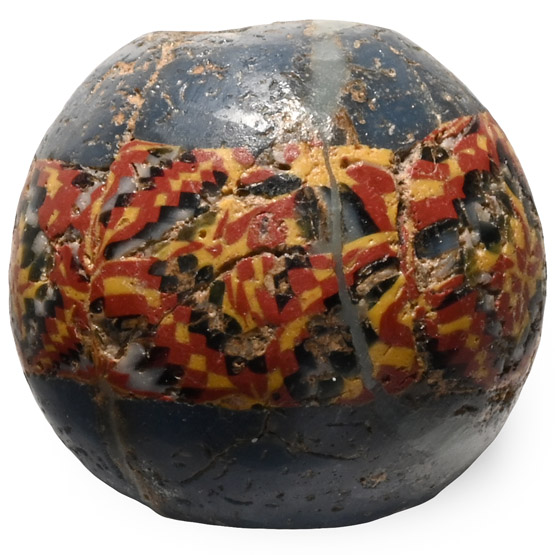
Roman Chequerboard Millefiori Glass Bead
Israel, 1st century A.D.Sold for (Inc. bp): £182
Spherical in profile with median horizontal band of chequerboard millefiori pattern. 5.92 grams, 17 mm
Acquired in the mid 1980s-1990s. Private collection, Switzerland, thence by descent. Private collection, since the late 1990s. -
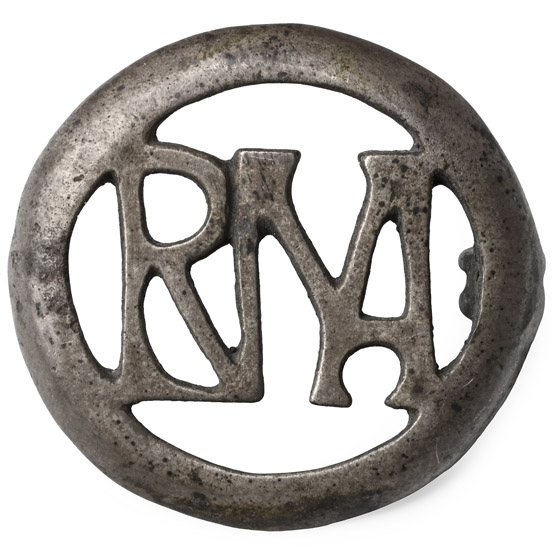
Roman Silver 'ROMA' Plate Brooch
2nd century A.D.Sold for (Inc. bp): £182
With openwork monogram of 'ROMA', hinge and catchplate to the reverse. 8.71 grams, 31 mm
Acquired on the UK art market. Private collection, England. -
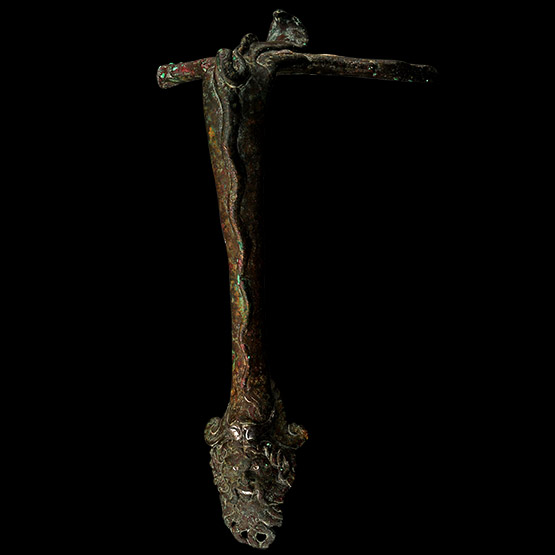
Roman Bronze Vessel Handle with Face
1st century A.D.Estimate: £2,000 - 3,000 (‡+bp*)
Opening Bid: £1,000
Swept in profile comprising a horizontal crescentic panel to attach to the rim, with inlaid silver detailing, recurved cobra-shaped thumb pad, raised serpent to the outer face of the tapering handle, finial a mask of Bacchus or Pan, facing with volute scrolls to the brow and thick splayed beard; silver diadem. 118 grams, 14.4 cm
Private collection. with Christie's, London, 11 June 1997, no.97 (part). with Bonhams, 13 April 2000, no.198. Private collection, Europe.
