
Loading, please wait...
LOT 0198
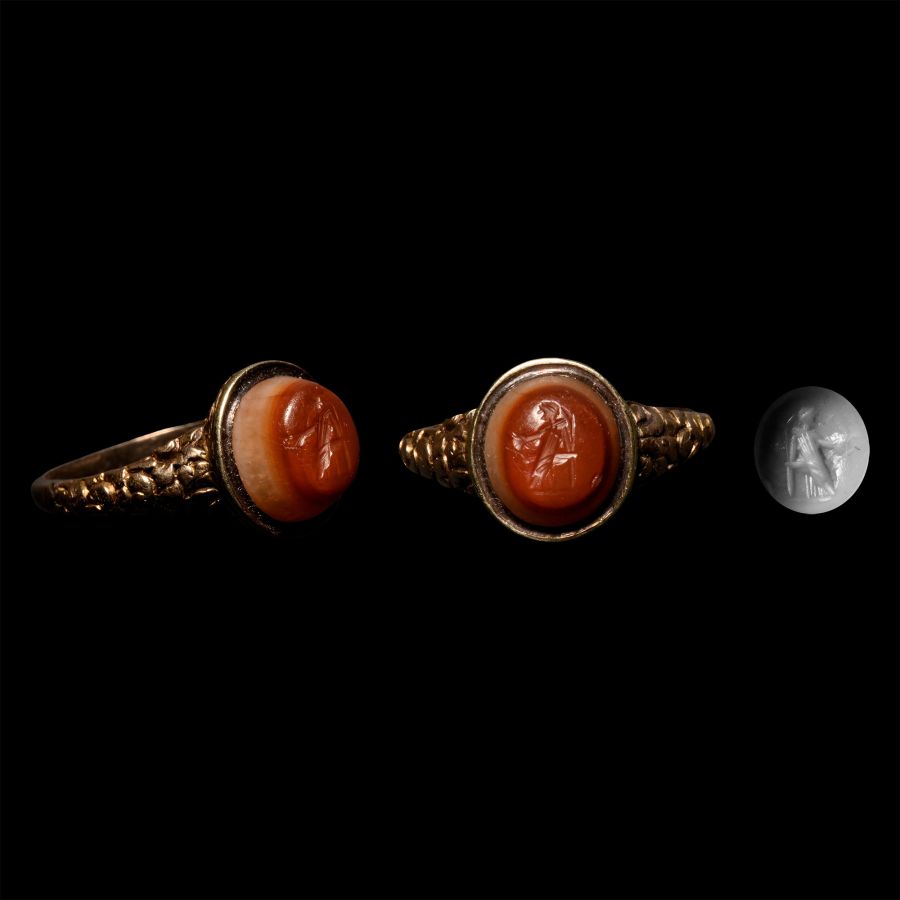
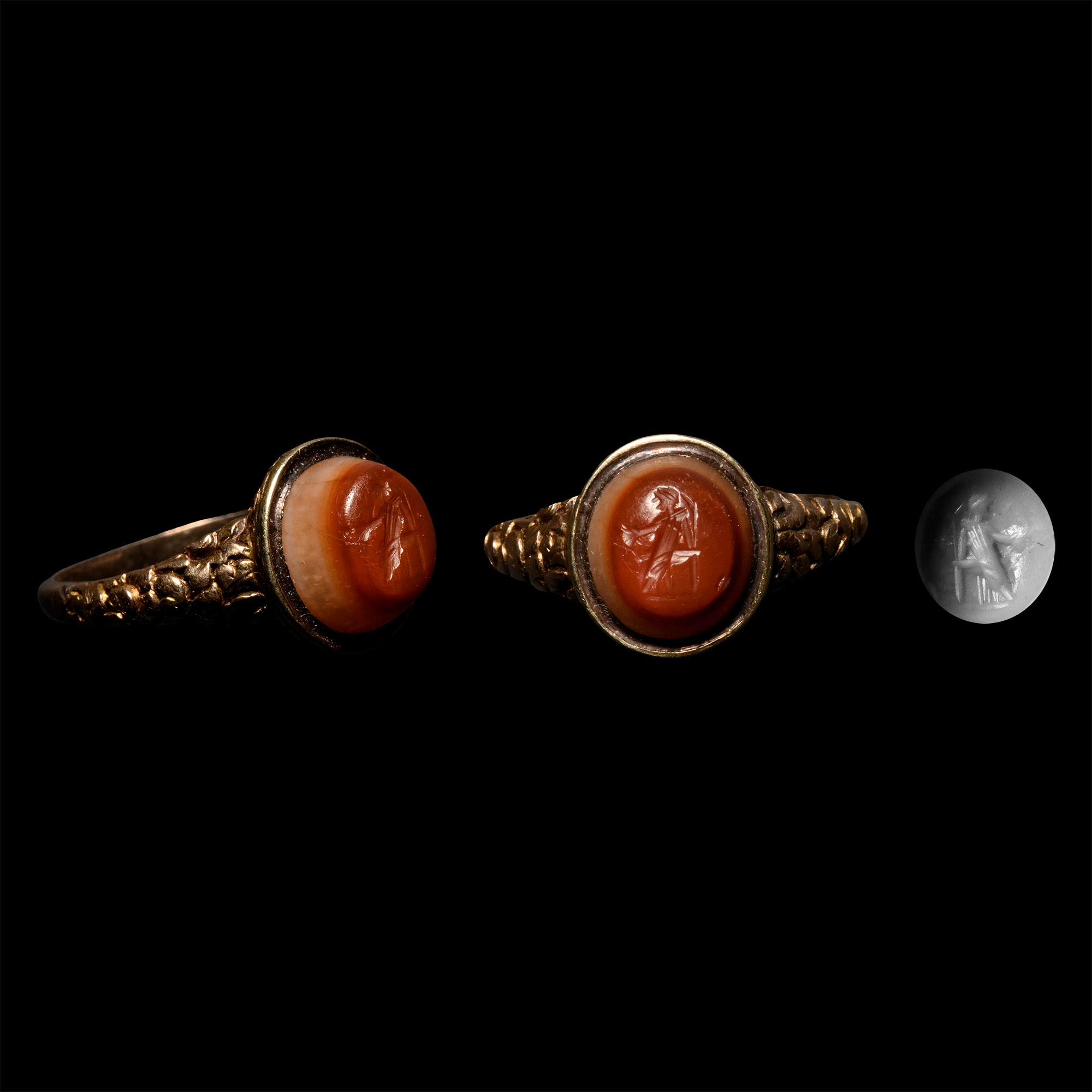
Roman Gemstone of a Seated Figure Set into a Gold Georgian Ring
2ND-3RD CENTURY A.D.
1 in. (3.44 grams, 25.11 mm overall, 17.50 mm internal diameter (approximate size British N, USA 6 1/2, Europe 13.72, Japan 13)).
Cabochon with incuse enthroned figure with one hand extended; set into an antique gold ring; supplied with a museum-quality impression.
ProvenancePrivate collection, Europe.
Acquired on the English art market.
Cf. Chadour, A.B., Rings. The Alice and Louis Koch Collection, volume I, Leeds, 1994, item 274, for type.
CONDITIONTimeLine Auctions follows a vetting process to ensure the authenticity and legality of all items, reinforcing our commitment to integrity and responsible trading. Each antiquity, antique, and coin lot undergoes thorough examination by a vetting committee of at least ten external specialists, professional trade association members, scientists, and archaeologists: Our Vetting Process
AUCTIONS:
TimeLine is a leading auction house specialising in antiquities, ancient art, collectables, natural history, coins, medals, and books. Our auctions offer museums, collectors, historians, and enthusiasts the opportunity to acquire unique and historically significant pieces.
LOT 0198
Roman Gemstone of a Seated Figure Set into a Gold Georgian Ring
Estimate £600 - 800€700 - 930 (for guidance only)$810 - 1,080 (for guidance only)
-
.jpg)
Roman Banded Glass Pyxis
1st century A.D.Estimate: £400 - 600 (‡+bp*)
Opening Bid: £220
Drum-shaped in profile with stepped rim; repaired. 87 grams, 60 mm
Acquired in the late 1980s. Private collection, thence by descent. Private collection, since the late 1990s. -
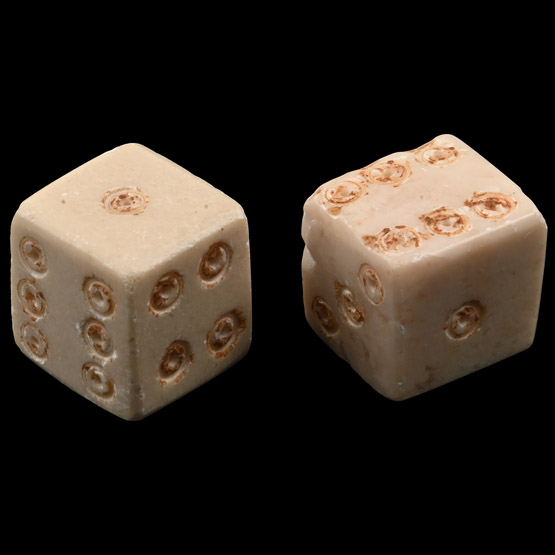
Marble Gaming Dice Pair
Roman, 1st-4th century A.D. or laterSold for (Inc. bp): £286
Cuboid type with incised ring-and-dot markings disposed 1:2, 3:4, 5:6. 12.92 grams total, 14 mm each
Ex German art market, 2000s. Acquired from an EU collector living in London. From the collection of a Surrey, UK, gentleman. -
.jpg)
Roman Carnelian Gemstone of the God Serapis
1st-2nd century A.D.Sold for (Inc. bp): £2,860
Orangey-red intaglio with a concave front and flat back, depicting the three-quarter bust of Serapis; displaying a tightly curled beard, shoulder-length wavy hair with a central parting brushed up from the forehead, wearing the characteristic calathus (woven basket or corn-measure) headgear, symbolising fertility; supplied with a museum-quality impression. 0.47 grams, 14 mm
Private English collection, formed between the late 1970s and early 1990s. Private collection, London, UK.
Serapis was a Graeco-Egyptian god combining the Egyptian gods Osiris and Apis, but with a decidedly Greek appearance. He was promoted by Ptolemy I in the 3rd century BC to help unite the Greek and Egyptian people. Later, Ptolemaic rulers spread his worship, and Serapis became popular across the Roman Empire. Outside Egypt, he was often identified as Isis's partner, replacing Osiris. Over time, he also adopted traits associated with the Greek gods, Hades and Dionysus.
