
Loading, please wait...
LOT 0606
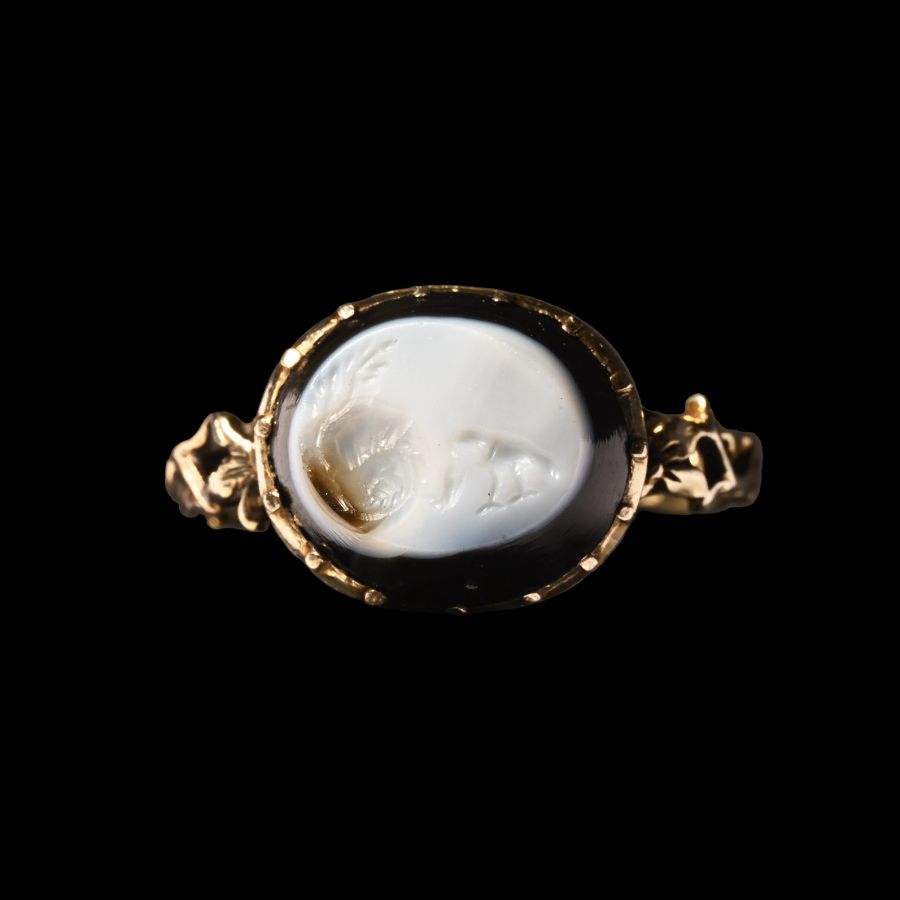
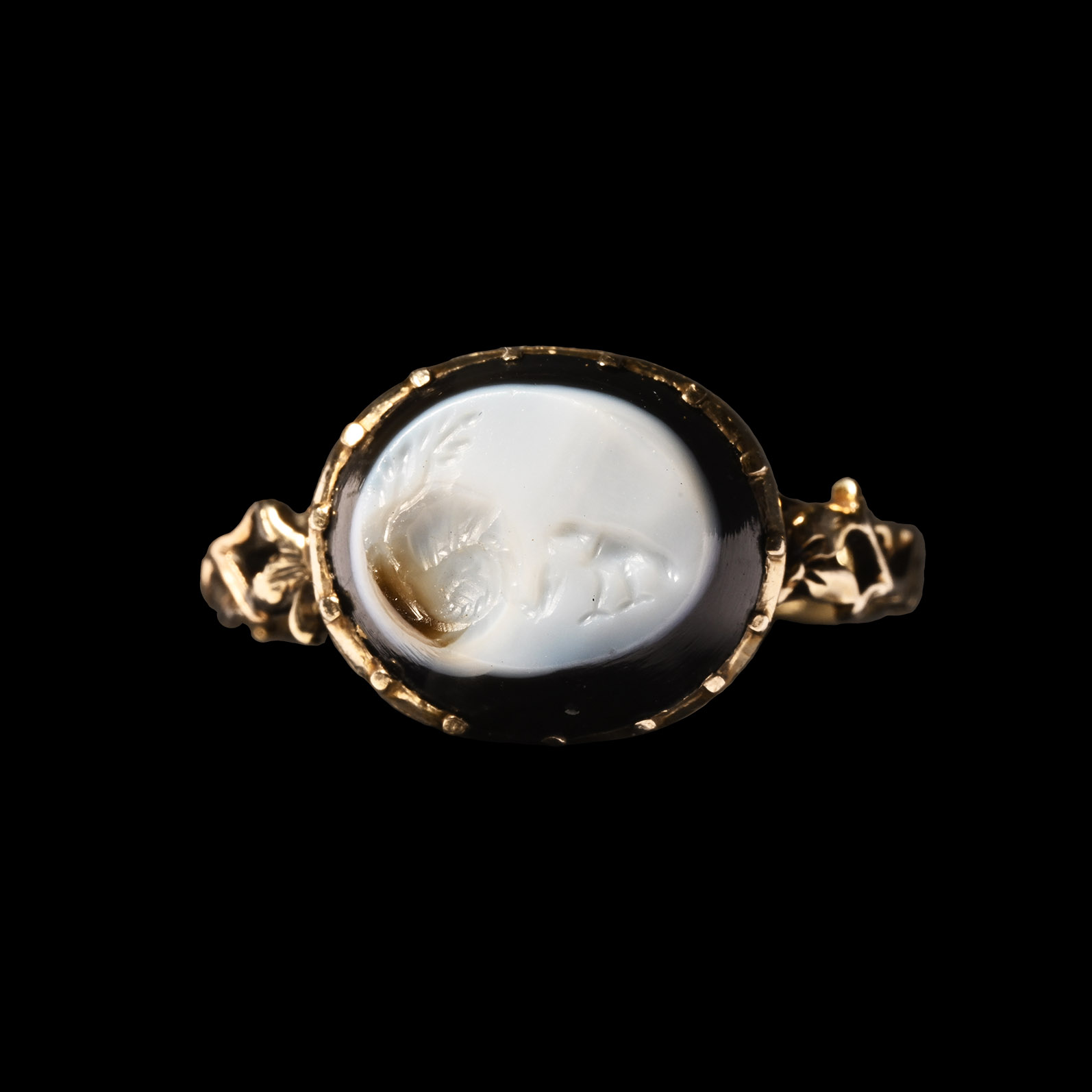
Roman Gemstone in Gold Ring
2ND CENTURY A.D. AND LATER
1 in. (3.13 grams, 25.68 mm overall, 18.43 mm internal diameter (approximate size British N 1/2, USA 6 3/4, Europe 14.35, Japan 13)).
A sardonyx intaglio of a bird pecking at a worm, set into a Georgian gold finger ring with openwork tendril detailing to the hoop, cupped bezel with rosette to the underside.
ProvenanceUK private collection.
with Bertolami Fine Art, London, 22 April 2022, lot 79.
English private collection.
TimeLine Auctions follows a vetting process to ensure the authenticity and legality of all items, reinforcing our commitment to integrity and responsible trading. Each antiquity, antique, and coin lot undergoes thorough examination by a vetting committee of at least ten external specialists, professional trade association members, scientists, and archaeologists: Our Vetting Process
AUCTIONS:
TimeLine is a leading auction house specialising in antiquities, ancient art, collectables, natural history, coins, medals, and books. Our auctions offer museums, collectors, historians, and enthusiasts the opportunity to acquire unique and historically significant pieces.
LOT 0606
Roman Gemstone in Gold Ring
Estimate £1,500 - 2,000€1,740 - 2,320 (for guidance only)$2,030 - 2,700 (for guidance only)
-
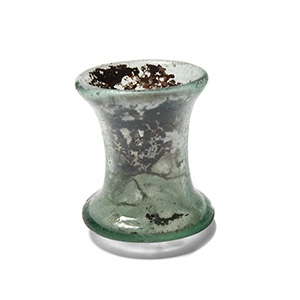
Roman Cast-Glass Bottle
1st century A.D.Sold for (Inc. bp): £117
A spool-shaped glass vessel with rounded base and lip; some iridescent surfaces. 31.7 grams, 48 mm
Acquired 1980-2015. Ex Abelita family collection. -
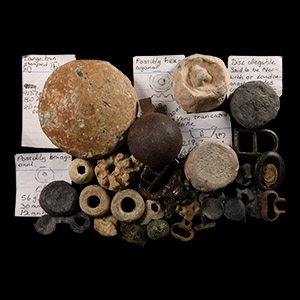
Roman to Civil War Artefact Group
1st-17th century A.D.Sold for (Inc. bp): £26
A group of detector finds including lead trade weights, thimbles, buckles, seals, buttons and other items. 1.87 kg total, 19-78 mm
Found UK. Ex property of a Nottingham, UK, collector. -
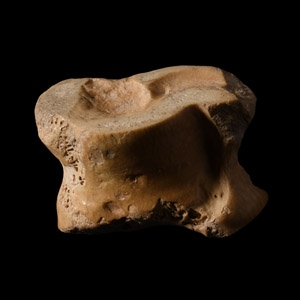
Late Roman Bone Gaming Piece
Circa 3rd century A.D.Sold for (Inc. bp): £6
A bone astragalus gaming piece with flattened base and upper face, from the game of 'knuckle bones'. 9.7 grams, 33 mm
Fine condition.
Ex UK art market, 1970s. Property of a London gentleman.
