
Loading, please wait...


LOT 0919
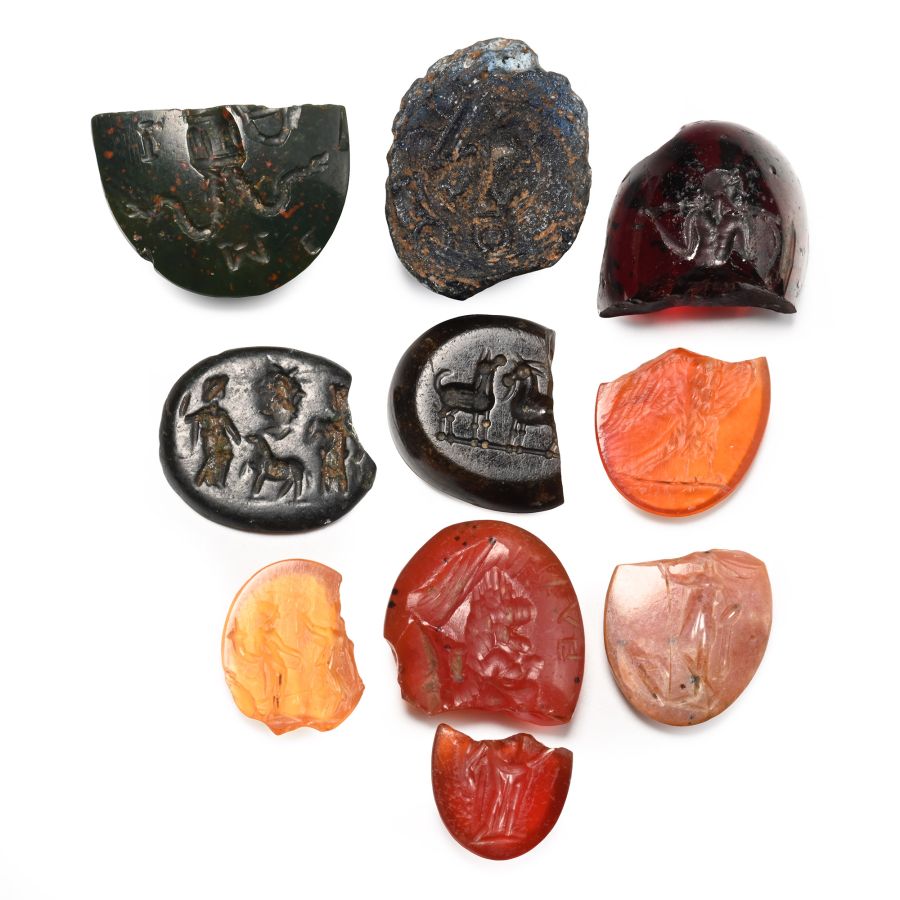
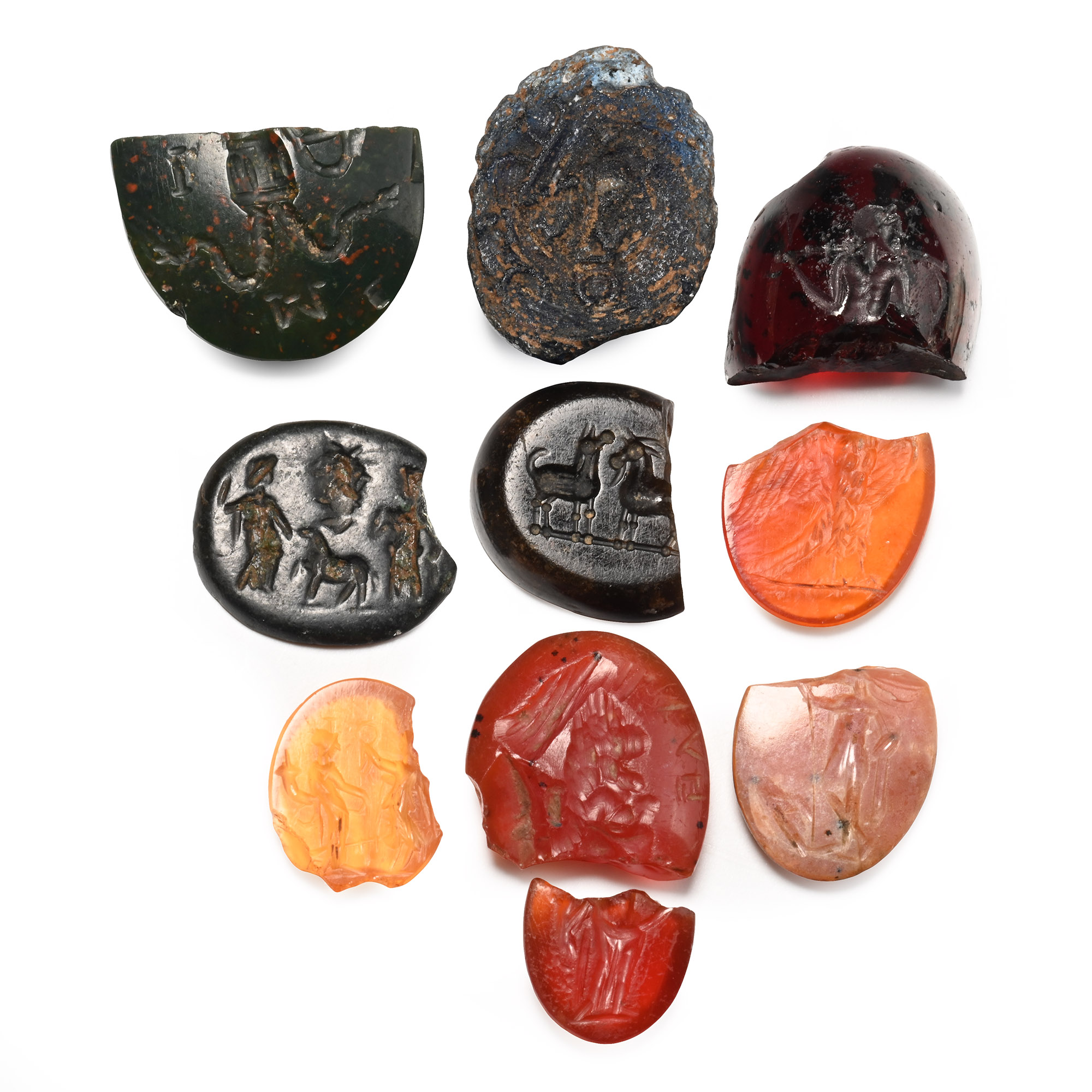
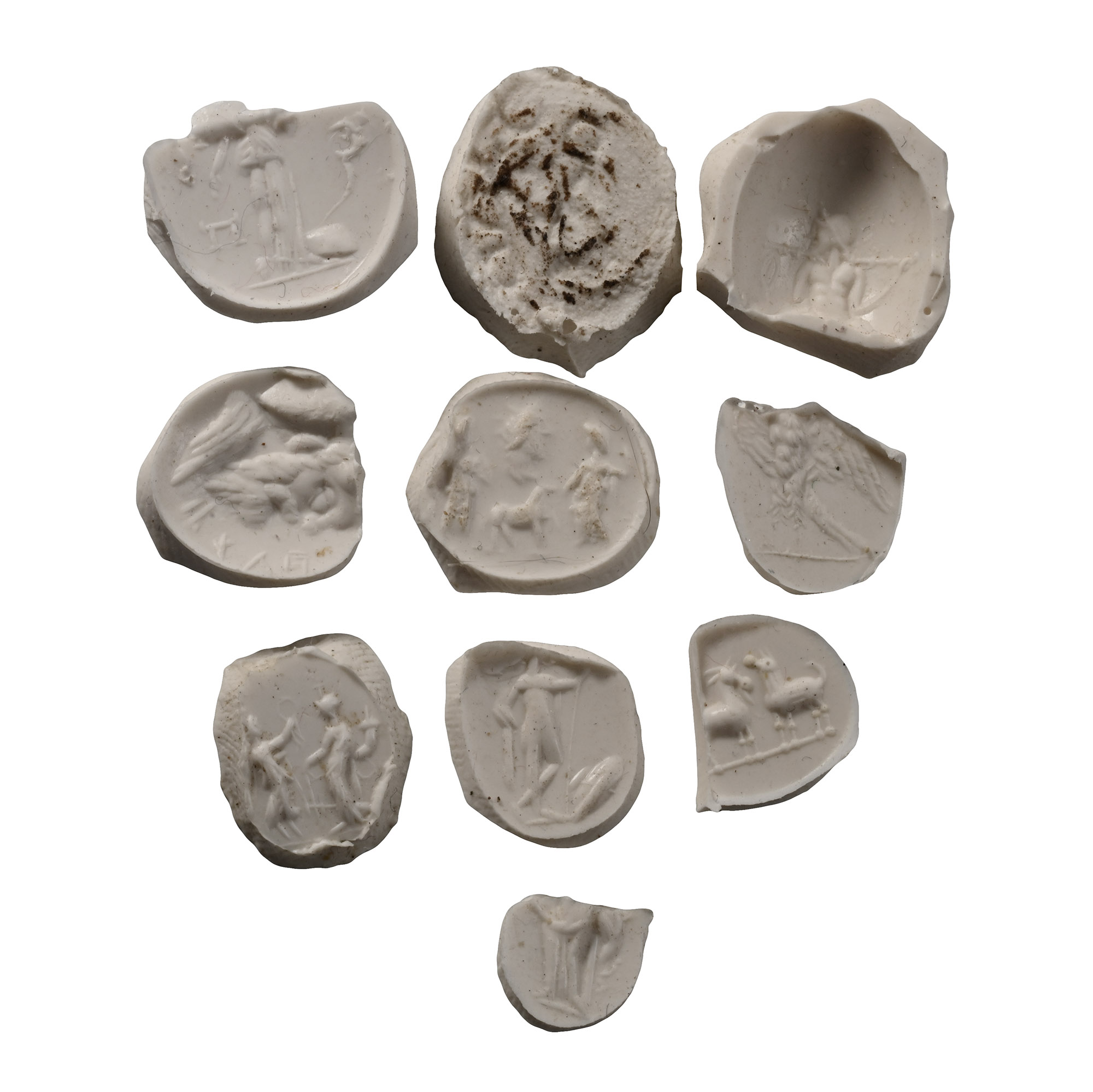
Roman Gemstone Group
2ND-3RD CENTURY A.D.
3/8 - 3/4 in. (14.59 grams total, 9-20 mm).
Including a warrior with a spear over his shoulder, a profile bust of Silenus with a partial Greek legend, Isis-Minerva with a cornucopia and supplicant, and other types; each supplied with a museum-quality impression. [10, No Reserve]
ProvenanceFrom the private collection of a European gentleman (1942-2024), formed since the 1970s.
CONDITIONTimeLine Auctions follows a vetting process to ensure the authenticity and legality of all items, reinforcing our commitment to integrity and responsible trading. Each antiquity, antique, and coin lot undergoes thorough examination by a vetting committee of at least ten external specialists, professional trade association members, scientists, and archaeologists: Our Vetting Process
AUCTIONS:
TimeLine is a leading auction house specialising in antiquities, ancient art, collectables, natural history, coins, medals, and books. Our auctions offer museums, collectors, historians, and enthusiasts the opportunity to acquire unique and historically significant pieces.
-
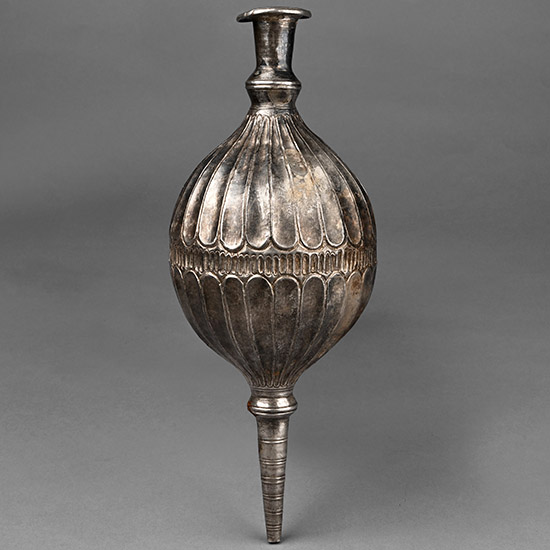
Large Graeco-Roman Silver Wine Infundibulum
5th century B.C.-1st century A.D.Sold for (Inc. bp): £39,000
With a hollow spherical body decorated with slightly concave petals radiating from each end, separated by a central grooved band; one end with a tapering funnel marked by horizontal grooves, the other with a short tapering neck and a wide rim. 356 grams, 29.5 cm
Old Austrian private collection, 1980s. Accompanied by a copy of a nine-page examination report number 154/2026 by Dr habil Mikhail Treister. Accompanied by an academic report by Dr Raffaele D’Amato. This lot has been checked against the Interpol Database of stolen works of art and is accompanied by search certificate number no.12905-242699.
Comparable instruments, usually called clepsydra in Greek and infundibulum in Latin, were in use in the 5th – first half of the 4th centuries B.C. A total of 13 such objects, or clepsydra, are known, including two of the unknown origin), represented by the finds both from Central (Lazio) and South (Campania, Calabria and Basilicata) Italy, Illyria (Apollonia) and Central Greece (Boeotia, Phocis) (all made of bronze), from the Taman peninsula in the North Pontic area, a fragmented one – from the Ulyap kurgan necropolis in the Trans-Kuban region and a silver piece from an aristocratic Thracian burial in the Plovdiv region. A distinctive feature of all these metal objects is the combination of a narrow vertical tube, at the lower end turning into a container with holes in the bottom. -
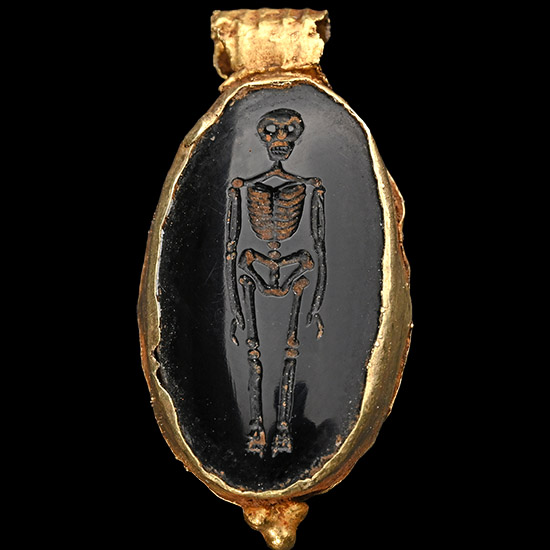
Roman Gold Pendant with Skeleton Gemstone
Circa 2nd-3rd century A.D. or laterSold for (Inc. bp): £3,120
Ellipsoid onyx gemstone with an incuse skeleton motif, set in a gold-sheet cell with granule cluster below and ribbed loop above, reverse with border of pellets enclosing three rosettes. 2.7 grams, 26 mm
From a North American gentleman's collection, 1990s. -
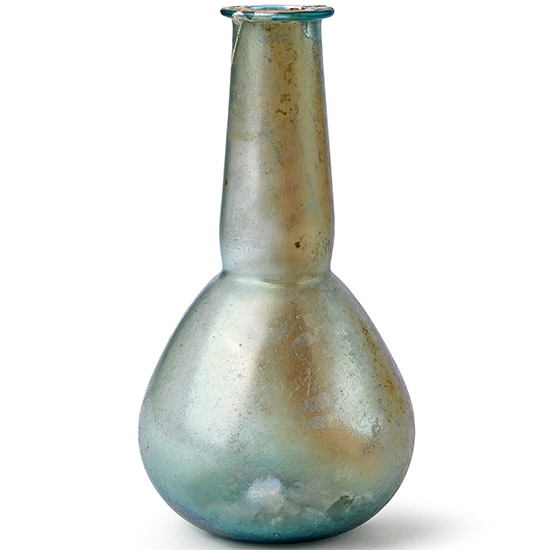
Large Roman Blue Glass Toilet Bottle
1st century A.D.Sold for (Inc. bp): £494
With a piriform body with a dimple base, a long tubular neck with an everted rim. 194 grams, 18.2 cm
From an important London, UK, collection 1980-2020.
The toilet bottle corresponds to the Isling Form 28a or Vessberg flask type A.III.a. The transparent greyish green glass suggests that the object belongs to the Hayes' fabric 2 of Cypriot blown glass.
