
Loading, please wait...
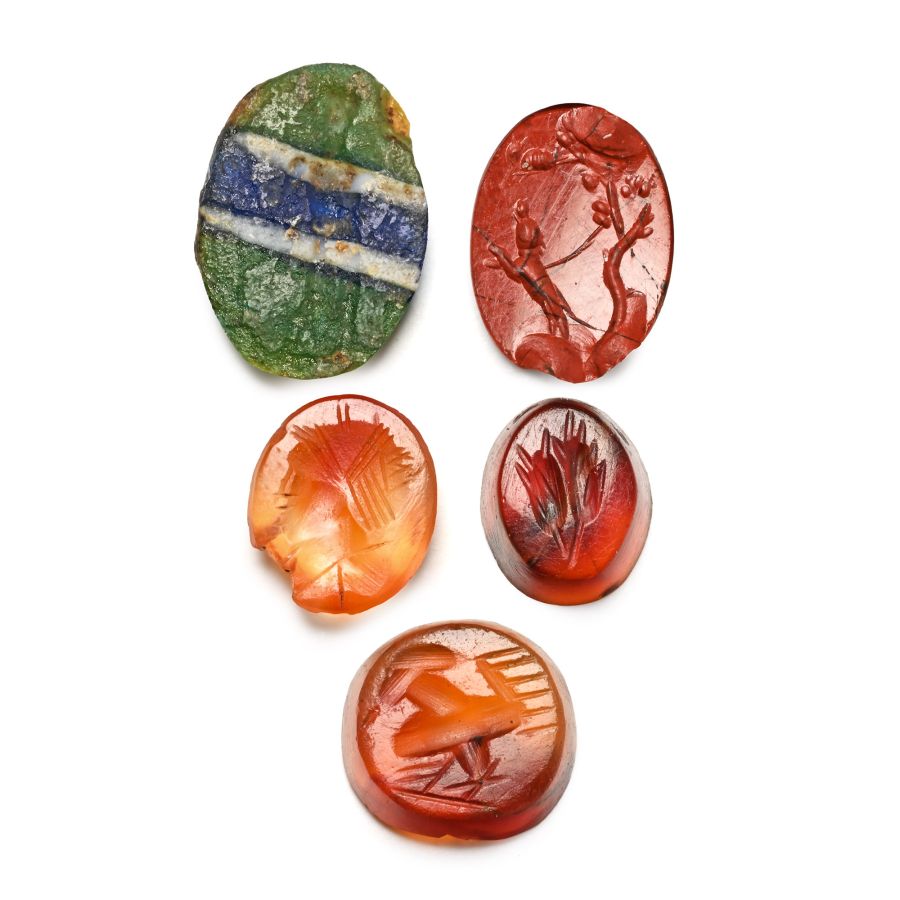


LOT 0754
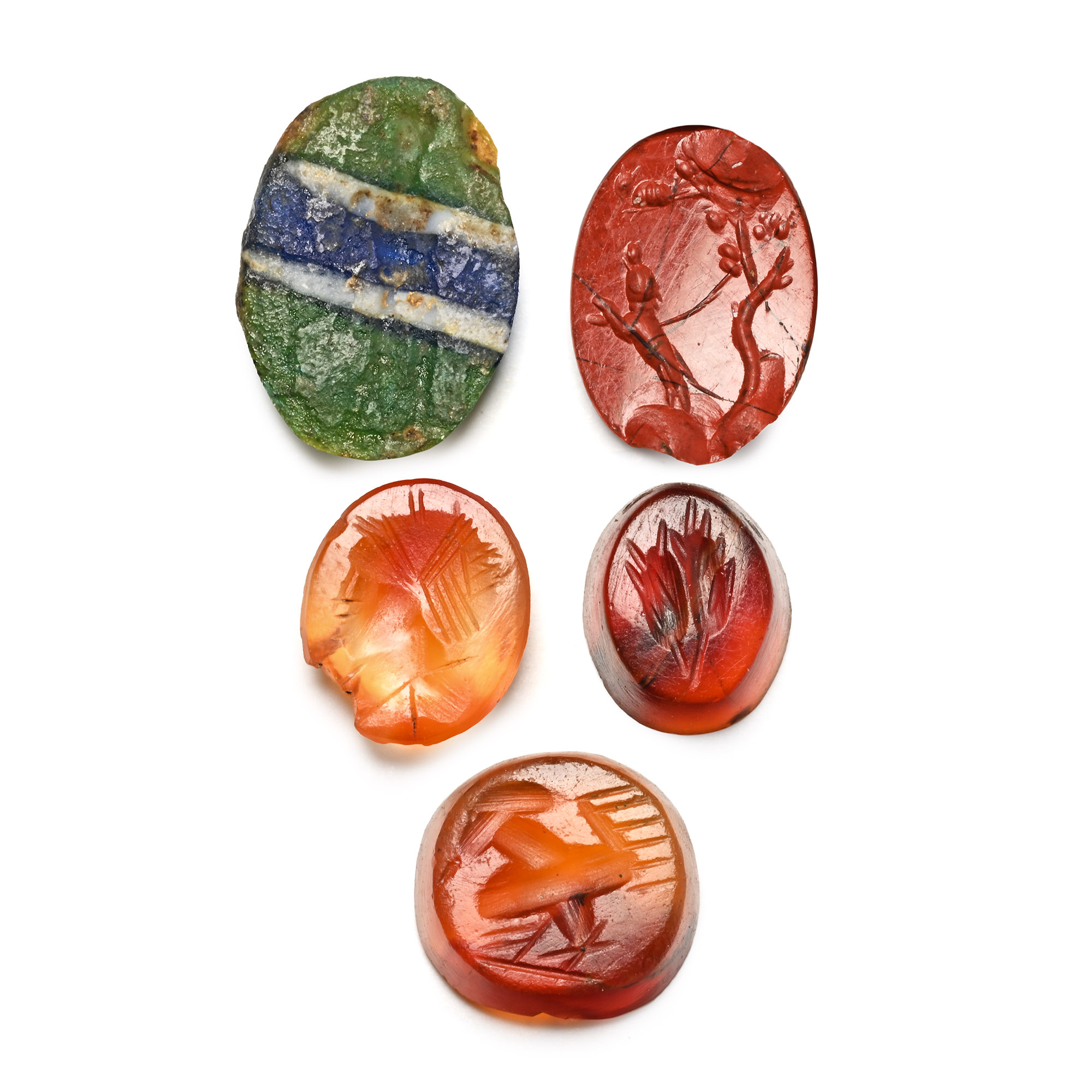
Roman Gemstone Group
2ND-3RD CENTURY A.D.
1/4 - 3/8 in. (1.25 grams total, 7-11 mm).
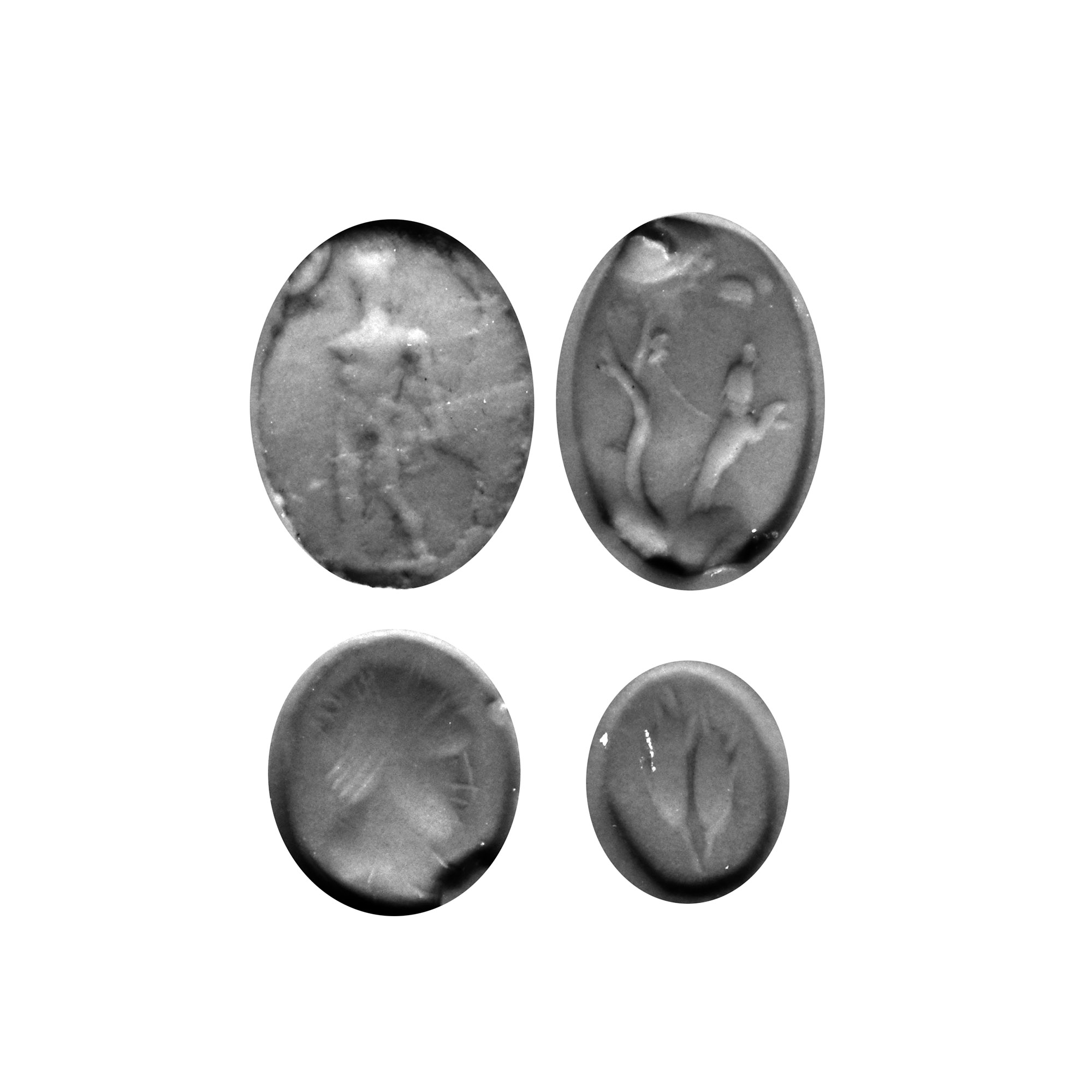
Including standing figure, profile portrait bust and other types; each supplied with a museum-quality impression. [5, No Reserve]
ProvenanceFrom the private collection of a European gentleman (1942-2024), formed since the 1970s.
CONDITIONTimeLine Auctions follows a vetting process to ensure the authenticity and legality of all items, reinforcing our commitment to integrity and responsible trading. Each antiquity, antique, and coin lot undergoes thorough examination by a vetting committee of at least ten external specialists, professional trade association members, scientists, and archaeologists: Our Vetting Process
AUCTIONS:
TimeLine is a leading auction house specialising in antiquities, ancient art, collectables, natural history, coins, medals, and books. Our auctions offer museums, collectors, historians, and enthusiasts the opportunity to acquire unique and historically significant pieces.
-
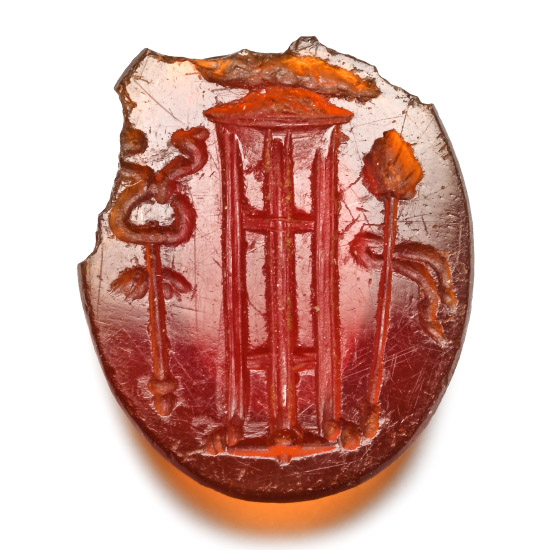
Roman Carnelian Gemstone with Tripod and Sceptres of Bacchus and Mercury
2nd-3rd century A.D.Sold for (Inc. bp): £104
Intaglio design of fasces, caduceus and other items. 0.28 grams, 9 mm
From the private collection of a European gentleman (1942-2024), formed since the 1970s. -
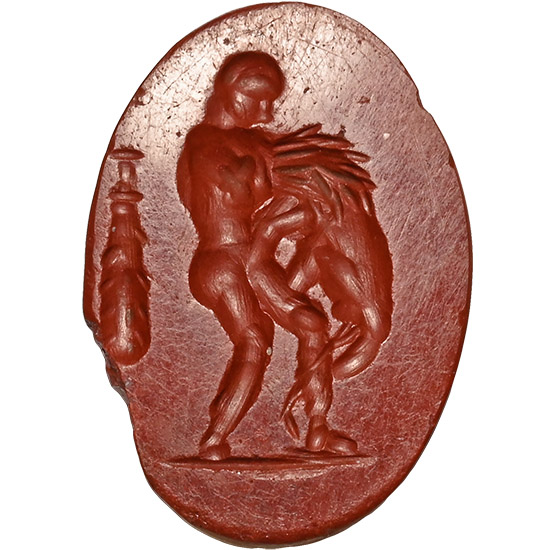
Roman Red Jasper Magical Stomach Amulet with Hercules Fighting a Lion
2nd-3rd century A.D.Sold for (Inc. bp): £975
Bifacial type with incuse design on one side of a Hercules fighting the Nemean lion, club adjacent, and on the other face two columns of angular characters including 'KKK'; supplied with a museum-quality impression. 1.06 grams, 16 mm
From the private collection of a European gentleman (1942-2024), formed since the 1970s. -
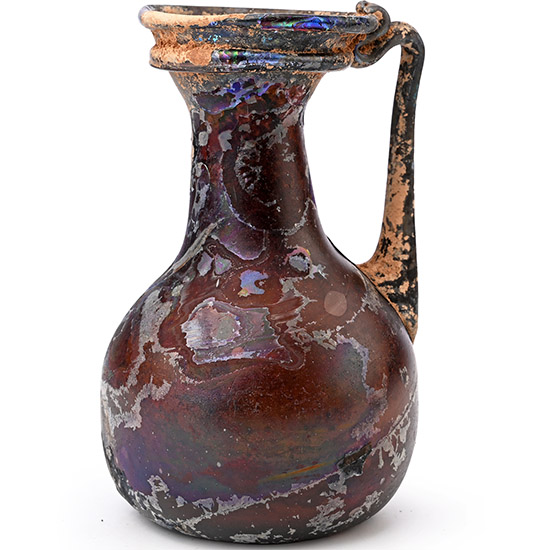
Roman Aubergine Glass Pitcher
3rd-4th century A.D.Sold for (Inc. bp): £468
Comprising a bulbous body with a dimple base and a funicular neck with an applied band below the rim and a handle to the rear. 93.2 grams, 10.8 cm
From an important London, UK, collection 1980-2020.
The pitcher shows the style of production of the Roman Rhine workshops. Several hundred vessels with applied decoration are known from the Roman Rhineland. The numerous finds from graves and the evidence of glass furnaces in Cologne suggest that a large proportion of these vessels were produced in local workshops, then spread throughout the empire.
