
Loading, please wait...


LOT 0981
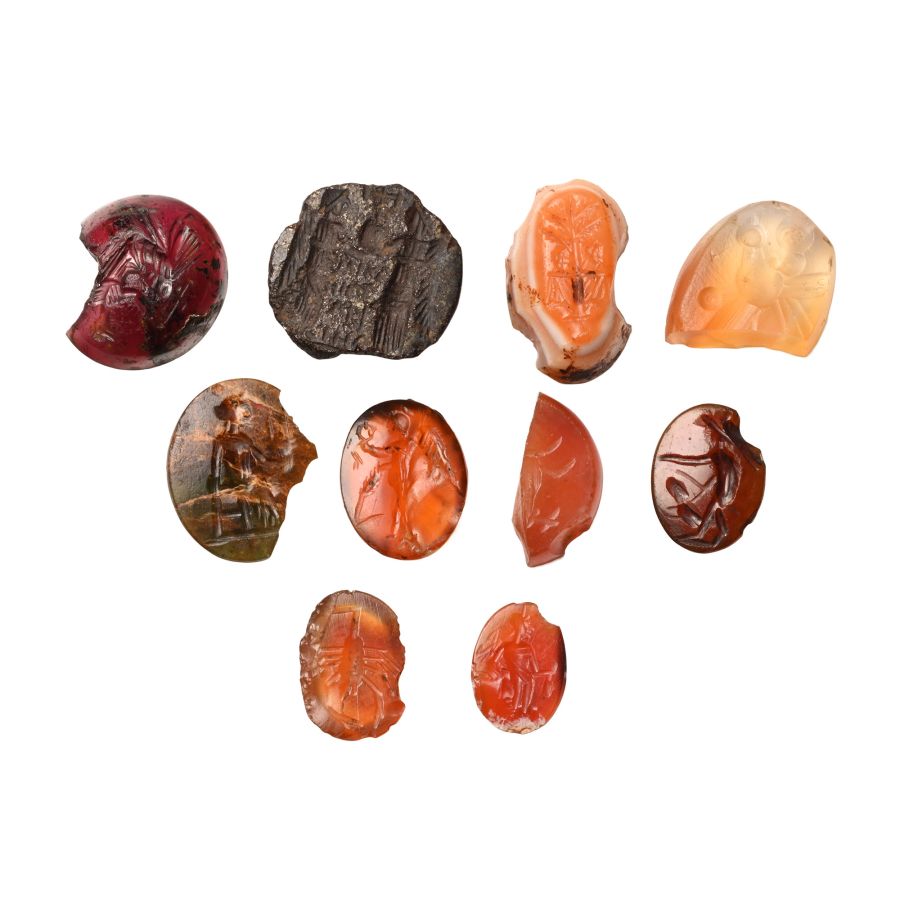
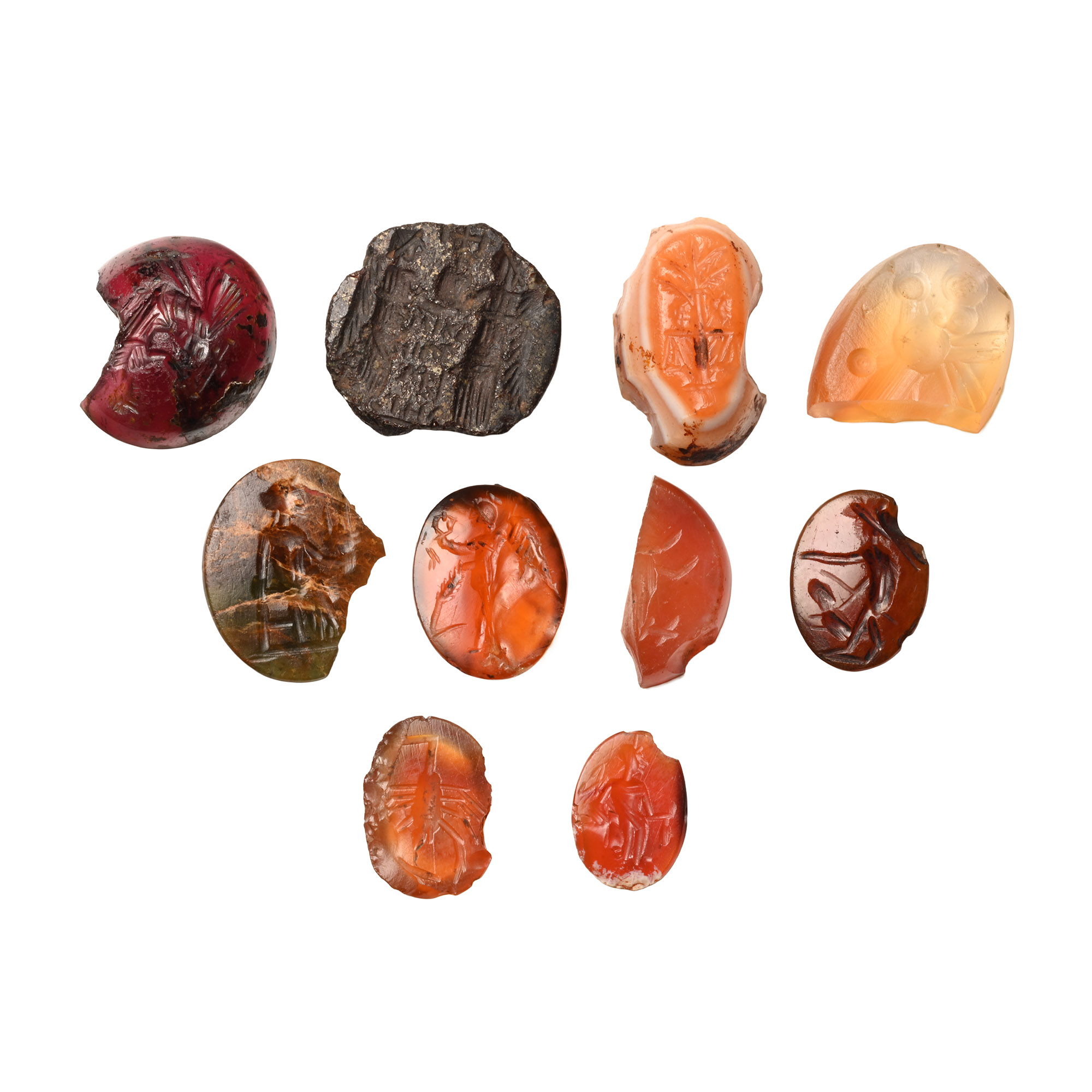
Roman Gemstone Collection
3RD CENTURY A.D. OR EARLIER
3/8 - 1/2 in. (6.57 grams total, 9-14 mm).
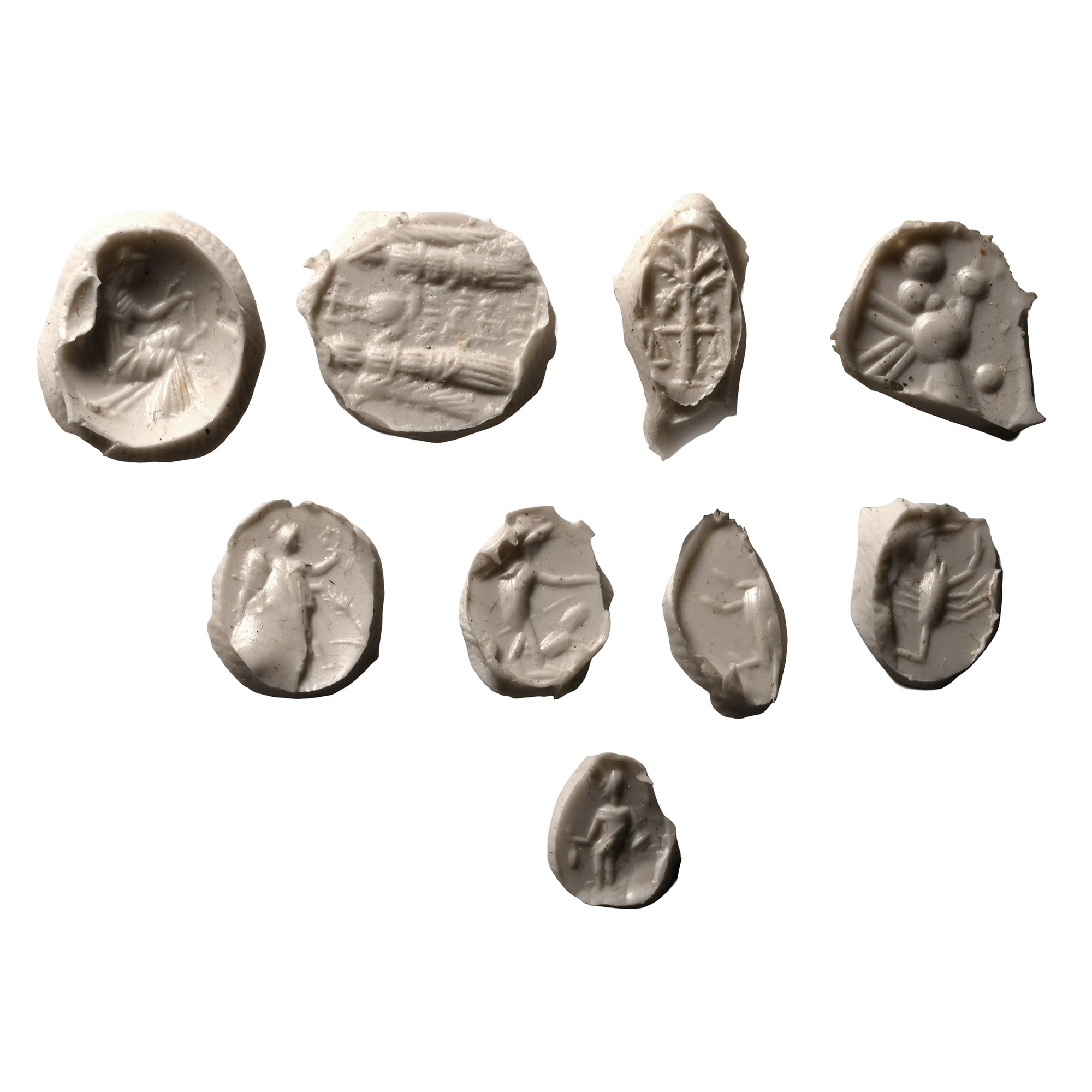
Including standing figures with vessel, seated figure with lyre, scorpion and other types; each supplied with a museum-quality impression. [10, No Reserve]
ProvenanceFrom the private collection of a European gentleman (1942-2024), formed since the 1970s.
LiteratureCf. for a similar gemstone with scorpion Michel, S., Die Magischen Gemmen im Britischen Museum, London, 2001, p.216, no.342 (BM inv.no.G 180/A 56180).
CONDITIONTimeLine Auctions follows a vetting process to ensure the authenticity and legality of all items, reinforcing our commitment to integrity and responsible trading. Each antiquity, antique, and coin lot undergoes thorough examination by a vetting committee of at least ten external specialists, professional trade association members, scientists, and archaeologists: Our Vetting Process
AUCTIONS:
TimeLine is a leading auction house specialising in antiquities, ancient art, collectables, natural history, coins, medals, and books. Our auctions offer museums, collectors, historians, and enthusiasts the opportunity to acquire unique and historically significant pieces.
LOT 0981
Roman Gemstone Collection
Estimate £120 - 170€140 - 200 (for guidance only)$160 - 230 (for guidance only)
-
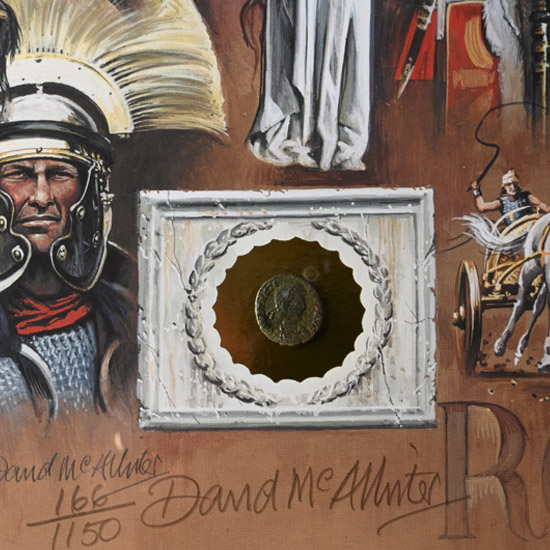
Bronze Roman Coin and Framed Limited Edition Print
3rd century A.D. and laterEstimate: £30 - 40 (+bp*)
Bids: 1 | Current Bid: £5
The coin from the House of Constantine mounted on 22 carat gold foil, framed with an art print signed by the artist David McAllister, depicting scenes of Roman military activity; limited edition number 166/1150. 1.26 kg, 49.5 x 37.5 cm
UK gallery, early 2000s. Accompanied by a previous numbered certificate of authenticity.
David McAllister's exciting design is a 'one of a kind' work that portrays the might and riches of the Roman civilisation. This limited edition print is a celebration of the award-winning artist's lifetime dedication to historical paintings of the ancient world. To enhance appreciation of this rare and historic work, each print is signed and numbered by the artist. -
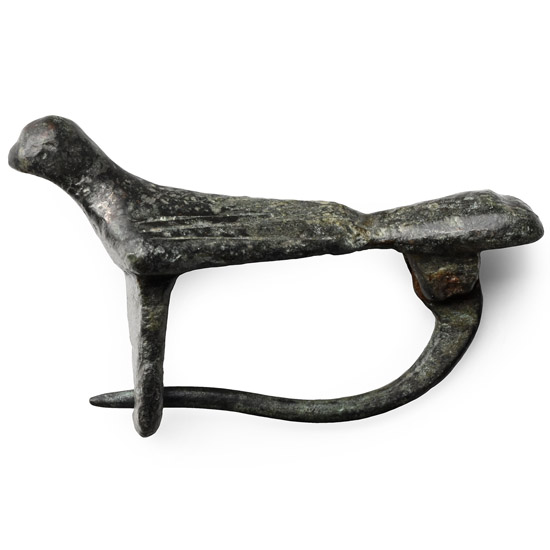
Roman Bronze Bird Brooch
Circa 3rd-4th century A.D.Estimate: £100 - 140 (+bp*)
Opening Bid: £50
Depicting a bird with folded wings and a fan-shaped tail, a springed pin, and a catchplate on the reverse. 12.6 grams, 40 mm
Ex German art market, 2000s. Acquired from an EU collector living in London. From the collection of a Surrey, UK, gentleman. -
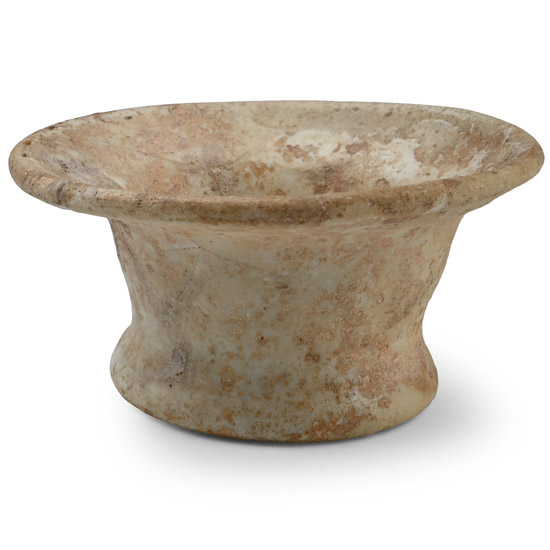
Roman Opaque White Glass Patera Bowl
1st-2nd century A.D.Estimate: £500 - 700 (+bp*)
Opening Bid: £250
Cylindrical body perched on a wide, slightly concave foot; the shoulders splayed outwards, leading to a thick trumpet-style rim gently curving upwards. 32 grams, 66 mm wide
Ex S.M. collection, London, UK, 1970-1999. Roman glass from an important London collection, acquired from the early 1980s. Accompanied by a typed previous catalogue information page with provenance.
The shape of this small cup derives from metal vessels of the Early Empire period or from ‘terra sigillata’ earthenware. Similar vessels were found throughout the Empire during the 1st and 2nd centuries A.D. Vessels similar to this one have been discovered in the necropolis at Kourion, Cyprus (dating to the first half of the 1st century A.D.), in 1st-century finds from Gaul, and in Egypt, though the specific find spot and date in the latter case remain undetermined.
