
Loading, please wait...
LOT 0869
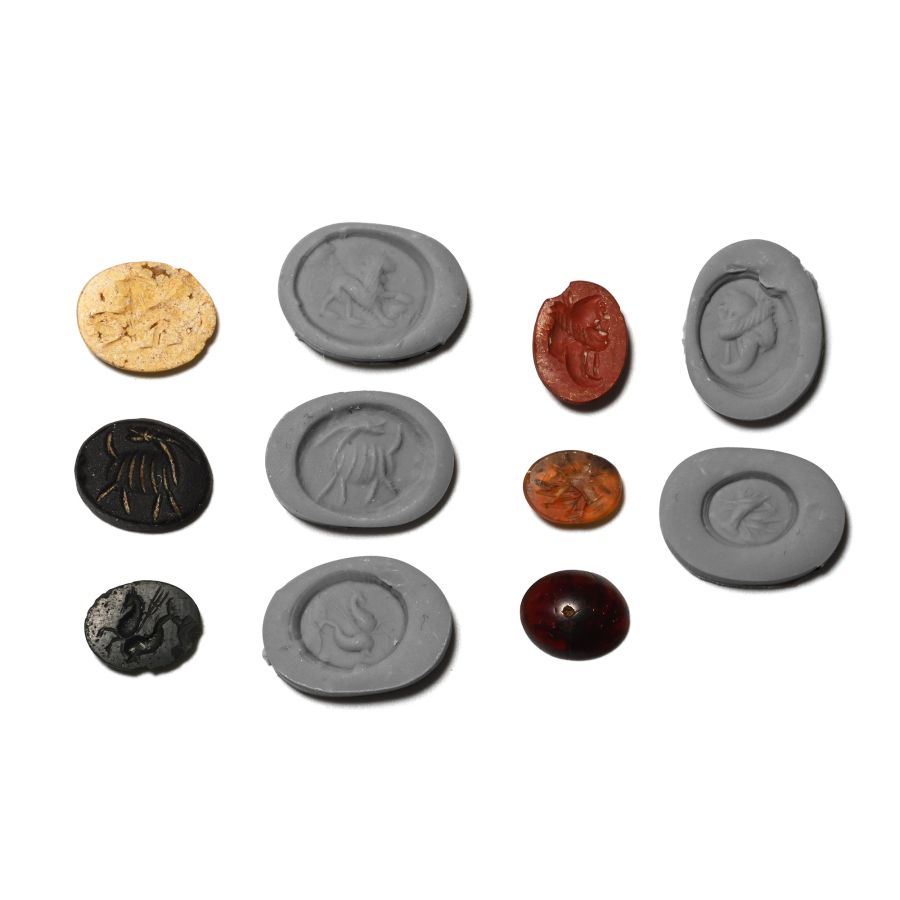
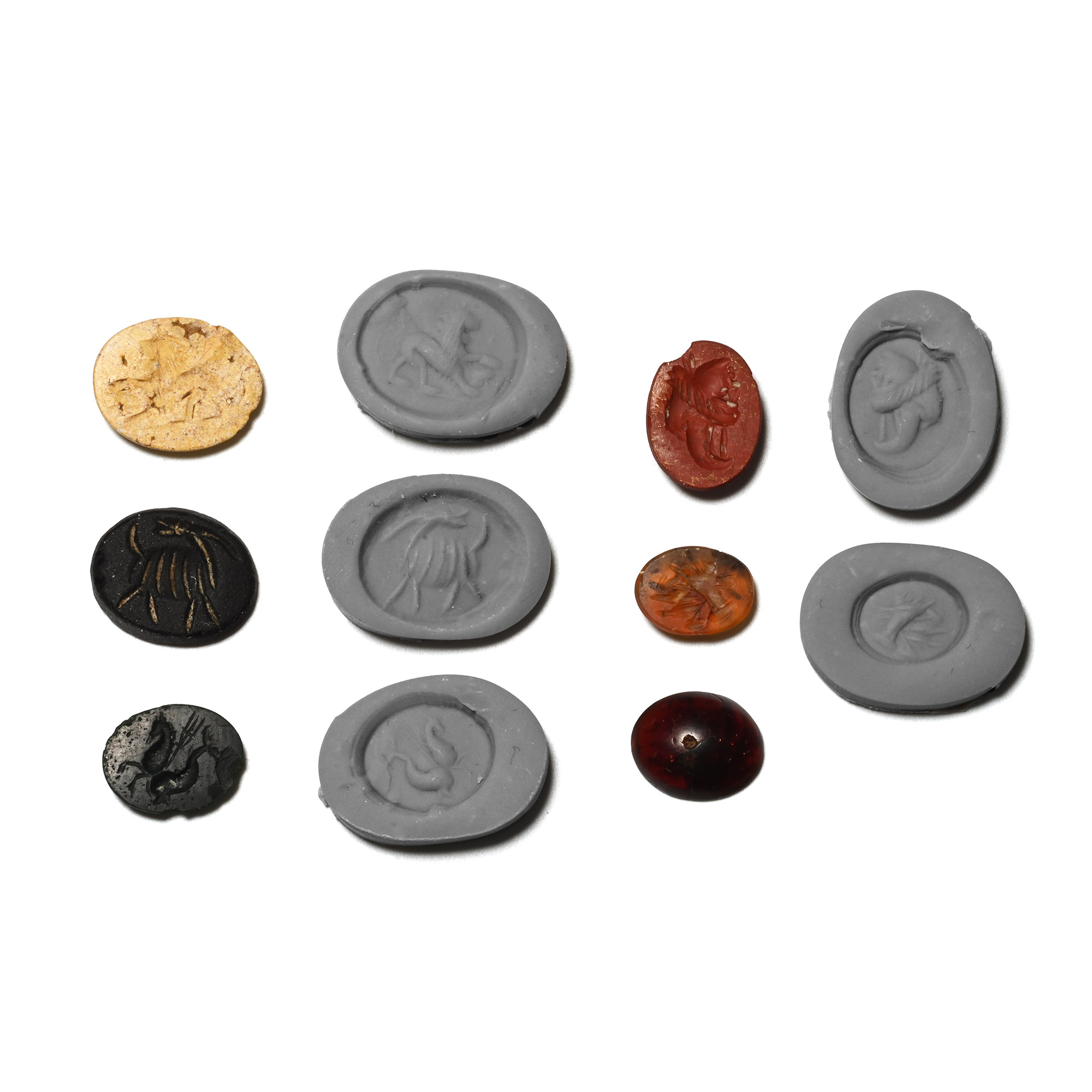
Roman Gemstone Collection
1ST-3RD CENTURY A.D.
1/4 - 1/2 in. (2.9 grams total, 9-13 mm).
Including profile bust, advancing lion, two fish and other types; each supplied with a museum-quality impression. [6]
ProvenanceFrom the collection of a gentleman, acquired on the London art market in the 1990s.
LiteratureCf. Kaić, I., ‘Engraved gems as part of the Augustan Propaganda. Some examples from Croatia’ in Milićević Bradač, M., Demicheli, D., The century of the brave, Roman conquest and indigenous resistance in Illyricum during the time of Augustus and his heirs, proceedings of the international conference Zagreb, 22-26,9,2014, Zagreb, 2018, figs.5,8, for similar.
FootnotesOne of the rings, representing a seahorse with a trident swimming beside a dolphin, could be connected with the Legio X Fretensis, whose symbol was Neptune and the dolphin, adopted after the battle of Actium.
CONDITIONTimeLine Auctions follows a vetting process to ensure the authenticity and legality of all items, reinforcing our commitment to integrity and responsible trading. Each antiquity, antique, and coin lot undergoes thorough examination by a vetting committee of at least ten external specialists, professional trade association members, scientists, and archaeologists: Our Vetting Process
AUCTIONS:
TimeLine is a leading auction house specialising in antiquities, ancient art, collectables, natural history, coins, medals, and books. Our auctions offer museums, collectors, historians, and enthusiasts the opportunity to acquire unique and historically significant pieces.
LOT 0869
Roman Gemstone Collection
Estimate £350 - 450€410 - 520 (for guidance only)$470 - 610 (for guidance only)
-
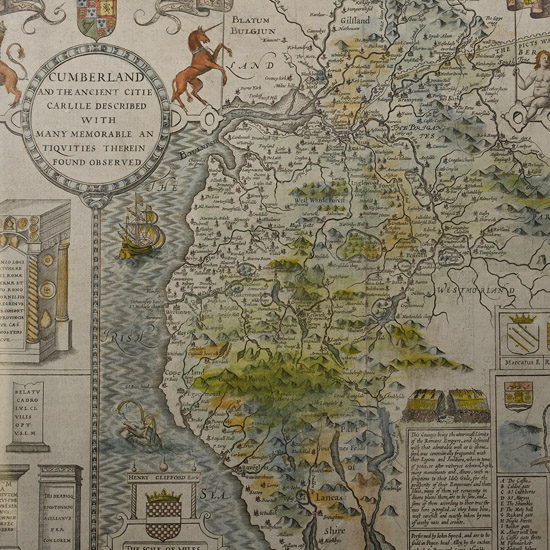
Hadrian's Wall and Roman Antiquities Map by John Speed
Published 1610 A.D.Sold for (Inc. bp): £286
A fine original double-page hand-coloured map of Cumberland and adjacent areas by John Speed, published in 1610, depicting Hadrian's Wall, Roman antiquities, the fortified city of Carlisle, tribal lands of 'The Brigantes', etc. Framed and glazed; reverse damaged. 1.57 kg, 53.8 x 41.5 cm
Ian Wilkinson collection, Nottinghamshire, UK, formed since 1985. -
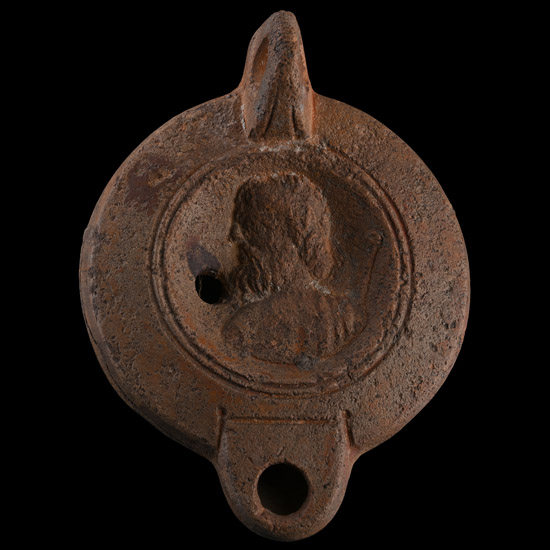
Roman Terracotta Oil Lamp with Bearded Philosopher
Circa 2nd century A.D.Sold for (Inc. bp): £312
Comprising a circular body with a short nozzle and a loop handle, the discus with a profile bust of a mature man holding a staff; base with concentric circles. 98 grams, 10.8 cm
From the private collection of Mr Brian Edwards, New Malden, Surrey, UK, formed from the late 1970s-early 1980s; thence by descent. Accompanied by the original collector's data sheet with reference no.A36. -
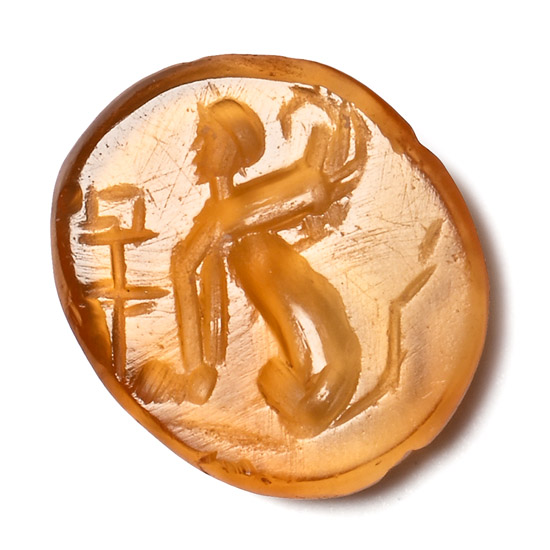
Roman Carnelian Gemstone with Sphinx
2nd-3rd century A.D.Sold for (Inc. bp): £72
With intaglio sphinx sitting beside a military standard; supplied with a museum-quality impression. 0.36 grams, 10.83 mm
From the private collection of a European gentleman (1942-2024), formed since the 1970s.
