
Loading, please wait...
LOT 0763
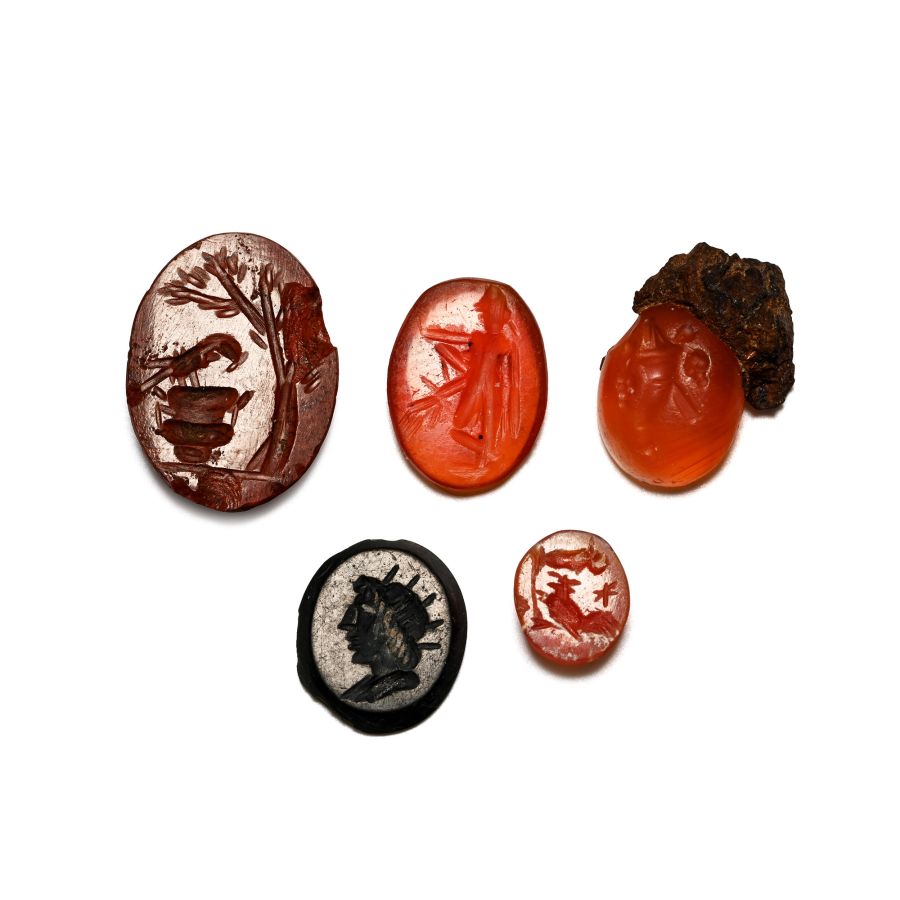
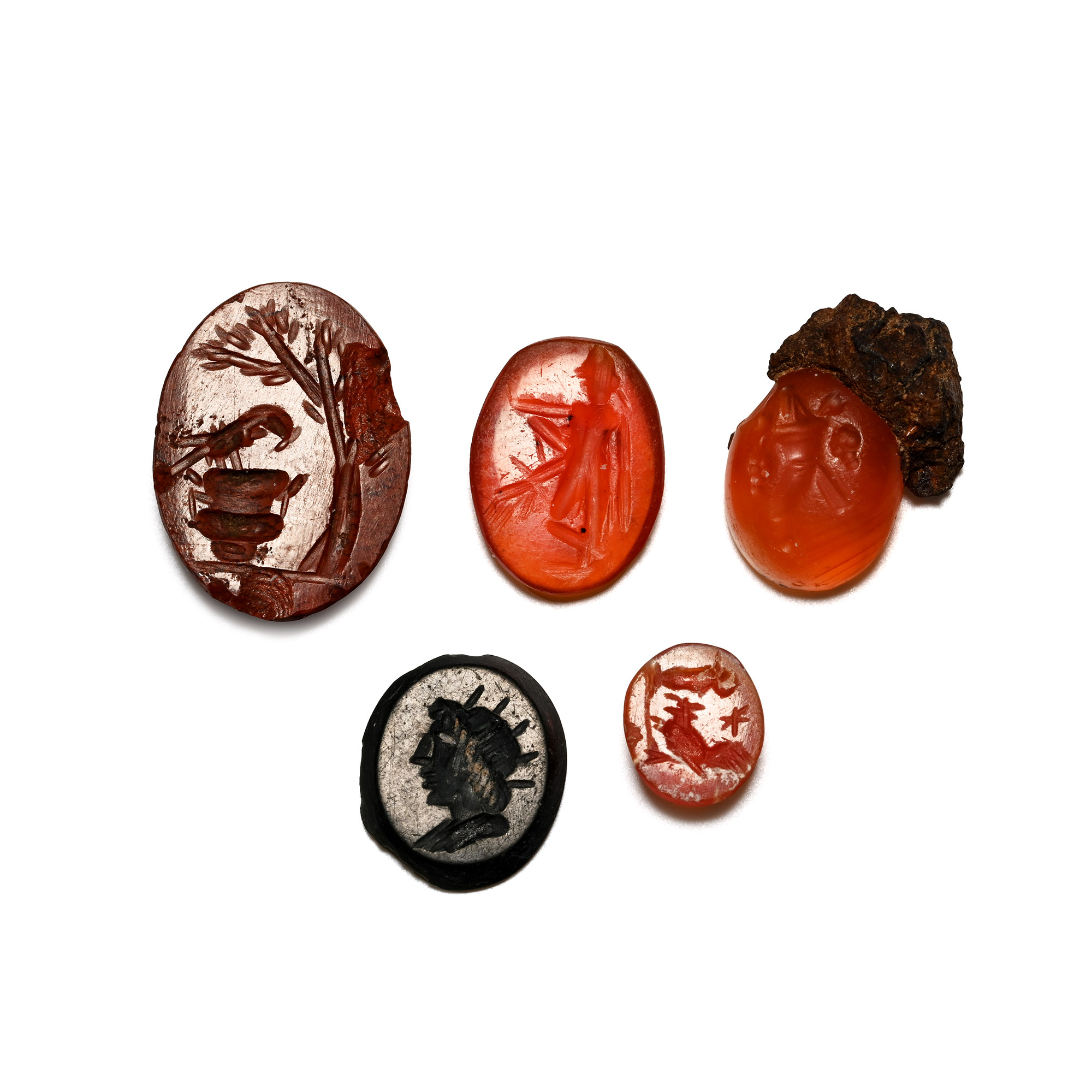
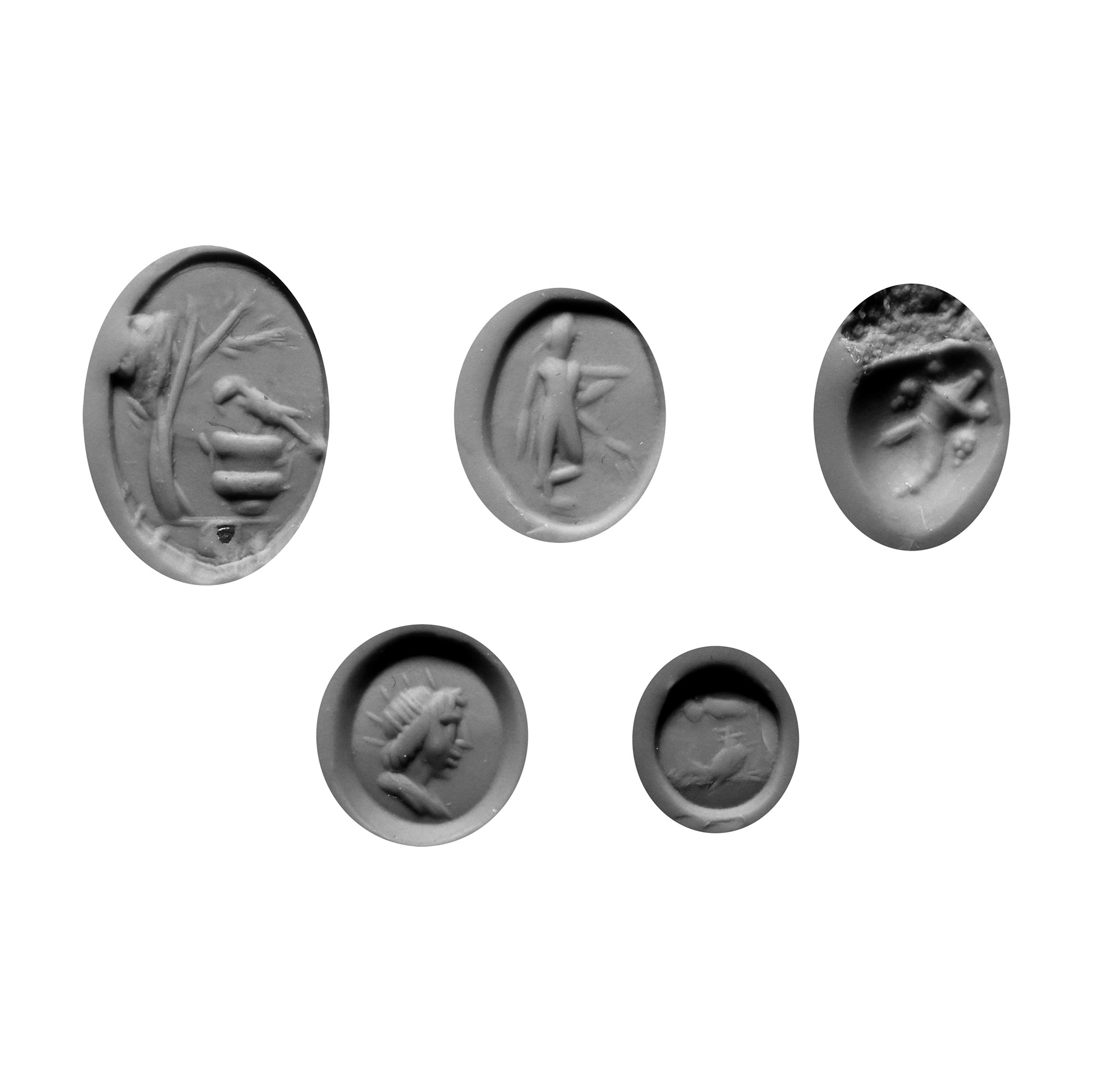
Roman Gemstone Collection
1ST-2ND CENTURY A.D.
1/4 - 5/8 in. (2.66 grams total, 7-16 mm).
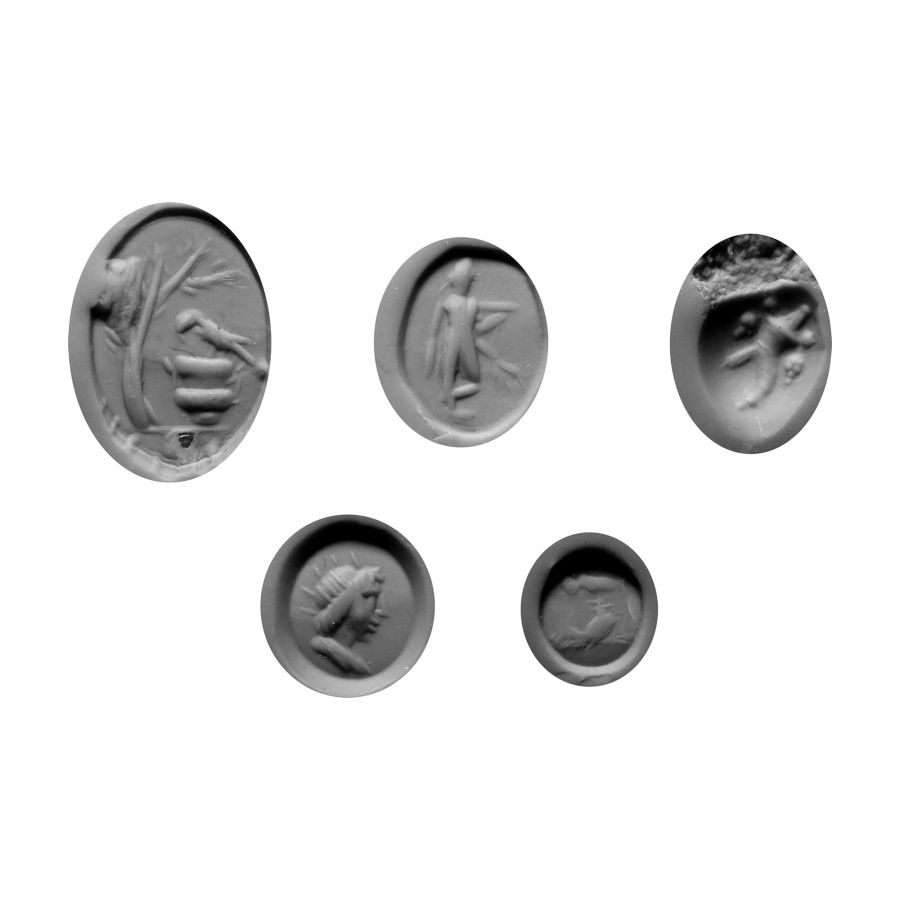
Mixed group including a standing female, a perching bird and others; each supplied with a museum-quality impression. [5]
ProvenanceFrom the collection of a gentleman, acquired on the London art market in the 1990s.
LiteratureCf. for similar gemstones Hoppal, K., 'Roman engraved gems from Southeast Asia' in Bartus D. (ed.), Dissertationes Archaeologicae ex Instituto Archaeologico Universitatis de Rolando Eotvos nominatae, Ser.3 No.9, Budapest, 2021, figs.1,2; 1,5; 2,2 and 2,5.
FootnotesTwo of the gemstones in this collection show cockerels. The motif of fighting or individual cockerels was very popular in the classical world, and individual cockerels (the animal often associated with gods, such as Mercury or Sol/Helios) were also often depicted in a standing position. Another gemstone appears to represent a nude figure of Dionysos/Bacchus draped in a long cloak, and another shows Helios with a radiate crown.
CONDITIONTimeLine Auctions follows a vetting process to ensure the authenticity and legality of all items, reinforcing our commitment to integrity and responsible trading. Each antiquity, antique, and coin lot undergoes thorough examination by a vetting committee of at least ten external specialists, professional trade association members, scientists, and archaeologists: Our Vetting Process
AUCTIONS:
TimeLine is a leading auction house specialising in antiquities, ancient art, collectables, natural history, coins, medals, and books. Our auctions offer museums, collectors, historians, and enthusiasts the opportunity to acquire unique and historically significant pieces.
LOT 0763
Roman Gemstone Collection
Estimate £380 - 480€440 - 560 (for guidance only)$510 - 650 (for guidance only)
-
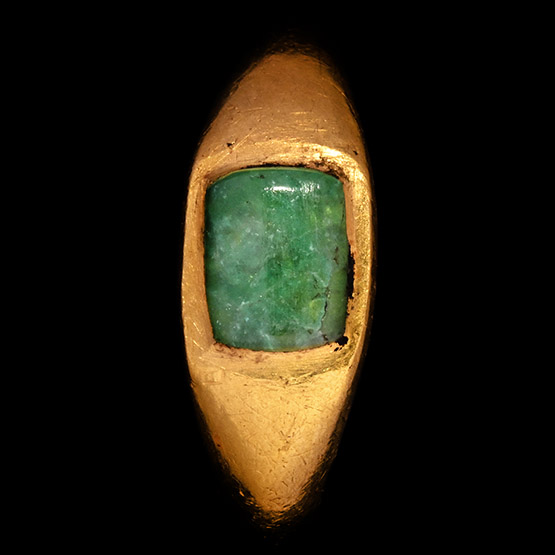
Roman Child's Ring with Emerald
1st-2nd century A.D.Estimate: £600 - 800 (+bp*)
Opening Bid: £300
Integral flat bezel with inset green cloison. 1.22 grams, 13.23 mm overall, 10.74 mm internal diameter
Private English collection, formed between the late 1970s and early 1990s. Private collection, UK. -
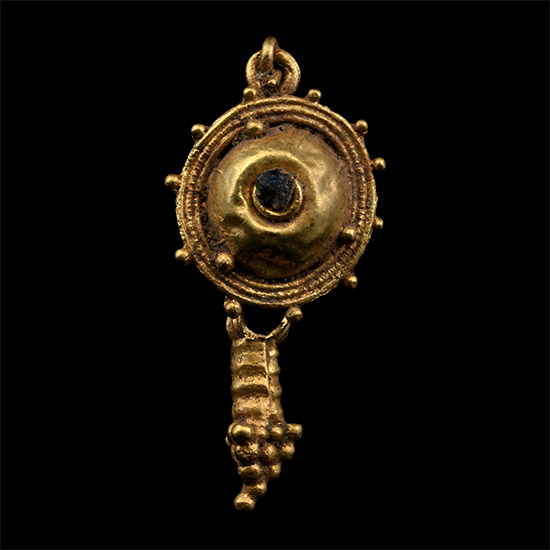
Roman Gold Earring
1st-4th century A.D.Sold for (Inc. bp): £312
Hollow-formed disc with radiating granules to the rim, filigree collar, dangle with granule cluster. 2.54 grams, 30 mm
Ex German art market, 2000s. Acquired from an EU collector living in London. From the collection of a Surrey, UK, gentleman. -
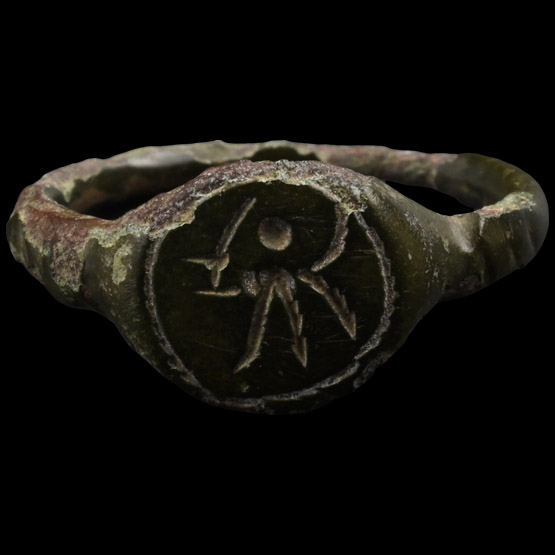
Roman Bronze Ring with Warrior
280-400 A.D.Sold for (Inc. bp): £33
Comprising a slender hoop and a discoid bezel with a stylised figure holding a sword. 3.35 grams, 21.58 mm overall, 17.38 mm internal diameter (approximate size British N, USA 6 1/2, Europe 13.72, Japan 13)
Acquired on the UK and EU art market before 2000. From the private collection of a Surrey, UK, gentleman.
The small copper-alloy Roman finger ring seems to be of Guiraud Type 4f (similar to Henig Type II) and dates from the 3rd to early 5th century A.D. The size of the ring suggests it may have been worn on the end of the finger, but most probably used by a child.
