
Loading, please wait...
LOT 0687
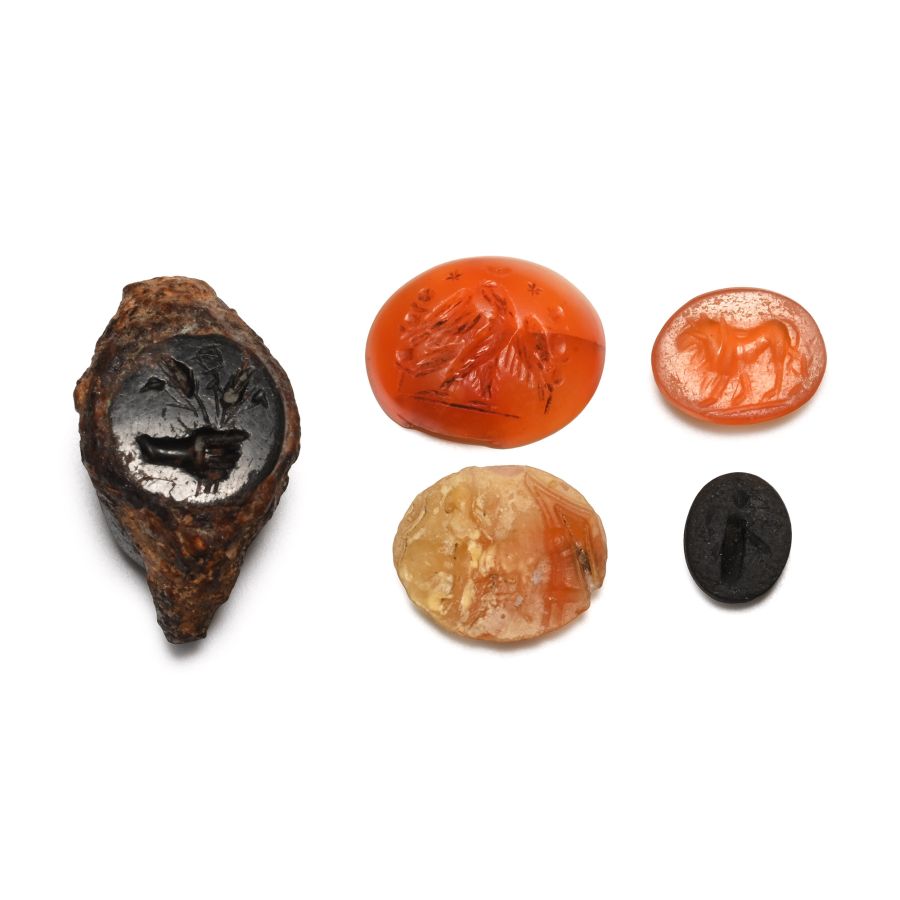
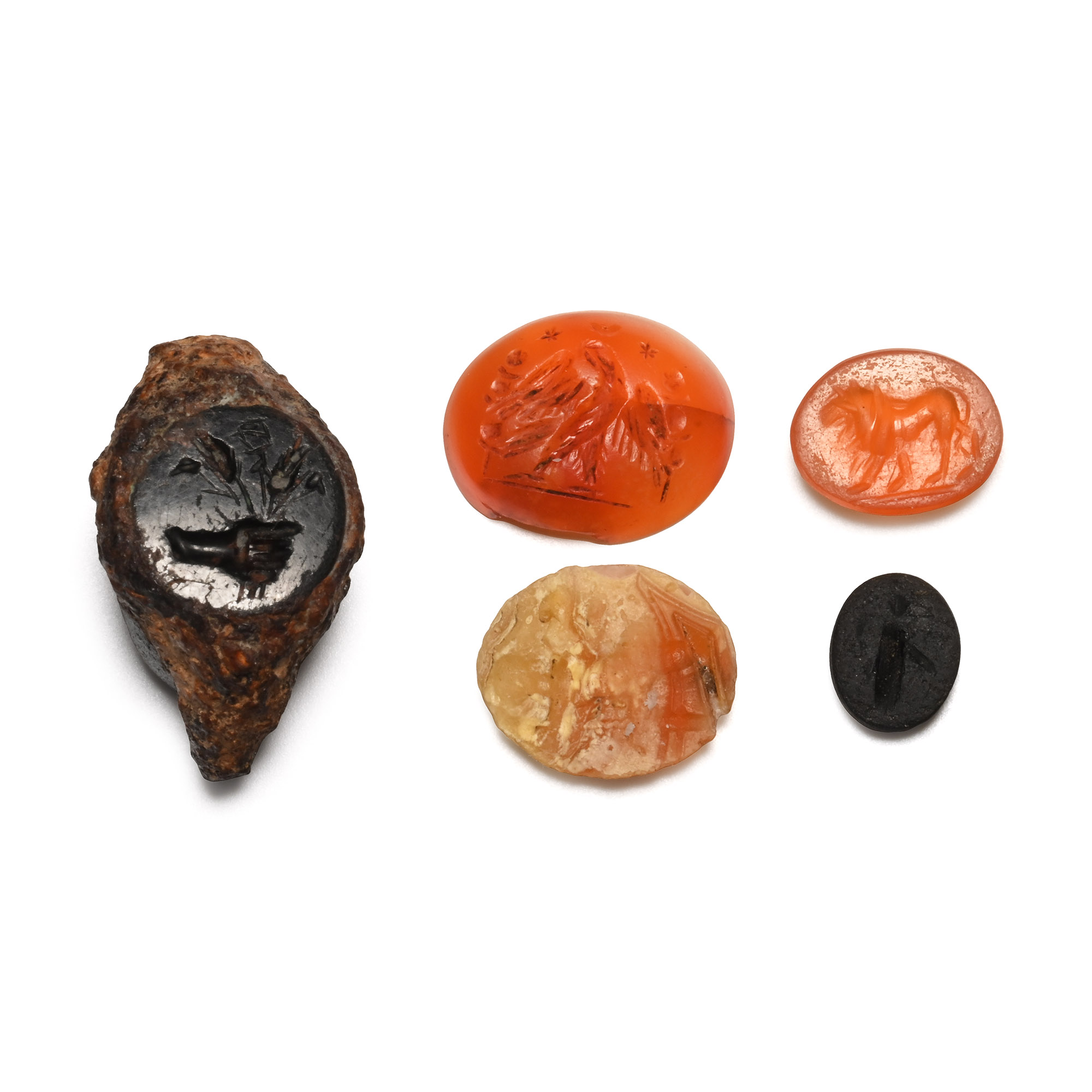
Roman Gemstone Collection
1ST-3RD CENTURY A.D.
1/4 - 3/4 in. (3.82 grams total, 7-19 mm).
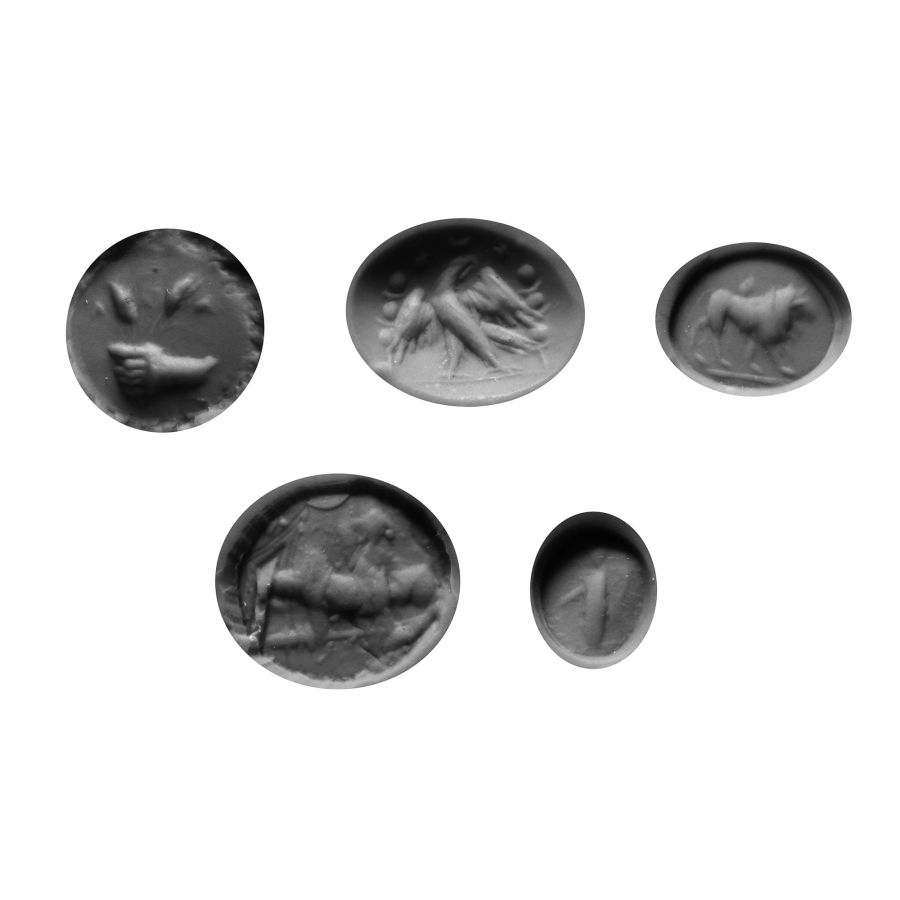
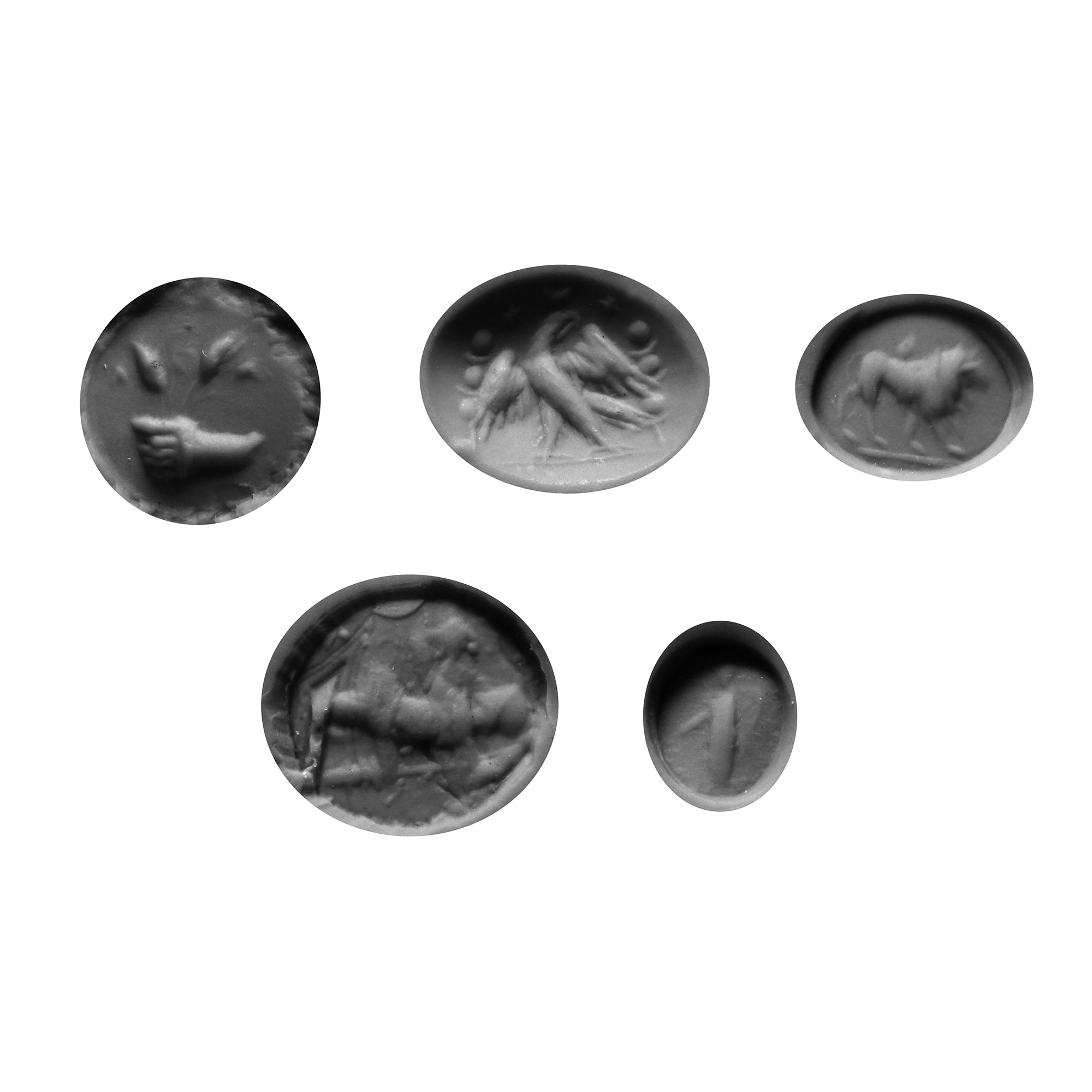
Including advancing lion, perching bird and other types; each supplied with a museum-quality impression. [5]
ProvenanceFrom the collection of a gentleman, acquired on the London art market in the 1990s.
LiteratureCf. for a similar gemstone with eagle and standards D’Amato, R., Roman Standards and Standard-Bearers, Oxford, 2018, p.27.
FootnotesOne of the gemstones is certainly pertinent to a military ring, representing an eagle among two signa (standards). Both shafts are decorated with multiple phalerae and lunulae.
CONDITIONTimeLine Auctions follows a vetting process to ensure the authenticity and legality of all items, reinforcing our commitment to integrity and responsible trading. Each antiquity, antique, and coin lot undergoes thorough examination by a vetting committee of at least ten external specialists, professional trade association members, scientists, and archaeologists: Our Vetting Process
AUCTIONS:
TimeLine is a leading auction house specialising in antiquities, ancient art, collectables, natural history, coins, medals, and books. Our auctions offer museums, collectors, historians, and enthusiasts the opportunity to acquire unique and historically significant pieces.
LOT 0687
Roman Gemstone Collection
Estimate £380 - 480€440 - 560 (for guidance only)$510 - 650 (for guidance only)
-
.jpg)
Roman Gold Ring with Jasper Gemstone of Fountain and Dolphin
2nd-3rd century A.D.Sold for (Inc. bp): £910
The hoop octagonal in section with a cell to the bezel and an inset conical jasper stone, intaglio vessel and dolphin with attributes; some restoration and polishing; supplied with a museum-quality impression. 5.39 grams, 21.00 mm overall, 15.51 x 13.97 mm internal diameter (approximate size British J, USA 4 3/4, Europe 8.69, Japan 8)
Private collection, Europe. Acquired on the English art market. -
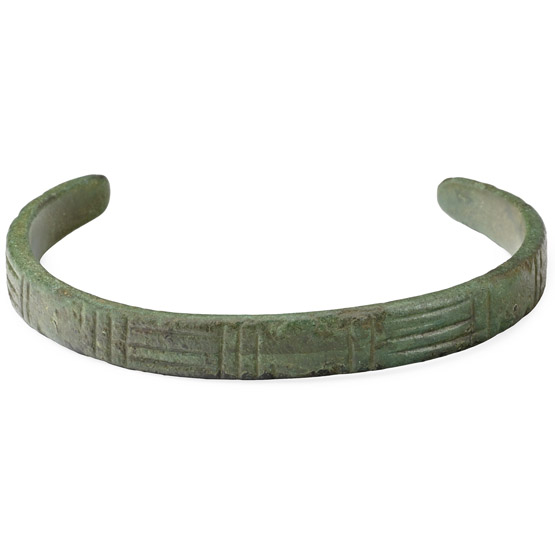
Roman Bronze Decorated Military Bracelet
1st-4th century A.D.Sold for (Inc. bp): £91
Penannular in profile with hatching to the outer face. 26 grams, 69 mm
Ex German art market, 2000s. Acquired from an EU collector living in London. From the collection of a Surrey, UK, gentleman. -
.jpg)
Post-Classical Glass Paste Cameo of Saint Demetrius
17th-18th century A.D. or earlierSold for (Inc. bp): £3,380
Discoid inlay with facing figure modelled in the half-round, clad in reticulated armour with pauldron and pteruges, cloak to the shoulders, small targe-type shield with cross in circle motif, grasping a spear held across the body; bare-headed with curly hair and beaded nimbus surrounding; legend in the field 'ΟΔΗΜΗΤΡΙΟC' (Dimitrios). 9.43 grams, 31 mm
Private English collection, formed between the late 1970s and early 1990s. Private collection, London, UK. This lot has been checked against the Interpol Database of stolen works of art and is accompanied by search certificate number no.13150-248707.
