
Loading, please wait...
LOT 0863
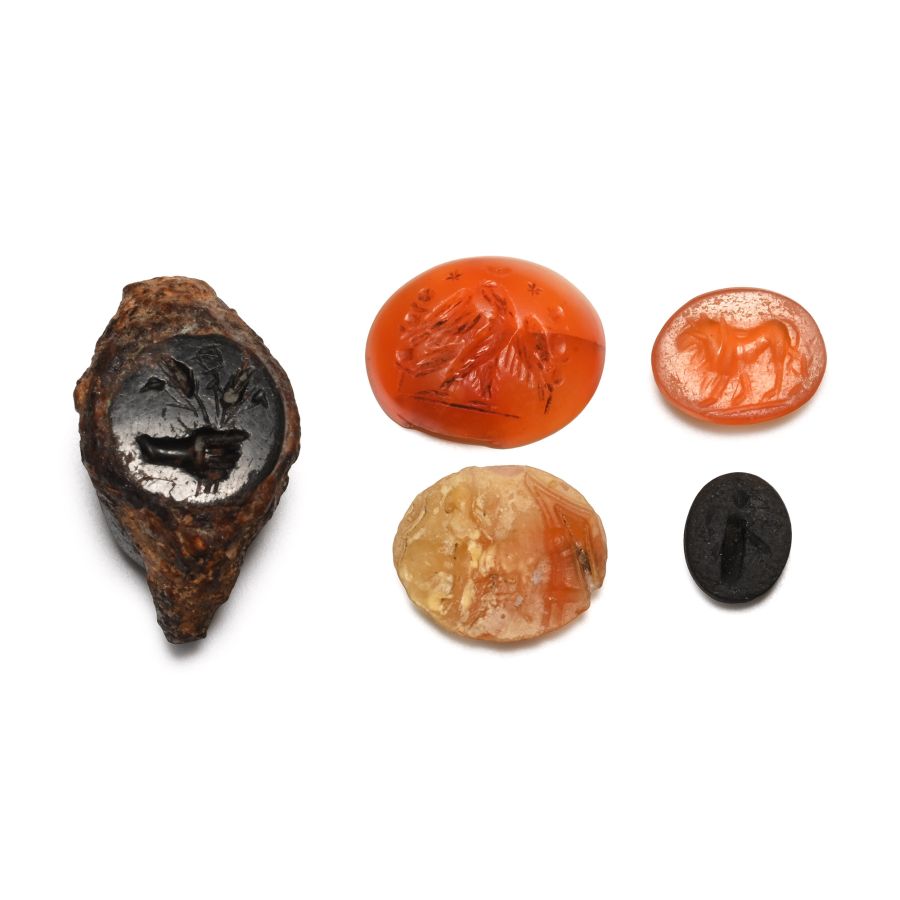
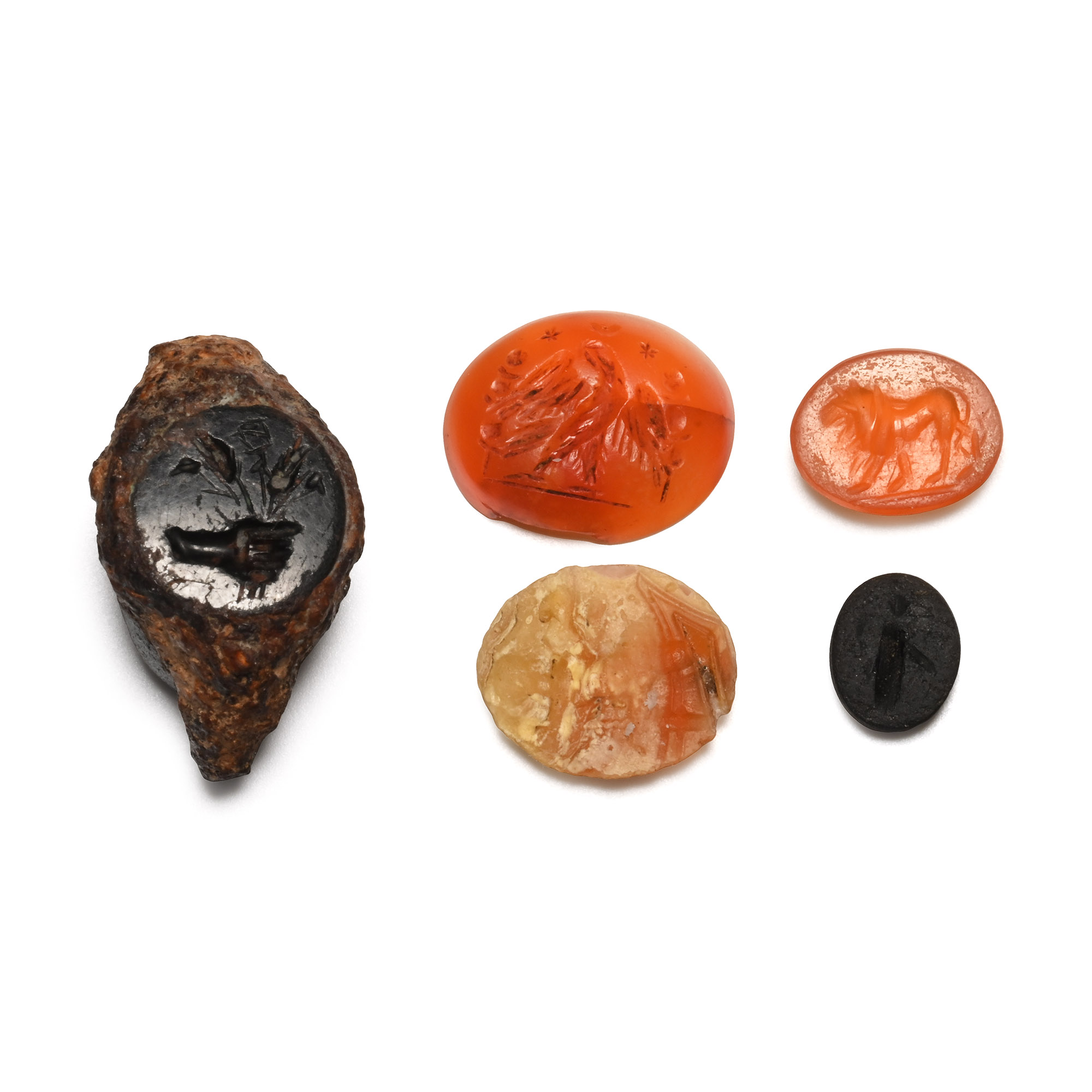
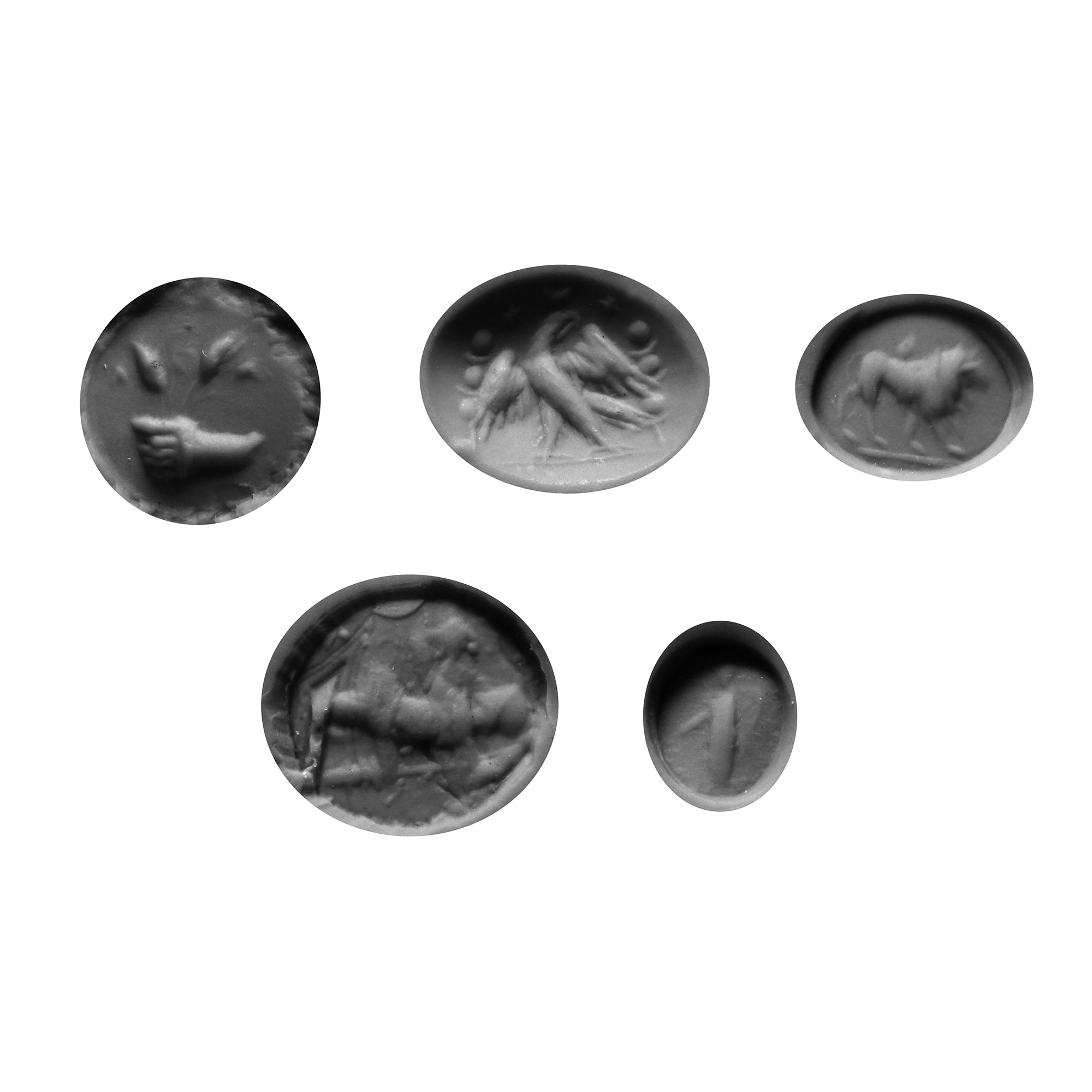
Roman Gemstone Collection
2ND-3RD CENTURY A.D.
1/4 - 3/4 in. (3.82 grams total, 7-19 mm).
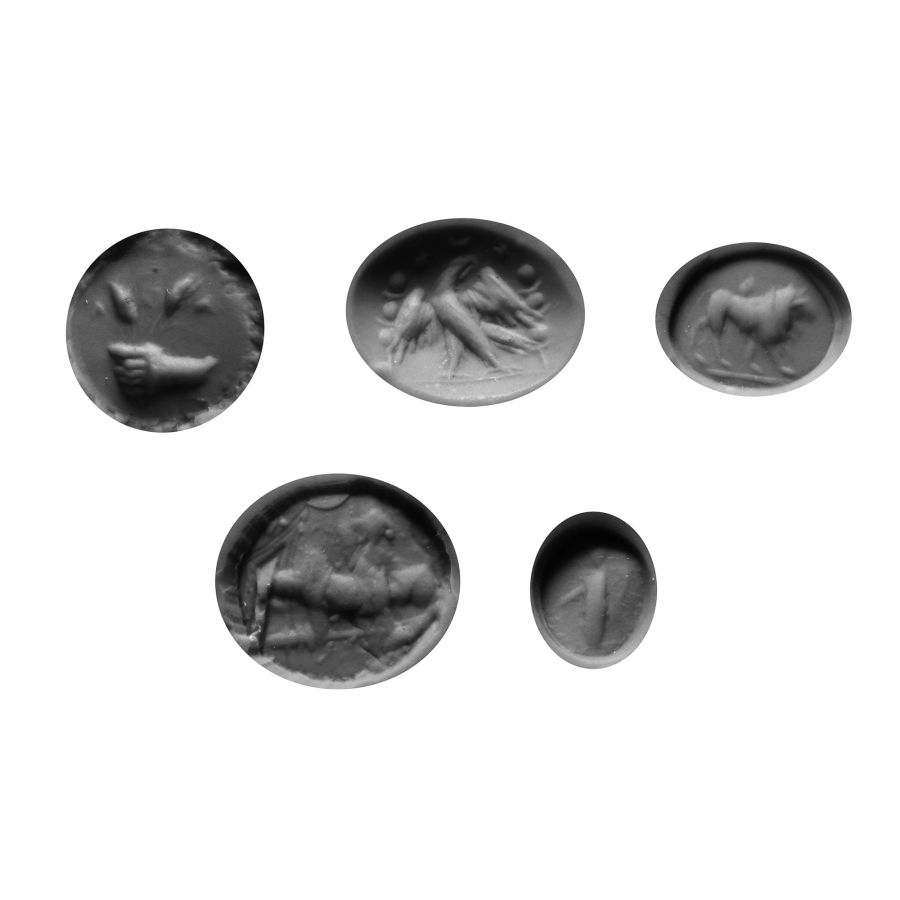
Including advancing lion, perching bird and other types; each supplied with a museum-quality impression. [5]
ProvenanceFrom the collection of a gentleman, acquired on the London art market in the 1990s.
This lot is accompanied by an illustrated lot declaration signed by the Head of the Antiquities Department, Dr Raffaele D'Amato.
TimeLine Auctions follows a vetting process to ensure the authenticity and legality of all items, reinforcing our commitment to integrity and responsible trading. Each antiquity, antique, and coin lot undergoes thorough examination by a vetting committee of at least ten external specialists, professional trade association members, scientists, and archaeologists: Our Vetting Process
AUCTIONS:
TimeLine is a leading auction house specialising in antiquities, ancient art, collectables, natural history, coins, medals, and books. Our auctions offer museums, collectors, historians, and enthusiasts the opportunity to acquire unique and historically significant pieces.
LOT 0863
Roman Gemstone Collection
Estimate £400 - 600€460 - 700 (for guidance only)$540 - 810 (for guidance only)
-
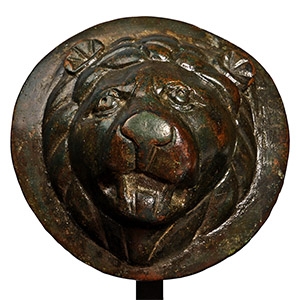
Roman Bronze Lion Head Mount
2nd-3rd century A.D.Estimate: £400 - 600 (+bp*)
Opening Bid: £200
Discoid mount with a lion-head modelled in the round to the centre, the beast with fierce expression and gaping jaws; mounted on a custom-made display stand. 218 grams total, 10 cm high including stand
Private collection of Mr K.A., acquired in the 1990s-early 2000s. This lot is accompanied by an illustrated lot declaration signed by the Head of the Antiquities Department, Dr Raffaele D'Amato.
Bronze lions were chosen guardian figures for millennia in both the Greek and Roman worlds. Representations of lions have been discovered in various contexts, appearing on gates and tombs in ancient Greece and on Roman coffins (sarcophagi), where they symbolise victory of the soul over death and evil. -
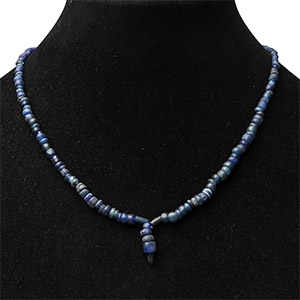
Roman Blue Glass Bead Necklace String
1st-4th century A.D. and laterSold for (Inc. bp): £98
Composed of mainly oblate and annular beads; restrung to a Y-shape. 11.9 grams, 38.2 cm
From the London, UK, art market in the 1990s. This lot is accompanied by an illustrated lot declaration signed by the Head of the Antiquities Department, Dr Raffaele D'Amato.
Such necklaces testify to the popularity of glass ornaments across the Roman Empire. Roman jewellery at first followed trends set by the Etruscans, using gold and glass beads, but with the extension of the Empire and the adoption of different styles from Greece, Egypt and North Africa, jewellery designs became increasingly various and elaborate. Each bead of this beautiful necklace is unique in shape, lustre and speckling, creating a mosaic like impression. Blue glass beads are distinguished by the scholars in opaque mid-blue and deep translucent cobalt blue. -
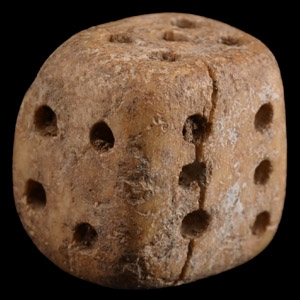
Roman Bone Gaming Die
1st-4th century A.D.Sold for (Inc. bp): £117
Irregular sub-cuboid in form with drilled spots disposed 1:6, 2:5, 3:4; cracked. 3.2 grams, 15 mm
Louis-Gabriel Bellon (1819–1899), Paris. Anonymous sale, France, 2009. Private European collection, acquired at the above sale. This lot is accompanied by an illustrated lot declaration signed by the Head of the Antiquities Department, Dr Raffaele D'Amato.
